


 Переглянути в інтер'єрі
 Надіслати
 Поділитися
 Деталі
 Посібник

 Завантажити
 Схожі предмети колекціонування
 Рентгенівське дослідження
 Слайд-шоу
 Статистика переглядів
Clouds

Explore Arkhip Kuindzhi’s ‘Clouds,’ a mesmerizing landscape painting of muted tones & atmospheric depth. Impressionistic brushwork evokes mood & tranquility. A unique piece for art lovers.
Архіп Куїнджі – видатний український художник-пейзажист, відомий своєю майстерною передачею світла та атмосфери України. Його картини – це справжнє диво! #Куїнджі #українськемистецтво
 Читати далі
Олійная репродукція ручної роботи
Написана вручну олією на полотні у вашому розмірі та рамі, виготовлена на замовлення нашими художниками. ( Перейти до друку Перейти до цифрових зображень)




































Стандартний розмір
на замовлення
CM
INCH
Обирайте з наших стандартних розмірів, що відповідають оригінальним пропорціям твору мистецтва.
Loading sizes...

ширина
висота
Введіть необхідну ширину та висоту, щоб картина підійшла до вашої рами або стіни. Оскільки це ручний розпис, для розміру іншої форми художник може написати трохи більше навколо картини або трохи обрізати її — вибір за вами. Перед початком роботи ми надішлемо вам цифровий макет для затвердження. Зображення, показане на цій сторінці, не є реальним результатом — лише макет відображає майбутній вигляд.
Приклади можливих змін: замінити обличчя на фото клієнта; додати домашню тварину (наприклад, замінити кота на собаку); додати приховане повідомлення на фоні; змінити ландшафт або елементи фону.
Після оформлення замовлення команда TopImpressionists.com зв'яжеться з клієнтом електронною поштою для отримання інструкцій та надасть попередній макет
Після оформлення замовлення команда TopImpressionists.com зв'яжеться з клієнтом електронною поштою для отримання інструкцій та надасть попередній макет
Доставка по всьому світу () за 3–4 тижні замість стандартних 5 тижнів. (22 Жовтень). Без жодних компромісів у якості.

Безкоштовна експрес-доставка по всьому світу

Високоякісне лляне полотно

Повне страхове покриття доставки

Гарантія повернення митних зборів

Гарантія точного відтворення кольорів

Політика повернення протягом 100 днів (лише у разі виявлення дефектів)

Гарантія повернення 100% коштів

Знижка на оптові замовлення
 Скляний варіант доступний лише для розмірів до 110 см

Clouds
Техніка репродукції
Розмір репродукції
-


Загальна вартість
₴ 12069
Схожі твори мистецтва


Біографія митця
A Life Illuminated: The World of Arkhip Kuindzhi
Arkhip Ivanovich Kuindzhi, a name that echoes with the golden light of Ukrainian sunsets and the mystical glow of moonlit nights, remains one of Russia’s most beloved landscape painters. Born in 1842 – though the exact date remains shrouded in a touch of mystery – in Mariupol, Ukraine, his origins were deeply rooted in the rich cultural tapestry of the region. Of Greek descent, tracing his lineage back to ancestors who sought refuge near the Azov Sea during Catherine II’s reign, Kuindzhi's early life was marked by hardship and resilience. Orphaned at a young age, he navigated a childhood filled with labor – working on the construction of churches, tending livestock, and assisting in a corn merchant’s shop. Yet, even amidst these struggles, a spark of artistic inclination ignited within him, nurtured by a Greek family friend who provided him with rudimentary education and instilled a love for beauty. This early exposure to both the practical realities of life and the nascent seeds of learning would profoundly shape his artistic vision, forging a unique perspective that he would later translate onto canvas.From Icon Retouching to Masterful Landscapes
Kuindzhi’s journey toward becoming a celebrated artist wasn't one of formal academic training, at least not initially. His early career began with an apprenticeship under the renowned marine painter Ivan Aivazovsky in Feodosia, a period primarily focused on acquiring technical skills – mastering paint mixing and brushwork – rather than developing his own artistic voice. He then honed his craft under Adolf Fessler, a student of Aivazovsky’s, before venturing into the world of photography as a retoucher in Taganrog. This seemingly disparate experience proved surprisingly crucial; it instilled within him an acute understanding of light and shadow, composition, and the meticulous detail required to capture reality – skills he would later wield with breathtaking mastery in his paintings. His attempt to establish his own photographic studio ultimately failed, leading to a pivotal move to Saint Petersburg in 1865. There, he enrolled at the Imperial Academy of Arts, pursuing studies independently while gaining recognition as a free-lance artist by 1868 and eventually achieving full membership in 1893. Kuindzhi’s artistic development was characterized by an unwavering pursuit of capturing the expressive power of light. He wasn't merely depicting landscapes; he was attempting to *recreate* the very experience of being immersed in nature, bathed in its radiant glow. Early works like “Autumn Weather” (1870) and “Lake Ladoga” (1870), while demonstrating his technical skill, hinted at a deeper ambition. It was with paintings such as "Deserted Village" (1874) and “The Chumak Road” (1875) that he began to address social themes, aligning himself with the realist-minded Society for Traveling Art Exhibitions. However, Kuindzhi soon transcended purely social commentary, embarking on a path of “pure poetry,” as some critics described it. His breakthrough came with "Ukrainian Night" (1876), followed by the breathtaking “Birch Grove” (1879) and the iconic “Moonlit Night on the Dnieper” (1880). These works weren’t simply representations of scenes; they were immersive experiences, achieved through innovative techniques. He employed composite methods, creating panoramic views that enveloped the viewer, and experimented with layering pigments to achieve an unparalleled luminosity. The effect was often described as almost supernatural, drawing crowds eager to witness his mastery of light.The Alchemy of Light: Techniques and Influences
Kuindzhi’s unique approach to landscape painting stemmed from a combination of technical innovation and a deep understanding of optics. He meticulously studied the way light interacted with surfaces – the shimmering reflections on water, the dappled shadows beneath trees, the ethereal glow of twilight. This knowledge informed his use of layering techniques, applying multiple thin washes of color to create an illusion of depth and luminosity that seemed to defy the limitations of traditional painting. He often employed a technique known as *“color-layering”* or *“chromatic layering,”* meticulously building up layers of paint to achieve effects of light and atmosphere previously unseen in landscape art. This process, combined with his careful observation of nature, allowed him to capture not just the appearance of a scene but also its emotional essence. Furthermore, Kuindzhi was influenced by several key artistic movements and figures. His early work shows traces of Ivan Aivazovsky’s marine realism, while his later paintings reflect elements of Impressionism and Symbolism. The influence of Caspar David Friedrich, a German Romantic landscape painter known for his evocative depictions of nature, is also evident in Kuindzhi's use of dramatic lighting and atmospheric perspective. His connection to the *Peredvizhniki* (Traveling Artists), a group of Russian realist painters who championed social justice through their art, further shaped his artistic vision and broadened his audience.Legacy and Recognition: A Painter’s Mystique
Despite achieving significant success during his lifetime, Kuindzhi mysteriously withdrew from public exhibitions after the height of his fame in 1882, offering no explanation for his sudden departure. He continued to teach at the Saint Petersburg Academy of Arts, imparting his knowledge and expertise to a new generation of artists. His work was celebrated throughout Russia, earning him recognition as one of the country’s most important landscape painters. Arkhip Kuindzhi's paintings continue to captivate audiences with their breathtaking beauty and technical brilliance, serving as a testament to his unwavering dedication to capturing the ephemeral magic of light and its profound impact on our perception of the world. His legacy endures not only through his stunning artwork but also through the ongoing fascination surrounding his enigmatic life and artistic process – a painter who truly illuminated the world around him.
Архіп Куїнджі
1842 - 1910 , Україна
Довідкова інформація
- Artistic Movement Or Style: Реалізм, Імпресіонізм
- Artists Or Movements Influenced By This Artist: ['Символізм']
- Artists Who Influenced This Artist:
- Іван Айвазовський
- Адольф Фесслер
- Date Of Birth: 27 січня 1842
- Date Of Death: 24 липня 1910
- Full Name: Архіп Іванович Куїнжі
- Nationality: Російський/Український/Грецький
- Notable Artworks:
- Ввечері в Україні
- Біржовий гай
- Ніч на Дніпрі
- Place Of Birth: Маріуполь, Україна
Схожі статті
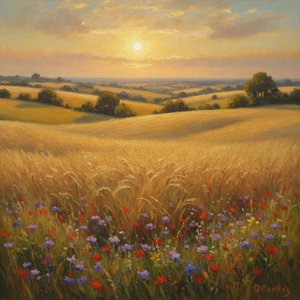
Golden Fields & Sun-Drenched Meadows: Capturing the Soul of Impressionist Landscapes
Immerse yourself in the luminous world of Impressionist landscapes. Discover how masters like Monet and Gauguin captured ephemeral light through plein air painting, and learn to bring the soul of sun-drenched meadows into your home with exquisite, hand-painted oil reproductions.

Capturing the Soul: The Most Emotionally Moving Impressionist and Post-Impressionist Masterpieces
Discover the profound emotional depth of Impressionist and Post-Impressionist masterpieces. Explore how legends like Monet, Van Gogh, and Gauguin captured light and soul through evocative landscapes and vibrant brushwork for a timeless connection to art history.

Beyond the Light: Capturing Raw Emotion and Subjective Vision in Post-Impressionist Landscapes
Explore the profound emotional depth of Post-Impressionist landscapes. Discover how masters like Van Gogh moved beyond light to capture raw human feeling through vibrant color and expressive texture in this expert art history retrospective.

The Beauty of Impermanence: Capturing Decay through Impressionist Eyes
Explore the profound beauty of impermanence through Impressionist and Post-Impressionist eyes. Discover how masters like Monet and Van Gogh captured fleeting light and the poetic essence of nature's transitions in our deep dive into art history and emotional landscapes.

Capturing the Soul of Russia: A Reflective Journey Through the Profound Beauty of Breathtaking Landscape Art
Embark on a soulful journey through Russia's breathtaking landscapes. Discover exquisite, hand-painted oil reproductions of Peredvizhniki masterpieces, meticulously crafted to bring the emotional depth and timeless beauty of Russian fine art into your personal sanctuary.