


 Переглянути в інтер'єрі
 Надіслати
 Поділитися
 Деталі
 Посібник

 Завантажити
 Схожі предмети колекціонування
 Рентгенівське дослідження
 Слайд-шоу
 Статистика переглядів
Canadian Jungle
 Acrylic On Canvas
- WallArt
- Canadian Group of Painters
 1946
1946- 19th Century
 44.0 x 53.0 cm
 McMichael Canadian Art Collection
Arthur Lismer's "Canadian Jungle" (1946) captures the lush beauty of Canada’s wilderness with vibrant colors and masterful detail. A stunning landscape painting by a Group of Seven member.
 Читати далі
Артур Лісмер – видатний канадський художник, учасник Групи Семи. Відомий пейзажами та унікальними малюнками-камуфляжем часів війни. Його творчість формувала канадську ідентичність!
Мистецький твір, представлений на цій сторінці, захищений законом про авторське право, що унеможливлює легальне створення або продаж його ідентичної репродукції. Цей захист забезпечується відповідно до міжнародних угод, таких як Бернська конвенція та національним законодавством, зокрема положеннями, що викладені в Законодавство США про авторське право — Розділ 17. Всі права захищені. Будь-яке використання без дозволу заборонено.
Цей метод повністю відповідає нормам авторського права, оскільки він не передбачає копіювання чи дублювання захищеного твору мистецтва. Натомість це творче переосмислення — створення нового малюнка під впливом оригіналу, який не є його точним відтворенням.
Гікле / Художній принт
Музейна якість друку جيкле або на полотні з оперативним виготовленням та різноманітними варіантами фінішної обробки. ( Купити картину ручної роботи Перейти до цифрових зображень)




P118B ₴10

P118H ₴10

P118W ₴10

P438Z ₴10

P508JH ₴12

P508YH ₴12

P805H ₴10

P805Z ₴10

P919BZ ₴10

P919G ₴10

P919XJ ₴10

P959ZH ₴10

P968JZ ₴12

W106C ₴8

W218G ₴10

W218JH ₴8

W218Y ₴10

W307PJ ₴10

W316G ₴10

W316PJ ₴8

W316Y ₴10

W398PJ ₴8

W4111J ₴10

W500HY ₴15

W500JH ₴15

W692G ₴12

W849H ₴8

W940BG ₴15

W953PJ ₴8




Стандартний розмір
на замовлення
CM
INCH
Обирайте з наших стандартних розмірів, що відповідають оригінальним пропорціям твору мистецтва.
Loading sizes...

ширина
висота
Введіть необхідну ширину та висоту, щоб принт ідеально підійшов до вашої рами або стіни. Принт можна лише обрізати, але не можна зробити більшим за оригінал, тому при зміні пропорцій частина зображення буде втрачена. Перед друком ми надсилаємо вам цифровий макет для затвердження. Зображення на цій сторінці не відображає реальну обрізку — її можна побачити лише на макеті.
Доставка по всьому світу () за 2 тижні замість стандартних 4/5 тижнів. (22 Жовтень)

Безкоштовна експрес-доставка по всьому світу

Високоякісне лляне полотно

Повне страхове покриття доставки

Гарантія повернення митних зборів

Гарантія точного відтворення кольорів

Політика повернення протягом 100 днів (лише у разі виявлення дефектів)

Гарантія повернення 100% коштів

Знижка на оптові замовлення
 Скляний варіант доступний лише для розмірів до 110 см

Canadian Jungle
Гікле / Художній принт
Розмір репродукції
-


Загальна вартість
₴ 3096
A Wilderness Captured: Arthur Lismer’s “Canadian Jungle”
Arthur Lismer's "Canadian Jungle," painted in 1946, isn’t merely a depiction of a forest; it’s a vibrant distillation of the Canadian spirit – a potent blend of rugged wilderness and burgeoning national identity. This oil on canvas, measuring 44.8 x 53.7 cm, transports the viewer to a realm where the raw power of nature collides with a nascent sense of artistic self-definition within Canada. Lismer, a pivotal figure in both the Group of Seven and as an educator at NSCAD University, masterfully employed his experience as a photo-engraver – a profession demanding meticulous detail and a keen eye for visual language – to create a landscape brimming with life and imbued with a quiet intensity.
The painting’s style is firmly rooted in the post-impressionist movement, yet distinctly Canadian. Lismer's brushwork is bold and expressive, eschewing photographic realism in favor of capturing the *feeling* of the forest – its density, its light, and its inherent energy. He utilizes a rich palette dominated by deep greens, browns, and ochres, punctuated by flashes of brighter color that draw the eye to specific details within the scene: the dappled sunlight filtering through the canopy, the vibrant hues of wildflowers, and the subtle variations in texture across the bark of ancient trees. Notice how he doesn’t shy away from a slightly rough application of paint; this adds to the sense of immediacy and authenticity, as if the viewer is stepping directly into the heart of the wilderness.
The Roots of Identity: Lismer's Journey and Context
Lismer’s artistic trajectory is itself a fascinating story. Born in Sheffield, England, his early life was shaped by the industrial realities of working-class existence – a stark contrast to the natural beauty he would later dedicate his art to capturing. His apprenticeship in photo-engraving honed his technical skills and instilled within him an appreciation for visual precision, which he then skillfully applied to landscape painting. His move to Canada in 1911 coincided with a crucial period of artistic development, as he sought to establish himself within the burgeoning Canadian art scene. The rise of the Group of Seven, of which Lismer was a founding member, reflected a desire to forge a distinctly Canadian visual language – one that moved beyond European influences and embraced the unique character of the country’s landscapes.
The painting's creation occurred during World War I, a period of profound social and political change in Canada. Lismer’s service as an official war artist, documenting scenes from Halifax harbor, further informed his understanding of the relationship between humanity and nature – particularly the resilience of the natural world amidst conflict. This experience is subtly reflected in “Canadian Jungle,” suggesting a deeper connection to the land and its enduring strength.
Symbolism Within the Scene: Trees as Guardians
The towering trees that dominate "Canadian Jungle" are more than just elements of the landscape; they function as powerful symbols. They represent not only the physical wilderness but also the ancient wisdom and enduring spirit of Canada itself. Their gnarled branches reach towards the sky, suggesting a connection to something larger than themselves – a sense of continuity and rootedness. The dense undergrowth and tangled vines further reinforce this symbolism, creating a feeling of mystery and hinting at hidden depths.
The inclusion of a small stream winding through the forest adds another layer of meaning. Water is often associated with life, renewal, and purification – qualities that are deeply valued in Canadian culture. It also creates a sense of movement and flow within the composition, drawing the viewer’s eye deeper into the heart of the scene.
A Legacy of Light and Landscape
"Canadian Jungle" is a testament to Arthur Lismer's ability to capture the essence of the Canadian wilderness. It’s a painting that invites contemplation, evoking feelings of awe, tranquility, and connection to nature. Reproductions of this artwork offer a remarkable opportunity to bring this evocative landscape into any space, serving as a constant reminder of Canada’s rich natural heritage and Lismer's enduring legacy as one of its most important artists. The vibrant colors and textured brushwork translate beautifully to high-quality reproductions, ensuring that the spirit of “Canadian Jungle” can be enjoyed for generations to come.
Запитання та відповіді
Як я можу переглянути репродукцію твору «Canadian Jungle» Артур Лісмер?
Попередній перегляд «Canadian Jungle» Артур Лісмер доступний на сторінці Попередній перегляд твору.
Який домінантний відтінок у «Canadian Jungle» Артур Лісмер?
«Canadian Jungle» має відтінок, що схиляється до Ochre to Sepia.
Яке національне походження стоїть за Canadian Group of Painters твору "Canadian Jungle"?
«Canadian Jungle» була створена Артур Лісмер, народилася в Великобританія і належить до течії Canadian Group of Painters. Походження митця пов'язує цей твір із напрямом Canadian Group of Painters, як його представляли художники з Великобританія.
Біографія митця
A Life Forged in Steel and Painted in Light
Arthur Lismer’s story is a remarkable one – a transformation from the gritty, industrial landscape of Sheffield, England, to becoming a pivotal figure in shaping a distinctly Canadian artistic identity. Born in 1885, his early life was deeply intertwined with the realities of working-class existence, a world dominated by factories and smoke, yet within this environment, a profound yearning for the unspoiled beauty of nature began to take root. His apprenticeship at thirteen with a photo-engraving company wasn’t merely a trade; it was an immersion into the language of visual communication, honing skills that would later form the bedrock of his artistic explorations. Evening classes at the Sheffield School of Art provided formal training, nurturing a talent already blossoming through sketches and observations – even discreetly during Unitarian church services, much to his mother’s gentle disapproval. This early exposure wasn't simply about mastering technique; it was about *seeing*, truly *seeing* the world around him, a skill that would define his entire career. The decision to travel to Antwerp’s Academie Royale broadened his horizons exponentially, exposing him to European artistic currents like Barbizon and Post-Impressionism – influences that subtly shaped his evolving style.From Halifax Harbor to the Group of Seven
The pivotal moment in Arthur Lismer's life arrived in 1911 when he made the courageous decision to immigrate to Canada. Settling in Toronto, he found employment at Grip Ltd., a prominent commercial art firm where fatefully, he encountered Tom Thomson – another artist destined for legendary status. However, his appointment as principal of the Victoria School of Art and Design in Halifax in 1916 revealed his deep commitment to education. He didn’t merely administer; he revitalized the school, expanding its curriculum and student body, believing passionately in fostering artistic talent within a new nation. The outbreak of World War I dramatically altered his path. Assigned as an official war artist, Lismer found himself captivated by the bustling Halifax harbor – a strategic port teeming with ships under siege. It was here that he developed a unique series of paintings depicting vessels adorned with *dazzle camouflage* – a revolutionary technique designed to confuse enemy submarines through bold patterns and disruptive coloration. These weren’t simply technical exercises; they were striking visual statements, demonstrating his ability to adapt artistic principles to the urgent needs of wartime, earning him recognition from Lord Beaverbrook. Upon returning to Toronto in 1919, Lismer became vice-president of the Ontario College of Art and actively collaborated with a group of artists who shared a vision: to create an art that was uniquely Canadian – a voice distinct from European traditions. This collective would soon become known as the Group of Seven.A Distinctly Canadian Vision
Lismer’s artistic development wasn't static; it was a continuous evolution, profoundly influenced by his European training and shaped by the vastness and raw beauty of the Canadian landscape. Initially embracing Post-Impressionist techniques, he gradually moved towards a more expressive and personal style. His landscapes weren’t merely representations of scenery; they were attempts to capture the *essence* of Canada – its emotional resonance, its untamed spirit. Vibrant colors, dynamic compositions, and bold brushstrokes became hallmarks of his work. He sought not just to depict what he saw but to convey how it felt to be immersed in the wilderness, to experience the power and majesty of nature firsthand. His paintings often featured flattened perspectives and expressive textures, reflecting a desire to move beyond mere imitation and towards a more subjective interpretation of reality. The Group of Seven’s collective goal was ambitious: to forge an artistic identity independent from European traditions, one rooted in the unique character of the Canadian environment. Lismer played a crucial role in this endeavor, contributing not only his artistic talent but also his unwavering dedication to their shared vision.Key Elements of His Style and Techniques
Lismer’s paintings are characterized by several distinctive elements:- Vibrant Color Palettes: He employed bold, expressive colors – often rich reds, deep blues, and earthy greens – to capture the emotional impact of landscapes.
- Dynamic Compositions: His compositions were frequently dynamic, utilizing strong lines and angles to create a sense of movement and energy.
- Expressive Brushwork: Lismer’s paintings are marked by visible brushstrokes that convey texture and emotion; he wasn't afraid to let the physicality of his paint be evident.
- Dazzle Camouflage Paintings: His wartime series showcased a remarkable ability to adapt artistic principles, creating visually arresting depictions of ships using innovative patterns and colors designed for disruption.
- Focus on Canadian Wilderness: He consistently depicted scenes from the vast wilderness of Northern Ontario and Nova Scotia, capturing their rugged beauty and untamed spirit.
Recognition and Legacy
Arthur Lismer’s contributions extended far beyond his paintings. As an educator, he profoundly impacted generations of Canadian artists through his leadership at NSCAD University and the Ontario College of Art, instilling in them a passion for creativity and a commitment to artistic excellence. His work as a war artist remains historically significant, offering a unique visual record of World War I. In 1967, he was made a Companion of the Order of Canada – a testament to his lasting impact on Canadian culture. Today, Arthur Lismer is celebrated as one of Canada’s most important artists, recognized for his vibrant landscapes, innovative techniques, and unwavering dedication to fostering artistic talent. His works are held in major public and private collections across the country and internationally, continuing to inspire and captivate audiences with their beauty and emotional depth. His legacy isn't just about what he painted; it’s about how he inspired others to see the world – and Canada – in a new light.
Артур Лісмер
1885 - 1969 , Великобританія
Довідкова інформація
- Artistic Movement Or Style: Група сівели
- Artists Or Movements Influenced By This Artist: ['Канадське мистецтво']
- Artists Who Influenced This Artist: ['Пост-імпресіонізм']
- Date Of Birth: 27 черв 1885
- Date Of Death: 23 квр 1969
- Full Name: Arthur Lismer
- Nationality: Англо-канадський
- Notable Artworks:
- Конвой у Берфордській затоці
- Сурмяна погода, Georgian Bay
- Чайка
- Ландшафт
- Place Of Birth: Шеффілд, Велика Британія
Схожі статті
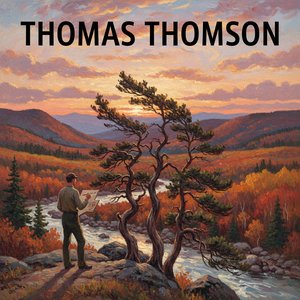
Thomas Thomson: Pioneering Canadian Landscape & the Pursuit of National Identity
Explore the evocative landscapes of Tom Thomson, a pivotal figure in Canadian art & precursor to the Group of Seven. Discover his bold style, lasting legacy, and profound impact on shaping a national artistic identity.

Arthur Lismer: A Pioneer of Canadian Modernism & the Group of Seven's Visionary Spirit
Explore the life & art of Arthur Lismer, a pivotal figure in Canadian Modernism and founding member of the Group of Seven. Discover his landscapes, teaching legacy & lasting influence on Canadian art history.

Arthur William Devis: A Provincial Eye on Georgian Life & Naval History
Explore the life & work of Arthur William Devis (1762-1822), a key figure in Georgian portraiture and naval history painting. Discover his intimate 'conversation pieces' and captivating depictions of colonial India. Learn more at TopImpressionists.

George Agnew Reid: A Canadian Impressionist's Pursuit of Light, Colour, and National Identity
Explore the life & work of George Agnew Reid, a pivotal figure in Canadian Impressionism. Discover his genre paintings, mural commissions, and lasting influence on art education & national identity. A comprehensive guide for collectors & enthusiasts.

Сімейний портрет для поколінь: Створіть незабутній спадок з TopImpressionists
Створіть незабутній сімейний портрет з TopImpressionists! Ручна робота від досвідчених художників, репродукції відомих шедеврів та персоналізовані замовлення. Інвестуйте у родинну спадщину та елегантний інтер'єр.