

Shown: · With its frame:
 Переглянути в інтер'єрі
 Надіслати як листівку
 Поділитися
 Деталі витвору
 Посібник

 Завантажити
 Схожі екземпляри
 Рентгенівське дослідження
 Слайд-шоу
 Q&A
Q&A Статистика

₴ 13216
Олійная репродукція ручної роботи
Написана вручну олією на полотні у вашому розмірі та рамі, виготовлена на замовлення нашими художниками. ( Перейти до друку Перейти до цифрових зображень)
Size
·Стандартний розмір
індивідуальний розмір
CM
INCH
Обирайте з наших стандартних розмірів, що відповідають оригінальним пропорціям твору мистецтва.
Loading sizes...

ширина
висота
Введіть необхідну ширину та висоту, щоб картина підійшла до вашої рами або стіни. Оскільки це ручний розпис, для зміни пропорцій художник може дописати трохи більше по краях або дещо обрізати композицію — вибір за вами. Перед початком роботи ми надішлемо вам цифровий макет для затвердження. Зображення, показане на цій сторінці, не є реальним результатом — лише макет відображає майбутній вигляд.
 Читати далі
Finish
·
White ₴1

Blurside ₴1

Extended ₴1

P118B ₴10

P118H ₴10

P118W ₴10

P438Z ₴10

P508JH ₴12

P508YH ₴12

P805H ₴10

P805Z ₴10

P919BZ ₴10

P919G ₴10

P919XJ ₴10

P959ZH ₴10

P968JZ ₴12

W106C ₴8

W218G ₴10

W218JH ₴8

W218Y ₴10

W307PJ ₴10

W316G ₴10

W316PJ ₴8

W316Y ₴10

W398PJ ₴8

W4111J ₴10

W500HY ₴15

W500JH ₴15

W692G ₴12

W849H ₴8

W940BG ₴15

W953PJ ₴8

H24-GOLD ₴30

H24-SILVER ₴30

H36-GOLD ₴45

H36-SILVER ₴45
Shipped in a protective tube, ready for your own framer.
Above 105 cm the frame is shipped as a kit for a professional framer — read the details.
Extras
optionalWhat do the extras include?
Examples of what can be changed: Replace face with customer photo; Add pet (e.g., replace cat with dog); Include hidden message in background; Change background landscape or elements.
After order, TopImpressionists.com team will email client for instructions and provide a mockup preview
After order, TopImpressionists.com team will email client for instructions and provide a mockup preview
Доставка по всьому світу () за 3–4 тижні замість стандартних 5 тижнів. (2 Листопад). Без жодних компромісів у якості.
Захисний лак
Етикетка експоната
Деталі гравірування на бронзовій табличці
This elegant plaque features the artist's name and the title of the artwork, finely engraved for a timeless presentation.
It is made from bronze with a refined, elegant finish. The text is precisely laser-engraved for a sharp and permanent result. Measuring 9x2 cm, the plaque is compact yet easy to read. It's built to be durable and scratch-resistant, offering a professional, museum-quality look. Mounting is simple thanks to the included adhesive backing.
Деталі прозорої акрилової таблички
The plaque includes essential engraved details such as the artist's name, the title of the artwork, the date it was created, the type of media used-like oil on canvas or watercolor-a brief description of the piece, and a QR code that links to the complete artwork information.
It is crafted from clear acrylic, offering a sleek, modern appearance. The text is UV-engraved in black to ensure strong visual contrast. With a size of 10x15 cm, it ensures optimal readability. It comes equipped with two metal hooks for secure wall mounting. The plaque is designed to be weather-resistant, making it suitable for various environments, and it includes interactive features that work seamlessly with smartphone scanning.
Деталі чорної акрилової таблички
This elegant plaque includes engraved information such as the artist's name, the title of the artwork, the date it was created, the type of media used (like oil on canvas or watercolor), a short description of the artwork, and a QR code for quick access to more information.
The plaque itself is made from refined black acrylic with a premium finish. The text is laser-engraved in white for high contrast and readability. Its size is 10x15 cm, designed to be easy to read. It comes with two metal hooks for professional mounting. The design is sleek and fits any interior style. It is also weather-resistant and durable, with built-in digital integration for mobile compatibility.
Скляний варіант доступний лише для розмірів до 110 см
 Скляний варіант доступний лише для розмірів до 110 см
- Безкоштовна експрес-доставка по всьому світу
- Високоякісне лляне полотно
- Повне страхове покриття доставки
- Гарантія повернення митних зборів
- Гарантія точного відтворення кольорів
- Політика повернення протягом 100 днів (лише у разі виявлення дефектів)
- Гарантія повернення 100% коштів
- Пропозиція на оптові замовлення


Опис експоната
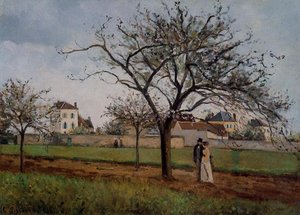
Experience the serenity of Camille Pissarro's "Walnut Tree in Spring" (1894). This Impressionist masterpiece captures nature’s beauty with soft colors & tranquil light.
Біографія митця
Каміль Піссарро – ключова постать імпресіонізму та неоімпресіонізму. Його картини – це звичайне життя, пейзажі Парижа та сільської місцевості. Вплинув на Ван Гога, Сезанна та інших. Відкрийте світ мистецтва Піссарро!
About the painting
Walnut Tree in Spring: A Study in Impressionistic Serenity
Camille Pissarro’s "Walnut Tree in Spring," painted in 1894, is more than just a depiction of nature; it's an embodiment of the Impressionist movement's core principles. This oil on canvas captures a fleeting moment – the vibrant renewal of spring centered around a majestic walnut tree. The painting resides within the E. G. Buhrle Collection Museum in Switzerland and exemplifies Pissarro’s skill in translating sensory experience into visual form.
The Essence of Impressionism
Pissarro, often considered the "dean" of the Impressionists by art historian John Rewald, consistently championed a style that prioritized capturing the ephemeral qualities of light and atmosphere. Unlike earlier artistic movements focused on meticulous detail and historical narratives, Impressionism sought to portray the subjective experience of seeing – the way light transforms color and shapes in an instant. “Walnut Tree in Spring” perfectly illustrates this approach. The visible brushstrokes, rather than being concealed, become part of the artwork's character, contributing to a sense of movement and spontaneity. This painting is a prime example of how Pissarro moved between Impressionism and Neo-Impressionism, experimenting with color theory and pointillist techniques while retaining his signature atmospheric style.
A Detailed Examination: Light, Color, and Composition
The composition centers on the large walnut tree, its branches reaching towards a softly rendered sky. The surrounding landscape is depicted with rolling hills and patches of vibrant green grass dotted with nascent leaves. Pissarro masterfully uses light to create depth and dimensionality within the scene. Notice how the sunlight filters through the tree's canopy, casting dappled shadows on the ground below. This interplay of light and shadow isn’t merely representational; it evokes a feeling of warmth and tranquility. The color palette is dominated by greens and yellows, reflecting the vibrancy of springtime foliage, but subtle touches of blue and pink in the sky add to the overall sense of serenity. The flattened perspective, characteristic of Impressionism, draws attention to the immediate sensory experience rather than creating a deep illusion of space.
Symbolism and Emotional Resonance
Beyond its aesthetic beauty, "Walnut Tree in Spring" carries symbolic weight. The walnut tree itself represents strength, longevity, and a connection to the earth – enduring symbols across various cultures. Its presence anchors the composition and provides a sense of stability amidst the fleeting nature of springtime. The painting evokes feelings of nostalgia, peace, and renewal. It invites viewers to pause and appreciate the simple beauty of the natural world, reflecting Pissarro’s lifelong dedication to portraying everyday scenes with profound sensitivity. The inclusion of a figure beneath the tree subtly suggests human interaction with nature, further enriching the narrative.
Pissarro's Legacy and Influence
Camille Pissarro’s impact on art history is undeniable. He mentored numerous artists, including Paul Cézanne and Vincent van Gogh, influencing their artistic development. His commitment to capturing the essence of rural life and his innovative use of light and color established him as a pivotal figure in both Impressionism and Post-Impressionism. "Walnut Tree in Spring" stands as a testament to Pissarro’s enduring legacy – a celebration of nature's beauty and a masterful demonstration of the Impressionist aesthetic.
Питання та відповіді
Який рекомендований розмір та орієнтація для друку твору "Walnut Tree in Spring"?
Розмір Середній розмір, орієнтація Альбомна орієнтація: рекомендовані параметри друку для «Walnut Tree in Spring» роботи Каміль Піссарро.
Яка техніка виконання та дата створення «Walnut Tree in Spring» роботи Каміль Піссарро?
«Walnut Tree in Spring» було створено у 1894 році, техніка: Олія на полотні.
Чи можу я детальніше розглянути "Walnut Tree in Spring"?
«Walnut Tree in Spring» можна досліджувати шар за шаром на сторінці Рентгенівське дослідження твору — це інтерактивний візуалізатор, натхненний освітлювальним столом реставратора, що пропонує одинадцять оптичних пластів зображення.
Quick facts and art quiz
About Каміль Піссарро

Каміль Піссарро
1830 - 1903, Франція
Біографія митця
A Life Rooted in Observation: The World of Camille Pissarro
Каміль Піссарро – ключова постать імпресіонізму та неоімпресіонізму. Його картини – це звичайне життя, пейзажі Парижа та сільської місцевості. Вплинув на Ван Гога, Сезанна та інших. Відкрийте світ мистецтва Піссарро!
Каміль Піссарро, ім'я, що асоціюється як із народженням, так і з розвитком імпресіонізму, був художником, чиє життя відображало мінливі ландшафти, які він таким відданим чином захоплював на полотно. Народився Якоб Абрахам Каміль Піссарро 10 липня 1830 року в Чарлотті Амалії, США Вірджинійських островах – тоді це була Данія Вест-Індія, а нині США Вірджинійські острови – його батько, португальский єврейський торговець з французькою національністю, і мати, з французької єврейської родини на острові, заклали в нього унікальну культурну спадщину. Ця освіта, відносно незвичайна через сімейні складність, сприяла ранній чутливості до навколишнього світу, якість, що стала основою його художньої практики.
Від Реалізму до Революції: Мистецька Розвиток
Мистецький шлях Піссарро був одним із постійних досліджень і вдосконалень. Після періоду допомоги данському живописцю Антону Мельбє у Парижі він занурився у творчість майстрів, таких як Густав Корбет, Жан-Баптист-Каміль Корот та Оноре Домієр – художників, які відстоювали реалізм і соціальний коментар. Він спочатку шукав прийняття в усталеному мистецькому світі, виставлявся на Паризькому салоні, але незабаром усвідомив його обмеження. Ключовим моментом став його прийняття *плен-е́ра* живопису – роботи прямо з природи, практика, яку заохочував Корот, що стала центральною для імпресіонізму. Цей перехід був не лише технічним; він символізував філософський зміст, прагнення зафіксувати миттєві ефекти світла та атмосфери, саму сутність сцени замість її точної репрезентації.
Батьківська Фігура Імпресіонізму
Каміль Піссарро не був лише імпресіоністом; він був, безсумнівно, його найстійкішою та об'єднуючою силою. Унікально, він виставлявся на всіх восьми Паризьких імпресіоністських експозиціях між 1874 і 1886 роками, діючи як стабілізуючий елемент у групі часто характеризувалася внутрішніми розбіжностями та індивідуальними амбіціями. Він не лише був присутній – він активно заохочував своїх колег, пропонував підтримку, керівництво та відчуття єдності. Це принесло йому лагідну назву «батьківська фігура» руху. Його відданість художній свободі та інноваціям була непохитною, навіть у той час як він стикався з критикою та громадською байдужістю. Він вірив у силу колективного дій і пропагував думку про художників виставлятися незалежно від обмежень салону.
Ландшафти Життя: Теми та Наслідок
Мистецький обсяг Піссарро був дивно різноманітним, але постійно зосереджений на світі навколо нього. Він славиться своїми зображеннями як сільських, так і міських ландшафтів, часто зображуючи сцени повсякденного життя – селян працюють у полях, гамірні паризькі вулиці, тихі міські площі. Його картини були не лише мальовничими краєвидами; вони були соціальними коментарями, що відображали його глибоку співчуття до робітників і його відданість зображенню їхнього життя з гідністю та повагою.
- Ландшафти: Відомий своїм захопленням красою як сільськогосподарських, так і міських пейзажів.
- Сцени Життя Парижа: Яскраві зображення міста, що швидко змінюється.
- Життя Селян: Відбиття соціальної свідомості та співчуття до робітників.
Його пізні роботи, особливо ті, що були створені під час політичних заворушень або особистої труднощів, часто несуть відтінок меланхолії та соціальної критики. Наслідок Піссарро сягає далеко за межі його прекрасних полотен. Він був захисником художньої свободи, наставником поколінь художників і піонером у розвитку сучасної мистецтва. Його відданість плен-е́ру живопису революціонізувала ландшафтну живописну практику, а його готовність експериментувати демонстрував інтелектуальну цікавість та непохитну відданість своїй справі.
Його творчість продовжує бути вивчальною та цінується за свою бездоганну естетику та глибоку гуманітарність.
Quick facts about Каміль Піссарро
- Artistic Movement Or Style: Імпресіонізм, Неоімпресіонізм
- Artists Or Movements Influenced By This Artist:
- Сезанн
- Ван Гог
- Гарньє
- Artists Who Influenced This Artist:
- Коробет
- Коро
- Дабньоі
- Date Of Birth: 10 лип 1830
- Date Of Death: 13 нов 1903
- Full Name: Каміль Піссарро
- Nationality: Франко-данський
- Notable Artworks:
- Бульвар Монмартр
- Пейзажі
- Place Of Birth: Шарлотта Амалі, Франція
Схожі твори мистецтва



Досліджуйте твори мистецтва, впорядковані за темами, стилями та характеристиками.


Каміль Піссарро
Walnut Tree in Spring
() ·
With its frame: · Hand-painted in oil on linen
Total