

 Надіслати
 Поділитися
 Деталі
 Посібник

 Завантажити
 Схожі предмети колекціонування
 Слайд-шоу
 Статистика переглядів
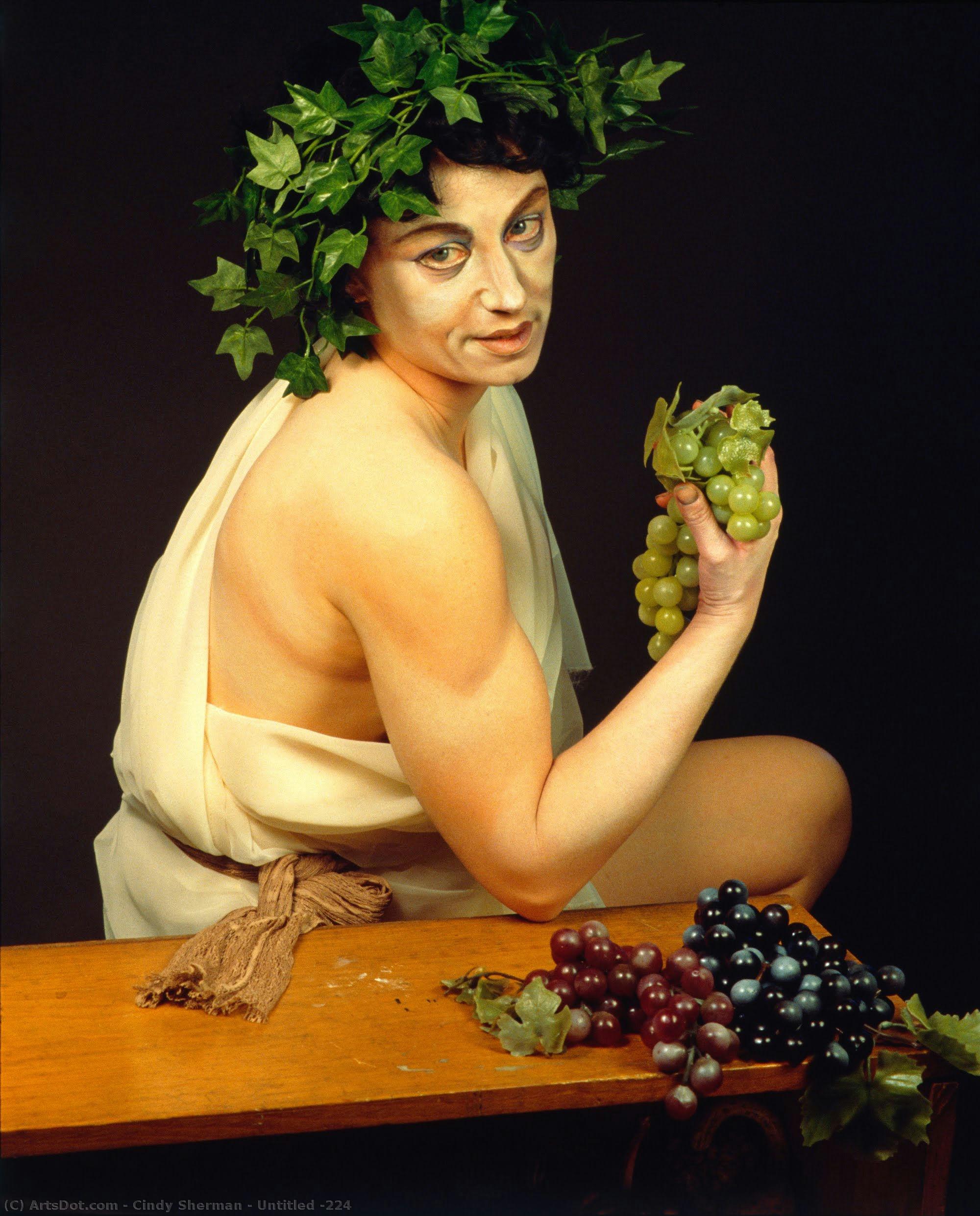
Untitled #224
 Black and White Photography
- Photo
- Contemporary Art
 1990
1990- Contemporary
 121.0 x 96.0 cm
 The Feminist Institute
A haunting black and white photograph of a woman with a crown of leaves and grapes by Cindy Sherman captures a sense of profound unease, inviting you to explore this powerful deconstruction of identity.
 Читати далі
Ціндлі Шерман – американська фотографістка, відома своїми трансформаційними автопортретами. Вона деконструює ідентичність та гендерні стереотипи через знакові серії, такі як "Untitled Film Stills".
Мистецький твір, представлений на цій сторінці, захищений законом про авторське право, що унеможливлює легальне створення або продаж його ідентичної репродукції. Цей захист забезпечується відповідно до міжнародних угод, таких як Бернська конвенція та національним законодавством, зокрема положеннями, що викладені в Законодавство США про авторське право — Розділ 17. Всі права захищені. Будь-яке використання без дозволу заборонено.
Як шанобливу та законну альтернативу, ми пропонуємо унікальні картини ручної роботи, створені натхненням від оригіналу. Наші досвідчені професійні художники ретельно вивчають стиль, настрій та художню сутність оригіналу, щоб створити новий, неповторний твір, який викликає ті ж почуття, — залишаючись при цьому самобутнім творінням.
Цей метод повністю відповідає нормам авторського права, оскільки він не передбачає копіювання чи дублювання захищеного твору мистецтва. Натомість це творче переосмислення — створення нового малюнка під впливом оригіналу, який не є його точним відтворенням.
Олійная репродукція ручної роботи
Написана вручну олією на полотні у вашому розмірі та рамі, виготовлена на замовлення нашими художниками. ( Перейти до друку Перейти до цифрових зображень)




































Стандартний розмір
на замовлення
CM
INCH
Обирайте з наших стандартних розмірів, що відповідають оригінальним пропорціям твору мистецтва.
Loading sizes...

ширина
висота
Введіть необхідну ширину та висоту, щоб картина підійшла до вашої рами або стіни. Оскільки це ручний розпис, для розміру іншої форми художник може написати трохи більше навколо картини або трохи обрізати її — вибір за вами. Перед початком роботи ми надішлемо вам цифровий макет для затвердження. Зображення, показане на цій сторінці, не є реальним результатом — лише макет відображає майбутній вигляд.
Приклади можливих змін: замінити обличчя на фото клієнта; додати домашню тварину (наприклад, замінити кота на собаку); додати приховане повідомлення на фоні; змінити ландшафт або елементи фону.
Після оформлення замовлення команда TopImpressionists.com зв'яжеться з клієнтом електронною поштою для отримання інструкцій та надасть попередній макет
Після оформлення замовлення команда TopImpressionists.com зв'яжеться з клієнтом електронною поштою для отримання інструкцій та надасть попередній макет
Доставка по всьому світу () за 3–4 тижні замість стандартних 5 тижнів. (23 Жовтень). Без жодних компромісів у якості.

Безкоштовна експрес-доставка по всьому світу

Високоякісне лляне полотно

Повне страхове покриття доставки

Гарантія повернення митних зборів

Гарантія точного відтворення кольорів

Політика повернення протягом 100 днів (лише у разі виявлення дефектів)

Гарантія повернення 100% коштів

Знижка на оптові замовлення
 Скляний варіант доступний лише для розмірів до 110 см

Untitled #224
Техніка репродукції
Розмір репродукції
-


Загальна вартість
₴ 12093
A Shadowed Feast
The camera captures a moment frozen in monochrome, where a woman sits amidst an abundance of fruit that feels both heavy and unsettling. A crown of leaves rests upon her head, its organic edges pressing against her brow as she holds clusters of grapes with a grip that seems more burdened than celebratory. Around her, the table is scattered with more dark, ripe bunches, their textures rendered in sharp, silvered tones. There is a palpable sense of unease in her gaze, an expression that drifts away from the viewer toward something unseen and perhaps troubling. The light falls across the scene in stark contrasts, highlighting the smooth skin of the fruit against the deeper shadows of the composition.
Every element in this frame feels carefully placed to disrupt a sense of classical peace. While the presence of grapes and leaves suggests a pastoral or mythological setting, the atmosphere remains thick with tension. The woman does not appear as a figure of leisure, but rather as someone caught in a state of profound discomfort. This tension pulls at the edges of the image, making the natural elements feel strangely artificial, as if the entire scene is a carefully constructed stage where the actors are momentarily lost in their own private anxieties.
The Weight of Representation
This work emerges from a period of intense exploration into how images are built and perceived. Created in 1990, it belongs to a series that looks back at the traditions of historical portraiture only to pull them apart. The composition alludes to much older visual languages, specifically referencing the way masters like Caravaggio depicted figures such as his Young Sick Bacchus. By using these familiar motifs—the crown, the fruit, the classical arrangement—the photograph engages with a long history of painting, yet it does so through the lens of contemporary photography and deliberate artifice.
The use of black and white strips away the distraction of color, forcing the eye to focus on the raw textures of the leaves, the skin, and the woman's face. This technique emphasizes the construction of the scene, making the props and costumes feel visible and intentional. It is a study in how identity can be performed through external objects. The discomfort felt by the subject becomes a tool to question the very idea of the portrait, turning a moment that looks like a classical painting into a modern interrogation of what it means to be seen.
Запитання та відповіді
Хто продає написані вручну копії «Untitled #224» Цінді Шерман?
«Untitled #224» доступна як репродукція олією ручного розпису на лляному полотні. Замовлення можна оформити на сторінці Репродукція ручного письма, вибравши відповідний розмір.
До якого стилю належить "Untitled #224"?
«Untitled #224» — це твір у стилі Contemporary Art. Назва течії вказує на художню традицію, до якої належить цей твір.
Яку кольорову гармонію демонструє «Untitled #224» Цінді Шерман?
«Untitled #224» Цінді Шерман демонструє Strong Color Unity колірну гармонію.
Біографія митця
A Deconstruction of Identity: The World of Cindy Sherman
Cindy Sherman, народжена 19 Грудня 1954 року в Глен Ріджі, штат Нью-Джерсі, – це американська фотографістка, чия робота переосмислює саму концепцію самопортрету та ідентичності. Вона не прагнула просто зобразити зовнішність; її мистецтво полягало у розкритті штучності того, ким ми є, виявляючи вплив медіа, соціальних очікувань та самого факту спостереження на формування особистості. Раннє дитинство в сім’ї з суворими правилами – батько-інженер і мати, яка працювала з дітьми, що мали труднощі з навчанням – заклало основу для її уваги до соціальних динамік та тиску конформизму, які пронизують її творчість.Від Живопису до Фотографічної Виразності
Початок мистецького шляху Sherman пов’язаний із живописом у Buffalo State University в 1972 році. Однак вона швидко усвідомила обмеження цього виду мистецтва, відчуваючи неможливість просто відтворювати реальність. Фотографія стала для неї іншим мовою – засобом безпосереднього взаємозв’язку з репрезентацією та маніпулюванням образами. Це стало поворотним моментом у її творчості, що призвело до створення серії *Bus Riders* (1976). У цій серії Sherman використовувала маски та костюми, спостерігаючи за людьми в громадському транспорті, намагаючись поглибити розуміння соціальних ролей. Проте, саме серія *Untitled Film Stills* (1977-1980) принесла їй міжнародне визнання. У ці 70 чорно-білих фотографіях Sherman постає в ролях архетипових жіночих персонажів з фільмів нуар і популярних кінострічок. Це не були копії, а скоріше емоції – ретельно продумані сцени, що натякають на історії без повного їх розкриття. Кожна фотографія викликає відчуття знайомості та тривоги, змушуючи глядача ставити під сумнів власні уявлення про гендерні ролі та кінематографічні тропи. Серія не була просто про цих персонажів; вона стала коментарем до самого процесу репрезентації, розкриваючи, як образи формують наше розуміння ідентичності.Дослідження Архетипів та Соціальних Ролей
У 1980-х роках та пізніше Sherman продовжувала досліджувати теми штучної ідентичності та соціальних очікувань у різних серіях робіт. *Centerfolds & Fashion Series* безпосередньо критикували об’єктивацію жінок у медіа, відтворюючи образи з журналів модних розгорнутих сторінок, але з критичним поглядом. *Fairy Tales and Disasters* (середини-кінець 1980-х) перенесла її в більш фантастичний та моторошний простір, використовуючи протези та складний макіяж для створення зображень, що кидають виклик традиційним уявленням про красу та розповідь. *History Portraits* (початок 1990-х) були особливо вражаючими – це були реконструкції історичних картин з помітними, але важливими змінами, які ставили під сумнів автентичність і динаміку влади в традиційних портретах. Sherman не просто копіювала ці роботи; вона їх інтерпретувала, розкриваючи їх штучність та викликуючи саму концепцію "видатних" творів мистецтва. Пізніша робота продовжувала цю тенденцію, часто використовуючи великі кольорові фотографії та цифрову обробку, щоб ще більше розмити межі між реальністю та ілюзією.Впливи та Наслідки
Творчість Sherman глибоко вкорінена в концептуальному мистецтві, де пріоритетом є ідея над традиційними навичками. Вона значною мірою черпає натхнення з феміністської теорії, досліджуючи критику репрезентації та чоловічого погляду, особливо як це було сформульовано в есе Лорри Малвей "Візуальне задоволення і наративний кінематограф". Концепція "бути-поглянутим" – об’єктивацію жінок у кінематографічних структурах – стала центральною темою у роботах Sherman. Хоча важко точно визначити всі безпосередні впливи, можна помітити ехо сюрреалізму в її дослідженні підсвідомості та дисонуючих зображень. Її вплив на сучасне мистецтво був глибоким. Вона вважається ключовою фігурою "Покоління фотографій", групи художників, які досліджували вплив масових медіа на культуру. Вона отримала визнання у вигляді престижних нагород, таких як Макартурська стипендія (1995), і її фотографії знаходяться в провідних музеях світу, включаючи MoMA та Nelson-Atkins Museum of Art. Іноваційний підхід Cindy Sherman до автопортрету не лише переосмислив цей жанр, але й продовжує провокувати критичний діалог про ідентичність, репрезентацію та всепоглинаючу силу зображень у формуванні наших сприйменів світу. Її роботи залишаються надзвичайно актуальними сьогодні, спонукаючи постійні дискусії про автентичність, виставу та еволюційну природу самості в медіа-замішеному суспільстві.
Цінді Шерман
1954 - , США
Довідкова інформація
- Artistic Movement Or Style: Концептуалізм, Фотографія
- Artists Or Movements Influenced By This Artist: ['Pictures Generation']
- Artists Who Influenced This Artist: ['Лаура Мулвей']
- Date Of Birth: 1954-01-19
- Full Name: Cindy Sherman
- Nationality: Американка
- Notable Artworks:
- Untitled Film Stills
- Bus Riders
- Centerfolds
- Fairy Tales
- History Portraits
- Place Of Birth (City And Country): Glen Ridge, USA
Схожі статті

Shadow & Soul: Why Black & White Photography Remains the Ultimate Power Move in Modern Art
Discover why black & white photography remains a powerful force in contemporary art. Explore the impact of light, shadow, and texture through a visual journey of monochrome mastery and learn how to elevate your space with timeless grayscale aesthetics.

Monochrome Visions: Exploring the Aesthetic & Historical Significance of Black & White Photography
Explore the rich history & artistic power of black and white photography. From early techniques to iconic masters like Ansel Adams, discover why monochrome continues to captivate art lovers today. Expert insights for collectors.

Топ-10 шедеврів у білих тонах: мистецтво світла та простору від TopImpressionists
Відкрийте для себе 10 легендарних картин, де білий колір стає головним героєм! Історія Моне, Ван Гога та інших майстрів. Купіть репродукції шедеврів імпресіонізму на TopImpressionists.com – мистецтво для вашого дому.

Топ-10 шедеврів у відтінках чорного: мистецтво та декор з TopImpressionists
Відкрийте силу чорного кольору в мистецтві! Топ-10 шедеврів від Ван Гога, Мунка та інших геніїв. Історія створення, техніки живопису та натхнення для вашого декору з TopImpressionists. Дослідіть колекцію онлайн!

Топ-10 шедеврів живопису в чорних тонах: історія, мистецтво та декор від TopImpressionists
Відкрийте для себе 10 найвідоміших картин у чорних тонах! Історія, техніка та емоції від TopImpressionists. Романтизм, готика, експресіонізм – шедеври живопису онлайн. Купіть репродукцію мрії на TopImpressionists.com!
Досліджуйте твори мистецтва, впорядковані за темами, стилями та характеристиками.


