

Shown: · With its frame:
 Переглянути в інтер'єрі
 Надіслати як листівку
 Поділитися
 Деталі витвору
 Посібник

 Завантажити
 Схожі екземпляри
 Рентгенівське дослідження
 Слайд-шоу
 Q&A
Q&A Статистика
 Олія на полотні
- Настінний декор
- Impressionist Painting
 1869
1869- — XIX століття
 73.0 x 92.0 cm
₴ 12059
Олійная репродукція ручної роботи
Написана вручну олією на полотні у вашому розмірі та рамі, виготовлена на замовлення нашими художниками. ( Перейти до друку Перейти до цифрових зображень)
Size
·Стандартний розмір
індивідуальний розмір
CM
INCH
Обирайте з наших стандартних розмірів, що відповідають оригінальним пропорціям твору мистецтва.
Loading sizes...

ширина
висота
Введіть необхідну ширину та висоту, щоб картина підійшла до вашої рами або стіни. Оскільки це ручний розпис, для зміни пропорцій художник може дописати трохи більше по краях або дещо обрізати композицію — вибір за вами. Перед початком роботи ми надішлемо вам цифровий макет для затвердження. Зображення, показане на цій сторінці, не є реальним результатом — лише макет відображає майбутній вигляд.
 Читати далі
Finish
·
White ₴1

Blurside ₴1

Extended ₴1

P118B ₴10

P118H ₴10

P118W ₴10

P438Z ₴10

P508JH ₴12

P508YH ₴12

P805H ₴10

P805Z ₴10

P919BZ ₴10

P919G ₴10

P919XJ ₴10

P959ZH ₴10

P968JZ ₴12

W106C ₴8

W218G ₴10

W218JH ₴8

W218Y ₴10

W307PJ ₴10

W316G ₴10

W316PJ ₴8

W316Y ₴10

W398PJ ₴8

W4111J ₴10

W500HY ₴15

W500JH ₴15

W692G ₴12

W849H ₴8

W940BG ₴15

W953PJ ₴8

H24-GOLD ₴30

H24-SILVER ₴30

H36-GOLD ₴45

H36-SILVER ₴45
Shipped in a protective tube, ready for your own framer.
Above 105 cm the frame is shipped as a kit for a professional framer — read the details.
Extras
optionalWhat do the extras include?
Examples of what can be changed: Replace face with customer photo; Add pet (e.g., replace cat with dog); Include hidden message in background; Change background landscape or elements.
After order, TopImpressionists.com team will email client for instructions and provide a mockup preview
After order, TopImpressionists.com team will email client for instructions and provide a mockup preview
Доставка по всьому світу () за 3–4 тижні замість стандартних 5 тижнів. (30 Жовтень). Без жодних компромісів у якості.
Захисний лак
Етикетка експоната
Деталі гравірування на бронзовій табличці
This elegant plaque features the artist's name and the title of the artwork, finely engraved for a timeless presentation.
It is made from bronze with a refined, elegant finish. The text is precisely laser-engraved for a sharp and permanent result. Measuring 9x2 cm, the plaque is compact yet easy to read. It's built to be durable and scratch-resistant, offering a professional, museum-quality look. Mounting is simple thanks to the included adhesive backing.
Деталі прозорої акрилової таблички
The plaque includes essential engraved details such as the artist's name, the title of the artwork, the date it was created, the type of media used-like oil on canvas or watercolor-a brief description of the piece, and a QR code that links to the complete artwork information.
It is crafted from clear acrylic, offering a sleek, modern appearance. The text is UV-engraved in black to ensure strong visual contrast. With a size of 10x15 cm, it ensures optimal readability. It comes equipped with two metal hooks for secure wall mounting. The plaque is designed to be weather-resistant, making it suitable for various environments, and it includes interactive features that work seamlessly with smartphone scanning.
Деталі чорної акрилової таблички
This elegant plaque includes engraved information such as the artist's name, the title of the artwork, the date it was created, the type of media used (like oil on canvas or watercolor), a short description of the artwork, and a QR code for quick access to more information.
The plaque itself is made from refined black acrylic with a premium finish. The text is laser-engraved in white for high contrast and readability. Its size is 10x15 cm, designed to be easy to read. It comes with two metal hooks for professional mounting. The design is sleek and fits any interior style. It is also weather-resistant and durable, with built-in digital integration for mobile compatibility.
Скляний варіант доступний лише для розмірів до 110 см
 Скляний варіант доступний лише для розмірів до 110 см
- Безкоштовна експрес-доставка по всьому світу
- Високоякісне лляне полотно
- Повне страхове покриття доставки
- Гарантія повернення митних зборів
- Гарантія точного відтворення кольорів
- Політика повернення протягом 100 днів (лише у разі виявлення дефектів)
- Гарантія повернення 100% коштів
- Пропозиція на оптові замовлення


Опис експоната
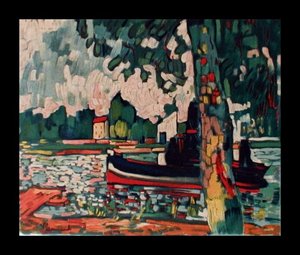
Experience Claude Monet's 'Bathing at La Grenouillère'! This Impressionist masterpiece captures a lively summer scene by the Seine, showcasing vibrant colors and light. A delightful glimpse into leisure time in 1869.
Біографія митця
Відкрийте світ Клода Моне, майстра імпресіонізму, відомого здатністю вловити миттєве світло та колір у таких знакових пейзажах, як «Водяні лілії» та «Стіжки».
About the painting
A Moment Frozen in Light: Exploring Monet’s “Bathing at La Grenouillère”
Claude Monet's "Bathing at La Grenouillère," painted in 1869, isn’t merely a depiction of a summer afternoon by the Seine; it’s an immersive experience. This Impressionist masterpiece captures a fleeting moment of leisure and camaraderie, inviting us to step into a vibrant tableau brimming with life, light, and the subtle poetry of everyday existence. The painting, measuring 73 x 92 cm, resides within the esteemed collection of The National Gallery in London, a testament to its enduring artistic merit and historical significance.
The scene unfolds at La Grenouillère, a popular boating and bathing resort near Bougival – a place that served as a gathering spot for artists, writers, and Parisians seeking respite from the city’s bustle. Monet, alongside his contemporary Pierre-Auguste Renoir, meticulously documented this lively locale, each artist offering their unique interpretation of the same captivating subject. Monet's version stands out for its remarkably free handling of color and brushwork, a hallmark of his revolutionary approach to capturing the ephemeral qualities of light and atmosphere. The painting is not a precise record but rather an impression – a distillation of Monet’s sensory experience at that particular moment.
The Dance of Color and Light
Monet's masterful technique lies in his deliberate use of broad, unblended strokes to suggest the boats moored in the shadows. These areas are rendered with a rich, dark palette, creating a sense of depth and volume while simultaneously allowing the light to reflect off their surfaces. The water itself is alive with shimmering dots – an innovative technique that mimics the dappled sunlight filtering through the ripples. This seemingly simple method creates a remarkable illusion of movement and vibrancy, drawing the viewer’s eye across the canvas.
Observe how Monet employs color not to represent reality exactly but to convey its *feeling*. The greens and blues are layered with hints of yellow and orange, capturing the warmth of the sun and the reflected light on the water. The figures themselves are rendered in loose, expressive strokes, their forms dissolving into the surrounding atmosphere – a characteristic feature of Impressionism that prioritized capturing the subjective experience of seeing over objective representation.
A Snapshot of Parisian Life
“Bathing at La Grenouillère” offers a fascinating glimpse into 19th-century Parisian society. The painting depicts thirteen individuals engaged in various activities: some strolling along the bank, others sitting and chatting, while still others are immersed in the water. The diversity of attire – from elegant dresses to casual boating outfits – reflects the social stratification of the time, with a mix of wealthy patrons and working-class visitors enjoying the resort’s amenities.
Beyond its social context, the painting holds symbolic weight. La Grenouillère represented a departure from traditional artistic subjects—the grand historical scenes or mythological narratives favored by earlier generations. Monet's choice to depict this seemingly ordinary scene was a deliberate act of rebellion against academic conventions, aligning him with the burgeoning Impressionist movement’s focus on capturing modern life and its fleeting moments.
Bringing “Bathing at La Grenouillère” into Your Space
TopImpressionists offers meticulously hand-painted reproductions of Claude Monet's "Bathing at La Grenouillère," allowing you to experience the magic of this iconic painting in stunning detail. Our skilled artists faithfully recreate Monet’s vibrant palette and expressive brushwork, ensuring that your reproduction captures the essence of the original while retaining its own unique beauty. Whether adorning a living room wall or gracing an office space, this artwork will infuse any environment with a sense of tranquility, light, and artistic inspiration.
Consider how the painting’s luminous quality can complement your interior design scheme. The interplay of light and shadow, the vibrant colors, and the evocative subject matter create a captivating focal point that invites contemplation and adds a touch of Impressionistic charm to any room. Explore our range of sizes and framing options to find the perfect reproduction for your personal space – a timeless piece of art that will be cherished for generations to come.
Питання та відповіді
Чи можу я побачити «Bathing at La Grenouillere,» роботи Клод Моне на власній стіні перед покупкою?
Для твору "Bathing at La Grenouillere," доступна функція попереднього перегляду в доповненій реальності: на сторінці Перегляд в AR ви можете побачити його у власному інтер'єрі за допомогою сумісного пристрою.
Який основний відтінок пронизує «Bathing at La Grenouillere,» роботи Клод Моне?
Переважаючий відтінок твору «Bathing at La Grenouillere,» роботи Клод Моне — Спектр від зеленого до фіолетового. Цей колір є основою всієї палітри.
Кольори у творі "Bathing at La Grenouillere," виглядають насиченими чи ніжними?
Кольори в «Bathing at La Grenouillere,» роботи Клод Моне мають Збалансований насиченість.
Quick facts and art quiz
About Клод Моне

Клод Моне
1840 - 1926, Франція
Біографія митця
Життя, занурене у світло: Світ Клода Моне
Оскар-Клод Моне, ім'я якого стало синонімом імпресіонізму, був не просто художником пейзажів; він був хронікером швидкоплинних моментів, поетом світла та кольору. Народившись у Парижі 14 листопада 1840 року, він пережив несподіваний поворот долі, коли у віці п'яти років його родина переїхала до Гавра, Нормандія. Хоча батько спочатку пророкував юному Клоду комерційну кар'єру, його природний художній талант швидко заявив про себе, вперше проявившись у вугільних карикатурах, які продавалися місцевим жителям — це стало свідченням як його майстерності, так і підприємницького духу. Однак саме зустріч з Еженом Буденом стала вирішальною. Буден не просто навчив Моне малювати; він прищепив йому революційну ідею живопису en plein air — безпосередньо з натури — практику, яка визначила всю його творчу подорож.
Формальна освіта Моне розпочалася в Парижі, спочатку в Académie Suisse, а пізніше під керівництвом Шарля Глера. Саме тут він зав'язав міцну дружбу з колегами-художниками, такими як Огюст Ренуар — зв'язок, побудований на спільних мистецьких пошуках та бажанні звільнитися від обмежень традиційного академічного живопису. Його ранні роботи, хоча й демонстрували технічну вправність, ще не мали того самобутнього голосу, який невдовзі стане його візитівкою. За смугою творчого становлення настав період потрясінь: Франко-прусська війна змусила Моне шукати притулку в Лондоні, де він заглибився у вивчення робіт англійських майстрів пейзажу, зокрема Дж. М. В. Тернера, вбираючи їхні атмосферні ефекти та інноваційне використання кольору.
Народження естетичної революції
Після повернення до Франції Моне став центральною постаттю зростаючого мистецького повстання. Незадоволений консервативними стандартами Салону, він об'єднав зусилля з іншими однодумцями для організації незалежних виставок. Виставка 1874 року стала переломним моментом не лише для Моне, а й для всього світу мистецтва. Саме тут була представлена його картина «Impression, soleil levant» (Враження, схід сонця) — туманне зображення гавані Гавра на світанку, — від назви якої походить і зневажливий термін «імпресіюнізм». Проте назва прижилася, перетворившись на знак пошани для руху, що прагнув зафіксувати суб'єктивне *враження* від сцени, а не її точне відтворення.
Фірмовий стиль Моне розцвів саме в цей період: вільні, помітні мазки, яскраві та часто незмішані кольори, що накладаються поруч (техніка, відома як «розривчастий колір»), та непохитна зосередженість на вловлюванні ефемерних якостей світла. Він невпинно дотримувався практики plein air, працюючи швидко, щоб зафіксувати свої миттєві сприйняття, перш ніж зміна умов змінить сцену. Ця відданість була не просто спробою змалювати те, що він *бачив*, а скоріше те, що він *відчував* у відповідь на побачене — радикальний відхід від мистецьких канонів.
Живерні: Рай світла та відображень
У 1883 році Моне оселився в Живерні, на північний захід від Парижа, створивши дім і сад, що стали для нього водночас і святилищем, і найбільшим джерелом натхнення. Він ретельно перетворив свою садибу на вишуканий рай з екзотичними квітами, плакучими вербами та, найвідомішою частиною, ставом із водяними ліліями, через який перекинуто японський місток. Це не був просто декоративний сад; це була жива лабораторія, де Моне міг вивчати вплив світла на воду, листя та відображення в контрольованих умовах.
Останні десятиліття свого життя він майже повністю присвятив малюванню ставка з ліліями у Живерні. Він розпочав монументальну серію «Водяні лілії» (Nymphéas), створюючи величезні полотна, що зображували поверхню ставка як постійно мінливий гобелен кольору та світла. Це були не просто картини квітів; це був досвід занурення, покликаний охопити глядача світом безтурботної краси та споглядальної тиші. Масштаб цих робіт захоплює дух, розсуваючи межі традиційного живопису та передвіщаючи появу абстрактного експресіонізму.
Спадщина: Незгласимий вплив на історію мистецтва
Вплив Клода Моне на історію мистецтва неможливо переоцінити. Він не був лише засновником імпресіонізму; він докорінно змінив те, як художники сприймають і представляють навколишній світ. Його акцент на суб'єктивному досвіді, прихильність до живопису plein air та інноваційні техніки проклали шлях для дослідження абстракції та нерепрезентативних форм у сучасному мистецтві.
За життя Моне досяг значного комерційного успіху — рідкість для авангардних митців його епохи. Його творчість продовжує викликати трепет і захоплювати аудиторію по всьому світу, закріплюючи за ним місце однієї з найважливіших постатей у західному мистецтві. Він помер 5 грудня 1926 року, залишивши по собі спадщину, що резонує крізь покоління художників та поціновувачів мистецтва. Значні колекції його шедеврів зберігаються в престижних інституціях, таких як Музей д'Орсе та Музей Мармоттанен Моне в Парижі, гарантуючи, що його бачення й надалі освітлюватиме світ.
Ключові художні техніки
- Живопис на відкритому повітрі (Plein Air): Центральний елемент його розвитку, що дозволяв безпосередньо спостерігати за світлом та атмосферою.
- Розривчастий колір: Накладання дрібних мазків чистого кольору поруч для оптичного змішування.
- Серійний живопис: Зображення одного й того ж сюжету за різних умов освітлення та погоди, що демонструє трансформаційну силу часу та світла.
Quick facts about Клод Моне
- Відомі Роботи:
- Impression, Sunrise
- Water Lilies
- Дата Народження: 14 листопада 1840
- Дата Смерті: 5 грудня 1926
- Місце Народження: Париж, Франція
- Національність: Француз
- Повне Ім'Я: Оскар-Клод Моне
- Рухи, На Які Вплинув: ['Сучасне мистецтво']
- Художники, Що Вплинули:
- Ежен Буден
- Ж.М.В. Тернер
- Художній Рух/Стиль: Імпресіонізм



Досліджуйте твори мистецтва, впорядковані за темами, стилями та характеристиками.


Клод Моне
Bathing at La Grenouillere,
() ·
With its frame: · Hand-painted in oil on linen
Total