


 Переглянути в інтер'єрі
 Надіслати як листівку
 Поділитися
 Деталі витвору
 Посібник

 Завантажити
 Схожі екземпляри
 Рентгенівське дослідження
 Слайд-шоу
 Статистика
PAYSAGE AVEC UNE STATUE DANS UNE NICHE


Donation under usufruit to the Louvre Museum in 1983.
 Розгорнути текст
Гюберт Роберт (1733-1808): французький художник, відомий своїми епічними пейзажами та фантастичними картинами руїн. Його мистецтво – поєднання історії, розбрату та уяви!
Гікле / Художній принт
Друк جيкле або на полотні музейної якості з оперативним виготовленням та різноманітними варіантами фінішної обробки. ( Замовити картину ручної роботи Перейти до цифрових зображень)




P118B ₴10

P118H ₴10

P118W ₴10

P438Z ₴10

P508JH ₴12

P508YH ₴12

P805H ₴10

P805Z ₴10

P919BZ ₴10

P919G ₴10

P919XJ ₴10

P959ZH ₴10

P968JZ ₴12

W106C ₴8

W218G ₴10

W218JH ₴8

W218Y ₴10

W307PJ ₴10

W316G ₴10

W316PJ ₴8

W316Y ₴10

W398PJ ₴8

W4111J ₴10

W500HY ₴15

W500JH ₴15

W692G ₴12

W849H ₴8

W940BG ₴15

W953PJ ₴8




Стандартний розмір
індивідуальний розмір
CM
INCH
Обирайте з наших стандартних розмірів, що відповідають оригінальним пропорціям твору мистецтва.
Loading sizes...

ширина
висота
Введіть необхідну ширину та висоту, щоб принт ідеально підійшов до вашої рами або стіни. Принт можна лише обрізати, але не можна зробити більшим за оригінал, тому при зміні пропорцій частина зображення буде втрачена. Перед друком ми надсилаємо вам цифровий макет для затвердження. Зображення на цій сторінці не відображає реальну обрізку — її можна побачити лише на макеті.
Доставка по всьому світу () за 2 тижні замість стандартних 4/5 тижнів. (25 Жовтень)

Безкоштовна експрес-доставка по всьому світу

Високоякісне лляне полотно

Повне страхове покриття доставки

Гарантія повернення митних зборів

Гарантія точного відтворення кольорів

Політика повернення протягом 100 днів (лише у разі виявлення дефектів)

Гарантія повернення 100% коштів

Пропозиція на оптові замовлення
 Скляний варіант доступний лише для розмірів до 110 см

PAYSAGE AVEC UNE STATUE DANS UNE NICHE
Гікле / Художній принт
Розмір репродукції
-


Підсумкова вартість
₴ 3097
A Vision of Decay and Remembrance: Hubert Robert’s Landscape with Statue in Niches
Hubert Robert, a name synonymous with evocative landscapes and the romantic allure of ruins, stands apart as one of the most distinctive figures in 18th-century French art. Born in Paris in 1733, his artistic journey unfolded against a backdrop of dramatic stylistic shifts—from the opulent Rococo to the burgeoning Neoclassicism—yet he steadfastly pursued a singular vision: capturing not merely what was seen but what lingered within memory and imagination.
Robert’s oeuvre is defined by an obsession with ruins, transforming crumbling monuments into canvases brimming with atmospheric drama. Unlike many of his contemporaries who sought to glorify grandeur and order, Robert deliberately confronted the inevitable passage of time, presenting scenes that simultaneously celebrated beauty and acknowledged mortality. This preoccupation isn't simply aesthetic; it reflects a broader intellectual current—the Romantic fascination with sublime landscapes and the melancholic contemplation of history’s fading glories.
Romanticism Meets Neoclassicism: Robert’s Unique Synthesis
Robert skillfully blended elements of both Romanticism and Neoclassicism, achieving an unparalleled effect. The Romantic impulse to infuse paintings with emotion and imagination is evident in his masterful depiction of light and shadow—particularly the diffused glow that illuminates the crumbling stone walls and foliage of his landscapes. Simultaneously, he adheres to neoclassical principles of composition and perspective, grounding these visions in a carefully constructed framework.
Considered “the painter of ruins,” Robert’s technique is characterized by visible brushstrokes—a deliberate rejection of the polished surfaces favored by earlier artists—that convey spontaneity and immediacy. He employs glazing techniques to subtly modulate color, creating luminous washes that heighten the sense of atmosphere. The artist meticulously renders architectural details with precision while simultaneously allowing for textural variation, mirroring the organic decay he portrays.
Symbolism Beyond Decoration: Echoes of Antiquity
More than just a visual spectacle, Robert’s paintings resonate with profound symbolic meaning. The ruins themselves serve as emblems of time's relentless march and the futility of human ambition—yet they are also imbued with an aura of timeless beauty. Nestled within an arched niche stands a statue, representing classical ideals of artistic excellence and moral virtue—a deliberate allusion to the grandeur of ancient Greece and Rome.
The figures depicted in Robert’s landscapes—often solitary wanderers contemplating crumbling ruins—are imbued with a sense of melancholy contemplation. They embody the Romantic spirit's preoccupation with emotion and introspection, inviting viewers to ponder the relationship between humanity and history. Ultimately, Robert’s art transcends mere decoration; it offers a meditation on beauty, decay, and the enduring legacy of civilization.
Питання та відповіді
Що зображено на творі "PAYSAGE AVEC UNE STATUE DANS UNE NICHE"?
«PAYSAGE AVEC UNE STATUE DANS UNE NICHE» роботи Гюберт Роберт зображує: ruins, sculpture, landscape, architecture, atmosphere, classical art, decay.
Де я можу купити написану вручну репродукцію твору «PAYSAGE AVEC UNE STATUE DANS UNE NICHE» роботи Гюберт Роберт?
Ви можете замовити написану вручну репродукцію твору «PAYSAGE AVEC UNE STATUE DANS UNE NICHE» роботи Гюберт Роберт безпосередньо на його сторінці Репродукція ручного письма олією: олійна репродукція ручного розпису на лляному полотні, під замовлення.
Чи можу я побачити рентгенівський знімок «PAYSAGE AVEC UNE STATUE DANS UNE NICHE» роботи Гюберт Роберт?
Рентгенівський зріз «PAYSAGE AVEC UNE STATUE DANS UNE NICHE» роботи Гюберт Роберт представлений на сторінці Рентгенівське дослідження твору: це інтерактивне дослідження зображення крізь одинадцять оптичних шарів.
Біографія митця
Hubert Robert: A Painter of Ruins and Visions
Hubert Robert, a name inextricably linked to the evocative beauty of decaying grandeur, stands as a singular figure in 18th-century French art. Born in Paris in 1733, his life unfolded against a backdrop of dramatic artistic shifts – from the opulent excesses of the Rococo to the burgeoning ideals of Neoclassicism – and ultimately, through the tumultuous upheaval of the French Revolution. Robert wasn’t merely an observer of ruins; he was a visionary interpreter, skillfully blending meticulous observation with boundless imagination to conjure scenes that resonated with both a poignant nostalgia for the past and a tantalizing anticipation of the future. His artistic journey began within the structured confines of formal training, initially under the tutelage of sculptor Michel-Ange Slodtz, who recognized Robert’s innate talent but wisely steered him towards painting, sensing his true calling lay in capturing the ephemeral dance of light, atmosphere, and the subtle poetry of form.Roman Reveries: Shaping an Artistic Identity
The defining moment in Robert's artistic development arrived with his extended sojourn to Rome between 1754 and 1765. This period wasn’t simply a vacation; it was a profound immersion into a world saturated with history, architectural magnificence, and the ghosts of antiquity. Accompanying Étienne-François de Choiseul, Robert found himself enveloped in the heart of the Roman Empire's legacy – its crumbling temples, majestic arches, and overgrown gardens became his constant studio. He didn’t merely replicate what he saw; rather, he meticulously studied, reimagined, and imbued these ancient spaces with a distinctly melancholic beauty. His early works, often categorized as *capricci*, reflected this approach—fantastical compositions that juxtaposed classical ruins with contemporary life, creating an intriguing dialogue between past and present. A pivotal influence during this time was Giovanni Paolo Panini, whose mastery of landscape and architectural detail profoundly shaped Robert’s technique. However, Robert quickly transcended mere imitation, developing a unique style characterized by extraordinary precision, atmospheric perspective, and a remarkable sensitivity to the interplay of light and shadow. He wasn't simply painting ruins; he was capturing time itself, distilling the essence of transience and the enduring power of memory into his canvases. His extensive sketchbook collection from this period offers invaluable insights into his artistic process – detailed studies of Roman landmarks like the Villa d’Este and Caprarola, revealing a keen eye for architectural nuance and landscape composition.Parisian Acclaim and Royal Patronage
Robert's triumphant return to Paris in 1765 marked a significant elevation in his career. He swiftly gained recognition within the artistic circles of the city, securing admission to the Académie Royale de Peinture et de Sculpture with “The Port of Rome, Ornamented with Different Monuments of Architecture, Ancient and Modern.” This success was followed by a series of exhibitions at the Salon, where his evocative depictions of ruins and picturesque landscapes captivated audiences. The critic Denis Diderot famously lauded Robert’s ability to transport viewers to another time and place, recognizing the profound emotional resonance of his work. This widespread acclaim led to prestigious commissions – including decorative projects for grand residences and appointments as “Designer of the King's Gardens” and later, “Keeper of the King’s Pictures.” He became a highly sought-after artist, not only for his easel paintings but also for his innovative designs for gardens and palatial interiors. Robert’s work resonated deeply with the prevailing taste for *capriccio* painting – a genre that appealed to collectors fascinated by history, archaeology, and the romantic allure of the picturesque – yet he infused it with a distinctive sensibility, elevating it beyond mere decorative art.Revolution, Resilience, and Lasting Legacy
The French Revolution presented an unprecedented challenge for Robert, forcing him to navigate a period of immense political instability and social upheaval. While many artists struggled to adapt to these turbulent times, Robert demonstrated remarkable resilience, continuing to paint prolifically despite the dangers and uncertainties surrounding him. He even endured imprisonment during the Reign of Terror – a harrowing experience that undoubtedly informed his later works exploring themes of confinement and vulnerability. Following the Revolution, Robert was appointed curator of the newly established Muséum Central des Arts—the future Musée du Louvre—a testament to his expertise and dedication to preserving France’s artistic heritage. He played a crucial role in organizing and cataloging the museum's vast collection, ensuring that its treasures were safeguarded for generations to come. Hubert Robert died in Paris in 1808, leaving behind an extraordinary body of work – over 300 paintings, drawings, and engravings – that continues to captivate viewers with its blend of historical accuracy, imaginative vision, and profound emotional depth. His legacy extends beyond his technical mastery; he pioneered a genre of painting that celebrated both the beauty of decay and the enduring power of human creativity, solidifying his place as a pivotal figure bridging the Rococo and Neoclassicism periods, and anticipating aspects of Romanticism with his fascination for history and imagination.- Key Influences: Giovanni Paolo Panini, Piranesi, the architectural landscape of Rome.
- Major Themes: Ruins, landscapes, *capriccio* paintings, historical memory, the passage of time.
- Artistic Style: Meticulous detail, atmospheric perspective, evocative lighting, blending observation with imagination.

Гюберт Роберт
1733 - 1808 , Франція
Короткі факти
- Artistic Movement Or Style: Романтизм, Неокласицизм
- Artists Or Movements Influenced By This Artist: ['Романтизм']
- Artists Who Influenced This Artist:
- Джованні Паніні
- П'єре-Огюст Рено
- Date Of Birth: 22 травня 1733
- Date Of Death: 15 квітня 1808
- Full Name: Hubert Robert
- Nationality: Француз
- Notable Artworks:
- Порт Риму
- Політ Галатеї
- Place Of Birth: Париж, Франція
Пов'язані статті

The Timeless Elegance of Academic Classicism: A Journey Through Order, Precision, and the Pursuit of Perfection
Explore the profound beauty of Academic Classicism. Discover how masters used order, precision, and classical ideals to achieve timeless perfection in art history, from Neoclassical portraits to the pursuit of ideal beauty.

The Elegance of Neoclassicism: Rediscovering Order, Logic, and Timeless Beauty in Art History
Explore the profound elegance of Neoclassicism. Discover how the Enlightenment era replaced Rococo excess with the timeless beauty, order, and logic of Greco-Roman antiquity through masterfully rendered art and enduring classical ideals.

Capturing Eternal Glory: Impressionist Visions of the Roman Empire's Timeless Grandeur
Explore the breathtaking intersection of Roman grandeur and Impressionist light. Discover how masters like Monet reimagined classical ruins through vibrant, emotive brushstrokes. A cultural journey for true art lovers seeking to bring eternal glory into their homes.
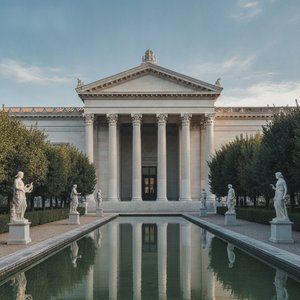
Neoclassicism Unveiled: Discovering the Timeless Elegance and Rational Order of Classical Art
Unveil the timeless elegance of Neoclassicism. Journey through an era defined by reason, order, and the revival of Greco-Roman ideals. Our expert exploration offers a sophisticated look at the transition from Rococo excess to classical precision for the true art enthusiast.
Досліджуйте твори мистецтва, впорядковані за темами, стилями та характеристиками.


