Біографія митця
A Dubliner’s Grace: The Life and Art of Hugh Douglas Hamilton
Hugh Douglas Hamilton, a name now recognized as one of Ireland's most accomplished portrait painters of the 18th century, was born in the bustling heart of Dublin around 1740. His life story is not merely one of artistic talent; it’s a narrative interwoven with social connections, European travel, and a remarkable ability to capture the essence of his subjects – from royalty to revolutionaries. The son of a peruke maker, a trade demanding precision and artistry in its own right, young Hugh received an early grounding in visual arts, initially studying at the Dublin Society House under the tutelage of Robert West and James Mannin. Even these formative years revealed a prodigious talent, evidenced by early awards for his drawings – hints of the skill that would soon secure him recognition throughout Ireland and beyond. Crucially, Hamilton cultivated a network of influential patrons, beginning with the prestigious La Touche banking family, a connection that opened doors to the world of high society and provided invaluable support for his burgeoning career. These relationships weren’t simply transactional; they were gateways into the circles where he would paint, offering access to the very people he sought to immortalize on canvas.
London’s Salon: Pastel Portraits and Royal Recognition
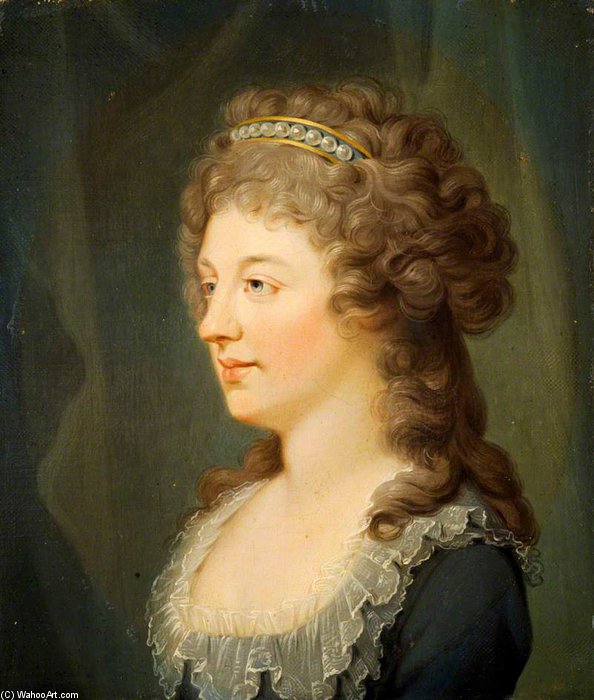
In 1762, Hamilton embarked on a significant chapter of his life by relocating to London – a move that proved pivotal to his artistic development and professional success. It was in this vibrant metropolis that he truly established himself as a portrait painter, quickly gaining recognition for his distinctive oval pastel portraits. These weren’t the imposing, bombastic portraits favored by some of his contemporaries; rather, they were intimate, affordable representations that resonated with the growing middle class eager to capture their likenesses and those of their loved ones. The pastel medium itself was perfectly suited to this style – its delicate texture and ability to mimic skin tones allowed for a remarkable level of detail and nuance. Hamilton’s talent didn't go unnoticed by the highest echelons of British society; he received commissions from the royal family, including a portrait of Queen Charlotte in 1764 – a commission that firmly established his reputation as one of London’s most sought-after artists. He exhibited regularly at both the Society of Artists and the Free Society of Artists, steadily building a clientele that included prominent politicians, wealthy merchants, and members of the aristocracy. The pace was relentless; Hamilton was often overwhelmed with orders, reflecting the immense demand for his work.
The Fresco Pastel: A Bold Innovation
Around the mid-1770s, Hamilton began experimenting with a groundbreaking technique he termed “fresco” pastel – a method that blended crayons and chalk to achieve a richer, more textured effect than traditional pastels alone. This innovation marked a turning point in his artistic practice, demonstrating his willingness to push boundaries and refine his skills. The “fresco” pastel allowed him to create portraits with greater depth and luminosity, mimicking the appearance of oil paint while retaining the delicate beauty of the medium. It was a testament to his inventive spirit and his desire to elevate his craft beyond mere imitation. This technique wasn’t simply a stylistic flourish; it represented a deeper understanding of materials and their potential – a hallmark of a truly accomplished artist.
Roman Reverie: Travel, Influence, and Artistic Transformation
In 1779, driven by a thirst for inspiration and a desire to hone his skills, Hamilton embarked on a transformative journey to Italy. He spent the next twelve years exploring the artistic heartland of Europe, primarily based in Rome, where he encountered the intellectual currents of the time and benefited from the guidance of renowned artists like Antonio Canova. During this period, he also developed close relationships with figures such as John Flaxman, who encouraged him to transition to oil painting – a medium that offered even greater possibilities for capturing form and expression. This shift reflected not only a change in artistic technique but also a broadening of his aesthetic horizons. He continued to paint portraits during this time, including those of visiting British tourists and members of the exiled Stuart family, demonstrating his adaptability and his ability to cater to diverse clientele.
A Legacy in Dublin: Sketches of Everyday Life and Enduring Portraits
Returning to Dublin in 1792, Hamilton resumed his portraiture practice, solidifying his position as the foremost painter in the city. He continued to capture the likenesses of prominent figures, including Lord Edward Fitzgerald, the Irish revolutionary – a poignant subject reflecting the turbulent political landscape of the era. However, it was perhaps the rediscovery of a sketchbook containing sixty-six drawings of Dublin street hawkers that truly cemented Hamilton’s historical significance. These sketches, created during his early years in Dublin, offer an unprecedented glimpse into the everyday lives of ordinary people – a rare and invaluable visual record of 18th-century urban society. The drawings are characterized by their remarkable realism and attention to detail, capturing the personalities and struggles of a diverse cast of characters. Hamilton’s legacy extends beyond his portraits; he remains a vital figure in Irish art history, celebrated for his technical skill, his artistic innovation, and his ability to capture the spirit of his time. His work continues to be studied and admired for its beauty, insight, and historical significance.


 Замовити репродукцію
 Надіслати
 Поділитися
 Деталі витвору

 Завантажити
 Схожі вироби
 Рентгенівське дослідження
 Слайд-шоу
 Розгорнути текст






































 Скляний варіант доступний лише для розмірів до 110 см



