


 Переглянути в інтер'єрі
 Надіслати
 Поділитися
 Деталі
 Посібник

 Завантажити
 Схожі предмети колекціонування
 Рентгенівське дослідження
 Слайд-шоу
 Статистика переглядів
Fear, Expression Head
 Pastel
- WallArt
- Rococo
 Early Modern
 40.0 x 30.0 cm
 Лувр
Лувр
A palpable sense of quiet turmoil radiates from this Rococo pastel study by Jean-Baptiste Greuze featuring a young woman's expressive gaze, inviting you to explore the profound emotional depth of this 18th-century masterpiece.
 Читати далі
Жан-Батьйольє Грзу — французький живописець, відомий своїми емоційно насиченими жанровими сценами та портретами, що зображують повсякденне життя та моральні уроки. Його роботи стали символом епохи рококо та відображають цінності буржуазного суспільства.
Гікле / Художній принт
Музейна якість друку جيкле або на полотні з оперативним виготовленням та різноманітними варіантами фінішної обробки. ( Купити картину ручної роботи Перейти до цифрових зображень)




P118B ₴10

P118H ₴10

P118W ₴10

P438Z ₴10

P508JH ₴12

P508YH ₴12

P805H ₴10

P805Z ₴10

P919BZ ₴10

P919G ₴10

P919XJ ₴10

P959ZH ₴10

P968JZ ₴12

W106C ₴8

W218G ₴10

W218JH ₴8

W218Y ₴10

W307PJ ₴10

W316G ₴10

W316PJ ₴8

W316Y ₴10

W398PJ ₴8

W4111J ₴10

W500HY ₴15

W500JH ₴15

W692G ₴12

W849H ₴8

W940BG ₴15

W953PJ ₴8




Стандартний розмір
на замовлення
CM
INCH
Обирайте з наших стандартних розмірів, що відповідають оригінальним пропорціям твору мистецтва.
Loading sizes...

ширина
висота
Введіть необхідну ширину та висоту, щоб принт ідеально підійшов до вашої рами або стіни. Принт можна лише обрізати, але не можна зробити більшим за оригінал, тому при зміні пропорцій частина зображення буде втрачена. Перед друком ми надсилаємо вам цифровий макет для затвердження. Зображення на цій сторінці не відображає реальну обрізку — її можна побачити лише на макеті.
Доставка по всьому світу () за 2 тижні замість стандартних 4/5 тижнів. (23 Жовтень)

Безкоштовна експрес-доставка по всьому світу

Високоякісне лляне полотно

Повне страхове покриття доставки

Гарантія повернення митних зборів

Гарантія точного відтворення кольорів

Політика повернення протягом 100 днів (лише у разі виявлення дефектів)

Гарантія повернення 100% коштів

Знижка на оптові замовлення
 Скляний варіант доступний лише для розмірів до 110 см

Fear, Expression Head
Гікле / Художній принт
Розмір репродукції
-


Загальна вартість
₴ 3102
A Window into the Soul: The Intimacy of Greuze’s Pastel Study
In the delicate realm of Rococo artistry, few works capture the fleeting nuances of human emotion as poignantly as Jean-Baptiste Greuze’s Fear, Expression Head. This intimate pastel study, executed around 1755, serves as a profound testament to the artist's ability to transcend mere portraiture, venturing instead into the depths of psychological exploration. The artwork centers on a young woman whose presence is felt through a palpable sense of contemplation and quiet vulnerability. Her hair, styled in loose curls that cascade softly over her shoulders, paired with a draped white garment, lends an aura of understated elegance to the composition. Yet, it is not her outward adornment that commands attention, but rather the subtle, haunting flicker of emotion captured within her gaze.
Greuze’s mastery of the pastel medium is on full display here, utilizing the soft, powdery texture of the medium to achieve a breathtakingly delicate effect. Through meticulous rendering of light and shadow, he creates a sense of three-dimensional depth that breathes life into the subject's features. The artist employs subtle tonal gradations to illuminate the woman's face, drawing the viewer's eye to the slight furrow in her brow and her averted gaze. This intentional use of lighting—sourced from the upper left—heightens the inherent drama of the piece, casting soft shadows that emphasize the texture of her skin and the fine strands of her hair, making the subject feel remarkably present and alive.
The Language of Sentiment and Symbolism
Beyond its technical brilliance, Fear, Expression Head is a masterpiece of emotional storytelling. During the Rococo era, there was a burgeoning fascination with portraying human psychology and the moral dilemmas found within domestic life. Greuze deliberately moved away from the grand, often distant mythological narratives favored by his contemporaries, choosing instead to engage with the more relatable, sentimental sensibilities of his time. In this work, the subject's expression—a mixture of apprehension, thoughtfulness, or perhaps a sudden moment of inner turmoil—invites the viewer into a private, silent dialogue.
The symbolism within the piece is found not in overt objects, but in the subtle gestures of the face itself. The slightly parted lips and the tension held in the brow suggest a state of being caught between thought and reaction, embodying the very essence of "expression heads" or têtes d’expression that Greuze became famous for. For the collector or interior designer, this piece offers more than just aesthetic beauty; it provides a focal point of profound introspection. A high-quality reproduction of this work brings a sense of historical depth and emotional sophistication to any space, acting as a quiet yet powerful anchor that encourages moments of reflection and grace.
Запитання та відповіді
Чим пояснюється статус авторського права на «Fear, Expression Head» Жан-Батьйоз Грезу?
Статус авторського права на "Fear, Expression Head" — є суспільним надбанням — термін дії авторського права закінчився — визначається датою смерті митця у 1805.
Чи доступна робота "Fear, Expression Head" у вигляді художнього принта?
«Fear, Expression Head» доступний як художній принт на бавовняному полотні або архівному канвас-папері. Замовлення можна оформити на сторінці Художній принт у будь-якому обраному вами розмірі.
Чи доступне завантаження для "Fear, Expression Head"?
Цифрову копію роботи «Fear, Expression Head» Жан-Батьйоз Грезу можна завантажити на сторінці Завантажити, обравши варіант завантаження цифрового зображення високої роздільної здатності.
Біографія митця
A Life Etched in Sentiment: The World of Jean-Baptiste Greuze
Jean-Baptiste Greuze, a name synonymous with the intimate and emotionally charged world of 18th-century French painting, was born in Tournus, a small Burgundian town steeped in history, on August 21st, 1725. His early life, far from the grand salons and aristocratic circles that defined much of the art world, was marked by a modest upbringing – his father a roofer, shaping his young mind with practical realities rather than artistic aspirations. Yet, within this seemingly ordinary existence, a spark ignited: a profound sensitivity to human emotion and an innate ability to capture it on canvas. This talent wasn’t immediately nurtured; initially discouraged from pursuing art by his father, young Greuze found encouragement in the guidance of Grandon, a Lyonnese artist who recognized the nascent potential within him. This early mentorship proved pivotal, laying the foundation for a career that would ultimately redefine the boundaries of genre painting.The Rise of a Genre Painter
Greuze’s artistic breakthrough arrived in 1755 with *Le Père de famille expliquant la Bible à ses enfants* (The Father Explaining the Bible to His Children). This wasn't merely a depiction of domestic life; it was an embodiment of Enlightenment ideals, a carefully constructed tableau that resonated deeply with the sensibilities of the era. The painting’s power lay not in grand historical narrative or mythological grandeur, but in its intimate portrayal of familial piety and moral instruction – a reflection of the burgeoning bourgeois virtue that was gaining prominence within French society. The work quickly garnered attention, culminating in its acquisition by Ange-Laurent de La Live de Jully, a discerning collector who recognized Greuze’s unique talent. This success propelled him to Paris, where he enrolled at the Royal Academy and began to hone his skills under the tutelage of Charles-Joseph Natoire. However, Greuze quickly distinguished himself from the prevailing academic emphasis on historical and mythological subjects, forging his own path towards capturing the nuances of everyday life. A journey to Italy in 1755, undertaken with Abbé Louis Gougenot, broadened his artistic horizons, exposing him to classical models and influencing his compositional techniques. Yet, despite this exposure, Greuze ultimately found greater inspiration in the realities of French society than in the idealized world of antiquity. His ability to evoke genuine feeling—joy, sorrow, remorse—set him apart from many of his contemporaries and established him as a leading figure in the emerging Rococo style, albeit one with a distinctly moralizing bent. He wasn’t simply painting scenes; he was painting emotions, distilling complex human experiences into accessible and deeply affecting images.Mastering Emotion and Moral Narrative
Greuze's artistic strength lay in his ability to tell stories through paint. His works are not merely portraits of children or domestic scenes; they are explorations of universal human experiences—loss, innocence, temptation, and the complexities of familial relationships. He possessed an extraordinary talent for capturing subtle nuances of expression, conveying inner turmoil with remarkable sensitivity. His compositions were often carefully staged, utilizing dramatic lighting and expressive gestures to heighten emotional impact. Consider *La Jeune Fille qui pleure son oiseau mort* (The Young Girl Weeping for Her Dead Bird) – the heartbreaking grief etched on the girl’s face, the delicate feathers scattered around her—it's a masterclass in conveying sorrow through visual language. Similarly, *Savoyard with a Dancing Doll* captures the fleeting joy and vulnerability of childhood, showcasing his skill in portraiture while simultaneously hinting at the darker undercurrents beneath the surface. Denis Diderot, a leading intellectual of the Enlightenment, became a fervent champion of Greuze’s work, praising his ability to depict “morality in paint.” Greuze's paintings weren’t just aesthetically pleasing; they were intended to provoke thought and inspire virtuous behavior – a reflection of the Enlightenment’s emphasis on reason and moral reform. However, this very success created a dilemma for the artist. He aspired to be recognized as a history painter—the most prestigious category within the Academy—and attempted a transition with *Septimius Severus Reproaching Caracalla* (1769). This ambitious work, depicting the Roman emperor’s confrontation with his son, was met with harsh criticism and ultimately failed to secure him acceptance into the Academy as a history painter.Later Years and Lasting Legacy
The rejection by the Academy marked a turning point in Greuze's career. He withdrew from exhibiting at the Salon for many years, becoming increasingly reclusive and embittered. His later works often explored themes of seduction and moral transgression, sometimes bordering on the overtly sensual. These paintings, while technically proficient, lacked the emotional resonance and moral clarity of his earlier masterpieces. Financial difficulties plagued his final years, a stark contrast to the acclaim he had once enjoyed. He died in poverty within the Louvre itself in 1805, a poignant end for an artist who had once commanded such admiration. Despite this decline, Jean-Baptiste Greuze’s influence on French art remains significant. He pioneered a new form of genre painting that focused on contemporary life and explored universal human emotions. His work paved the way for later artists who sought to depict the realities of everyday existence with honesty and sensitivity. He left behind a body of work that continues to captivate viewers with its emotional power, technical brilliance, and enduring relevance – a testament to his unique ability to translate the complexities of the human heart onto canvas.Key Works & Their Significance
- Le Père de famille expliquant la Bible à ses enfants (1755): A cornerstone of his early success, embodying Enlightenment ideals of familial piety.
- La Jeune Fille qui pleure son oiseau mort (c. 1765): Demonstrates Greuze’s mastery of emotional expression and poignant storytelling.
- Savoyard with a Dancing Doll (c. 1763): Captures the spirit and vulnerability of childhood, showcasing his skill in portraiture.
- Septimius Severus Reproaching Caracalla (1769): A failed attempt at historical painting that highlighted his strengths lay elsewhere.
- The Broken Pitcher (c. 1770s): Represents a shift towards more sensual and morally ambiguous themes in his later work.

Жан-Батьйоз Грезу
1725 - 1805 , Франція
Довідкова інформація
- Artistic Movement Or Style: Рококо, Жанр живопис
- Artists Or Movements Influenced By This Artist: ['Dutch genre masters']
- Artists Who Influenced This Artist: ['Grandon (or Grondom)']
- Date Of Birth: 1725
- Date Of Death: 1805
- Full Name: Jean-Baptiste Greuze
- Nationality: Француз
- Notable Artworks:
- Le Père de famille...
- La Jeune Fille...
- Savoyard...
- Septimius Severus
- Place Of Birth: Tournus, Франція
Схожі статті

10 Iconic Rococo Masterpieces That Defined an Era of Elegance
Step into the elegance of the 18th century. Explore 10 iconic Rococo masterpieces, from Fragonard to Watteau, through their stories and pastel beauty. Find museum-quality art reproductions and decor inspiration at TopImpressionists.com. Discover all masterpieces on TopImpressionists.com

The Elegance of Rococo Portraiture: A Journey Through Grace, Soft Light, and Pastel Dreams
Discover the exquisite world of Rococo portraiture. Explore the delicate beauty of 18th-century French art, from pastel light to graceful asymmetry, and learn how to bring this era of elegance into your home through masterfully hand-painted oil reproductions.
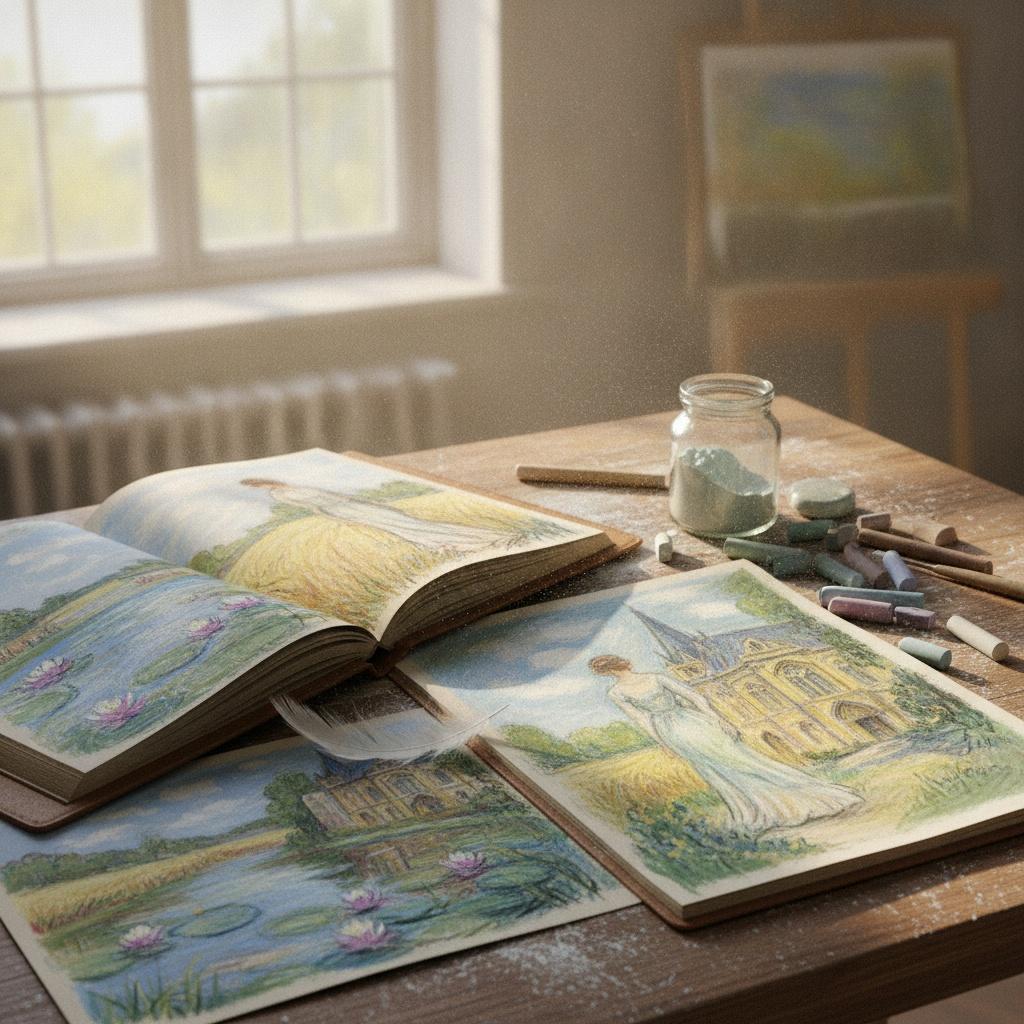
The Soft Magic of Chalk: Capturing Light, Texture, and the Ethereal Soul of Impressionist Masterpieces
Discover the ethereal beauty of pastel and chalk art. Explore how Impressionist masters like Van Gogh and Degas captured light and texture to create timeless, soulful masterpieces for the discerning collector.

10 Iconic Pastel Masterpieces That Revolutionized Art History
Journey through history with 10 iconic pastel masterpieces that redefined art. From Rococo elegance to Impressionist light, explore the stories behind these timeless works and find museum-quality reproductions for your decor. Discover all masterpieces on TopImpressionists.com.

Top 25 Masterpieces by David Moreau: A Journey Through Texture and Light
Immerse yourself in the tactile world of David Moreau. Explore our curated selection of his top 25 textured masterpieces, featuring heavy impasto and sculptural depth. Find museum-quality art reproductions for your collection. Discover all masterpieces on TopImpressionists.com.