


 Переглянути в інтер'єрі
 Надіслати як листівку
 Поділитися
 Деталі витвору
 Посібник

 Завантажити
 Схожі екземпляри
 Рентгенівське дослідження
 Слайд-шоу
 Статистика
Blind-Mans Buff
 Acrylic
- WallArt
- Romantic Pastoralism
 1752
1752 116.0 x 91.0 cm
 Толедський музей мистецтв
Explore Jean-Honoré Fragonard’s ‘Blind Man’s Buff,’ a playful depiction of youthful romance and flirtation set within an idyllic Provençal garden, capturing the fleeting beauty of love.
 Розгорнути текст
Жан-Онор Фрагонард – французький художник епохи Рококо, що славиться своїми яскравими та грайливими полотнами, такими як «Карусель» і «Юна дівчина читає». Його творчість стала символом розкішу та кокетства XVIII століття! Відкрийте світ мистецтва Фрагонара вже сьогодні!
Гікле / Художній принт
Друк جيкле або на полотні музейної якості з оперативним виготовленням та різноманітними варіантами фінішної обробки. ( Замовити картину ручної роботи Перейти до цифрових зображень)




P118B ₴10

P118H ₴10

P118W ₴10

P438Z ₴10

P508JH ₴12

P508YH ₴12

P805H ₴10

P805Z ₴10

P919BZ ₴10

P919G ₴10

P919XJ ₴10

P959ZH ₴10

P968JZ ₴12

W106C ₴8

W218G ₴10

W218JH ₴8

W218Y ₴10

W307PJ ₴10

W316G ₴10

W316PJ ₴8

W316Y ₴10

W398PJ ₴8

W4111J ₴10

W500HY ₴15

W500JH ₴15

W692G ₴12

W849H ₴8

W940BG ₴15

W953PJ ₴8




Стандартний розмір
індивідуальний розмір
CM
INCH
Обирайте з наших стандартних розмірів, що відповідають оригінальним пропорціям твору мистецтва.
Loading sizes...

ширина
висота
Введіть необхідну ширину та висоту, щоб принт ідеально підійшов до вашої рами або стіни. Принт можна лише обрізати, але не можна зробити більшим за оригінал, тому при зміні пропорцій частина зображення буде втрачена. Перед друком ми надсилаємо вам цифровий макет для затвердження. Зображення на цій сторінці не відображає реальну обрізку — її можна побачити лише на макеті.
Доставка по всьому світу () за 2 тижні замість стандартних 4/5 тижнів. (28 Жовтень)

Безкоштовна експрес-доставка по всьому світу

Високоякісне лляне полотно

Повне страхове покриття доставки

Гарантія повернення митних зборів

Гарантія точного відтворення кольорів

Політика повернення протягом 100 днів (лише у разі виявлення дефектів)

Гарантія повернення 100% коштів

Пропозиція на оптові замовлення
 Скляний варіант доступний лише для розмірів до 110 см

Blind-Mans Buff
Гікле / Художній принт
Розмір репродукції
-


Підсумкова вартість
₴ 3093
A Dance of Delight: Exploring Jean-Honoré Fragonard’s “Blind Man’s Buff”
The painting "Blind Man's Buff," completed in 1752 by Jean-Honoré Fragonard, transcends mere depiction; it embodies the very essence of Rococo artistry – a celebration of sensual pleasure and fleeting romance. More than just a charming pastoral scene, this artwork speaks volumes about the social conventions and artistic sensibilities of eighteenth-century France, offering a captivating glimpse into the courtship rituals of its aristocratic patrons.- Subject Matter: At its core lies an intimate tableau capturing a playful moment between lovers in a sunlit garden. A woman playfully engages with her infant child while another man observes, creating a dynamic interplay of gestures and glances that underscores the central theme – the deceptive allure of appearances.
- Style & Technique: Fragonard’s signature style is characterized by its airy lightness and exquisite delicacy. Employing pastel hues—primarily pinks, greens, and yellows—he achieves a luminous effect that captures the vibrancy of springtime blossoms. The brushstrokes are loose and fluid, prioritizing expressive movement over meticulous detail, reflecting the Rococo penchant for illusionistic textures and shimmering surfaces.
Historical Context: Courtly Love and Artistic Patronage
“Blind Man’s Buff” emerged during a period defined by opulent aristocratic life and an obsession with idealized beauty. The game itself served as a metaphor for courtship, where deception and flirtation were considered acceptable strategies to win affection. Fragonard's painting directly addresses this cultural preoccupation, mirroring the tastes of Louis XV’s court who favored scenes depicting pastoral idylls brimming with romantic symbolism. Boucher’s influence is palpable in the composition’s graceful forms and harmonious color palette—a testament to the artistic standards upheld during that era.- Symbolism: The artwork is replete with symbolic gestures designed to heighten its emotional impact. The playful tickling of the woman's cheek by a straw symbolizes flirtation and distraction, while Cupid’s infant brushing her hand represents divine intervention guiding affections. Even the woman’s attire—elaborate gowns adorned with opulent bows—represents the extravagance and sophistication valued within aristocratic circles.
- Emotional Impact: Fragonard masterfully captures the ephemeral nature of youthful passion. The subtle gaze exchanged between lovers hints at unspoken desires and vulnerabilities, inviting viewers to contemplate the complexities of human relationships. Ultimately, “Blind Man’s Buff” evokes a feeling of carefree joy mingled with wistful longing—a timeless portrayal of love's captivating power.
A Reproduction Worth Admiring
A high-quality reproduction of "Blind Man’s Buff" offers an exceptional opportunity to bring this masterpiece into your home. TopImpressionists.com’s meticulous printing process ensures that the painting's luminous colors and delicate brushstrokes are faithfully reproduced, allowing you to appreciate Fragonard’s artistic vision with stunning clarity. Consider framing it in a neutral tone to complement its ethereal beauty—a beautiful addition to any interior space.Питання та відповіді
Чи є "Blind-Mans Buff" однією з найпопулярніших робіт Жан-Онуар Фрагонар?
«Blind-Mans Buff» має рівень популярності Recognized.
Наскільки насиченими є кольори у творі "Blind-Mans Buff"?
«Blind-Mans Buff» роботи Жан-Онуар Фрагонар вирізняється Subtle Color насиченістю та Monochromatic інтенсивністю кольору.
Чи можна вільно відтворювати зображення «Blind-Mans Buff» роботи Жан-Онуар Фрагонар?
«Blind-Mans Buff» роботи Жан-Онуар Фрагонар перебуває у є суспільним надбанням — термін дії авторського права закінчився. Цей статус визначає правила відтворення зображення твору.
Біографія митця
A Life Bathed in Light: The World of Jean-Honoré Fragonard
Born amidst the fragrant fields of Grasse, France, in 1732, Jean-Honoré Fragonard’s artistic journey began not with grand ambition but a quiet relocation to Paris with his family. It was there, under the initial guidance of Jean Siméon Chardin – a master of everyday life and subtle observation – that young Fragonard first encountered the possibilities of paint and canvas. However, it was within the atelier of François Boucher, the celebrated painter to the court of Louis XV, that his true stylistic foundations were laid. Boucher’s influence instilled in Fragonard a love for graceful forms, delicate colors, and the playful spirit that would come to define his oeuvre. Winning the prestigious Prix de Rome in 1752 marked a pivotal moment, affording him the opportunity to immerse himself in the classical world of Italy for several years. This period wasn’t merely about copying ancient masters; it was an awakening – a chance to absorb the vibrancy and sensuality that would later infuse his own unique vision.The Rococo Master: A Celebration of Pleasure and Intrigue
Upon returning to Paris, Fragonard swiftly established himself as a leading figure in the burgeoning Rococo movement. This wasn’t simply about adopting a style; it was about embodying an entire worldview – one that celebrated pleasure, intimacy, and the fleeting beauty of life. His paintings weren't intended for grand public display but rather for the private salons of aristocrats seeking works that whispered secrets and hinted at hidden desires. The Swing, perhaps his most iconic creation, perfectly encapsulates this spirit. A young woman playfully kicks off her shoe as a bishop pushes her swing, while a hidden lover gazes up from below – it’s a scene brimming with mischievous energy and veiled eroticism. Other works like The Bolt and Love Vow continue this exploration of clandestine encounters and the delicate dance between attraction and restraint. Fragonard didn't merely depict scenes of love; he created an atmosphere, a mood – one that was both alluring and slightly dangerous. His brushwork became increasingly fluid and spontaneous, capturing not just appearances but also the very essence of fleeting moments. He skillfully blended light and shadow, creating a sense of movement and drama within his compositions. The pastel hues of his palette—soft pinks, blues, and greens—further enhanced the dreamlike quality of his paintings, evoking a feeling of romance and indulgence.Beyond the Salon: Experimentation and Evolving Styles
While Fragonard achieved considerable success within the established art world, he wasn’t one to remain confined by its conventions. He experimented with different genres and techniques throughout his career, demonstrating a remarkable versatility. His early attempts at history painting, though initially praised, didn't fully satisfy him; he found greater freedom in exploring more intimate and personal subjects. A brief flirtation with Neoclassicism – evident in portraits like that of Denis Diderot – showcased his willingness to engage with contemporary artistic trends, but it was the Rococo sensibility that ultimately defined his legacy. He also excelled as a draftsman, producing countless sketches and drawings that reveal his masterful command of line and form. These weren’t merely preparatory studies; they were often works of art in their own right, capturing fleeting impressions and intimate moments with remarkable sensitivity. His drawings are characterized by a loose, expressive style, reflecting the spontaneity and fluidity of his paintings.Influences and Artistic Connections
Fragonard's artistic development was shaped by a number of key influences. The meticulous observation and subtle realism of Jean Siméon Chardin provided him with a foundation in depicting everyday life. However, it was François Boucher who truly molded his style, introducing him to the principles of Rococo painting—graceful forms, delicate colors, and an emphasis on sensuality. The Italian masters, particularly those of the Baroque period, also played a significant role in his artistic education. He spent several years studying their works in Rome, absorbing their techniques and embracing their dramatic use of light and shadow. Furthermore, Fragonard’s close association with Boucher allowed him to learn from one of the most influential artists of his time, shaping his approach to composition, color, and subject matter.A Legacy Enduring Through Time
The French Revolution brought a dramatic shift in artistic tastes, and Fragonard's lighthearted, aristocratic style fell out of favor. He retreated to his hometown of Grasse for a time, returning to Paris only after the political turmoil subsided. Though he held administrative positions at the Louvre during this period, his creative output diminished. However, his influence continued to resonate through subsequent generations of artists. His emphasis on color, light, and sensuality paved the way for Impressionism, while his playful spirit and rejection of academic constraints inspired a more liberated approach to artmaking. Today, Fragonard’s works are celebrated in museums around the world – from the Louvre in Paris to the National Gallery of Art in Washington D.C. His paintings continue to captivate audiences with their beauty, wit, and enduring appeal, reminding us of a time when life was meant to be savored, and pleasure was considered an art form itself.Notable Works & Collections
- The Swing (L'Escarpolette): Wallace Collection, London – A quintessential example of Rococo exuberance.
- The Bolt: View on TopImpressionists - A captivating scene of domestic intrigue and playful tension.
- Love Vow: Discover more about Fragonard’s works on TopImpressionists – A tender depiction of romantic commitment.
- Young Girl Reading: Featured in artworks databases, showcasing his mastery of portraiture and light.
- Works are also prominently displayed at the Musée du Louvre, Grasse Cathedral, The Metropolitan Museum of Art, and The Frick Collection.

Жан-Онуар Фрагонар
1732 - 1806 , Франція
Короткі факти
- Artistic Movement Or Style: Рококо
- Artists Or Movements Influenced By This Artist: ['Неокласицизм']
- Artists Who Influenced This Artist:
- Бшерон
- Шардан
- Date Of Birth: 5 квітня 1732
- Date Of Death: 22 серпня 1806
- Full Name: Jean-Honoré Fragonard
- Nationality: Француз
- Notable Artworks:
- Карусель
- Юна дівчина
- Рінальдо
- Place Of Birth: Гrasse, Франція
Пов'язані статті

The Elegance of Rococo: A Journey Through Pastel Dreams and Ornate Splendor
Embark on an elegant journey through the Rococo era. Discover the delicate beauty of pastel masterpieces, the intricate artistry of 18th-century French masters, and how this era of ornate splendor continues to inspire timeless luxury in fine art collecting.
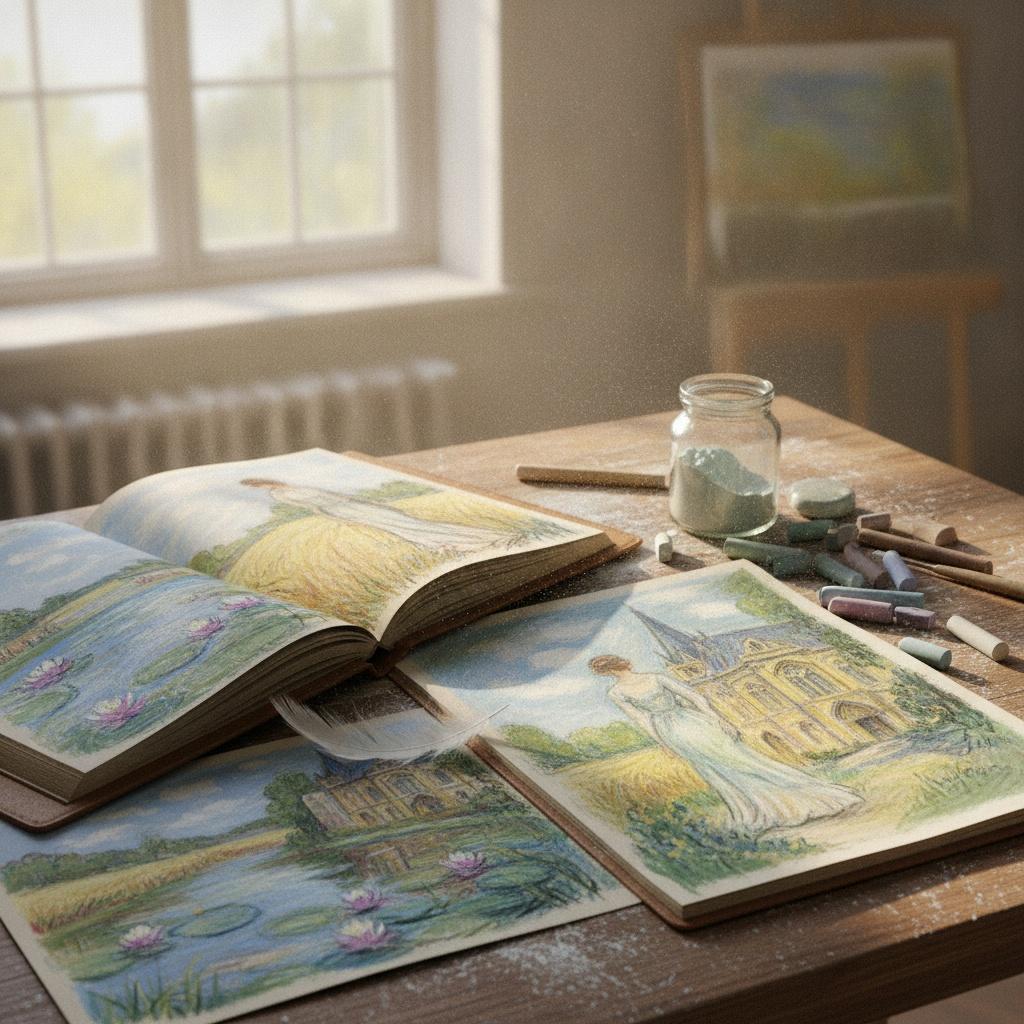
The Soft Magic of Chalk: Capturing Light, Texture, and the Ethereal Soul of Impressionist Masterpieces
Discover the ethereal beauty of pastel and chalk art. Explore how Impressionist masters like Van Gogh and Degas captured light and texture to create timeless, soulful masterpieces for the discerning collector.
Досліджуйте твори мистецтва, впорядковані за темами, стилями та характеристиками.


