

На зображенні: · Разом із рамою:
 Переглянути в інтер'єрі
 Надіслати як листівку
 Поділитися
 Деталі витвору
 Посібник

 Завантажити
 Схожі екземпляри
 Рентгенівське дослідження
 Слайд-шоу
 Питання та відповіді
 Статистика
- 75.0 x 63.0 cm


₴ 12083
Олійная репродукція ручної роботи
Написана вручну олією на полотні у вашому розмірі та рамі, виготовлена на замовлення нашими художниками. ( Перейти до друку Перейти до цифрових зображень)
Розмір
·Стандартний розмір
індивідуальний розмір
CM
INCH
Обирайте з наших стандартних розмірів, що відповідають оригінальним пропорціям твору мистецтва.
Завантаження розмірів...

ширина
висота
Введіть необхідну ширину та висоту, щоб картина підійшла до вашої рами або стіни. Оскільки це ручний розпис, для зміни пропорцій художник може дописати трохи більше по краях або дещо обрізати композицію — вибір за вами. Перед початком роботи ми надішлемо вам цифровий макет для затвердження. Зображення, показане на цій сторінці, не є реальним результатом — лише макет відображає майбутній вигляд.
 Читати далі
Завершити
·
Білий край ₴1

Розмитий край ₴1

З розширенням ₴1

P118B ₴10

P118H ₴10

P118W ₴10

P438Z ₴10

P508JH ₴12

P508YH ₴12

P805H ₴10

P805Z ₴10

P919BZ ₴10

P919G ₴10

P919XJ ₴10

P959ZH ₴10

P968JZ ₴12

W106C ₴8

W218G ₴10

W218JH ₴8

W218Y ₴10

W307PJ ₴10

W316G ₴10

W316PJ ₴8

W316Y ₴10

W398PJ ₴8

W4111J ₴10

W500HY ₴15

W500JH ₴15

W692G ₴12

W849H ₴8

W940BG ₴15

W953PJ ₴8

H24-GOLD ₴30

H24-SILVER ₴30

H36-GOLD ₴45

H36-SILVER ₴45
Доставляється в захисному тубусі, готовий для оформлення у вашій багетній майстерні.
Додаткові послуги
необов'язковоЩо саме входять до додатків?
Приклади того, що можна змінити: замінити обличчя на фото клієнта; додати домашню тварину (наприклад, замінити кота на собаку); додати приховане повідомлення на фоні; змінити пейзаж або елементи фону.
Після оформлення замовлення команда TopImpressionists.com надішле клієнту електронний лист із запитом інструкцій та надасть попередній макет для перегляду
Після оформлення замовлення команда TopImpressionists.com надішле клієнту електронний лист із запитом інструкцій та надасть попередній макет для перегляду
Доставка по всьому світу () за 3–4 тижні замість стандартних 5 тижнів. (5 Листопад). Без жодних компромісів у якості.
Захисний лак
Етикетка експоната
Деталі гравірування на бронзовій табличці
This elegant plaque features the artist's name and the title of the artwork, finely engraved for a timeless presentation.
It is made from bronze with a refined, elegant finish. The text is precisely laser-engraved for a sharp and permanent result. Measuring 9x2 cm, the plaque is compact yet easy to read. It's built to be durable and scratch-resistant, offering a professional, museum-quality look. Mounting is simple thanks to the included adhesive backing.
Деталі прозорої акрилової таблички
The plaque includes essential engraved details such as the artist's name, the title of the artwork, the date it was created, the type of media used-like oil on canvas or watercolor-a brief description of the piece, and a QR code that links to the complete artwork information.
It is crafted from clear acrylic, offering a sleek, modern appearance. The text is UV-engraved in black to ensure strong visual contrast. With a size of 10x15 cm, it ensures optimal readability. It comes equipped with two metal hooks for secure wall mounting. The plaque is designed to be weather-resistant, making it suitable for various environments, and it includes interactive features that work seamlessly with smartphone scanning.
Деталі чорної акрилової таблички
This elegant plaque includes engraved information such as the artist's name, the title of the artwork, the date it was created, the type of media used (like oil on canvas or watercolor), a short description of the artwork, and a QR code for quick access to more information.
The plaque itself is made from refined black acrylic with a premium finish. The text is laser-engraved in white for high contrast and readability. Its size is 10x15 cm, designed to be easy to read. It comes with two metal hooks for professional mounting. The design is sleek and fits any interior style. It is also weather-resistant and durable, with built-in digital integration for mobile compatibility.
Скляний варіант доступний лише для розмірів до 110 см
 Скляний варіант доступний лише для розмірів до 110 см
- Безкоштовна експрес-доставка по всьому світу
- Високоякісне лляне полотно
- Повне страхове покриття доставки
- Гарантія повернення митних зборів
- Гарантія точного відтворення кольорів
- Політика повернення протягом 100 днів (лише у разі виявлення дефектів)
- Гарантія повернення 100% коштів
- Пропозиція на оптові замовлення


Опис експоната
Admire Johann Zoffany's iconic portrait of David Garrick alongside Eva Maria Veigel, capturing the theatrical spirit of Georgian England at The Ashmolean Museum.
Біографія митця
Йоган Зофань – німецький художник, відомий своїми витонченими портретами та "розмовними картинами", що закарбовують життя еліти 18-го століття. Його твори, зокрема «Трибуна Уффіці», демонструють майстерність і тонке розуміння людських взаємодій.
Про картину
A Theatrical Soul Captured in Oil
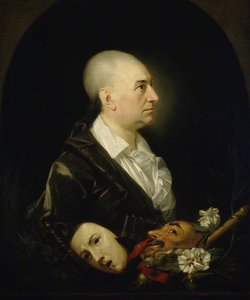
In the quiet halls of The Ashmolean Museum of Art and Archaeology, there exists a portrait that does more than merely record a likeness; it breathes with the very essence of the eighteenth-century stage. Johann Zoffany’s 1763 masterpiece, David Garrick, is an evocative window into the heart of Enlightenment England. At first glance, we encounter the commanding presence of Garrick, the most celebrated actor of his era, rendered with a profound sense of dignity and intellectual depth. Zoffny does not present us with a mere performer in costume, but with a man whose very existence was intertwined with the dramatic arts. The composition is intimate yet grand, focusing on Garrick from the chest up against a somber, dark background that pushes his luminous features toward the viewer, demanding an immediate and visceral connection.
The technique employed by Zoffany is nothing short of masterful, showcasing the meticulous precision characteristic of the finest oil-on-canvas works of the period. Through subtle tonal gradations and a sophisticated command of light, the artist breathes life into the textures of the subject's attire—the crisp white collar contrasting sharply against the deep black of his formal coat. This interplay of light and shadow, or chiaroscuro, serves to sculpt Garrick’s face, highlighting a contemplative gaze that seems to look beyond the frame, perhaps lost in thought regarding a recent performance or a future script. For the discerning collector or interior designer, this painting offers a profound sense of classical elegance, making it an ideal centerpiece for spaces that value historical gravity and sophisticated drama.
The Dual Faces of Drama
Beyond the physical representation of a legendary actor, Zoffany weaves a complex tapestry of symbolism into the very fabric of the portrait. Floating near Garrick’s face are two iconic theatrical masks: the smiling visage of Comedy and the furrowed, mournful brow of Tragedy. These are not mere decorative elements; they are the dual pillars of the human experience that Garrick mastered on stage. The presence of these masks transforms the portrait from a standard biographical study into a profound meditation on the nature of performance and emotion. It suggests that behind the dignified gentleman lies the capacity for both joyous exuberance and profound sorrow, mirroring the duality of the human condition itself.
This symbolic layer adds an intellectual richness that elevates the artwork, making it much more than a decorative piece. It invites the viewer to contemplate the boundaries between reality and artifice, between the man and the persona. For those looking to adorn a home or gallery with a reproduction of this caliber, the painting provides a continuous source of conversation and inspiration. It embodies a period where art, intellect, and social status converged in a beautiful, theatrical display. To possess such a work is to hold a fragment of history—a moment frozen in 1763, where the spirit of the theatre remains eternally vibrant and hauntingly beautiful.
Питання та відповіді
Чи дозволяє авторське право на «David Garrick» роботи Йоган Зофаньї створення репродукцій?
«David Garrick» роботи Йоган Зофаньї, що зберігається в Ашмолеанський музей мистецтва та археології, є є суспільним надбанням — термін дії авторського права закінчився. Цей статус визначає можливість створення репродукцій зображення.
Які розміри оригіналу "David Garrick"?
Розмір оригіналу «David Garrick» роботи Йоган Зофаньї становить 75 x 63 cm.
Чи можу я переглянути "David Garrick" у форматі повноекранного слайд-шоу?
Слайд-шоу до твору «David Garrick» можна переглянути на сторінці Слайд-шоу цього витвору.
Короткі факти та вікторина про мистецтво
Про Йоган Зофаньї

Йоган Зофаньї
1733 - 1810, Німеччина
Біографія митця
Johann Zoffany: Мистець, що вловив дух епохи
Йоганн Зоффані, народився Йозеф Йосипус Зауфаллі у 1733 році у Фрайбурзі, Німеччина, був живописцем, чия слава здобула особливе визнання в Англії та Італії. Деталі його раннього життя залишаються маловідомими, але відомо, що він отримав мистецьку освіту ще з юних років. Спочатку він проходив навчання як скульптор, можливо, Мельхіора Паулуса в Ельвангені, а потім вивчав у Мартіна Спієра в Регенсбурзі. Цей фундамент заклав основу для його подальшої кар’єри.
У 1750 році Зоффані вирушив до Риму, де вступив до студії Агостіно Массучі, опанувавши італійську художню традицію. У 1760 році він переїхав до Англії, спочатку заробляючи на життя, створюючи декоративні дизайни для годинників Стівена Рімбаульта. Цей період став поворотним моментом, оскільки він почав встановлювати зв’язки та здобувати визнання в лондонському мистецькому середовищі.
Королівська покровительство та розвиток мистецтва
Зоффані швидко привернув увагу короля Георга III та королеви Шарлотти, ставши улюбленим портретистом королівської родини. Його здатність вловлювати невимушені моменти – такі як Королева Шарлотта та її двоє старших дітей (1765) – відрізняла його від більш офіційних придворних художників. Він також користувався популярністю серед австрійської імператорської родини і був нагороджений баронеєю Священної Римської імперії у 1776 році імператрицею Марією Терезій.
Майстер “розмовних портретів”
Зоффані став відомим завдяки своїм “розмовним портретам”, або *conversazione* – неформальним групам портретів, що зображують соціальні зібрання. Він виділявся у зйомці особистостей та взаємодій всередині цих сцен, часто включаючи провідних осіб із суспільства, театру та літератури. Його роботи, такі як Сім’я Коупа (1775), демонструють цей стиль, даючи можливість зазирнути в життя його патронів.
Видатні досягнення та знакові твори
- Трибуна Уффіцій (1772-1778): Його найвідоміша робота, ретельно зображена Трибуна Уффіцій у Флоренції.
- Др. Вільям Гант, який викладає анатомію в Королівській академії (1779): Захоплюючий портрет медичної освіти та наукового дослідження.
- Король Георг III (1771): Величний портрет, що демонструє владу та елегантність короля.
- Колорельний матч полковника Морданта (1784-1786): Яскраве зображення колоніального життя в Індії, яке захоплює унікальну культурну подію.
Роки в Індії та пізніше життя
З 1783 по 1789 роки Зоффані жив в Індії, де написав портрети провідних осіб, таких як Уоррен Гастінгс і Асаф-уд-Даула. Його досвід там вплинув на його художній стиль та тематику. Захоплююча історія з цього періоду розповідає про корабельну аварію біля островів Андаманських морів, де вижилі шукали екстремальних заходів для виживання.
Впливи та спадщина
Роботи Зоффані відображають вплив як німецької точності, так і італійського мистецтва. Він був під впливом художників, таких як Агостіно Массучі, і черпав натхнення з барокової традиції. Його стиль, у свою чергу, вплинув на сучасників та пізніших митців, зацікавлених портретом та соціальним коментарем. Він залишив помітний слід в історії мистецтва 18-го століття, відомий своєю технічною майстерністю, проникливими спостереженнями та унікальним художнім баченням.
Історичне значення
Живописи Йоганна Зоффані надають цінні відомості про соціальні звичаї, інтелектуальне життя та культурні цінності його часу. Його “розмовні портрети” пропонують ближчі портрети видатних осіб і їхнього світу, а його зображення Індії сприяють нашому розумінню колоніальної історії. Він залишається значущою фігурою в історії мистецтва, визнаний за свою технічну майстерність, проникливі спостереження та унікальне художнє бачення.
Короткі факти про Йоган Зофаньї
- Artistic Movement Or Style: Неокласицизм, Реалізм
- Artists Or Movements Influenced By This Artist: ['Роза Барбюс']
- Artists Who Influenced This Artist:
- Маскуччі
- Шпір
- Date Of Birth: 1733
- Date Of Death: 1810
- Full Name: Johann Zoffany
- Nationality: Німецький
- Notable Artworks:
- Трибуна Уффіці
- Др. Вільям Гантер
- Король Георг III
- Place Of Birth: Фрайбург, Німеччина
Досліджуйте твори мистецтва, впорядковані за темами, стилями та характеристиками.


Йоган Зофаньї
David Garrick
() ·
Разом із рамою: · Написано олією на льоні вручну
Разом