Atelier — Complimentary worldwide shipping — Термін доставки: 2–6 тижнів
Wishlist Кошик
Замовити друк Замовити друкЗамовити репродукцію Замовити репродукцію НадіслатиНадіслати
Деталі витворуДеталі витвору Додати до улюблених Додати до улюблених ЗавантажитиЗавантажити Схожі виробиСхожі вироби Рентгенівське дослідженняРентгенівське дослідження Слайд-шоуСлайд-шоу

Untitled

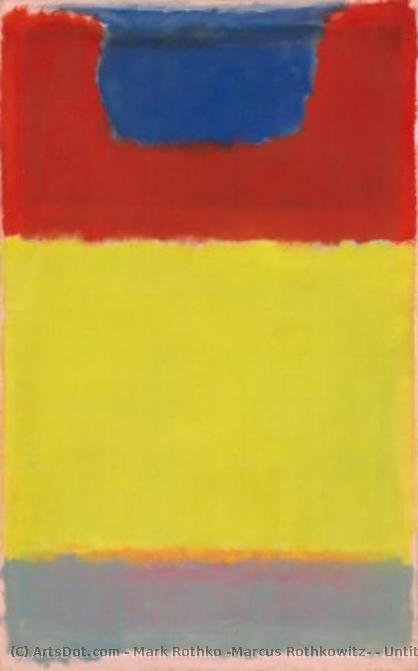
Bold yellow hues dominate Mark Rothko’s 1956 canvas, juxtaposed with vibrant red and blue rectangles—a quintessential example of Abstract Expressionism's emotive color field painting style. Explore this iconic piece and bring Rothko’s contemplative vision into your home.

Пориньте у світ емоційного кольору! Картина Марка Рота з 1952 року – шедевр абстрактного експресіонізму, що запрошує до роздумів та спокусив світ мистецтва.

Придбайте цифрову копію високої роздільної здатності з покращеною якістю, що значно перевершує онлайн-перегляд.

Кожен файл ретельно підготовлений нашими фахівцями за допомогою сучасних інструментів та професійної ручної ретуші. Ми гарантуємо виняткову чіткість, точну передачу кольору та високу деталізацію кожного зображення.

Фінальний файл надсилається електронною поштою протягом 72 годин і оптимізований для негайного використання у професійних виданнях та друкованих матеріалах. Таку якість обирають провідні дизайнерські студії, видавництва та галереї.

Цифрове зображення

Завантажте файл високої роздільної здатності для особистого перегляду, друку та творчих проєктів.

Підсумкова ціна

$9.99

Включено в кожне замовлення цифрових зображень

Експертна цифрова доставка, гарантовано

Обираючи TopImpressionists.com, ви отримуєте не просто зображення — ви отримуєте професійно вдосконалений цифровий витвір мистецтва, створений з надзвичайною точністю та підкріплений гарантією задоволення. Ось усе, що автоматично додається до вашого замовлення:

shipping_icon
Швидка доставка на email

Ваш цифровий файл із зображенням високої роздільної здатності буде надісланий вам електронною поштою протягом 72 годин після оформлення замовлення — він буде готовий до негайного використання.

canvas_icon
Цифровий файл із покращенням ШІ

Ваш витвір мистецтва професійно оптимізовано за допомогою передових інструментів штучного інтелекту та ручної корекції, що забезпечує максимальну деталізацію, чіткість і точність передачі кольорів.

insurance_icon
Безкоштовне повторне надання послуг протягом усього життя

Випадково видалили або втратили файл? Не хвилюйтеся — ми надішлемо його вам повторно в будь-який час безкоштовно.

tax_icon
Без митних зборів — завжди

Насолоджуйтесь вашим витвором мистецтва миттєво без жодних мит, зборів або плати за доставку — цифрові завантаження завжди не оподатковуються.

color_icon
Гарантія точності кольорів

Ми гарантуємо, що ваше цифрове зображення максимально точно відтворює оригінальні кольори завдяки використанню професійних інструментів та систем управління кольором.

return_icon
Гарантія задоволення протягом 60 днів

Якщо ви не задоволені придбаним цифровим зображенням, ми відкоригуємо його або повернемо 100% вартості протягом 60 днів — без жодних запитань.

guarantee_icon
Гарантія повернення 100% коштів

Не задоволені покупкою? Отримайте повне повернення коштів протягом 60 днів після отримання цифрового файлу — без жодних запитань.

discount_icon
Знижки на оптові замовлення

Купуйте 3 зображення — заощаджуйте 10% — Купуйте 5 — заощаджуйте 15% — Купуйте 10+ — заощаджуйте 20%. Чудово підходить для творчих проєктів, галерей та агентств.

Основні факти

  • Location: Private Collection
  • Year: 1956
  • Notable elements or techniques: Color field painting
  • Medium: Oil on canvas
  • Artistic style: Geometric abstraction
  • Subject or theme: Color and Emotion
  • Movement: Abstract Expressionism

Опис колекційного об'єкта

A Symphony of Color: Exploring Mark Rothko’s Untitled Canvas

The painting “Untitled,” created in 1956 by Mark Rothko, stands as a testament to the profound influence of existential contemplation on abstract expressionism. Measuring 179 x 117 cm, this canvas embodies Rothko's signature style—large rectangular blocks of color layered upon one another, eschewing traditional representation for an immersive experience of hue and texture. The photograph captures precisely this luminous quality, highlighting the dominant yellow background punctuated by bold red and blue shapes that bleed into each other, creating a mesmerizing interplay of light and shadow.
  • Subject Matter: Rothko deliberately avoided depicting recognizable subjects, prioritizing instead the exploration of fundamental emotions and spiritual concepts. He sought to convey feelings of awe, melancholy, and transcendence—a desire to capture the essence of human experience beyond concrete imagery.
  • Style & Technique: Rothko’s method involved applying thin washes of pigment onto linen canvases, building up layers gradually until achieving a velvety surface finish. This technique, termed “condensation,” aimed to evoke a meditative state in the viewer, encouraging contemplation and introspection rather than visual stimulation.
  • Historical Context: The painting emerged during the height of Abstract Expressionism—a movement that rejected European artistic conventions and embraced spontaneity and emotional intensity as guiding principles. Rothko’s work aligns with the broader philosophical currents of his time, reflecting anxieties about nuclear war and the perceived loss of faith in traditional values.

Decoding the Color Palette: Symbolism Beyond Surface Appearance

Rothko's deliberate use of color wasn’t merely aesthetic; it carried significant symbolic weight. The yellow hue represents warmth, optimism, and perhaps even divine illumination—a visual echo of biblical references to God’s radiant glory. Conversely, the red and blue shapes convey feelings of passion, sorrow, and vulnerability. Their merging suggests a complex interplay between opposing forces – joy and despair – mirroring the human condition itself. Rothko believed that color could communicate emotions directly, bypassing rational thought and tapping into primal instincts.

Emotional Resonance: An Invitation to Contemplation

The enduring appeal of “Untitled” lies in its ability to provoke a visceral response in viewers. The sheer scale of the canvas envelops the observer, creating an immersive environment that encourages stillness and reflection. Critics have described experiencing feelings of profound sadness or serenity when gazing upon Rothko’s paintings—a testament to their capacity to bypass intellectual analysis and connect with the viewer's subconscious mind. It is precisely this emotional depth that distinguishes Rothko’s work from more decorative forms of art.

Reproductions: Bringing Rothko’s Vision Home

TopImpressionists.com offers meticulously crafted reproductions of “Untitled,” utilizing archival inks on premium canvas to faithfully capture the original artwork's luminosity and textural nuances. These high-quality prints allow collectors and interior designers alike to experience the transformative power of Rothko’s vision—a celebration of color, emotion, and the enduring quest for spiritual understanding.

Біографія митця

Early Life and the Seeds of Artistic Vision

Mark Rothko, born Markus Yakovlevich Rothkowitz in Dvinsk, Latvia, in 1903, carried within him from the outset a sense of displacement that would profoundly shape his artistic journey. His early years were marked by the anxieties of a Jewish family living within the Pale of Settlement, shadowed by pogroms and political unrest. This atmosphere instilled a deep sensitivity to human suffering, a theme that would resonate throughout his oeuvre. The 1913 immigration to Portland, Oregon, represented not just a geographical shift but a cultural upheaval for the young Rothko. While his father, a pharmacist and intellectual with socialist leanings, fostered a home filled with debate and learning, the loss of Jacob Rothkowitz shortly after their arrival cast a long shadow. This early experience of loss, coupled with the challenges of assimilation, fueled a lifelong exploration of existential themes – mortality, trauma, and the search for meaning in a chaotic world. Though he excelled academically at Yale University, Rothko found himself drawn more to the vibrant energy of New York City, abandoning formal studies to pursue his passion for art at the Art Students League. These formative years laid the groundwork for an artistic vision that would ultimately challenge conventional notions of painting and redefine the emotional power of color.

From Figurative Beginnings to Abstract Expressionism

Rothko’s initial artistic explorations were firmly rooted in realism, depicting urban scenes and portraits with a keen eye for detail. However, these early works already hinted at the psychological depth that would become his hallmark. As the 1940s unfolded, and the world grappled with the horrors of World War II, Rothko’s art underwent a dramatic transformation. Influenced by Surrealism and mythology, he began to move away from representational imagery, seeking instead to express universal human emotions through symbolic forms. This period saw the emergence of multi-form paintings – canvases populated by ambiguous, biomorphic shapes that seemed to hover between figuration and abstraction. These works were not merely experiments in form; they were deeply felt responses to the anxieties and uncertainties of a world at war. By the late 1940s, Rothko had arrived at his signature style: large-scale canvases featuring rectangular blocks of color that appeared to float and resonate with one another. He stripped away all vestiges of recognizable imagery, focusing instead on the pure emotional impact of color and form. This marked a pivotal moment in the development of Abstract Expressionism, and established Rothko as a leading figure in this groundbreaking movement.

The Color Field and the Pursuit of Transcendence

Rothko’s mature work is defined by what came to be known as “Color Field” painting – vast expanses of luminous color that envelop the viewer in an immersive experience. These paintings are not about *what* they depict, but rather *how* they make you feel. Rothko believed that art should engage the viewer viscerally, bypassing intellectual analysis and speaking directly to the emotions. He meticulously layered thin washes of paint, creating subtle variations in tone and texture that seemed to emanate from within the canvas. The edges of his rectangular forms are often blurred, allowing them to blend and interact with one another, creating a sense of depth and movement. Rothko deliberately avoided titles beyond numbers – “No. 1,” “No. 6” – encouraging viewers to confront the paintings without preconceived notions and allow their own emotional responses to guide their experience. He sought to create a space for contemplation, a sanctuary where viewers could connect with something larger than themselves. His ambition was nothing less than to evoke profound spiritual experiences through the language of color.

Major Achievements and Lasting Legacy

Among Rothko’s most significant achievements are “No. 10 (1950),” a pivotal work that exemplifies his evolving style, and the Seagram Murals (1958). Commissioned for the Four Seasons Restaurant in New York City, these murals were ultimately rejected by Rothko, who felt they would be compromised by their intended environment. He instead donated them to the Tate Gallery in London, where they continue to inspire awe and contemplation. Perhaps his most ambitious project was the Rothko Chapel (1971) in Houston, Texas – a non-denominational sanctuary housing fourteen of his paintings. Designed as a space for quiet reflection, the chapel is considered a sacred place by many, embodying Rothko’s belief in the spiritual power of art. Rothko's influence on subsequent generations of artists has been immense. He paved the way for Minimalist art and continues to inspire contemporary painters who explore the emotional possibilities of abstraction. Despite struggling with depression throughout his life, culminating in his tragic suicide in 1970, Mark Rothko remains one of the most important and influential artists of the 20th century – a master of color whose work continues to resonate with audiences around the world.
  • Rothko’s paintings are celebrated for their ability to convey universal human emotions—tragedy, ecstasy, despair, and hope.
  • His exploration of color as a vehicle for emotional expression revolutionized abstract painting.
  • The Rothko Chapel stands as a testament to his belief in the spiritual power of art.
  • He remains a pivotal figure in Abstract Expressionism and a major influence on contemporary artists.

Марк Ротко

Марк Ротко

1903 - 1970 , Латвія

Короткі факти

  • Artistic Movement Or Style: Поле кольору
  • Artists Or Movements Influenced By This Artist: ['Мінімалізм']
  • Date Of Birth: 25 вересня 1903 р.
  • Date Of Death: 25 лютого 1970 р.
  • Full Name: Маркус Якововвич Ротако́вський
  • Nationality: Американський
  • Notable Artworks:
    • №10 (1950)
    • Мюрали Се́грамм
    • Хаппель Ро́тка
  • Place Of Birth: Девґавпільс, Латвія
© TopImpressionists.com — Усі права захищено  ·  100% Ручна розписка · Гарантія задоволення · Безкоштовна доставка по всьому світу
VISA MASTERCARD