
 Переглянути в інтер'єрі
 Надіслати як листівку
 Поділитися
 Деталі витвору
 Посібник

 Завантажити
 Схожі екземпляри
 Рентгенівське дослідження
 Слайд-шоу
 Q&A
Q&A Статистика
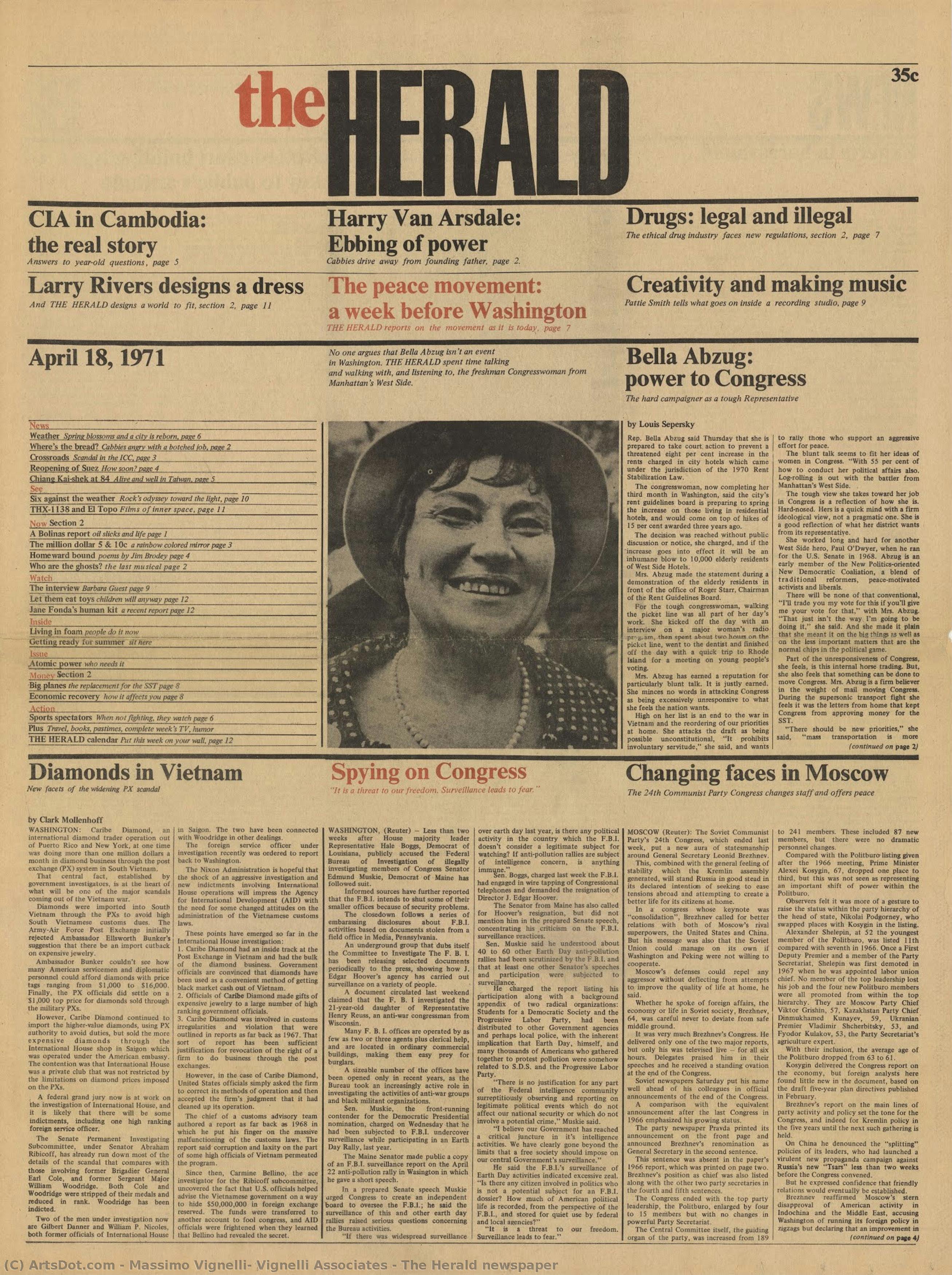
The Herald newspaper

- 43.0 x 57.0 cm


Experience the modernist grid design of The Herald newspaper by Massimo Vignelli (1971), showcasing vintage graphic communication art; discover this iconic piece today.
 Розгорнути текст
Ммассімо Віньєллі (1931-2014): Італійський дизайнер і художник, відомий мінімалістичним графічним дизайном, зокрема міським маршрутом Нью-Йорка та корпоративними брендами. Дослідіть його спадок!
Мистецький твір, представлений на цій сторінці, захищений законом про авторське право, що унеможливлює легальне створення або продаж його ідентичної репродукції. Цей захист забезпечується відповідно до міжнародних угод, таких як Бернська конвенція та національним законодавством, зокрема положеннями, що викладені в Законодавство США про авторське право — Розділ 17. Всі права захищені. Будь-яке використання без дозволу заборонено.
Цей метод повністю відповідає нормам авторського права, оскільки він не передбачає копіювання чи дублювання захищеного твору мистецтва. Натомість це творче переосмислення — створення нового малюнка під впливом оригіналу, який не є його точним відтворенням.
Гікле / Художній принт
Друк جيкле або на полотні музейної якості з оперативним виготовленням та різноманітними варіантами фінішної обробки. ( Замовити картину ручної роботи Перейти до цифрових зображень)




P118B ₴10

P118H ₴10

P118W ₴10

P438Z ₴10

P508JH ₴12

P508YH ₴12

P805H ₴10

P805Z ₴10

P919BZ ₴10

P919G ₴10

P919XJ ₴10

P959ZH ₴10

P968JZ ₴12

W106C ₴8

W218G ₴10

W218JH ₴8

W218Y ₴10

W307PJ ₴10

W316G ₴10

W316PJ ₴8

W316Y ₴10

W398PJ ₴8

W4111J ₴10

W500HY ₴15

W500JH ₴15

W692G ₴12

W849H ₴8

W940BG ₴15

W953PJ ₴8




Стандартний розмір
індивідуальний розмір
CM
INCH
Обирайте з наших стандартних розмірів, що відповідають оригінальним пропорціям твору мистецтва.
Loading sizes...

ширина
висота
Введіть необхідну ширину та висоту, щоб принт ідеально підійшов до вашої рами або стіни. Принт можна лише обрізати, але не можна зробити більшим за оригінал, тому при зміні пропорцій частина зображення буде втрачена. Перед друком ми надсилаємо вам цифровий макет для затвердження. Зображення на цій сторінці не відображає реальну обрізку — її можна побачити лише на макеті.
Доставка по всьому світу () за 2 тижні замість стандартних 4/5 тижнів. (1 Листопад)

Безкоштовна експрес-доставка по всьому світу

Високоякісне лляне полотно

Повне страхове покриття доставки

Гарантія повернення митних зборів

Гарантія точного відтворення кольорів

Політика повернення протягом 100 днів (лише у разі виявлення дефектів)

Гарантія повернення 100% коштів

Пропозиція на оптові замовлення
 Скляний варіант доступний лише для розмірів до 110 см

The Herald newspaper
Гікле / Художній принт
Розмір репродукції
-


Підсумкова вартість
₴ 3102
The Grid of Modern Communication: Vignelli's The Herald
To encounter this piece is to step directly into the vibrant, structured chaos of mid-century New York journalism. This reproduction of The Herald newspaper from April 1971, conceived by Massimo Vignelli and his associates, is far more than mere ephemera; it is a meticulously designed artifact of visual communication history. It captures a moment when design principles—simplicity, functionality, and rigorous structure—were being aggressively applied to the seemingly unruly medium of print journalism. The very act of presenting this newspaper front page transforms what might be considered disposable media into a profound study in modernist graphic discipline.
A Masterclass in Structured Design
Vignelli’s genius, always rooted in an almost architectural understanding of space, is on full display here. The description notes the structure: a rigid grid of six columns and sixteen modules per column. This underlying skeleton dictates every element—the placement of headlines like "Diamonds in Vietnam," the accompanying portrait of the smiling woman, and the smaller articles detailing everything from spying congress to changing leaves in Moscow. Vignelli’s commitment to using a single typeface, Times Roman, across various weights and sizes, speaks volumes about his belief in universal legibility. It is a powerful testament to the idea that restraint—the disciplined use of negative space and consistent typography—can generate an overwhelming sense of order and sophistication.
Historical Resonance and Materiality
The year 1971 places this work within a fascinating cultural nexus, post-war modernism grappling with the burgeoning media landscape. While the paper itself ultimately folded due to distribution issues, its surviving design remains potent. For the collector or designer, understanding this context is key. This piece speaks to an era obsessed with efficiency and clarity in information transfer. When considering a reproduction for your space, you are not just acquiring art; you are curating a dialogue about how we consume knowledge—a conversation between the fleeting headline and the enduring power of good design.
Symbolism of the Grid
The grid itself functions as the primary symbolic element. In an age where digital information often feels overwhelming, this physical manifestation of order offers a visual anchor. It symbolizes control, but not oppressive control; rather, it suggests that even complex narratives—the confluence of international events and local interest—can be organized into digestible, beautiful patterns. The interplay between the large, arresting photograph and the tightly packed textual modules creates a dynamic tension, mirroring the very energy of a bustling city like New York in that era.
Bringing Modernist Precision Home
For interior design or gallery display, this piece offers an unparalleled opportunity to inject intellectual rigor into a space. It pairs beautifully with minimalist furniture, mid-century modern accents, or any setting that appreciates the clean lines of 20th-century industrial aesthetics. Owning this reproduction is an homage to Massimo Vignelli’s lifelong dedication to elevating the mundane—the daily newspaper—into something enduringly beautiful and intellectually stimulating.
Питання та відповіді
До якого стилю належить "The Herald newspaper"?
Мистецький напрям, до якого належить «The Herald newspaper» роботи Massimo Vignelli, Vignelli Associates, — це Modernism. Така класифікація дозволяє розмістити цей твір у контексті суміжних митців та творів мистецтва.
Для чого рекомендується використовувати репродукцію «The Herald newspaper»?
Рекомендоване використання відбитка «The Herald newspaper» — це Statement.
Яку форму має «The Herald newspaper» роботи Massimo Vignelli, Vignelli Associates та які її розміри?
Формат твору "The Herald newspaper" — Portrait, а оригінал має розмір 43 x 57 cm. Обидва показники є корисними під час планування репродукції.
Біографія митця
Життя, присвячене формі: Світ Массімо Віньєллі
Народившись у Мілані, Італія, у 1931 році, шлях Массімо Віньєллі став втіленням непохитної відданості принципам модерністського дизайну. З юних років він демонстрував природне розуміння візуальної комунікації, розпочавши свою формальну підготовку в галузі архітектури в Міланському політехнічному інституті, а згодом продовживши навчання в Університеті Венеції (Università Iuav di Venezia). Проте саме стажування у поважних братів Кастільйоні — піонерів італійського промислового дизайну — справді запалило його пристрасть до перетворення світу через осмислену творчіstring. Цей ранній досвід прищепив йому віру у функціональність, простоту та силу елегантних рішень повсякденних проблем. Він не просто створював об'єкти; він конструював досвід, спрощував взаємодію та підносив буденне до рівня незабутнього. Цей формуючий період заклав фундамент для кар'єри, що здатна переосмислити візуальну культуру на цілих континентах.З Італії до Нью-Йорка: Трансатлантичне бачення
Шлях Віньєллі привів його до Америки у 1966 році, де він відіграв ключову роль у створенні нью-йоркського офісу Unimark International. Це стало поворотним моментом не лише для його кар'єри, а й для всього ландшафту американського дизайну. Компанія Unimark швидко здобула визнання, а внесок Віньєллі — найбільш помітним із яких став довговічний логотип American Airlines — закріпив його репутацію майстра корпоративної ідентичності. Однак зростаючі розбіжності у творчій філософії спонукали його розпочати незалежну справу. У 1971 році разом зі своєю дружиною та довіреною колегою протягом усього життя, Леллою Віньєллі, він заснував Vignelli Associates. Це партнерство виявилося надзвичайно плідним, ставши синонімом витончених дизайнерських рішень, що охоплювали графічний дизайн, інтер'єри, дизайн продуктів та архітектуру. Етос фірми ґрунтувався на переконанні, що хороший дизайн має бути доступним, позачасовим і глибоко корисним — принципи, які вони незмінно відстоювали протягом усієї своєї діяльності.Іконічні творіння: Спадщина ясності
Вплив Массімо Віньєллі вплетений у саму тканину сучасного життя. Можливо, його найбільш впізнаваним досягненням є редизайн карти метро Нью-Йорка 1972 року. Хоча спочатку він викликав суперечки через відхід від суворої географічної точності, це було сміливим заявом про важливість чіткості та зручності використання. Віньєллі поставив на перше місце зрозумілість і інтуїтивну навігацію замість буквального відображення реальності, створивши діаграматичну карту, яка й досі щодня веде мільйони пасажирів. Цей проєкт є втіленням його основної філософії: пріоритет комунікації понад усе. Окрім карти метро, Vignelli Associates залишили незгладимий слід у роботі численних брендів та інституцій. Їхня робота для Bloomingdale’s — включаючи культовий коричневий паперовий пакет із простим білим логотипом — перетворила процес покупок на маніфест стилю. Вони розробляли меблі для Knoll, упаковку для Heller та корпоративну ідентичність, що стала миттєво впізнаваним символом якості та інновацій. Його Heller Rainbow Dinnerware слугує свідченням його мінімалістичної естетики, демонструючи яскраві кольори в чистих геометричних формах. Постер Tredicesima Triennale di Milano демонструє сміливе використання кольору та форми, тоді як обкладинка Knoll Design підкреслює його здатність створювати вражаючі візуальні образи для відомих брендів.Тривалий вплив: Поза межами естетики
Вплив Массімо Віньєллі виходить далеко за межі окремих проєктів; він фундаментально змінив те, як ми сприймаємо сам дизайн. Він був палким прихильником типографічної дисципліни, відомим своєю пропагандою обмеженої палітри шрифтів — вірячи, що справжня креативність полягає не в нескінченному виборі, а у майстерному виконанні за допомогою ретельно підібраних інструментів. Його книга The Vignelli Canon стала маніфестом для дизайнерів, окреслюючи його принципи ясності, простоти та незгасної елегантності. Він не просто створював візуально приємні об'єкти; він прагнув створити порядок із хаосу, ефективно комунікувати та підносити людський досвід через продуманий дизайн. Його робота продовжує надихати покоління дизайнерів, нагадуючи їм, що справжня інновація полягає в тому, щоб відкинути непотрібне і зосередитися на суттєвому. Центр досліджень дизайну імені Віньєллі в Рочестерському технологічному інституті слугує тривалою даниною його спадщині, зберігаючи величезний архів його робіт та сприяючи подальшому вивченню його революційних ідей. Він пішов із життя у 2014 році, але його проєкти залишаються потужно присутніми, формуючи наш світ своєю неперевершеною елегантністю та непохитною відданістю ясності.
Massimo Vignelli, Vignelli Associates
1931 - 2014 , Італія
Короткі факти
- Artistic Movement Or Style: Модернізм
- Artists Who Influenced This Artist:
- Ахілле Кастільйоні
- Пієро Джакомо Кастільйоні
- Date Of Birth: 1931 рік
- Date Of Death: 2014 рік
- Full Name: Массімо Віньєллі
- Nationality: Італійський
- Notable Artworks:
- Логотип американських авіаліній
- Карта Нью-Йоркського метро
- Фірмовий стиль Bloomingdale
- Place Of Birth: Мілан, Італія
Пов'язані статті

TopImpressionists.com F.A.Q.: Discover the Vibrant Beauty of Our Premium Art Poster Prints
Explore the technical excellence of TopImpressionists.com's premium art poster prints. Discover how our 12-color pigment system and archival inks capture the luminous beauty of Impressionist masterpieces with unmatched color fidelity and museum-grade durability for the discerning collector.
Досліджуйте твори мистецтва, впорядковані за темами, стилями та характеристиками.


