

 Переглянути в інтер'єрі
 Надіслати як листівку
 Поділитися
 Деталі витвору
 Посібник

 Завантажити
 Схожі екземпляри
 Рентгенівське дослідження
 Слайд-шоу
 Статистика
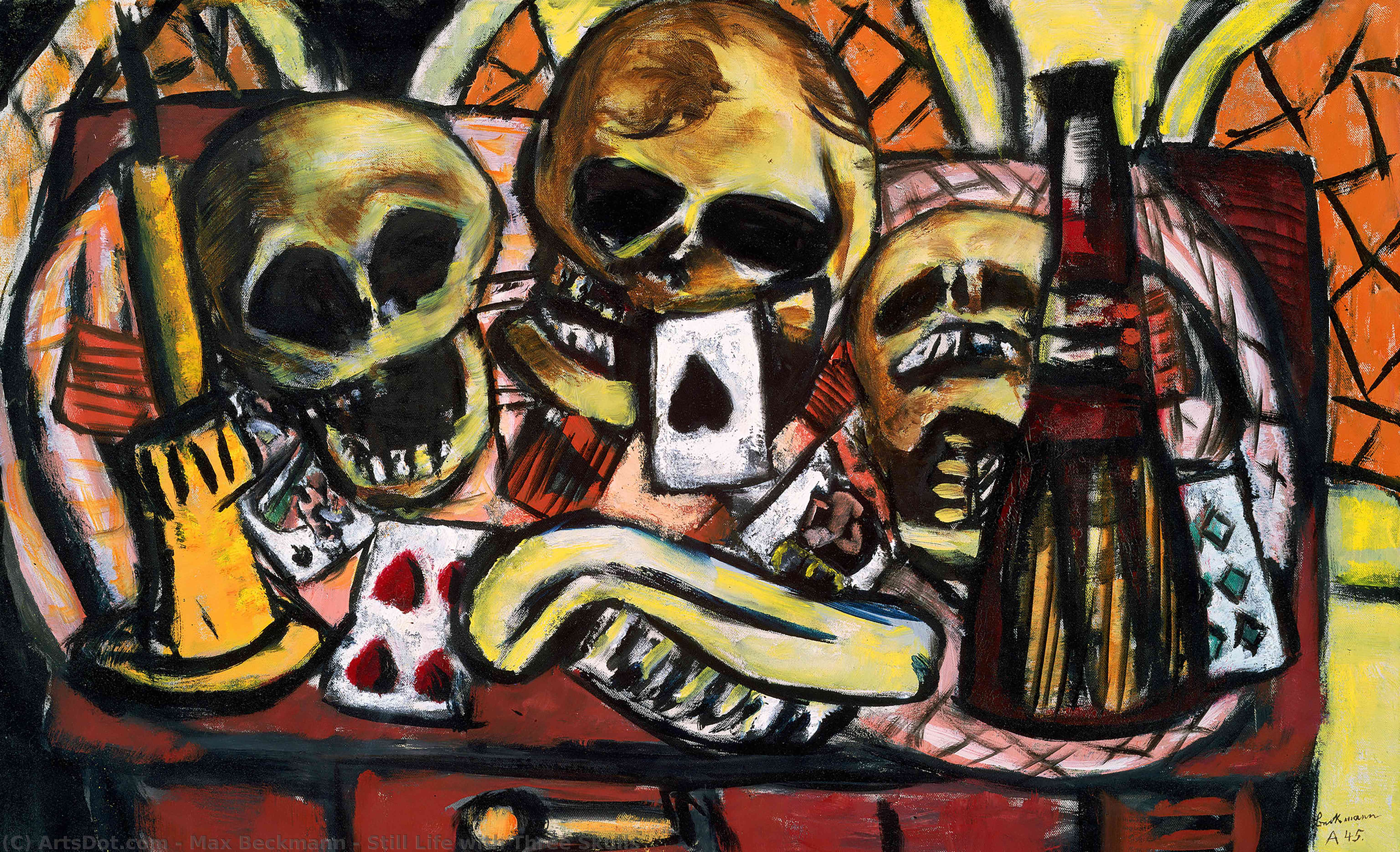
Still Life with Three Skulls


Three haunting skulls and scattered bottles create a profound sense of mortality in this powerful German Expressionist still life by Max Beckmann, inviting you to explore the depths of this evocative masterpiece.
 Розгорнути текст
Ефектний пейзаж від Макса Ернста «Європа після дощу II» (1942) вражає барвистими тонами та сюрреалістичною композицією. Відкрийте для себе шедевр Супрематизму, що символізує розпад цивілізації та повернення природи!
Гікле / Художній принт
Друк جيкле або на полотні музейної якості з оперативним виготовленням та різноманітними варіантами фінішної обробки. ( Замовити картину ручної роботи Перейти до цифрових зображень)




P118B ₴10

P118H ₴10

P118W ₴10

P438Z ₴10

P508JH ₴12

P508YH ₴12

P805H ₴10

P805Z ₴10

P919BZ ₴10

P919G ₴10

P919XJ ₴10

P959ZH ₴10

P968JZ ₴12

W106C ₴8

W218G ₴10

W218JH ₴8

W218Y ₴10

W307PJ ₴10

W316G ₴10

W316PJ ₴8

W316Y ₴10

W398PJ ₴8

W4111J ₴10

W500HY ₴15

W500JH ₴15

W692G ₴12

W849H ₴8

W940BG ₴15

W953PJ ₴8




Стандартний розмір
індивідуальний розмір
CM
INCH
Обирайте з наших стандартних розмірів, що відповідають оригінальним пропорціям твору мистецтва.
Loading sizes...

ширина
висота
Введіть необхідну ширину та висоту, щоб принт ідеально підійшов до вашої рами або стіни. Принт можна лише обрізати, але не можна зробити більшим за оригінал, тому при зміні пропорцій частина зображення буде втрачена. Перед друком ми надсилаємо вам цифровий макет для затвердження. Зображення на цій сторінці не відображає реальну обрізку — її можна побачити лише на макеті.
Доставка по всьому світу () за 2 тижні замість стандартних 4/5 тижнів. (27 Жовтень)

Безкоштовна експрес-доставка по всьому світу

Високоякісне лляне полотно

Повне страхове покриття доставки

Гарантія повернення митних зборів

Гарантія точного відтворення кольорів

Політика повернення протягом 100 днів (лише у разі виявлення дефектів)

Гарантія повернення 100% коштів

Пропозиція на оптові замовлення
 Скляний варіант доступний лише для розмірів до 110 см

Still Life with Three Skulls
Гікле / Художній принт
Розмір репродукції
-


Підсумкова вартість
₴ 3093
A Memento Mori in Modernity
In the hauntingly evocative Still Life with Three Skulls, the viewer is invited into a somber, introspective space where the boundaries between life and death blur through the lens of German Expressionism. Max Beckmann, a master of capturing the psychological weight of the human condition, presents a composition that transcends mere tabletop arrangement. The painting features three skulls arranged across a dark, textured surface, their hollow sockets staring back with an unsettling permanence. Interspersed among these skeletal remains are various bottles and a solitary knife, objects that ground the macabre subject matter in a domestic, almost mundane reality. This juxtaposition creates a profound tension, as the everyday items of life sit alongside the undeniable symbols of mortality.
The technique employed by Beckmann is nothing short of visceral. Eschewing the delicate smoothness of classical still lifes, he utilizes a bold, distorted approach to space and form that reflects his experience as a medical orderly during World War I. The brushwork feels heavy and deliberate, imbuing each object with a sense of sculptural weight. There is a rhythmic quality to the placement of the bottles—one perched in the upper right, another near the center, and a third anchoring the lower left—which guides the eye through a labyrinth of light and shadow. This use of chiaroscuro, reminiscent of the Old Masters like Rembrandt, serves to heighten the drama, pulling the skulls out of the darkness and forcing a confrontation with their stark, bony architecture.
Symbolism and the Weight of Existence
To gaze upon this work is to engage with the ancient tradition of memento mori—the reminder that death is an ever-present companion. However, Beckmann breathes a modern, existential dread into this classical theme. The skulls are not merely decorative symbols; they represent the fragility of the human ego and the inevitable decay of all material things. The presence of the knife adds a layer of latent violence or perhaps the surgical precision of fate, while the bottles suggest the fleeting pleasures of the senses that cannot stave off the end. For the collector or interior designer, this piece offers more than just visual interest; it provides a profound intellectual anchor for a room, sparking conversation about the cyclical nature of life and the enduring legacy of human struggle.
For those seeking to integrate such a powerful work into a curated space, a high-quality reproduction of Still Life with Three Skulls serves as a centerpiece of immense character. It is an ideal selection for a study, a library, or a sophisticated gallery wall where art is intended to provoke thought and evoke emotion. The painting’s dark palette and commanding presence allow it to harmonize with rich textures like leather, dark wood, and velvet, creating an atmosphere of timelessness and intellectual depth. Owning this piece is an invitation to contemplate the beauty found within the shadows and to appreciate the raw, unfiltered truth of the human experience as captured by one of the twentieth century's most significant artistic voices.
Питання та відповіді
Кольори «Still Life with Three Skulls» роботи Макс Бекманн яскраві чи приглушені?
«Still Life with Three Skulls» роботи Макс Бекманн вирізняється Balanced Soft насиченістю та Balanced інтенсивністю кольору.
Який формат у "Still Life with Three Skulls"?
«Still Life with Three Skulls» роботи Макс Бекманн має Panoramic формат. Формат визначає пропорції композиції.
Як я можу придбати принт «Still Life with Three Skulls» роботи Макс Бекманн?
Принт роботи «Still Life with Three Skulls» роботи Макс Бекманн можна замовити безпосередньо на її сторінці Художній принт: художній принт на бавовняному полотні або архівному канвас-папері.
Біографія митця
Early Life and Artistic Development
Max Carl Friedrich Beckmann (født 12. februar 1884 i Leipzig, Sachsen) var en fremtrædende tysk maler, tegner, grafiker og skulptør samt forfatter. Hans kunstneriske rejse begyndte med akademisk korrekte gengivelser, hvilket senere udviklede sig til deformerede figurer og rum, der afspejlede hans ændrede verdensbillede efter tjenesten som medicinsk ordning under Første Verdenskrig. Denne traumatiske erfaring havde dybtgående indflydelse på hans kunstneriske stil og blev en konstant kilde til inspiration gennem hele hans karriere. Hans tidlige uddannelse fandt sted ved Weimar Kunstakademi, hvor han blev præget af konservative idealer og fokus på klassisk teknik. Dette førte til en udvikling mod ekspressionistiske udtryk og brug af nye kunstneriske metoder.Artistic Style and Influences
Beckmanns stil var radikalt anderledes fra mange samtidige kunstnere og blev karakteriseret ved et unikke forhold mellem fantasi og realisme. Han fandt inspiration i middelalderlige klosterglasmalerier, hvilket førte til brug af kontrastfulde farver og dramatiske kompositioner. Hans kunstneriske udvikling blev betydeligt påvirket af flere prominente kunstnere, herunder Cézanne, hvor Beckmanns interesse for geometriske former og perspektiv blev tydelig. Han studerede også værkerne hos Vincent van Gogh, hvilket førte til en brug af kraftfulde penselstrøg og følelsesladede farver – teknikker, der senere blev centrale i hans kunstneriske udtryk. Desuden fandt Beckmann inspiration i værkerne fra Rembrandt og Rubens, hvor han efterlignede deres brug af lys og skygge til at skabe atmosfære og psykologisk dybde. Han var også fascineret af nordeuropæiske kunstnere fra sen middelalder og tidlig renæssance som Bosch og Grünewald, hvilket førte til en interesse for groteske billeder og symbolsk fortælling. Disse kunstnere prægede hans kunstneriske verdenssyn og bidrog til udviklingen af hans egen unikke stil.Notable Works and Exhibitions
Beckmanns kunstproduktion omfattede et bredt spektrum af værker, hvoraf mange blev betragtet som blandt de mest betydningsfulde inden for ekspressionismen. Hans mest kendte malerier inkluderer "The Bark" (1925), hvor han udforskede temaet menneskelig isolation og eksistensielle spørgsmål gennem en abstrakt komposition præget af geometriske former og kontrastfulde farver. Dette værk blev udstillet på flere internationale udstillinger og anses for at være et ikon inden for ekspressionismen. Han skabte også selvportrætter, hvor han udforskede temaet identitet og selvbevidsthed gennem detaljerede gengivelser af ansigtet og kroppen. Disse selvportrætter var ikke blot teknisk præcise, men også psykologisk indsigtfulde og udtrykte Beckmanns følelsesmæssige tilstand på en måde, der var både ærlig og udfordrende. Hans værker blev præget af hans konstante søgen efter nye kunstneriske udtryk og hans evne til at kommunikere komplekse idéer og følelser gennem billedsprog. Udover individuelle værker var Beckmann aktiv i kunstneriske kollektiver og samarbejdede med andre ekspressionistiske kunstnere om projekter, hvor han udforskede forskellige kunstneriske teknikker og stilistikker. Han deltog også i flere vigtige udstillinger, hvor hans kunst blev præsenteret for offentligheden og vurderet af kritikere og kunsthistorikere. Disse udstillinger bidrog til at styrke Beckmanns internationale renommé og cementerede hans position som en af de mest betydningsfulde kunstnere i sin tid.Later Life and Exile
Beckmanns kunstneriske karriere blev præget af flere udfordringer og omvæltninger, hvoraf den største var hans udvisning fra Frankfurt Kunstakademi efter nazisternes magtovertagelse i 1933. Dette førte til en betydelig nedgang i hans økonomi og begrænsede hans kunstneriske aktiviteter. Han flyttede til Amsterdam i 1938, hvor han søgte beskæftigelse som lærer og kunsthistoriker, men fik ikke mulighed for at få et visa til USA. Denne selvpålagte eksilperiode var præget af både kreativ udfordring og følelsesmæssig smerte, hvilket førte til udviklingen af nye kunstneriske temaer og teknikker. Han fortsatte med at male og skildre menneskelige konflikter og tragedier gennem sine værker, hvor han udtrykte sin bekymring for verdens aktuelle forhold og hans egen personlige erfaringer. Hans kunst blev præget af hans konstante søgen efter nye perspektiver og hans evne til at kommunikere komplekse idéer og følelser gennem billedsprog. På trods af de udfordringer, han stod overfor under naziregimet og senere i eksilperioden, lykkedes det Beckmann at opretholde sin kunstneriske kreativitet og producere nogle af verdens mest ikoniske værker inden for ekspressionismen. Han døde i december 1950 i München og efterlod sig et omfattende kunstværk, der fortsat inspirerer kunstnere og kunsthistorikere verden over. Hans kunst er kendt for sin psykologiske dybde, symbolsk kompleksitet og teknisk præcision og anses for at være blandt de mest betydningsfulde værker inden for ekspressionismen og moderne kunst generelt.
Макс Бекманн
1884 - 1950 , Німеччина
Короткі факти
- Artistic Movement Or Style: Експресіонізм
- Artists Or Movements Influenced By This Artist:
- Рембрандт
- Бош
- Artists Who Influenced This Artist:
- Жорж Сеора
- Вінсент Ван Гог
- Date Of Birth: 12 лютого 1884 р.
- Date Of Death: 27 грудня 1950 р.
- Full Name: Макс Карл Фридрих Бекманн
- Nationality: Німецький
- Notable Artworks:
- «Єль Бесо»
- Портрет у смокінгу
- Place Of Birth: Лейпциг, Німеччина
Пов'язані статті

Unmasking Emotion: A Journey Through the Raw Power and Visceral Beauty of German Expressionism
Explore the raw emotional power of German Expressionism. From Kirchner to Die Brücke, discover how artists used distortion and vibrant color to unmask the human psyche. A deep dive into art history for the discerning collector and enthusiast.
Досліджуйте твори мистецтва, впорядковані за темами, стилями та характеристиками.


