

 Переглянути в інтер'єрі
 Надіслати як листівку
 Поділитися
 Деталі витвору
 Посібник

 Завантажити
 Схожі екземпляри
 Рентгенівське дослідження
 Слайд-шоу
 Q&A
Q&A Статистика
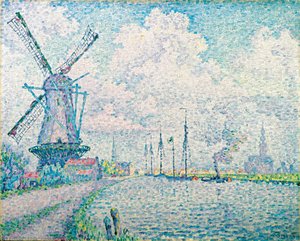
Dutch Mill at Edam

- 73.0 x 92.0 cm


A serene Neo-Impressionist view of a windmill and tranquil boats by Paul Signac captures the luminous essence of 1898 through masterful Pointillism, inviting you to bring this peaceful Dutch scene into your collection.
 Розгорнути текст
Пауль Сіганк (1863-1935) – ключова постать неоімпресіонізму та майстер техніки точкистизму. Його яскраві морські пейзажі, порти та міста надихали художників століттями. Відкрийте для себе світ мистецтва Сіганка!
Отримайте файл, готовий до друку, якість якого значно перевищує якість веб-попереднього перегляду. Кожне цифрове зображення, яке ми продаємо, створене на основі високої роздільної здатності з нашої бази даних — зазвичай від 5 000 до 15 000 пікселів по ширині — тому ви можете впевнено друкувати у великому форматі, робити щільну обрізку або відтворювати найдрібніші деталі.
Жоден файл не залишається в нашій студії без уваги. Експерт із цифрової обробки звіряє кольори з оригінальною картиною та за потреби коригує їх, після чого покращує чіткість і деталізацію за допомогою професійних інструментів ретушування — завжди зберігаючи вірність мазкам пензля та стилю художника. Результатом є зображення, яке виглядає як справжня картина, а не як відскановане фото з накладеними фільтрами.
Ви затверджуєте результат перед завершенням замовлення: протягом 72 годин наш експерт надішле зображення електронною поштою для вашого перегляду. Не задоволені результатом? Ви можете попросити про внесення змін чи виправлень або отримати відшкодування, якщо якість не відповідає вашим очікуванням.
Саме на таку якість покладаються видавництва, дизайн-студії, галереї та друкарні.
Цифрове зображення
Завантажте файл високої роздільної здатності для особистого використання, друку та творчих проєктів. ( Перейти до друку Замовити картину ручної роботи)
Переваги кожного замовлення цифрових зображень
Експертна цифрова доставка з гарантією якості
Обираючи TopImpressionists.com, ви отримуєте не просто зображення — ви отримуєте професійно вдосконалений цифровий витвір мистецтва, створений з надзвичайною точністю та підкріплений гарантією задоволення. Ось усе, що автоматично додається до вашого замовлення:

Швидка доставка на email
Ваш цифровий файл із зображенням високої роздільної здатності буде надісланий вам електронною поштою протягом 72 годин після оформлення замовлення — він буде готовий до негайного використання.

Цифровий файл із покращенням ШІ
Ваш витвір мистецтва професійно оптимізовано за допомогою передових інструментів штучного інтелекту та ручної корекції, що забезпечує максимальну деталізацію, чіткість і точність передачі кольорів.

Безкоштовне повторне завантаження назавжди
Випадково видалили або втратили файл? Не хвилюйтеся — ми надішлемо його вам повторно в будь-який час безкоштовно.

Без митних зборів — завжди
Насолоджуйтесь вашим витвором мистецтва миттєво без жодних мит, зборів або плати за доставку — цифрові завантаження завжди не оподатковуються.

Гарантія точності кольорів
Ми гарантуємо максимально точне відтворення оригінальних кольорів на вашому цифровому зображенні завдяки використанню професійних інструментів та систем управління кольором.

100-денна гарантія задоволення
Якщо ви не задоволені придбаним цифровим зображенням, ми внесемо правки або повернемо 100% вартості протягом 100 днів — без зайвих запитань.

Гарантія повернення 100% коштів
Незадоволені покупкою? Отримайте повне повернення коштів протягом 100 днів після отримання цифрового файлу — без зайвих запитань.

Знижки на оптові замовлення
Купуйте 3 зображення — заощаджуйте 10% — Купуйте 5 — заощаджуйте 15% — Купуйте 10+ — заощаджуйте 20%. Чудово підходить для творчих проєктів, галерей та агентств.
A Symphony of Light and Color in Edam
In the quietude of the late nineteenth century, few landscapes capture the essence of tranquil maritime life as poignantly as Paul Signac’s Dutch Mill at Edam. Created in 1898, this masterpiece serves as a window into a world where time seems to slow, anchored by the majestic presence of a windmill that stands as a sentinel over the shimmering waters. The scene is far more than a mere depiction of a Dutch landscape; it is a meticulously orchestrated dance of light and atmosphere. As the eye wanders across the canvas, one encounters a serene arrangement of boats drifting upon the water, their forms softly integrated into the surrounding environment. A few solitary figures are scattered throughout the composition, adding a touch of human narrative to the vastness of the scene, suggesting a moment of quiet reflection or the rhythmic, peaceful labor of life by the canal.
The true soul of this painting lies in Signac’s mastery of Neo-Impressionism. Moving beyond the spontaneous brushstrokes of his predecessors, Signac employed the rigorous technique of Pointillism to achieve a scientific yet deeply emotional harmony. Rather than blending pigments on a palette, he applied tiny, distinct dots of pure, unadulterated color directly onto the canvas. This method relies on the viewer's eye to perform the final act of creation, optically mixing the vibrant hues to produce a luminosity that feels almost alive. In Dutch Mill at Edam, this technique allows the sunlight to appear as if it is vibrating against the sails of the mill and dancing upon the ripples of the water, creating a sense of depth and brilliance that traditional blending could never achieve.
A Timeless Addition to the Sophisticated Interior
For the discerning collector or interior designer, this reproduction offers much more than visual beauty; it provides an emotional anchor for a room. The painting’s palette—a sophisticated blend of soft blues, earthy tones, and luminous highlights—possesses a unique ability to evoke feelings of peace and stability. It is a piece that invites contemplation, making it an ideal centerpiece for a study, a quiet reading nook, or a grand living space where one wishes to introduce a sense of historical depth and classical elegance.
Integrating such a high-quality hand-painted reproduction into a modern decor scheme allows for a striking contrast between contemporary minimalism and the rich, textured heritage of the Post-Impressionist era. The structural rhythm of the windmill and the rhythmic application of color dots provide a sophisticated texture that complements both neutral palettes and more eclectic, colorful environments. To own this work is to possess a fragment of art history—a tribute to the scientific beauty of light and the enduring charm of the Dutch landscape, rendered with the precision and passion of a true master.
Питання та відповіді
Що зображено на творі «Dutch Mill at Edam» роботи Пол Сінак і який у нього настрій?
«Dutch Mill at Edam» роботи Пол Сінак поєднує в собі windmill, boats, water, people, sails, sky із Serene атмосферою.
Яку атмосферу привносить «Dutch Mill at Edam» роботи Пол Сінак в інтер'єр?
Завдяки своїй Serene атмосфері, робота "Dutch Mill at Edam" чудово підійде для Living Room.
Яка насиченість кольорів у творі «Dutch Mill at Edam» роботи Пол Сінак?
Кольори в «Dutch Mill at Edam» роботи Пол Сінак мають Balanced насиченість.



Біографія митця
The Harmonious Vision of Paul Signac
Paul Victor Jules Signac, born in the heart of Paris in 1863, wasn’t merely a painter; he was an architect’s initial aspiration transformed into a passionate exploration of light, color, and the very science underpinning visual perception. His early life, steeped in the artistic atmosphere of Montmartre – a vibrant hub for creativity at the time – ignited within him a lifelong fascination with capturing the world's beauty through paint. Initially drawn to architecture, a chance encounter with Claude Monet’s groundbreaking exhibition served as a pivotal catalyst, setting his artistic trajectory on an entirely new course. Signac wasn’t content with simply observing; he yearned to understand *how* light danced across surfaces and how color could evoke emotion – a quest that would ultimately define his revolutionary approach to painting.A Partnership Forged in Scientific Inquiry
The meeting between Signac and Georges Seurat in 1884 proved to be the genesis of Neo-Impressionism, a movement that sought to reconcile artistic expression with scientific principles. Both artists were deeply influenced by Eugène Delacroix’s writings on color theory, particularly his exploration of complementary contrasts and their ability to create vibrant visual effects. Together, they embarked on a rigorous investigation into these concepts, meticulously translating them into a revolutionary painting technique – Pointillism. This wasn't simply about applying dots; it was an attempt to systematize the entire process of painting, grounding it in scientific observation and challenging the established norms of Impressionism’s fleeting brushstrokes. Signac wholeheartedly embraced Seurat’s vision, abandoning the spontaneous approach for a deliberate, calculated application of tiny, distinct points of pure color intended to blend optically within the viewer's eye. This meticulous process demanded an extraordinary level of precision and control, transforming painting from an act of intuition into one of scientific analysis.Coastal Reveries and the Birth of a Style
Following Seurat’s tragic death in 1891, Signac inherited the mantle of Neo-Impressionism, continuing to refine and expand upon their shared principles. He found renewed inspiration in his travels, particularly along the French Riviera, where he established a home in Saint-Tropez – a place that would become synonymous with his artistic output. The shimmering waters, sun-drenched harbors, and picturesque coastal landscapes provided an endless source of visual stimulation, fueling his exploration of color and light. *The Red Buoy, Saint-Tropez* (1895) stands as a testament to this period, showcasing Signac’s mastery of Pointillism in capturing the vibrant hues and dynamic energy of the Mediterranean coast. He began to experiment with larger brushstrokes and a broader palette, moving beyond strict adherence to Seurat's precise dotting method, injecting a sense of personal expression into his work while retaining its underlying scientific foundation.A Patron of the Avant-Garde and Lasting Legacy
Beyond his own prolific output, Paul Signac played a crucial role in fostering the development of modern art through his leadership within the Société des Artistes Indépendants. From 1908 until his death in 1935, he served as president, providing a vital platform for emerging talents and championing artistic freedom – often pushing boundaries with works that challenged conventional aesthetic norms. He recognized and supported artists like Henri Matisse, André Derain, and others who were pioneering new approaches to painting, demonstrating a remarkable foresight and commitment to the future of art. Signac’s theoretical writings, notably *From Eugène Delacroix to Neo-Impressionism* (1899), further solidified his position as a leading intellectual figure in the art world, offering a systematic exploration of color theory and its application to painting. Paul Signac's legacy extends far beyond his captivating paintings; he was a visionary artist, a dedicated theorist, and a generous patron who profoundly influenced the course of modern art, leaving an indelible mark on generations of artists to come.Key Dates & Achievements
- 1863: Born in Paris, France.
- 1884: Co-founded the Société des Artistes Indépendants with Georges Seurat.
- 1886: Painted *Boulevard de Clichy*, a key example of early Pointillism.
- 1895: Created *The Red Buoy, Saint-Tropez*, showcasing his mastery of coastal scenes.
- 1899: Published *From Eugène Delacroix to Neo-Impressionism*, a seminal work on color theory.
- 1908 – 1935: Served as President of the Société des Artistes Indépendants, championing avant-garde artists.
- 1935: Passed away in Paris at the age of 72, leaving behind a rich artistic legacy.

Пол Сінак
1863 - 1935 , Франція
Короткі факти
- Artistic Movement Or Style: Неоімпресіонізм, Точілізм
- Artists Or Movements Influenced By This Artist:
- Генрі Матісс
- Фавризми
- Artists Who Influenced This Artist:
- Клод Моне
- Жорж Сур
- Date Of Birth: 11 листопада 1863
- Date Of Death: 15 серпня 1935
- Full Name: Paul Victor Jules Signac
- Nationality: Француз
- Notable Artworks:
- Бульвар де Кліші
- Червоний буях
- Ла Валюз
- Velodrome
- Міський пляж, Коліюр
- Place Of Birth: Париж, Франція