


 Переглянути в інтер'єрі
 Надіслати
 Поділитися
 Деталі
 Посібник

 Завантажити
 Схожі предмети колекціонування
 Рентгенівське дослідження
 Слайд-шоу
 Статистика переглядів
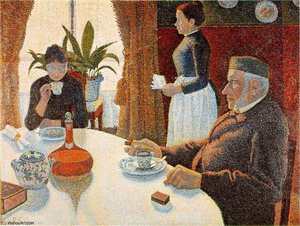
The dining room, Opus 152
 Acrylic On Canvas
- WallArt
- Neo-Impressionism
 1887
1887 16.0 x 89.0 cm
 Кройлер-Мюллер Музей
Paul Signac's "The Dining Room" (1887) is a pivotal Pointillist masterpiece. Explore its vibrant color contrasts, symbolic figures, and the artist’s critique of bourgeois society through this iconic work.
 Читати далі
Пауль Сіганк (1863-1935) – ключова постать неоімпресіонізму та майстер техніки точкистизму. Його яскраві морські пейзажі, порти та міста надихали художників століттями. Відкрийте для себе світ мистецтва Сіганка!
Олійная репродукція ручної роботи
Написана вручну олією на полотні у вашому розмірі та рамі, виготовлена на замовлення нашими художниками. ( Перейти до друку Перейти до цифрових зображень)




P118B $10

P118H $10

P118W $10

P438Z $10

P508JH $12

P508YH $12

P805H $10

P805Z $10

P919BZ $10

P919G $10

P919XJ $10

P959ZH $10

P968JZ $12

W106C $8

W218G $10

W218JH $8

W218Y $10

W307PJ $10

W316G $10

W316PJ $8

W316Y $10

W398PJ $8

W4111J $10

W500HY $15

W500JH $15

W692G $12

W849H $8

W940BG $15

W953PJ $8




Стандартний розмір
на замовлення
CM
INCH
Обирайте з наших стандартних розмірів, що відповідають оригінальним пропорціям твору мистецтва.
Loading sizes...

ширина
висота
Ви можете вказати власні розміри, щоб репродукція ідеально підійшла до конкретної рами або інтер'єру. Якщо вибраний вами розмір не відповідає пропорціям оригіналу, ми або обріжемо полотно, або доповнимо картину додатковими елементами, промальованими вручну. Цифровий макет буде надіслано вам на затвердження перед початком виробництва.
Зверніть увагу, що попередній перегляд на екрані не відображає фактичне обрізання або розширення зображення. Тільки макет точно покаже остаточну композицію.
Хоча ми можемо виготовити виріб у нестандартному розмірі, для збереження оригінальних пропорцій рекомендуємо обирати варіанти зі встановленого списку.
Приклади можливих змін: замінити обличчя на фото клієнта; додати домашню тварину (наприклад, замінити кота на собаку); додати приховане повідомлення на фоні; змінити ландшафт або елементи фону.
Після оформлення замовлення команда TopImpressionists.com зв'яжеться з клієнтом електронною поштою для отримання інструкцій та надасть попередній макет
Після оформлення замовлення команда TopImpressionists.com зв'яжеться з клієнтом електронною поштою для отримання інструкцій та надасть попередній макет
Доставка по всьому світу () за 3–4 тижні замість стандартних 5 тижнів. (23 Вересень). Без жодних компромісів у якості.

Безкоштовна експрес-доставка по всьому світу

Високоякісне лляне полотно

Повне страхове покриття доставки

Гарантія повернення митних зборів

Гарантія точного відтворення кольорів

Політика повернення протягом 100 днів (лише у разі виявлення дефектів)

Гарантія повернення 100% коштів

Знижка на оптові замовлення
 Скляний варіант доступний лише для розмірів до 110 см

The dining room, Opus 152
Техніка репродукції
Розмір репродукції
-


Загальна вартість
$ 269
The Quiet Resonance of Bourgeois Life: Paul Signac’s “The Dining Room”
Paul Signac's "The Dining Room," painted in 1887, isn’t merely a snapshot of a domestic scene; it’s a carefully constructed meditation on the complexities of modern life. Emerging from the vibrant crucible of Neo-Impressionism alongside Georges Seurat, Signac sought to move beyond the fleeting impressions of Monet and capture a more enduring truth through scientific analysis of color and light. This painting exemplifies that ambition, offering a glimpse into the lives of his family – his mother, grandfather, and housekeeper – rendered with an almost unsettling stillness within a meticulously designed interior.
The work’s core lies in Signac's innovative application of Pointillism, a technique he developed alongside Seurat. Rather than blending colors on the palette, Signac painstakingly applied tiny, distinct dots of pure color—primarily blues, yellows, and oranges-greens – directly onto the canvas. These individual points, when viewed from a distance, coalesce in the viewer’s eye to create an illusion of blended hues and subtle tonal variations. This method wasn't simply about visual trickery; it represented a systematic approach to painting, rooted in the belief that color perception was fundamentally optical. The deliberate arrangement of these dots creates a shimmering surface, almost like a mosaic, inviting prolonged observation and revealing the intricate layering of light and shadow.
A Study in Contrasting Hues and Static Forms
Signac’s masterful use of complementary colors—the interplay between blue and orange, yellow and green—dominates the composition. These pairings generate visual tension and dynamism within the otherwise restrained scene. The figures themselves are presented with a remarkable degree of formality: frontal poses, profile views, and an absence of expressive gestures. They exist as types – representatives of a timeless bourgeoisie – rather than individuals with distinct personalities or emotions. This deliberate detachment elevates the painting beyond a simple depiction of a family meal; it becomes a commentary on the self-contained nature of this social class, their lives seemingly governed by routine and devoid of genuine interaction.
The room itself is rendered with careful attention to detail, from the meticulously arranged silverware and tableware to the potted plants that introduce a touch of naturalism. The window behind the figures casts a strong, directional light, creating dramatic contrasts between illuminated areas and deep shadows. This interplay of light and dark not only adds depth to the scene but also subtly emphasizes the formality and stillness of the subjects. Notice how Signac uses the light to define the shapes of the furniture and the figures, contributing to the overall sense of order and control.
Symbolism and a Critique of Civic Life
Beyond its technical brilliance, “The Dining Room” carries a subtle layer of social critique. As an anarchist at heart, Signac used his art to challenge the prevailing values of bourgeois society – its self-satisfaction, its emphasis on material possessions, and its perceived authoritarianism. The figures’ impassive expressions and lack of communication suggest a world where genuine connection is sacrificed in favor of outward appearances and social conformity. The painting isn't celebrating domesticity; it’s presenting a carefully constructed façade, hinting at the underlying tensions and unspoken anxieties within this seemingly idyllic setting.
Considered alongside Signac’s broader artistic philosophy, “The Dining Room” stands as a pivotal work in the development of modern art. It represents a shift away from purely subjective impressions towards a more scientific and analytical approach to painting—a legacy that profoundly influenced artists like Vincent van Gogh and Piet Mondriaan. Reproductions of this captivating piece offer an exceptional opportunity to appreciate Signac’s innovative technique and his insightful commentary on the complexities of human experience.
Схожі твори мистецтва




Біографія митця
The Harmonious Vision of Paul Signac
Paul Victor Jules Signac, born in the heart of Paris in 1863, wasn’t merely a painter; he was an architect’s initial aspiration transformed into a passionate exploration of light, color, and the very science underpinning visual perception. His early life, steeped in the artistic atmosphere of Montmartre – a vibrant hub for creativity at the time – ignited within him a lifelong fascination with capturing the world's beauty through paint. Initially drawn to architecture, a chance encounter with Claude Monet’s groundbreaking exhibition served as a pivotal catalyst, setting his artistic trajectory on an entirely new course. Signac wasn’t content with simply observing; he yearned to understand *how* light danced across surfaces and how color could evoke emotion – a quest that would ultimately define his revolutionary approach to painting.A Partnership Forged in Scientific Inquiry
The meeting between Signac and Georges Seurat in 1884 proved to be the genesis of Neo-Impressionism, a movement that sought to reconcile artistic expression with scientific principles. Both artists were deeply influenced by Eugène Delacroix’s writings on color theory, particularly his exploration of complementary contrasts and their ability to create vibrant visual effects. Together, they embarked on a rigorous investigation into these concepts, meticulously translating them into a revolutionary painting technique – Pointillism. This wasn't simply about applying dots; it was an attempt to systematize the entire process of painting, grounding it in scientific observation and challenging the established norms of Impressionism’s fleeting brushstrokes. Signac wholeheartedly embraced Seurat’s vision, abandoning the spontaneous approach for a deliberate, calculated application of tiny, distinct points of pure color intended to blend optically within the viewer's eye. This meticulous process demanded an extraordinary level of precision and control, transforming painting from an act of intuition into one of scientific analysis.Coastal Reveries and the Birth of a Style
Following Seurat’s tragic death in 1891, Signac inherited the mantle of Neo-Impressionism, continuing to refine and expand upon their shared principles. He found renewed inspiration in his travels, particularly along the French Riviera, where he established a home in Saint-Tropez – a place that would become synonymous with his artistic output. The shimmering waters, sun-drenched harbors, and picturesque coastal landscapes provided an endless source of visual stimulation, fueling his exploration of color and light. *The Red Buoy, Saint-Tropez* (1895) stands as a testament to this period, showcasing Signac’s mastery of Pointillism in capturing the vibrant hues and dynamic energy of the Mediterranean coast. He began to experiment with larger brushstrokes and a broader palette, moving beyond strict adherence to Seurat's precise dotting method, injecting a sense of personal expression into his work while retaining its underlying scientific foundation.A Patron of the Avant-Garde and Lasting Legacy
Beyond his own prolific output, Paul Signac played a crucial role in fostering the development of modern art through his leadership within the Société des Artistes Indépendants. From 1908 until his death in 1935, he served as president, providing a vital platform for emerging talents and championing artistic freedom – often pushing boundaries with works that challenged conventional aesthetic norms. He recognized and supported artists like Henri Matisse, André Derain, and others who were pioneering new approaches to painting, demonstrating a remarkable foresight and commitment to the future of art. Signac’s theoretical writings, notably *From Eugène Delacroix to Neo-Impressionism* (1899), further solidified his position as a leading intellectual figure in the art world, offering a systematic exploration of color theory and its application to painting. Paul Signac's legacy extends far beyond his captivating paintings; he was a visionary artist, a dedicated theorist, and a generous patron who profoundly influenced the course of modern art, leaving an indelible mark on generations of artists to come.Key Dates & Achievements
- 1863: Born in Paris, France.
- 1884: Co-founded the Société des Artistes Indépendants with Georges Seurat.
- 1886: Painted *Boulevard de Clichy*, a key example of early Pointillism.
- 1895: Created *The Red Buoy, Saint-Tropez*, showcasing his mastery of coastal scenes.
- 1899: Published *From Eugène Delacroix to Neo-Impressionism*, a seminal work on color theory.
- 1908 – 1935: Served as President of the Société des Artistes Indépendants, championing avant-garde artists.
- 1935: Passed away in Paris at the age of 72, leaving behind a rich artistic legacy.

Пол Сінак
1863 - 1935 , Франція
Довідкова інформація
- Artistic Movement Or Style: Неоімпресіонізм, Точілізм
- Artists Or Movements Influenced By This Artist:
- Генрі Матісс
- Фавризми
- Artists Who Influenced This Artist:
- Клод Моне
- Жорж Сур
- Date Of Birth: 11 листопада 1863
- Date Of Death: 15 серпня 1935
- Full Name: Paul Victor Jules Signac
- Nationality: Француз
- Notable Artworks:
- Бульвар де Кліші
- Червоний буях
- Ла Валюз
- Velodrome
- Міський пляж, Коліюр
- Place Of Birth: Париж, Франція
Схожі статті

25 шедеврів Поля Сезанна: подорож у світ імпресіонізму та натюрморту | TopImpressionists
Відкрийте 25 найвідоміших картин Поля Сезанна! Дослідіть імпресіонізм, натюрморти та пейзажі художника. Купіть високоякісні репродукції та знайдіть ідеальний декор для вашого дому на TopImpressionists.com.

Paul Signac: Pointillism, Politics & the Pursuit of Harmony in Modern Art
Explore the life & art of Paul Signac, a key figure in Neo-Impressionism. Discover his Pointillist technique, anarchist beliefs, and stunning coastal scenes. Learn about his influence on modern art history.

Chromatic Harmonies & Discord: A History of Color Theory in Art
Explore the fascinating evolution of color theory in art history! Discover Impressionism, Neo-Impressionism & beyond with expert insights for collectors and enthusiasts. Learn about Seurat's techniques & the psychology of color.

Топ-25 шедеврів Пауля Клее: подорож у світ кольору та абстракції | TopImpressionists
Відкрийте для себе 25 шедеврів Пауля Клее – від ранніх робіт до пізнього модернізму. Пориньте у світ абстракції, експресіонізму та унікального стилю художника. Репродукції картин високої якості на TopImpressionists.com! Дослідіть повну колекцію онлайн.

Chromatic Islands: Exploring the Theory & Legacy of Pointillism in 19th-Century Art
Explore the revolutionary world of Pointillism! Discover Georges Seurat's color theory, techniques & lasting impact on art history. Learn about Signac, Luce & Neo-Impressionism’s scientific approach to painting.
Досліджуйте твори мистецтва, впорядковані за темами, стилями та характеристиками.


