


 Переглянути в інтер'єрі
 Надіслати
 Поділитися
 Деталі
 Посібник

 Завантажити
 Схожі предмети колекціонування
 Рентгенівське дослідження
 Слайд-шоу
 Статистика переглядів
Self portrait with hat
 Painting
- Post-Impressionism
 1909
1909- Modern
 15.0 x 14.0 cm
A striking close-up portrait of a man with an expressive open mouth set against a vibrant yellow background, this 1909 painting by Theo van Doesburg captures raw emotion and invites you to explore his early mastery.
 Читати далі
Тео ван Досбурґ – революціонер мистецтва! Його De Stijl та Неопластицизм вплинули на архітектуру, дизайн та абстрактне мистецтво. Геометричні форми, чисті кольори, новаторський погляд!
Гікле / Художній принт
Музейна якість друку جيкле або на полотні з оперативним виготовленням та різноманітними варіантами фінішної обробки. ( Купити картину ручної роботи Перейти до цифрових зображень)




P118B ₴10

P118H ₴10

P118W ₴10

P438Z ₴10

P508JH ₴12

P508YH ₴12

P805H ₴10

P805Z ₴10

P919BZ ₴10

P919G ₴10

P919XJ ₴10

P959ZH ₴10

P968JZ ₴12

W106C ₴8

W218G ₴10

W218JH ₴8

W218Y ₴10

W307PJ ₴10

W316G ₴10

W316PJ ₴8

W316Y ₴10

W398PJ ₴8

W4111J ₴10

W500HY ₴15

W500JH ₴15

W692G ₴12

W849H ₴8

W940BG ₴15

W953PJ ₴8




Стандартний розмір
на замовлення
CM
INCH
Обирайте з наших стандартних розмірів, що відповідають оригінальним пропорціям твору мистецтва.
Loading sizes...

ширина
висота
Введіть необхідну ширину та висоту, щоб принт ідеально підійшов до вашої рами або стіни. Принт можна лише обрізати, але не можна зробити більшим за оригінал, тому при зміні пропорцій частина зображення буде втрачена. Перед друком ми надсилаємо вам цифровий макет для затвердження. Зображення на цій сторінці не відображає реальну обрізку — її можна побачити лише на макеті.
Доставка по всьому світу () за 2 тижні замість стандартних 4/5 тижнів. (23 Жовтень)

Безкоштовна експрес-доставка по всьому світу

Високоякісне лляне полотно

Повне страхове покриття доставки

Гарантія повернення митних зборів

Гарантія точного відтворення кольорів

Політика повернення протягом 100 днів (лише у разі виявлення дефектів)

Гарантія повернення 100% коштів

Знижка на оптові замовлення
 Скляний варіант доступний лише для розмірів до 110 см

Self portrait with hat
Гікле / Художній принт
Розмір репродукції
-


Загальна вартість
₴ 3102
A Moment Captured in Amber: The Raw Humanity of Van Doesburg
In the quiet moments before his radical departure into the geometric purity of De Stijl, Theo van Doesburg captured something profoundly intimate and startlingly human. Self-portrait with hat, painted in 1909, serves as a breathtaking window into the artist's psyche during his formative years. Unlike the rigid lines and primary colors that would later define his legacy as the architect of abstraction, this work vibrates with an almost visceral energy. The subject—a man caught in a transient, candid gesture—appears to be mid-sentence or perhaps lost in a sudden yawn, lending the piece an unexpected sense of life and spontaneity. It is not merely a likeness; it is a captured breath, a fleeting second of existence frozen against a luminous, sun-drenched yellow backdrop.
The composition is masterfully focused, pulling the viewer into an immediate, face-to-face encounter with the artist. The stark contrast between the deep, obsidian black of the hat and the radiant warmth of the background creates a visual tension that commands attention. This interplay of light and shadow does more than just define form; it establishes a psychological depth. The yellow expanse behind him is not a flat void but a textured atmosphere that seems to pulse with the same vitality found in the man's expressive features. For the discerning collector, this painting offers a rare glimpse into the evolution of a master, showcasing a period where emotion and physical presence reigned supreme over mathematical precision.
Technique and the Beauty of the Visible Hand
To gaze upon this reproduction is to appreciate the tactile romance of traditional oil painting. The technique employed here celebrates the impasto spirit, where every brushstroke tells a story of movement and intention. One can almost feel the rhythmic motion of the bristles as they layered pigment to sculpt the contours of the face and the heavy fabric of the clothing. These visible strokes provide a wonderful sense of texture and depth, making the artwork feel alive and multidimensional. This handmade quality is what distinguishes a true fine art reproduction from a mere print; it possesses a soul that resonates within a room.
The artistry lies in the balance between detail and impression. While the facial features are rendered with enough precision to convey character and emotion, there is an intentional looseness that prevents the portrait from feeling static or overly academic. This stylistic choice creates an emotional resonance that is both accessible and profound. For interior designers, this piece serves as a sophisticated focal point—a conversation starter that brings a sense of historical weight and artistic integrity to any modern or classical space. It is a work that does not just decorate a wall; it anchors a room with its vibrant energy and timeless human connection.
Запитання та відповіді
Який розмір друку «Self portrait with hat» Тео ван Досбурґ підійде для рекомендованої кімнати?
Рекомендоване поєднання для «Self portrait with hat» Тео ван Досбурґ: принт розміром Small у Studio Apartment.
До якого періоду творчості Тео ван Досбурґ належить твір "Self portrait with hat"?
«Self portrait with hat» представляє Early Period Тео ван Досбурґ.
Який формат друку рекомендується для «Self portrait with hat» Тео ван Досбурґ?
Для репродукції «Self portrait with hat» Тео ван Досбурґ рекомендується розмір Small з орієнтацією Square.
Біографія митця
The Architect of Abstraction: A Life in Geometric Harmony
Theo van Doesburg, born Christian Emil Marie Küpper in 1883 in Utrecht, Netherlands, wasn’t merely a painter; he was a revolutionary force who fundamentally reshaped the very foundations of modern art. His journey began amidst the lingering echoes of Impressionism and Post-Impressionism – initially mirroring styles reminiscent of Vincent van Gogh – both in subject matter and emotional intensity. However, this early phase served as a crucial prelude, a necessary stepping stone toward the radical transformation that would define his enduring legacy. A pivotal moment arrived in 1913 with his encounter with Wassily Kandinsky’s *Rückblicke*. This text sparked within van Doesburg a profound realization: true artistic expression lay not in replicating the external world but in channeling an inner, spiritual reality through pure abstraction. It was this conviction that birthed Neoplasticism – more commonly known as De Stijl – a movement he founded and fiercely championed, becoming its most ardent advocate.Forging a New Visual Language: The Principles of De Stijl
De Stijl wasn’t merely an artistic style; it was a comprehensive philosophical manifesto translated into visual form. Van Doesburg believed in stripping art down to its most essential elements – straight lines, right angles, and the primary colors of red, yellow, and blue, alongside black, white, and gray. This austere palette wasn't born from limitation but from a desire for universality—a belief that these fundamental forms resonated with an underlying cosmic order. He envisioned a *total* work of art, extending beyond the canvas to encompass architecture, design, and even everyday objects. Collaboration was key; van Doesburg worked closely with architects like J.J.P. Oud and Gerrit Rietveld, designing stained glass windows, furniture, and entire interiors that embodied the principles of De Stijl. His collaborations extended to fellow artists such as Piet Mondrian, with whom he co-founded the influential journal *De Stijl*, a platform for disseminating their ideas and attracting like-minded creatives. However, despite their shared origins, tensions arose between van Doesburg and Mondrian regarding the rigidity of Neoplasticism. Van Doesburg introduced “Elementarism” in 1926, advocating for diagonal lines and more dynamic compositions – a departure that ultimately led to a schism within the movement, revealing his restless spirit and constant pursuit of artistic evolution.A Multifaceted Artistic Vision: Beyond Painting
While celebrated as a painter, Theo van Doesburg’s artistic pursuits were remarkably diverse. He was a prolific writer, poet, and critic, using his pen to articulate the theoretical underpinnings of De Stijl and challenge conventional notions of art. His engagement with Dadaism in the early 1920s further broadened his artistic horizons, leading to experimental works that incorporated collage and typography. This period also saw him teaching at the Bauhaus, where he shared his ideas with a new generation of artists and designers. He wasn’t content to remain within the confines of traditional art forms; van Doesburg actively sought to integrate art into everyday life, believing it had the power to transform society. His designs for interiors and furniture weren't merely aesthetic exercises but attempts to create harmonious living spaces that reflected the principles of De Stijl. A prime example is his collaboration with Sophie Taeuber-Arp and Georges Vantongerloo on designing artist residences, showcasing a holistic approach to artistic creation – an attempt to build a world *in* the image of his ideals.Key Influences & Developments
Van Doesburg’s artistic development was shaped by a complex interplay of influences. Initially drawn to the emotive power of Van Gogh's work, he quickly moved beyond mere imitation, seeking a more profound and universal language for art. The encounter with Kandinsky’s *Rückblicke* proved transformative, pushing him toward abstraction as a means of expressing inner spiritual realities. His early engagement with Futurism, though ultimately rejected due to its focus on dynamism, exposed him to new ideas about movement and technology. The impact of the Bauhaus school further solidified his commitment to functional design and the integration of art into everyday life. Crucially, his association with Piet Mondrian was both a source of inspiration and a point of contention, leading to the development of Elementarism – a departure from Neoplasticism that emphasized dynamism and complexity.Legacy & Enduring Influence
Theo van Doesburg’s life was tragically cut short in 1931 at the age of 47, yet his impact on modern art remains profound. De Stijl, though relatively short-lived as a cohesive movement, exerted an enormous influence on subsequent artistic developments, including Bauhaus design, Minimalism, and Constructivism. His emphasis on geometric abstraction, pure color, and functionalism continues to resonate with artists and designers today. His work serves as a reminder that art is not merely about representation but about the exploration of fundamental forms and ideas. Van Doesburg’s legacy extends beyond his paintings and designs; it lies in his unwavering commitment to artistic innovation and his belief in the transformative power of abstraction. His vision of a unified, harmonious world – expressed through the language of De Stijl – continues to inspire those who seek to create a more beautiful and meaningful environment.Notable Works
- Study for Simultaneous Compositions XXII (1922): A quintessential example of Neoplasticism, showcasing the movement’s signature geometric forms and limited color palette.
- Composition with half values (1928): Demonstrates van Doesburg's exploration of tonal variations within the De Stijl aesthetic.
- Dancers (1917-1918): Represents a transitional phase in his work, blending figurative elements with emerging abstract tendencies.
- Collaboration on *De Stijl* journal: A crucial platform for disseminating the movement’s ideas and fostering dialogue among artists and intellectuals.
- Elementarism (1926): Van Doesburg's attempt to inject dynamism into Neoplasticism, introducing diagonal lines and a more fluid approach to composition.

Тео ван Досбурґ
1883 - 1931 , Нідерланди
Довідкова інформація
- Artistic Movement Or Style: Де Стьйль, Неопластицизм
- Artists Or Movements Influenced By This Artist:
- Баухаус
- Мінімалізм
- Конструктивизм
- Artists Who Influenced This Artist:
- Ван Гог
- Кандінковський
- Date Of Birth: 30 серпня 1883
- Date Of Death: 7 березня 1931
- Full Name: Theo van Doesburg
- Nationality: Нідерландський
- Notable Artworks:
- Дослідження для одночасних композицій XXII
- Композиція з напівцінностями
- Танцюристи
- Place Of Birth: Утрехт, Нідерланди
Схожі статті
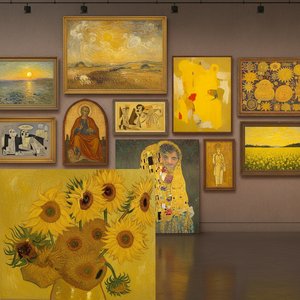
Топ-10 шедеврів живопису в домінуючих відтінках хромової жовтизни | TopImpressionists.com
Відкрийте для себе 10 найвідоміших картин, де домінує хромова жовтизна! Ван Гог, Моне та інші майстри. Історія мистецтва, техніки живопису та ідеї декору від TopImpressionists.com. Дослідіть колекцію онлайн!

Топ-10 шедеврів живопису в чорних тонах: історія, мистецтво та декор від TopImpressionists
Відкрийте для себе 10 найвідоміших картин у чорних тонах! Історія, техніка та емоції від TopImpressionists. Романтизм, готика, експресіонізм – шедеври живопису онлайн. Купіть репродукцію мрії на TopImpressionists.com!
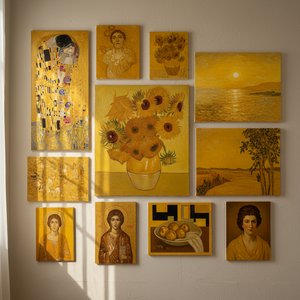
Топ-10 шедеврів живопису в відтінках жовтої охри: історія та натхнення для вашого дому
Відкрийте для себе 10 шедеврів живопису, де жовта охра – головний герой! Історія Ван Гога, Моне та інших геніїв. Натхнення для вашого дому від TopImpressionists.com. Репродукції картин преміум-класу онлайн.

The Golden Hue: Exploring Symbolism & Emotion in Yellow Art
Explore the rich symbolism & emotional power of yellow in art history! From Van Gogh to Kandinsky, discover how artists used this vibrant hue. Expert analysis & high-quality reproductions at TopImpressionists.

Топ-10 шедеврів у відтінках чорного: мистецтво та декор з TopImpressionists
Відкрийте силу чорного кольору в мистецтві! Топ-10 шедеврів від Ван Гога, Мунка та інших геніїв. Історія створення, техніки живопису та натхнення для вашого декору з TopImpressionists. Дослідіть колекцію онлайн!
Досліджуйте твори мистецтва, впорядковані за темами, стилями та характеристиками.
