


 Переглянути в інтер'єрі
 Надіслати
 Поділитися
 Деталі
 Посібник

 Завантажити
 Схожі предмети колекціонування
 Рентгенівське дослідження
 Слайд-шоу
 Статистика переглядів
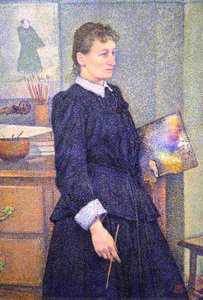
Maria Sethe at the Harmonium
 Олія на полотні
- Настінний декор
- Neo-Impressionism
 1891
1891- — XIX століття
 118.0 x 84.0 cm
 Королівський музей мистецтв Антверпену
Experience Theo van Rysselberghe's luminous Neo-Impressionist masterpiece, ‘Maria Sethe at the Harmonium,’ capturing serene beauty with meticulous pointillism and a cozy domestic atmosphere.
 Читати далі
Теофіл ван Риссельберг – видатний бельгійський художник-неоімпресіоніст, відомий своїми яскравими пейзажами та портретами, що досліджують світ світла та кольору. Його творчість вплинула на розвиток мистецтва.
Олійная репродукція ручної роботи
Написана вручну олією на полотні у вашому розмірі та рамі, виготовлена на замовлення нашими художниками. ( Перейти до друку Перейти до цифрових зображень)




P118B $10

P118H $10

P118W $10

P438Z $10

P508JH $12

P508YH $12

P805H $10

P805Z $10

P919BZ $10

P919G $10

P919XJ $10

P959ZH $10

P968JZ $12

W106C $8

W218G $10

W218JH $8

W218Y $10

W307PJ $10

W316G $10

W316PJ $8

W316Y $10

W398PJ $8

W4111J $10

W500HY $15

W500JH $15

W692G $12

W849H $8

W940BG $15

W953PJ $8




Стандартний розмір
на замовлення
CM
INCH
Обирайте з наших стандартних розмірів, що відповідають оригінальним пропорціям твору мистецтва.
Loading sizes...

ширина
висота
Ви можете вказати власні розміри, щоб репродукція ідеально підійшла до конкретної рами або інтер'єру. Якщо вибраний вами розмір не відповідає пропорціям оригіналу, ми або обріжемо полотно, або доповнимо картину додатковими елементами, промальованими вручну. Цифровий макет буде надіслано вам на затвердження перед початком виробництва.
Зверніть увагу, що попередній перегляд на екрані не відображає фактичне обрізання або розширення зображення. Тільки макет точно покаже остаточну композицію.
Хоча ми можемо виготовити виріб у нестандартному розмірі, для збереження оригінальних пропорцій рекомендуємо обирати варіанти зі встановленого списку.
Приклади можливих змін: замінити обличчя на фото клієнта; додати домашню тварину (наприклад, замінити кота на собаку); додати приховане повідомлення на фоні; змінити ландшафт або елементи фону.
Після оформлення замовлення команда TopImpressionists.com зв'яжеться з клієнтом електронною поштою для отримання інструкцій та надасть попередній макет
Після оформлення замовлення команда TopImpressionists.com зв'яжеться з клієнтом електронною поштою для отримання інструкцій та надасть попередній макет
Доставка по всьому світу () за 3–4 тижні замість стандартних 5 тижнів. (23 Вересень). Без жодних компромісів у якості.

Безкоштовна експрес-доставка по всьому світу

Високоякісне лляне полотно

Повне страхове покриття доставки

Гарантія повернення митних зборів

Гарантія точного відтворення кольорів

Політика повернення протягом 100 днів (лише у разі виявлення дефектів)

Гарантія повернення 100% коштів

Знижка на оптові замовлення
 Скляний варіант доступний лише для розмірів до 110 см

Maria Sethe at the Harmonium
Техніка репродукції
Розмір репродукції
-


Загальна вартість
$ 269
A Symphony of Light and Stillness
In the quiet corners of late nineteenth-century European art, few works capture the delicate intersection of domestic peace and intellectual depth as poignantly as Théo van Rysselberghe’s 1891 masterpiece, Maria Sèthe at the Harmonium. This oil on canvas is far more than a mere portrait; it is an immersive experience that invites the viewer into a moment of profound, silent contemplation. The scene depicts a woman, Maria Sèthe, seated before the harmonium, her gaze drifting upward as if caught in the middle of a musical thought or a sudden, beautiful realization. There is a palpable sense of stillness in the room, an atmosphere where time seems to slow down, allowing the soft light of a Belgian afternoon to dance across the surfaces of a private, scholarly sanctuary.
The setting itself tells a story of a life enriched by both art and intellect. Surrounded by the comforting presence of books and the gentle touch of nature provided by a vase of flowers, the room exudes a sophisticated yet cozy ambiance. For the discerning collector or interior designer, this painting offers a unique emotional anchor—a piece that brings a sense of tranquility, warmth, and cultured refinement to any space. It is an artwork that does not demand attention through loud colors or dramatic action, but rather earns it through a subtle, luminous grace that rewards prolonged observation.
The Magic of the Pointillist Dot
To look closely at this work is to witness the revolutionary spirit of Neo-Impressionism. Van Ryssebheghe, heavily inspired by the groundbreaking methods of Georges Seurat and Paul Signac, employs the technique of Pointillism to breathe life into the canvas. Rather than traditional blending, the artist meticulously applies tiny, distinct dots of pure pigment side by side. This scientific approach to color relies on the viewer's eye to perform an optical blend, creating a shimmering, vibrating effect that mimics the true behavior of light. In Maria Sèthe at the Harmonium, this technique is used to extraordinary effect; the woman’s dress, rendered in muted ochre and mauve, seems to catch a subtle, internal glow, while the textures of the wooden instrument and the surrounding shadows possess a luminous depth that feels almost tactile.
This painstaking method requires immense patience and precision, resulting in a surface that feels alive with energy despite the subject's outward stillness. The way the light scatters across the scene—simulating the soft diffusion of sunlight through a window—creates a sense of atmosphere that is both ethereal and grounded. For those seeking a high-quality reproduction, capturing this specific optical vibration is essential, as it is the very soul of the painting, transforming a static domestic scene into a breathing, luminous window into the past.
A Legacy of Elegance for the Modern Interior
Beyond its technical brilliance, the painting serves as a bridge between the traditional realism of the Academy and the modern fascination with light and perception. Van Rysselberghe’s ability to infuse a portrait with such symbolic resonance—suggesting an intellectual pursuit through the presence of books and a musical soul through the harmonium—makes this work a timeless addition to any curated collection. It embodies a period of European history where the domestic sphere was a site of profound cultural cultivation.
Integrating a reproduction of this masterpiece into a contemporary interior design scheme offers an opportunity to introduce narrative depth and historical prestige. Whether placed in a sunlit reading nook or as a focal point in a formal living area, the painting’s soft palette and serene subject matter provide a calming influence. It is an ideal choice for those who appreciate art that speaks of quiet sophistication, offering a sophisticated touch of Belgian Neo-Impressionism that remains as captivating today as it was in 1891.


Біографія митця
Théo van Rysselberghe: A Pioneer of Light and Color
Théophile “Théo” van Rysselberghe, a name synonymous with Belgian Neo-Impressionism, was more than just an artist; he was a pivotal figure who bridged the gap between traditional realism and the burgeoning avant-garde movements of the late 19th century. Born in Ghent, Belgium, in 1862, his life’s journey was marked by a relentless pursuit of capturing the ephemeral beauty of light and color – a quest that ultimately shaped not only his artistic style but also the broader landscape of European art.
Van Rysselberghe's early training at the Academy of Ghent instilled in him a solid foundation in academic painting techniques. His initial works, such as *Self-Portrait with Pipe* (1880), reflected this classical influence – characterized by meticulous detail and somber tones. However, even within these early pieces, subtle hints of a burgeoning sensitivity to light and color began to emerge, foreshadowing the radical shift that was to come. The painting *Child in an Open Spot of the Forest* (1880) represents a crucial step away from strict realism, suggesting a nascent interest in capturing the fleeting effects of nature’s brilliance.
Moroccan Impressions: A Catalyst for Change
A transformative period in van Rysselberghe's artistic development unfolded during his extended travels to Morocco between 1882 and 1888. These sojourns, a stark contrast to the muted palette of his earlier work, plunged him into a world saturated with vibrant colors, intense sunlight, and exotic landscapes. Paintings like *Arabian Street Cobbler* (1882), *Arabian Boy* (1882), and *Resting Guard* (1883) vividly demonstrate this shift – capturing the dazzling effects of light on form and revealing a profound fascination with Moroccan culture. These experiences weren’t merely visual observations; they were an immersion into a different way of seeing, broadening his artistic horizons and instilling a lifelong love for travel.
Crucially, these travels coincided with his association with the artist Frantz Charlet and the painter Darío de Regoyos. Together, they explored the Spanish and Moroccan art scene, encountering influences from masters like Pedro Campaña, whose works sparked an interest in capturing the essence of light and atmosphere. This exposure to diverse artistic traditions fueled van Rysselberghe’s evolving style.
The Birth of Les XX: A Hub for Avant-Garde Art
Upon his return to Brussels, van Rysselberghe became a central figure in the burgeoning avant-garde scene. He played a key role in establishing *Les XX* (Les Vingt), an influential exhibition society founded in 1883 alongside Octave Maus and Émile Verhaeren. This group served as a vital platform for showcasing innovative art, music, poetry, and decorative arts – introducing new trends like Impressionism and Symbolism to a Belgian audience largely unfamiliar with such movements. *Les XX* provided van Rysselberghe with invaluable exposure and fostered a collaborative environment where artistic ideas could flourish.
Embracing Neo-Impressionism: A Scientific Approach
The true turning point in van Rysselberghe’s artistic trajectory arrived with his encounter with Georges Seurat's *A Sunday on La Grande Jatte* at the eighth Impressionist exhibition in Paris in 1886. Initially skeptical of Seurat’s meticulous “pointillist” technique – the systematic application of tiny dots of pure color – van Rysselberghe gradually came to appreciate its scientific basis and potential for achieving luminous effects. He began experimenting with divisionism, the Neo-Impressionist method of separating colors into their constituent parts and allowing the viewer’s eye to blend them optically. This wasn't simply a technical shift; it represented a fundamental change in his approach to painting – a move towards a more analytical and objective representation of light and color.
He forged close friendships with other Neo-Impressionist painters like Paul Signac, traveling with him along the French Riviera and exchanging ideas about technique and theory. Van Rysselberghe distinguished himself within the movement by applying pointillism not only to landscapes but also to portraiture, creating strikingly vibrant and psychologically insightful likenesses of his family and friends – works such as *Madame Charles Maus* (1890) are prime examples.
Beyond Pointillism: A Lasting Legacy
While deeply committed to Neo-Impressionism for a significant period, van Rysselberghe eventually moved beyond its strict tenets in the late 1890s. He sought greater freedom in his brushwork and compositions, exploring new ways to express emotion and atmosphere. He continued to be a prolific artist, working in various media including furniture design, book illustration, and decorative arts. His influence extended far beyond Belgium, impacting artists like Piet Mondrian and Jan Toorop who were inspired by his innovative use of color and light.
Van Rysselberghe’s legacy lies not only in his beautiful paintings but also in his role as a catalyst for artistic change – a champion of modernism who helped introduce new ideas and techniques to the Belgian art world. His works are now held in prominent museum collections worldwide, ensuring that his contribution to the history of art continues to be celebrated and appreciated by generations to come. *His dedication to exploring the interplay of light, color, and form cemented his place as a true pioneer of modern painting.*

Теофіл ван Рисселбрюгге
1862 - 1926 , Бельгія
Довідкова інформація
- Artistic Movement Or Style: Неоімпресіонізм
- Artists Or Movements Influenced By This Artist:
- П’єт Мондріан
- Джан Тоороп
- Artists Who Influenced This Artist:
- Жан-Франсуа Портаельс
- Жорж Сеур
- П’єр-Огюст Ренуар
- Date Of Birth: 23 листопада 1862
- Date Of Death: 13 грудня 1926
- Full Name: Théo van Rysselberghe
- Nationality: Бельгійський
- Notable Artworks:
- Арабська фантазія
- Іспанка
- Севільська жінка
- Place Of Birth: Гент, Бельгія
Схожі статті

Топ-10 шедеврів постімпресіонізму: мистецтво, яке змінила епоху | TopImpressionists.com
Відкрийте для себе 10 шедеврів постімпресіонізму від Ван Гога, Сезанна та інших геніїв! Історія мистецтва, унікальні техніки та емоційний вплив картин. Купуйте репродукції високої якості на TopImpressionists.com та створіть свій неповторний інтер'єр.

Рембрандт ван Рейн: Топ-25 шедеврів для вашого дому | TopImpressionists
Пориньте у світ Рембрандта ван Рейна! 25 культових шедеврів бароко, портретів та біблійних сцен. Купіть високоякісні репродукції картин Рембрандта для вашого дому на TopImpressionists.com – музейне мистецтво онлайн!

The Science of Light: Decoding the Optical Precision of Neo-Impressionism
Explore the scientific brilliance of Neo-Impressionism. Discover how masters like Georges Seurat revolutionized art through optical mixing, color theory, and the precision of Pointillism to capture the true essence of light.

Theo van Doesburg: Pioneering De Stijl & the Evolution of Neo-Plasticism
Explore the revolutionary De Stijl movement & Neo-Plasticism with our expert guide. Discover Piet Mondrian, Theo van Doesburg, and the lasting impact of this influential art style. Learn about collecting & investing in De Stijl masterpieces.

Théo van Rysselberghe: Pioneering Belgian Pointillism & the Pursuit of Luminosity
Explore the captivating world of Théo van Rysselberghe, a pioneer of Belgian Neo-Impressionism. Discover his masterpieces, artistic journey, and lasting impact on modern art. Learn more at TopImpressionists.
Досліджуйте твори мистецтва, впорядковані за темами, стилями та характеристиками.
