


 Переглянути в інтер'єрі
 Надіслати
 Поділитися
 Деталі
 Посібник

 Завантажити
 Схожі предмети колекціонування
 Рентгенівське дослідження
 Слайд-шоу
 Статистика переглядів
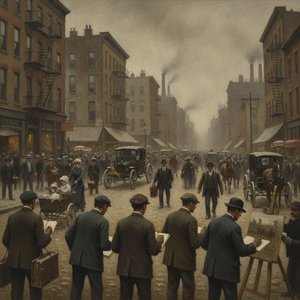
Parade, Washington Square


Experience the vibrancy of early 20th-century New York in William Glackens' 'Parade, Washington Square.' A stunning Ashcan School oil painting capturing a lively urban scene.
 Читати далі
Мета опис: Дослідіть реалістичні полотна Вільяма Джеймса Глэкенса (1870-1938), піонера школи Ашкан! Відкрийте для себе яскраві зображення раннього XX століття у Нью-Йорку та Парижі, передаючи повсякденне життя з вражаючою деталізацією.
Олійная репродукція ручної роботи
Написана вручну олією на полотні у вашому розмірі та рамі, виготовлена на замовлення нашими художниками. ( Перейти до друку Перейти до цифрових зображень)




P118B ₴10

P118H ₴10

P118W ₴10

P438Z ₴10

P508JH ₴12

P508YH ₴12

P805H ₴10

P805Z ₴10

P919BZ ₴10

P919G ₴10

P919XJ ₴10

P959ZH ₴10

P968JZ ₴12

W106C ₴8

W218G ₴10

W218JH ₴8

W218Y ₴10

W307PJ ₴10

W316G ₴10

W316PJ ₴8

W316Y ₴10

W398PJ ₴8

W4111J ₴10

W500HY ₴15

W500JH ₴15

W692G ₴12

W849H ₴8

W940BG ₴15

W953PJ ₴8




Стандартний розмір
на замовлення
CM
INCH
Обирайте з наших стандартних розмірів, що відповідають оригінальним пропорціям твору мистецтва.
Loading sizes...

ширина
висота
Введіть необхідну ширину та висоту, щоб картина підійшла до вашої рами або стіни. Оскільки це ручний розпис, для розміру іншої форми художник може написати трохи більше навколо картини або трохи обрізати її — вибір за вами. Перед початком роботи ми надішлемо вам цифровий макет для затвердження. Зображення, показане на цій сторінці, не є реальним результатом — лише макет відображає майбутній вигляд.
Приклади можливих змін: замінити обличчя на фото клієнта; додати домашню тварину (наприклад, замінити кота на собаку); додати приховане повідомлення на фоні; змінити ландшафт або елементи фону.
Після оформлення замовлення команда TopImpressionists.com зв'яжеться з клієнтом електронною поштою для отримання інструкцій та надасть попередній макет
Після оформлення замовлення команда TopImpressionists.com зв'яжеться з клієнтом електронною поштою для отримання інструкцій та надасть попередній макет
Доставка по всьому світу () за 3–4 тижні замість стандартних 5 тижнів. (22 Жовтень). Без жодних компромісів у якості.

Безкоштовна експрес-доставка по всьому світу

Високоякісне лляне полотно

Повне страхове покриття доставки

Гарантія повернення митних зборів

Гарантія точного відтворення кольорів

Політика повернення протягом 100 днів (лише у разі виявлення дефектів)

Гарантія повернення 100% коштів

Знижка на оптові замовлення
 Скляний варіант доступний лише для розмірів до 110 см

Parade, Washington Square
Техніка репродукції
Розмір репродукції
-


Загальна вартість
₴ 24406
Parade, Washington Square: A Glimpse of Early 20th Century New York
William James Glackens' "Parade, Washington Square," housed within the esteemed Whitney Museum of American Art, offers a vibrant snapshot of pre-World War I New York City life. Created in 1912, this oil on canvas painting captures a bustling parade scene unfolding against the backdrop of Washington Square. The artwork exemplifies Glackens' unique blend of realism and impressionistic flair, showcasing his keen observation skills and ability to convey movement and energy.
Artistic Style and Influences
Glackens was a pivotal figure in the Ashcan School, a movement that championed depicting everyday urban life with unflinching honesty. Rejecting the formal constraints of the National Academy of Design, Glackens and his contemporaries focused on portraying the realities of working-class and middle-class neighborhoods. While rooted in realism, "Parade, Washington Square" reveals the influence of Renoir, particularly evident in its brighter tones and looser brushwork compared to earlier works. This blend resulted in a style that is both grounded in observation and imbued with a sense of dynamism.
Composition and Technique
The painting's composition is characterized by a lively arrangement of figures and forms, creating a palpable sense of movement. The parade winds through Washington Square, populated by a diverse crowd engaged in the festivities. Glackens masterfully uses short, broken brushstrokes to capture the energy of the scene, layering colors to create depth and texture. The perspective is somewhat flattened, prioritizing an immediate impression over strict realism—a hallmark of Impressionism. The use of light and shadow further enhances the vibrancy of the scene, highlighting the flags and banners carried by the parade participants.
Historical Context and Symbolism
"Parade, Washington Square" provides a valuable window into early 20th-century American society. The painting reflects a period of rapid urbanization and social change in New York City. The parade itself likely commemorates a significant event or celebration, possibly related to the 1904 World’s Fair. The flags displayed symbolize national pride and internationalism. Beyond its documentary value, the artwork captures a sense of collective joy and community spirit—a moment of shared experience amidst the bustling urban landscape.
Emotional Impact and Legacy
Glackens' "Parade, Washington Square" evokes feelings of excitement, energy, and optimism. The vibrant colors and dynamic composition create an immersive experience for the viewer, transporting them to a lively scene in early 20th-century New York. As a significant work within the Ashcan School, it stands as a testament to Glackens' ability to capture the essence of urban life with both realism and artistic sensitivity. The painting’s enduring appeal lies in its ability to resonate with viewers across generations, offering a glimpse into a bygone era while celebrating the vibrancy of human connection.
Запитання та відповіді
Який настрій та емоції поєднуються у "Parade, Washington Square"?
Переданий настрій твору «Parade, Washington Square» Вілліям Джеймс Глаккенс — це Ностальгічний стиль, а його емоційна тональність — Ностальгічний.
Чи є слайд-шоу для «Parade, Washington Square» Вілліям Джеймс Глаккенс?
Слайд-шоу до твору «Parade, Washington Square» можна переглянути на сторінці Слайд-шоу цього витвору.
Який домінантний відтінок у «Parade, Washington Square» Вілліям Джеймс Глаккенс?
Переважаючий відтінок твору «Parade, Washington Square» Вілліям Джеймс Глаккенс — Від охри до сепії. Цей відтінок є основою всієї палітри.
Біографія митця
A Pioneer of Ashcan Realism
William James Glackens (March 13, 1870 – May 22, 1938) stands as a cornerstone figure in American art history, particularly recognized for his unwavering dedication to portraying the gritty realities of urban life through masterful realist paintings. Born in Philadelphia, Pennsylvania, he descended from a family steeped in artistic tradition—his father, Samuel Glackens, served as a clerk for the Pennsylvania Railroad, fostering an early appreciation for visual expression within his upbringing. Alongside his brother, Louis Glackens, William demonstrated exceptional talent from youth, enrolling at the Pennsylvania Academy of Fine Arts where he honed his skills under the guidance of Thomas Anshutz, a prominent realist painter who profoundly shaped his artistic vision.The Ashcan School and Its Influence
Glackens’ formative years coincided with the emergence of the Ashcan School—a movement that irrevocably altered the landscape of American art. Rejecting the idealized aesthetics championed by academic institutions, the Ashcan School sought to capture the unfiltered essence of New York City life during its burgeoning industrial era. Influenced deeply by Anshutz's commitment to portraying everyday subjects with unflinching honesty, Glackens joined forces with fellow artists like George Caleb Bingham and Robert Henri to establish this groundbreaking collective. The school’s ethos—to depict urban scenes without embellishment or sentimentality—challenged prevailing artistic conventions and paved the way for a more truthful representation of American society.Glackens' Artistic Style and Technique
Glackens’ distinctive style is characterized by its subdued color palettes, often dominated by earthy tones that effectively convey the atmosphere of his subjects. He meticulously rendered urban environments – bustling streets, tenement buildings, and dimly lit interiors—with remarkable detail, capturing textures and nuances that would have been absent from more polished artistic endeavors. His brushstrokes were deliberate and expressive, conveying a palpable sense of immediacy and observation. Notably, Glackens drew inspiration from Impressionist painters like Pierre Auguste Renoir, incorporating techniques such as broken color and atmospheric perspective to imbue his canvases with luminosity and depth.Notable Works and Collections
Glackens’ artistic legacy is cemented by several iconic paintings that continue to resonate with audiences today. “The Shoppers” (1913), housed in the Chrysler Museum of Art, exemplifies his masterful ability to distill complex urban narratives into compelling visual compositions—a testament to his dedication to capturing the spirit of the era. Similarly, “View of Haarlem with Bleaching Grounds” (circa 1895), now residing at Forzo Castle in Milan, Italy, showcases Glackens’ meticulous attention to detail and his masterful command of color and light. Furthermore, he played a crucial role in bolstering Albert C. Barnes' collection by securing European paintings—a contribution that significantly enriched American art history.A Lasting Impact on American Art
William James Glackens’ unwavering commitment to realism and his pioneering role within the Ashcan School solidified his position as one of America’s foremost artists of the early 20th century. His unflinching portrayal of urban life served as a catalyst for artistic innovation, prompting subsequent generations of painters to confront social realities with courage and conviction. Glackens' enduring influence can be seen in the continued appreciation for gritty realism—a stylistic hallmark that continues to captivate viewers and scholars alike.
Вілліям Джеймс Глаккенс
1870 - 1938 , США
Довідкова інформація
- Artistic Movement Or Style: Ашканська школа
- Artists Or Movements Influenced By This Artist: ['Пір Ауґюст Реноар']
- Artists Who Influenced This Artist: ['Томас Аншутц']
- Date Of Birth: Філадельфія, США (1870)
- Date Of Death: Вестпорт, Кентуккі (1938)
- Full Name: William James Glackens
- Nationality: Американський
- Notable Artworks:
- «Спостерігач»
- Вид Хаарлема з білилами
- Place Of Birth: Філадельфія, Пенсільванія
Схожі статті
The Ashcan School: Capturing the Raw, Unfiltered Soul of Urban Life through American Realism
Discover the raw beauty of the Ashcan School. Explore how masters like Bellows and Henri captured the gritty, vibrant soul of early 20th-century New York through profound American Realism and evocative urban landscapes.

The Unvarnished Truth: A Cultural Journey Through the Soul of American Realism
Explore the profound beauty of American Realism. From the Ashcan School's urban grit to intimate portraits, discover how artists captured the authentic soul of a nation through unvarnished truth and masterful observation.
Досліджуйте твори мистецтва, впорядковані за темами, стилями та характеристиками.

