
 Oil On CanvasWallArtDutch Golden Age
 1643Early Modern
 91.0 x 119.0 cm
 大都会艺术博物馆




























从与原作比例一致的预设尺寸中进行选择。

您可以输入自定义尺寸,以适配特定的画框或空间。如果您选择的尺寸与原图比例不符,我们将对作品进行裁剪,或通过镜像填充/纯色填充边缘的方式来扩展图像。在开始制作之前,我们会向您发送一份数字效果图供您确认。
请注意,屏幕上的预览并不能反映实际的裁剪或扩展效果。只有效果图才能准确展示最终的构图。
虽然我们提供定制尺寸,但为了保持原图比例,我们建议您从预设列表中选择尺寸。

Piping Shepherds
复制品尺寸
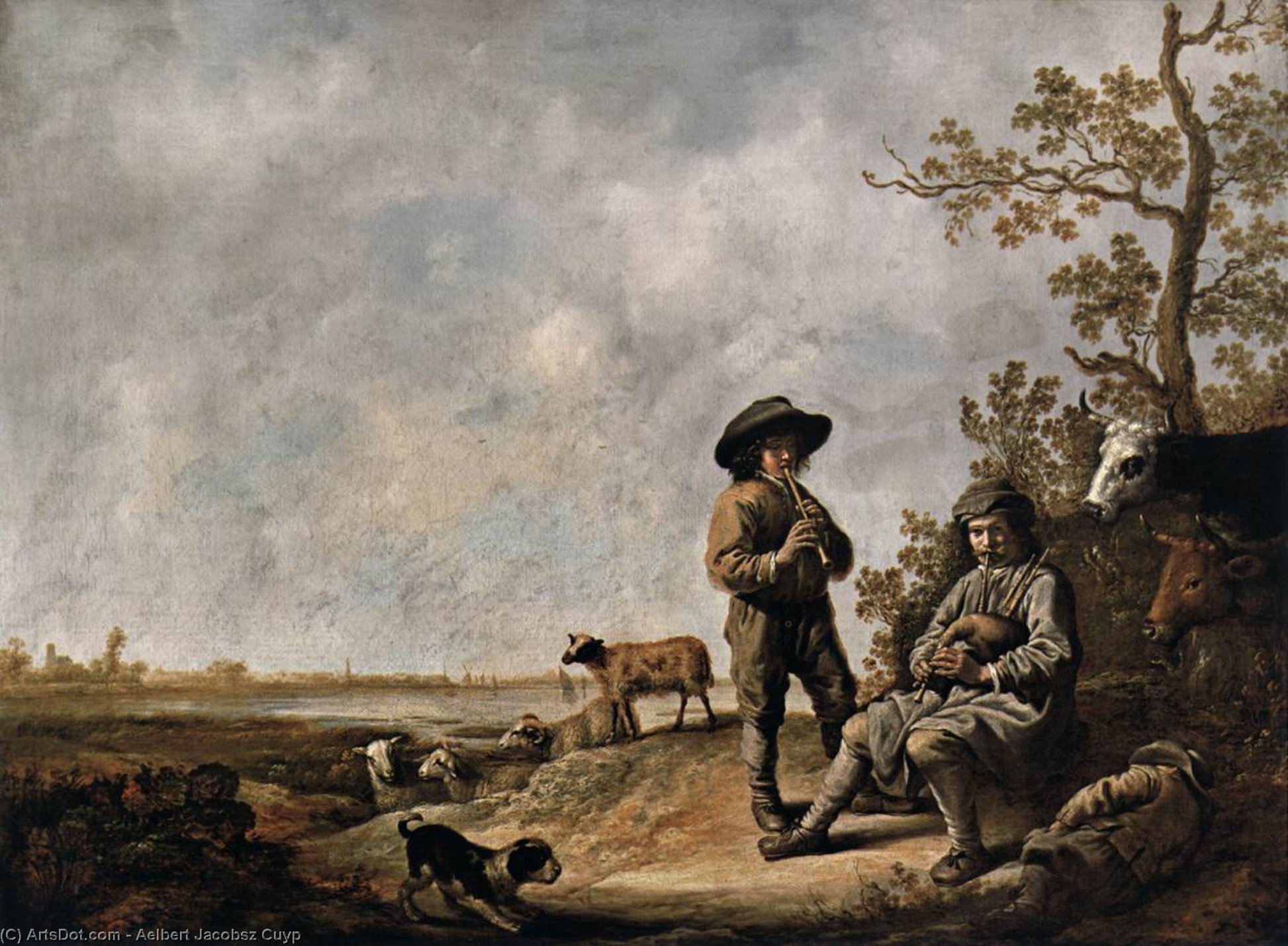
To gaze upon Aelbert Jacobsz Cuyp's Piping Shepherds is to step through a veil and into the luminous heart of the Dutch Golden Age. This oil on canvas, executed in 1643, is far more than a mere depiction of rural life; it is an orchestrated symphony of light, tranquility, and pastoral grace. The scene unfolds with breathtaking serenity, centering around figures engaged in simple, timeless activities. We are drawn into a landscape where rolling hills meet the gentle murmur of a distant river, all bathed in that signature, warm luminescence for which Cuyp became renowned. It captures that perfect moment when human activity harmonizes flawlessly with the natural world.
Cuyp’s technical brilliance is immediately apparent upon viewing this work. The handling of light is nothing short of magical; it seems to emanate from within the scene itself, softening edges and deepening shadows into rich, velvety tones. The palette is a masterful blend of muted earth tones—ochres, deep greens, and soft blues—that anchor the composition in undeniable realism. Notice how the artist employs atmospheric perspective: the details soften as the eye travels toward the background, creating an exquisite sense of profound depth across the canvas. The structure itself feels balanced, almost pyramidal, guiding the viewer's gaze naturally from the foreground figures up into the lush backdrop of trees and fields.
The subject matter speaks volumes about the values cherished during Cuyp’s time. This is a celebration of the agrarian ideal—a quiet testament to the rhythm of life dictated by seasons, labor, and nature's bounty. The shepherds themselves, with one playing his pipe and another perhaps resting nearby, embody a sense of contented repose. Symbolically, the presence of the animals, the grazing sheep, reinforces this theme of pastoral harmony. It suggests a return to simplicity, an escape from the clamor of urban existence into a realm of enduring peace. The very air in the painting feels breathable, imbued with the quiet dignity of everyday life.
For the collector or designer seeking art that whispers rather than shouts, Piping Shepherds offers unparalleled depth. Its enduring appeal lies in its ability to evoke an immediate sense of calm—a visual balm for the modern soul. Owning a reproduction allows one to integrate this piece of Dutch history into contemporary interiors, lending an air of cultivated elegance and storied romance. The meticulous detail, achieved through oil on canvas, ensures that every brushstroke contributes to the overall feeling of idyllic permanence, making it a centerpiece that invites contemplation long after the initial viewing.
艾尔伯特·雅各布斯·库伊普(Aelbert Jacobszoon Cuyp)于1620年10月20日出生于多德雷赫特,并于1691年11月15日在同城逝世,他是荷兰黄金时代最具代表性的人物之一。他不仅仅是一位画家,更是一位光的诠释者,将荷兰宁静的风景转化为田园诗般的幻境。尽管他的生平细节仍有些许模糊——即便当时最卓越的艺术史学家阿诺德·豪布拉肯(Arnold Houbraken)对其一生的记载也颇为简略——但库伊珀的艺术遗产却极具分量,其作品中蕴含的静谧力量在数个世纪后依然能深深打动观众。
库伊普出身于一个深耕于艺术领域的家族。他的父亲雅各布·格里茨索恩·库伊普(Jacob Gerritszoon Cuyp)是一位受人尊敬的肖像画家,不仅是艾尔伯特的启蒙老师,也是他频繁的合作伙伴。他的叔叔本杰明从事彩绘玻璃设计,祖父格里特则从事底稿设计。这种家族性的艺术传承为年轻的艾尔伯特提供了孕育才华的沃土,尽管直到17世纪40年代,他才真正开始锻造出属于自己的独特风格。他不仅继承了艺术天赋,还拥有丰厚的家产,这使他能够摆脱生计的压力,全身心地投入到绘画创作之中。
库伊普的艺术历程可以被视为一种迷人的影响力的融合,这些力量逐渐汇聚成一种独一无二的个人愿景。他的早期作品展现了扬·范·戈延(Jan van Goyen)的深刻影响,后者那具有色调感的调色板和破碎的笔触——作为印象派的前奏——在1640年左右的作品中清晰可见。他采用了范·戈延标志性的麦秆黄和浅褐色,并运用类似的短促、不混色的笔法来营造大气深邃感。然而,库伊普并非仅仅是在模仿;他正在吸收这些教训,并开始将自己的感性注入其中。
17世纪40年代中期,扬·博特(Jan Both)的影响开始出现在库伊普的作品中。博特近期从意大利归来,为他带来了对光影和构图更敏锐的觉察。库伊普将这种新发现的理解融入到他的风景画中,增添了一种明亮度,使其作品区别于前辈。至关重要的是,他将这些外部影响与父亲雅各布·格里茨索恩·库伊普传授的基础技能相结合,后者为许多早期作品的形态和结构奠定了基础。这种结合——来自范·戈延的色调、来自博特的光影,以及来自父亲的形体——构筑了库伊普成熟风格的基石。
库伊普最负盛名的作品是那些壮阔的荷兰河畔景象,画面沐浴在清晨或傍晚的金色光辉中。这些画作并非简单的地形描绘,而是充满了宁静与和谐,反映了人与自然世界的深层连接。他的画作中经常出现从事日常活动的形象——放牧的农夫、沿水滑行的船只、岸边交谈的人们——但这些元素从未占据主角地位。相反,它们作为宏大风景中的锚点,增强了整体的平和感与空间尺度。
这位艺术家对光的掌控或许是他最显著的特征。他以惊人的精准度捕捉了阳光在水面反射的细微变化、云层的光照以及横跨田野的长影。这种唤起氛围和情绪的能力,使他的风景画超越了单纯的景色描绘;它们成为了特定时刻、特定情感状态的表达。人们常说他的画作具有一种诗意,邀请观者沉浸在荷兰乡村的美丽与宁静之中。
尽管库伊普活跃的绘画时期相对较短——大致局限于1639年至1660年间的二十年——但他对荷兰艺术的影响却是深远的。他被称为“荷兰的克劳德·洛兰(Claude Lorrain)”,这证明了他们在大气感风景画上的相似性,尽管库伊普的作品拥有一种鲜明的荷兰特色。他的影响力在后世那些试图捕捉自然界美与宁静的风景画家作品中清晰可见。
除了艺术成就,库伊普的一生也让我们窥见了荷兰黄金时代的价值观。他虔诚的加尔文主义信仰体现在他去世时家中并未收藏其他艺术家的画作,这表明他更注重个人虔诚而非世俗财富。1658年他与科内留斯·博斯曼(Cornelia Bosman)的婚姻恰逢其艺术生涯的终结,这导致一些人推测家庭生活在他决定隐退于绘画之外的过程中扮演了某种角色。无论具体原因如何,艾尔伯特·雅各布斯·库伊普留下了一系列持续激发灵感并带给人愉悦的作品,巩固了他作为荷兰黄金时代最受爱戴的大师之一的地位。

Discover the breathtaking beauty of Dutch Golden Age landscapes. Explore the mastery of light, chiaroscuro, and 17th-century realism through an expert art history lens, celebrating the enduring legacy of the Dutch Masters for discerning collectors and art lovers.

Embark on a cultural journey through the Dutch Golden Age. Explore the masterful interplay of light and shadow in 17th-century masterpieces, from Rembrandt to Vermeer, and discover how this era of profound realism continues to inspire fine art collectors today.


第一时间获取最新的艺术新闻、独家优惠及装饰灵感。
向我们介绍您的项目需求,我们的艺术专家将为您提供 3 个个性化的艺术品推荐。
由我们的专家为您精选 3 款心仪之作 —— 完全免费!

 效果预览
效果预览
 购买手绘画作
 分享
分享 分享
分享
 详情
详情

 下载
下载
 相似作品
相似作品 X射线
X射线 幻灯片播放
幻灯片播放 展开详情
展开详情









 玻璃选项仅适用于110厘米以下的尺寸。


