
 实景预览
实景预览
 分享
分享 分享
分享
 详情
详情 指南
指南

 下载作品
下载作品
 相似作品
相似作品 X射线
X射线 幻灯片播放
幻灯片播放 问答
问答 统计数据
统计数据
- 29.0 x 21.0 cm


¥ 1806
手工油画复制品
由我们的艺术家按需定制,为您提供您所选尺寸及画框的布面手工油画。 ( 切换至版画销售渠道 切换至数字图像销售渠道)
尺寸
·标准尺寸
定制
CM
INCH
您可以从与原作比例一致的预设尺寸中进行选择。
正在加载尺寸...

宽度
高度
请输入您需要的宽度和高度,以适配您的画框或墙面。由于作品为手工绘制,若选择不同比例的尺寸,艺术家可能会在画面边缘多画一些或稍作裁剪 —— 由您决定。在开始绘画之前,我们会为您发送一份数字效果图供您确认。本页面上展示的图片并非最终实物 —— 只有效果图才能反映真实结果。
 了解更多
了解更多完成
·
白色边缘 ¥1

边缘晕染效果 ¥1

延展式 ¥1

P118B ¥10

P118H ¥10

P118W ¥10

P438Z ¥10

P508JH ¥12

P508YH ¥12

P805H ¥10

P805Z ¥10

P919BZ ¥10

P919G ¥10

P919XJ ¥10

P959ZH ¥10

P968JZ ¥12

W106C ¥8

W218G ¥10

W218JH ¥8

W218Y ¥10

W307PJ ¥10

W316G ¥10

W316PJ ¥8

W316Y ¥10

W398PJ ¥8

W4111J ¥10

W500HY ¥15

W500JH ¥15

W692G ¥12

W849H ¥8

W940BG ¥15

W953PJ ¥8

H24-GOLD ¥30

H24-SILVER ¥30

H36-GOLD ¥45

H36-SILVER ¥45
采用保护管包装寄送,方便您交由专业的装裱师进行装裱。
增值服务
可选附加内容包含哪些内容?
可定制内容示例:将面部替换为客户照片;添加宠物(例如,将猫替换为狗);在背景中加入隐藏信息;更改背景风景或元素。
下单后,TopImpressionists.com 团队将通过电子邮件联系客户获取具体指令,并提供效果预览图
下单后,TopImpressionists.com 团队将通过电子邮件联系客户获取具体指令,并提供效果预览图
全球配送()仅需 3-4 周即可送达,无需等待标准时效的 5 周。(6 November)。品质绝不妥协。
保护性清漆
展品铭牌
青铜铭牌雕刻详情
This elegant plaque features the artist's name and the title of the artwork, finely engraved for a timeless presentation.
It is made from bronze with a refined, elegant finish. The text is precisely laser-engraved for a sharp and permanent result. Measuring 9x2 cm, the plaque is compact yet easy to read. It's built to be durable and scratch-resistant, offering a professional, museum-quality look. Mounting is simple thanks to the included adhesive backing.
透明亚克力铭牌详情
The plaque includes essential engraved details such as the artist's name, the title of the artwork, the date it was created, the type of media used-like oil on canvas or watercolor-a brief description of the piece, and a QR code that links to the complete artwork information.
It is crafted from clear acrylic, offering a sleek, modern appearance. The text is UV-engraved in black to ensure strong visual contrast. With a size of 10x15 cm, it ensures optimal readability. It comes equipped with two metal hooks for secure wall mounting. The plaque is designed to be weather-resistant, making it suitable for various environments, and it includes interactive features that work seamlessly with smartphone scanning.
黑色亚克力铭牌详情
This elegant plaque includes engraved information such as the artist's name, the title of the artwork, the date it was created, the type of media used (like oil on canvas or watercolor), a short description of the artwork, and a QR code for quick access to more information.
The plaque itself is made from refined black acrylic with a premium finish. The text is laser-engraved in white for high contrast and readability. Its size is 10x15 cm, designed to be easy to read. It comes with two metal hooks for professional mounting. The design is sleek and fits any interior style. It is also weather-resistant and durable, with built-in digital integration for mobile compatibility.
玻璃选项仅适用于110厘米以下的尺寸。
 玻璃选项仅适用于110厘米以下的尺寸。
- 全球免运费特快专递服务
- 优质亚麻画布
- 全程运输保险
- 关税退款保证
- 色彩精准还原保证
- 100天退货保障(仅限制造缺陷)
- 100% 退款保证
- 多件购买优惠


藏品详情
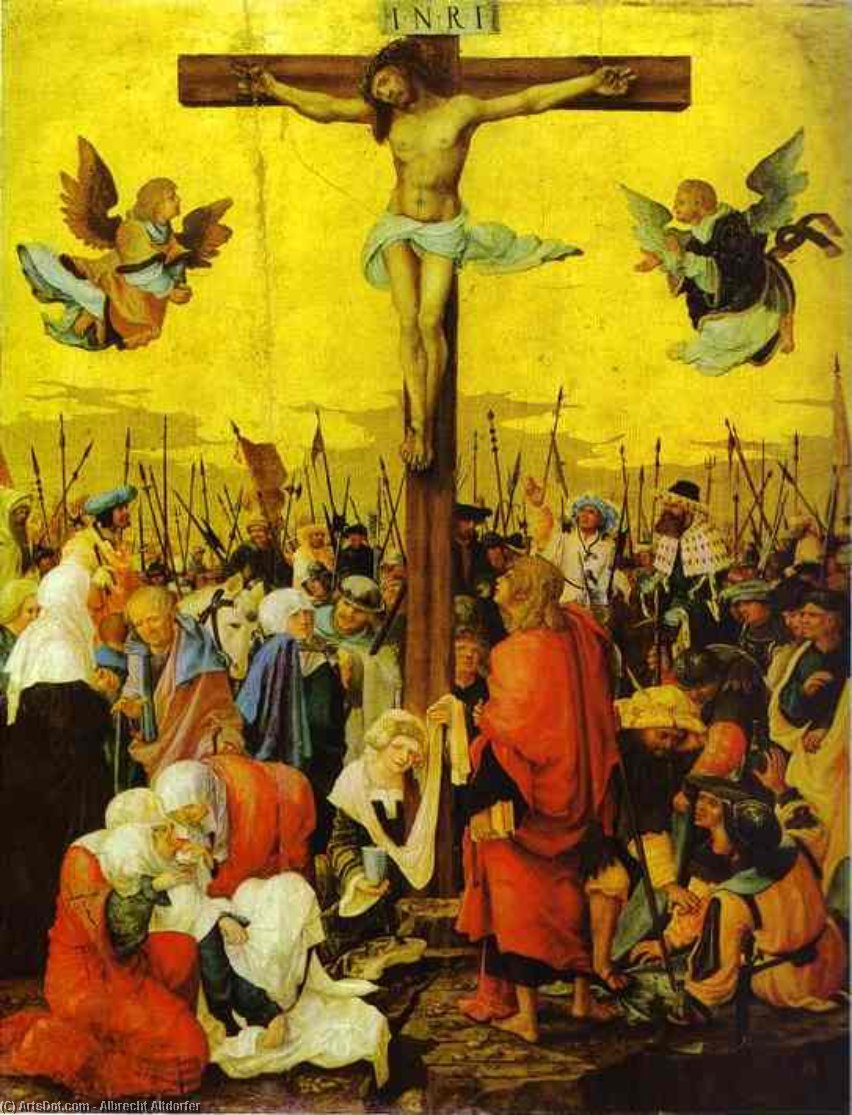
Albrecht Altdorfer's "Crucifixion" (1526) is a dramatic, evocative depiction of Christ’s suffering, showcasing the artist's pioneering landscape style and masterful use of color within the Northern Renaissance.
关于作品
The Weight of Sorrow: Albrecht Altdorfer’s “Crucifixion”
Albrecht Altdorfer's "Crucifixion," painted in 1526, isn’t merely a depiction of a pivotal religious event; it’s a visceral experience. Emerging from the burgeoning German Renaissance, Altdorfer wasn’t simply replicating biblical narratives; he was forging a new visual language, one deeply rooted in the natural world yet imbued with profound spiritual intensity. This particular rendition transcends simple illustration, becoming a landscape saturated with grief and a haunting meditation on sacrifice. The painting immediately commands attention not through grand scale – it's remarkably intimate, measuring just 29 x 21 cm – but through its masterful manipulation of light, color, and composition to evoke an overwhelming sense of sorrow.
The scene unfolds against a dramatically rendered landscape—a brooding, almost primeval forest. The trees, rendered in thick, layered brushstrokes of deep greens, browns, and purples, seem to writhe with the weight of the event. This isn’t a picturesque vista; it's a wilderness imbued with an unsettling energy. Altdorfer deliberately eschews traditional depictions of serene backgrounds, instead presenting a landscape actively participating in the drama. The distant mountains, shrouded in mist and shadow, amplify the feeling of isolation and despair. Notice how the artist uses atmospheric perspective – lighter hues for objects further away – to create a sense of depth and distance, drawing the viewer’s eye into the heart of the scene.
A Pioneer of Landscape
Albrecht Altdorfer stands as a pivotal figure in art history, largely credited with establishing landscape painting as an independent artistic subject within Europe. Prior to his work, landscapes were typically relegated to mere backgrounds for religious or mythological scenes. However, Altdorfer recognized the power of the natural world to convey emotion and meaning. His meticulous observation of nature—evident in the detailed rendering of foliage, rocks, and atmospheric conditions—transformed the landscape from a passive backdrop into an active participant in the narrative. This shift was revolutionary, paving the way for later generations of landscape artists like Albert Bierstadt and Frederic Church.
His background as a town architect and council member further informs his artistic approach. Altdorfer possessed a keen eye for spatial relationships and a deep understanding of how to create a sense of harmony and balance within a composition. This skill is brilliantly demonstrated in “Crucifixion,” where the human figure—Jesus—is carefully positioned within the landscape, creating a dynamic interplay between the earthly realm and the divine.
Symbolism and Emotional Resonance
Beyond its technical brilliance, "Crucifixion" resonates deeply with viewers through its potent symbolism. The stark simplicity of Jesus’s pose – arms outstretched, head bowed – is profoundly moving. Altdorfer avoids any overtly dramatic or theatrical elements, opting instead for a quiet, understated portrayal of suffering. The figures surrounding the cross—angels and soldiers—are rendered in muted tones, emphasizing the central tragedy. Even the light itself seems to weep, casting long shadows across the landscape.
The choice of a dark, foreboding forest as the setting is particularly significant. Forests have historically been associated with death, mourning, and the unknown. In this context, it serves as a powerful metaphor for the spiritual darkness surrounding Jesus’s sacrifice. The painting isn't simply depicting an event; it’s exploring the profound emotional consequences of that event—the grief, despair, and sense of loss experienced by those who witnessed it.
A Timeless Masterpiece
“Crucifixion” is more than just a religious painting; it’s a testament to Altdorfer's artistic genius and his ability to capture the essence of human emotion. The meticulous detail, masterful use of color and light, and profound symbolism combine to create an unforgettable image that continues to resonate with viewers centuries after its creation. Reproductions, like this one, offer a remarkable opportunity to experience the power and beauty of this iconic work, bringing its haunting message into our own spaces.
常见问题与解答
阿尔布雷希特·阿尔多费尔 的《Crucifixion》 是哪种类型的艺术品?
“Crucifixion”是一件WallArt作品。
"Crucifixion" 与 阿尔布雷希特·阿尔多费尔 的其他作品有何共通之处?
"Crucifixion" 与 阿尔布雷希特·阿尔多费尔 的其他作品一样,都体现了 German Renaissance Landscape 风格以及其一贯的主题:danube school landscape influence, medieval religious symbolism strong, early renaissance artistic trends, german cultural identity depicted, altdorfer's innovative landscape role。
"Crucifixion" 是否收藏于其创作者的本国?
不,该作品目前存放于海外。阿尔布雷希特·阿尔多费尔的出生国是德国,而收藏有《Crucifixion》原件的博物馆则位于Germany。
艺术速览与艺术小测验
关于 阿尔布雷希特·阿尔多费尔

阿尔布雷希特·阿尔多费尔
1480 - 1538, 德国
艺术家简介
阿尔布雷希特·阿尔多费尔:北方文艺复兴时期风景画的先驱
阿尔布雷希特·阿尔多费尔,约于1480年出生于德国雷根斯堡,是连接晚哥特时期和新兴德国文艺复兴时期的关键人物。他不仅仅是一位时代的艺术家,更积极地重塑了当时的艺术轨迹,尤其是在风景画领域。出身于一个根深蒂固的艺术世家——他的父亲乌尔里希·阿尔多费尔是一位画家和小型绘画师——年轻的阿尔多费尔很快就以其创新精神脱颖而出,而不是作为追随者。雷根斯堡,一座战略性地位于多瑙河上的自由帝国城市,为他早年的形成提供了充满活力的文化背景。这个地理位置深刻影响了他的艺术敏感度,培养了他与自然世界的联系,这成为了他作品的核心。除了他的艺术创作之外,阿尔多费尔还是一位尽职的公民,同时担任城镇建筑师和议员——证明了他多才多艺的天赋。然而,正是通过他的艺术——特别是大约1506年左右的早期版画和素描,例如《圣方济各的圣痕》和《圣耶柔米》——他首先展现出独特的艺术声音,预示着成熟风格中那种强烈的情感和一丝不苟的细节。多瑙学派与革命性的视野
阿尔多费尔最著名的是作为多瑙学派的杰出成员,这是一个活跃于16世纪初德国南部地区的有影响力的艺术家团体。这个艺术圈共享一个共同的热情,即探索风景的表现潜力,将其从单纯的背景提升到成为其自身的核心主题。在阿尔多费尔之前,风景画主要用作宗教或历史叙事的场景;他大胆地描绘自然*本身*,赋予其氛围和情感共鸣。“大型云杉”等作品充分体现了这种转变,提供了一幅宁静而精致的自然美景图。大约1511年左右的多瑙河之旅以及深入阿尔卑斯山脉的一次旅行对他艺术发展至关重要。戏剧性的景色、茂密的森林和雄伟的山脉在他心中点燃了一种前所未有的对描绘自然的忠实度和情感的热情。他可以说是第一位现代风景画家,不仅复制了他所看到的东西,而且传达了一种情感反应——一种敬畏感、神秘感,甚至是一种精神联系。这不仅仅是地形的准确性;而是要捕捉*身处*景观中的体验。杰作与艺术影响
阿尔多费尔在其职业生涯中创作了各种各样的作品,包括绘画、版画、素描和建筑设计。他最著名的成就之一是《亚历山大大战于伊苏斯》(1529年),由巴伐利亚公爵威廉四世委托创作。这幅巨大的画作不仅展示了他对构图和细节的掌握,还展示了他创新地运用风景来增强战斗场景的戏剧性张力。旋转的云层、崎岖的山脉以及混乱的士兵混战营造出一种压倒性的能量和壮观感。1513年与马克西米利安一世皇帝在因斯布鲁克合作进一步拓展了他的艺术视野,并为大型项目提供了机会。阿尔多费尔的风格并非孤立形成;他从各种来源汲取了影响。乔尔乔内的诗意抒情、卢卡斯·克拉纳赫老人的富有表现力的人物以及阿尔布雷希特·丢勒的细致细节都对他作品产生了影响。然而,他将这些影响综合成一种独特的个人视野,其特点是强烈的情感、戏剧性的光线和引人入胜的风景。他的版画,例如《沐浴后的维纳斯》,展示了他在这方面的技巧,展现出精致的线条和复杂的细节。遗产与持久的影响
阿尔布雷希特·阿尔多费尔的艺术遗产远远超出了他在一生中创作的55幅面板、120幅素描以及无数版画。他从根本上改变了艺术家们对待风景画的方式,为后代探索其表现潜力铺平了道路。他的影响可以在后来德国浪漫主义画家作品中看到,他们同样寻求捕捉自然崇高的美丽和情感力量。今天,阿尔多费尔的艺术作品在世界各地的主要博物馆收藏中都有展出,包括德国奥斯特德意志画廊博物馆——那里收藏了他的《美丽的雷根斯堡圣母》——以及奥地利奥格斯堡艺术品收藏与博物馆。他创新的精神、精湛的技术和对自然世界的深刻联系继续激励着艺术家并吸引着观众几个世纪以来。他仍然是德国文艺复兴时期的一位杰出人物,一位真正的先驱,敢于将风景画视为不仅仅是景色,而是一种能够唤起深刻情感和精神意义的强大力量。他的作品证明了艺术持久的力量,可以改变我们对周围世界的感知——这种遗产今天仍在与观众产生共鸣。探索阿尔多费尔的多样化作品
除了他标志性的风景画和战斗场景之外,阿尔多费尔的艺术范围还包括宗教主题、神话叙事甚至建筑设计。他对圣经故事的描绘,例如《亚伯拉罕献祭》,都充满了戏剧性的强度和情感深度,使其与早期的诠释不同。他不仅仅是说明经文;他通过信仰的视角探索人类状况。- 版画:阿尔多费尔的版画,如“穆修斯·西维欧拉烧手”,展示了他对线条和细节的掌握,通常传达出一种运动感和戏剧性。
- 素描:他的素描提供了对他创作过程的亲密一瞥,揭示了他的细致观察技巧和富有表现力的阴影运用。
- 建筑设计:作为雷根斯堡的城镇建筑师,阿尔多费尔为这座城市的防御工事和城市规划做出了贡献,展示了他实践性和艺术才能。
关于 阿尔布雷希特·阿尔多费尔 的简介
- Artistic Movement Or Style: 多瑙学派,文艺复兴
- Artists Or Movements Influenced By This Artist: ['德国浪漫主义画家']
- Artists Who Influenced This Artist:
- 乔尔乔内
- 卢卡斯·克拉纳赫
- 阿尔布雷希特·丢勒
- Date Of Birth: 约1480年
- Date Of Death: 1538年
- Full Name: 阿尔布雷希特·阿尔多费尔
- Nationality: 德国
- Notable Artworks (List Of Titles):
- 亚历山大之战
- 大型云杉树
- 圣乔治与恶龙
- Place Of Birth (City And Country): 德国雷根斯堡


阿尔布雷希特·阿尔多费尔
Crucifixion
() ·
含框总尺寸: · 亚麻布油画手绘
总计