


从与原作比例一致的预设尺寸中进行选择。

您可以输入自定义尺寸,以适配特定的画框或空间。如果您选择的尺寸与原图比例不符,我们将对作品进行裁剪,或通过镜像填充/纯色填充边缘的方式来扩展图像。在开始制作之前,我们会向您发送一份数字效果图供您确认。
请注意,屏幕上的预览并不能反映实际的裁剪或扩展效果。只有效果图才能准确展示最终的构图。
虽然我们提供定制尺寸,但为了保持原图比例,我们建议您从预设列表中选择尺寸。

Reception
复制品尺寸
The world of 19th-century art often focuses on grand narratives and revolutionary movements, but within Italy’s evolving landscape, a quieter yet profoundly significant voice persisted – that of Alessandro Sani. Born in Florence in 1856, Sani wasn't a figure embroiled in the fervor of Impressionism or the bold pronouncements of Realism; instead, he remained rooted in his homeland, meticulously documenting everyday Italian life with an unwavering commitment to academic precision and a deeply felt sense of piety. His work offers a poignant glimpse into a nation grappling with change while clinging fiercely to its traditions – a perspective rarely captured by artists who sought their fortunes abroad.
Sani’s early artistic training was rigorous, reflecting the established standards of Florentine art academies. He studied at the Istituto Palagi, absorbing the techniques and philosophies of his time. However, unlike many of his contemporaries, Sani chose not to embrace the radical shifts occurring across Europe. Instead, he honed his skills in a style that prioritized meticulous observation and a restrained palette. This dedication to traditional methods is evident in his numerous genre scenes – depictions of domestic life, religious subjects, and portraits—executed with remarkable detail and a palpable sense of realism.
A significant portion of Sani’s oeuvre revolves around monastic settings. His paintings within monasteries, such as “In The Monastery Library,” are particularly compelling. These aren't romanticized visions of religious seclusion; rather, they present a realistic portrayal of daily life within these institutions. Monks engaged in their routines – reading, praying, tending to the library—are rendered with an almost photographic quality. Sani’s meticulous attention to detail extends beyond mere representation; he imbues these scenes with a profound sense of reverence and spiritual contemplation. The muted colors, the soft lighting, and the carefully arranged compositions all contribute to this atmosphere of solemnity and devotion.
Works like “La tentazione” (The Temptation) further illustrate Sani’s engagement with religious themes. These paintings aren't dramatic displays of divine intervention but rather nuanced explorations of human vulnerability and moral struggle. The figures are often depicted in quiet moments of introspection, grappling with internal conflicts—a testament to Sani’s belief that faith is not about grand gestures but about the constant effort to resist temptation and uphold virtue.
Beyond his monastic subjects, Sani produced a substantial body of work depicting everyday Italian life. “Flirtation,” for example, offers a charming glimpse into courtship rituals—a scene filled with subtle gestures and unspoken emotions. His portraits, too, are notable for their psychological depth. He captured the essence of his subjects not through idealized beauty but by revealing their individual personalities and inner lives. The use of light and shadow, combined with carefully observed details, creates a sense of intimacy and immediacy.
Sani’s style can be characterized as “romantic realism.” While he adhered to academic conventions—precise drawing, careful composition, and a realistic depiction of form—he also infused his work with a strong emotional current. His paintings are not simply representations of reality; they are expressions of his own perceptions and beliefs.
Alessandro Sani’s contribution to Italian art is often overlooked in the shadow of more flamboyant movements. However, his unwavering commitment to traditional techniques and his profound understanding of the Italian spirit make him a significant figure in the late 19th-century artistic landscape. He remained in Italy during a period when many artists had migrated to France or England, preserving a vital link to the country’s cultural heritage.
His work offers a valuable counterpoint to the prevailing trends of his time—a testament to the enduring power of realism and piety. Sani's paintings continue to resonate with viewers today, offering a glimpse into a bygone era and reminding us of the importance of preserving our traditions and values. He stands as one of the last great Italian painters who remained in Italy during the mass immigration to the US in the late 1800s and early 1900s, making his works some of the only Italian artwork produced during that period.

1870 - 1950 , Italy

Explore the captivating world of Alonzo Chappel, a master of 19th-century American historical painting. Discover his iconic works, Romantic style & lasting legacy. Learn about collecting Chappel's art today!

Explore the life & work of Anselm Feuerbach, a leading German Neoclassical painter. Discover his Romantic idealism, mythological scenes, and stunning portraits. Learn about his influences & lasting legacy with TopImpressionists.

Journey through art history with our guide to 10 legendary oil on canvas masterpieces! Explore iconic works by Van Gogh, Monet & Rembrandt. Find museum-quality reproductions and elevate your home decor at . Discover all masterpieces online.
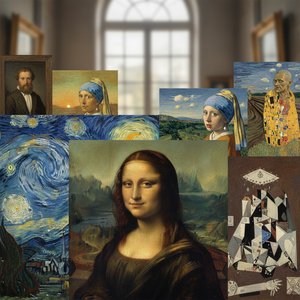
Journey through art history with our Top 10 oil paintings! Explore iconic works by Van Gogh, Monet & Rembrandt. Discover timeless masterpieces and find museum-quality reproductions for your home at .

Journey through 10 legendary 'Oil on Panel' masterpieces by Van Eyck, Bosch & Bruegel. Explore the stories behind these iconic Renaissance & Baroque paintings and find museum-quality art reproductions to elevate your home decor. Discover all masterpieces on !


第一时间获取最新的艺术新闻、独家优惠及装饰灵感。
向我们介绍您的项目需求,我们的艺术专家将为您提供 3 个个性化的艺术品推荐。
由我们的专家为您精选 3 款心仪之作 —— 完全免费!
 Preview
 定制手绘复刻品
 分享
分享 分享
分享
 详情
详情

 下载
下载
 相似作品
相似作品 X射线
X射线 幻灯片播放
幻灯片播放
 展开详情
展开详情






































 玻璃选项仅适用于110厘米以下的尺寸。


