


 效果预览
效果预览
 分享
分享 分享
分享
 详情
详情 指南
指南

 下载
下载
 相似作品
相似作品 X射线
X射线 幻灯片播放
幻灯片播放 统计数据
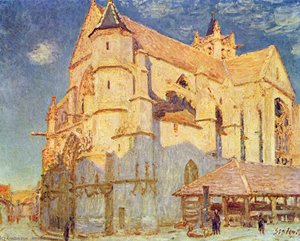
统计数据The Church at Moret, Rainy Morning
 Oil On Canvas
- WallArt
- Impressionist Landscape
 1893
1893 81.0 x 65.0 cm
Alfred Sisley’s Impressionist masterpiece captures a tranquil rainy morning scene at Moret Church, France—a luminous depiction of faith and fleeting light, inviting you to explore this serene beauty.
 展开详情
展开详情
西斯莱(1839-1899)是英国裔法国印象派大师,以其宁静的河流和乡村风光而闻名。他捕捉了光线的微妙变化,创作出如泰晤士河系列和莫雷河畔风景等杰作,展现了对自然的细腻观察和诗意表达,在印象派画家中独树一帜。
手工油画复制品
由我们的艺术家按需定制,为您提供您所选尺寸及画框的布面手工油画。 ( 切换至版画销售渠道 切换至数字图像销售渠道)




P118B $10

P118H $10

P118W $10

P438Z $10

P508JH $12

P508YH $12

P805H $10

P805Z $10

P919BZ $10

P919G $10

P919XJ $10

P959ZH $10

P968JZ $12

W106C $8

W218G $10

W218JH $8

W218Y $10

W307PJ $10

W316G $10

W316PJ $8

W316Y $10

W398PJ $8

W4111J $10

W500HY $15

W500JH $15

W692G $12

W849H $8

W940BG $15

W953PJ $8




标准尺寸
定制
CM
INCH
从与原作比例一致的预设尺寸中进行选择。
Loading sizes...

宽度
高度
您可以输入自定义尺寸,以适配特定的画框或空间。如果所选尺寸与原图比例不符,我们将通过裁剪作品或添加手绘元素来扩展画面。数字样稿将在制作开始前发送给您确认。
请注意,屏幕预览无法准确反映实际的裁剪或扩展效果,只有样稿才能真实呈现最终的构图。
虽然我们提供定制尺寸服务,但为了保留原作比例,建议您从预设列表中选择尺寸。
可定制示例:将面部替换为客户照片;添加宠物(例如,将猫替换为狗);在背景中加入隐藏信息;更改背景风景或元素。
下单后,TopImpressionists.com 团队将通过电子邮件联系客户获取具体要求,并提供效果预览图。
下单后,TopImpressionists.com 团队将通过电子邮件联系客户获取具体要求,并提供效果预览图。


 玻璃选项仅适用于110厘米以下的尺寸。

The Church at Moret, Rainy Morning
复制材质
复制品尺寸
-


最终总价
$ 269
A Moment Captured in Watercolor Light
Alfred Sisley’s “The Church at Moret, Rainy Morning,” painted in 1893, stands as a quintessential emblem of Impressionist art—a testament to the movement's dedication to portraying fleeting impressions rather than meticulously rendered details. Held within the Museum Langmatt in Switzerland, this canvas (81 x 65 cm) isn’t merely a depiction of a church; it’s an embodiment of atmosphere and emotion, skillfully conveyed through Sisley’s masterful use of watercolor.
The Essence of Impressionism: Light and Atmosphere
Sisley's artistic philosophy revolved around capturing the ephemeral qualities of light—a preoccupation shared with Monet and Renoir. He sought to convey not what he *saw*, but how it *felt*. “The Church at Moret, Rainy Morning” exemplifies this approach perfectly. The overcast sky casts a diffused glow upon the stone façade of Saint-Sulpice church, highlighting its architectural grandeur while simultaneously softening its contours. This deliberate blurring of lines is characteristic of Impressionism’s rejection of academic conventions and embraces spontaneity.
Technique and Composition: Broken Brushstrokes
Sisley achieved this luminous effect through a technique rooted in broken brushstrokes—a hallmark of Impressionist painting. Rather than blending colors smoothly, he applied pigment in short, irregular dashes that allowed individual strokes to retain their vibrancy and texture. These visible marks contribute significantly to the painting’s dynamism, mirroring the subtle movement of raindrops glistening on the church roof and surrounding buildings. The composition is balanced by the inclusion of an old building with a pointed roof—a deliberate choice reflecting Sisley's fascination with rural landscapes and architectural forms.
Historical Context: Monet's Fellow Traveler
Painted during a period of artistic experimentation, “The Church at Moret” aligns itself closely with the broader Impressionist movement. Sisley collaborated extensively with Claude Monet on numerous projects, sharing a similar vision for capturing the beauty of nature and experimenting with innovative painting methods. Like Monet’s works—particularly his series depicting Rouen Cathedral—Sisley aimed to distill the essence of a particular scene into a single moment in time, prioritizing sensory experience over precise representation.
Symbolism and Emotional Resonance
Beyond its technical brilliance, “The Church at Moret” possesses a subtle symbolic depth. The church itself represents faith and tradition—values that resonated deeply within the Impressionist artists’ worldview. However, Sisley's focus isn’t on conveying religious dogma; instead, he invites viewers to contemplate the serenity of a rainy day and the quiet contemplation afforded by simple surroundings. The painting evokes feelings of peace, tranquility, and nostalgia—capturing not just what was seen but how it felt to be present in that particular place and time.
相似艺术品




艺术家简介
阿尔弗雷德·西斯莱:光与田园的宁静大师
阿尔弗雷德·西斯莱,一个常常与莫奈、雷诺阿和毕沙罗并列的名字,在印象派运动中占据着独一无二且充满深邃美的位置。1839年10月30日,他出生于巴黎,父母威廉·西斯莱是一位丝绸商人,费莉西亚·塞尔则是一位热爱音乐的女士,他们都拥有英国国籍。这种双重身份微妙地影响了他的艺术视野。尽管他一生的大部分时间都在法国度过,西斯莱始终保留着英国公民身份,这在晚年申请成为法国公民时给他带来了个人失望。他的早年生活舒适富足,使他有机会最初为了商业事业而学习,并在18岁时前往伦敦。然而,艺术的吸引力最终战胜了一切,他在1861年回到巴黎,在瑞士艺术家马克·查尔斯·加布里埃尔·格莱尔的工作室接受了正规训练。正是在这里,在那个艺术蓬勃发展的时代,西斯莱与莫奈、雷诺阿和巴齐尔结下了至关重要的友谊——这些关系将深刻地塑造他的艺术生涯。他们分享着一种叛逆的精神,拒绝学院派绘画的僵化惯例,转而致力于直接从大自然中捕捉光线和氛围的瞬间变化。印象主义中的静谧探索
西斯莱对plein air(户外写生)绘画的奉献从未动摇。与一些同时代人尝试各种题材不同,西斯莱始终坚定地致力于风景画。这种专注的投入使他能够完善一种独特的风格,其特点是宁静、精致的色彩和微妙的光线表现。他的画布常常被淡雅的绿色、粉色、紫色、灰蓝色和奶油色笼罩,营造出一种沉思的氛围。虽然早期的作品大多已失传,但他的成熟画作揭示了对自然的细致观察与诗意的敏锐相结合。他并非追求宏大的叙事或戏剧性的姿态;相反,他在日常生活中发现了美——在河流的温柔流淌、阳光穿过树林的斑驳光影以及乡村生活的宁静魅力中。尽管早年面临认可上的困难,他的父亲在1870年的普法战争后遭遇财务困境,迫使西斯莱完全依靠出售自己的艺术作品为生——这是一种笼罩在他职业生涯中的不稳定的生活状态。他是一位真正的印象主义画家,但也是一位在有生之年常常默默无闻的艺术家。河流、运河与场所的精髓
贯穿西斯莱作品的主题是水对他的痴迷。河流景观成为了他的标志性主题,例如他在1874年前往英格兰时在莫利赛附近的泰晤士河畔创作的一系列画作。这些作品捕捉了河流及其周围环境的宁静之美,被认为是其最杰出的成就之一——艺术史学家肯尼思·克拉克称之为“印象主义的完美时刻”。他还与莫雷-苏尔-卢瓦恩建立了深厚的联系,在那里他生活了许多年,将运河、桥梁和周围乡村描绘在众多画布上。诸如《磨坊附近的风景》、《卢瓦恩运河上的驳船,春天》和“森林附近的田野”等画作展示了他赋予普通场景诗意优雅的能力。他不仅仅是描绘这些地方;他捕捉了它们的精髓,传达的不仅是它们的样子,更是它们的感觉——微风的轻拂、阳光的温暖以及水流的低语声。这种对氛围和情绪的敏感性或许是西斯莱最持久的遗产。影响与持久的意义
西斯莱的艺术影响是多方面的。格莱尔的学院派训练为他提供了技术基础,而与莫奈、雷诺阿和巴齐尔的友谊则培养了对印象主义原则的共同承诺。他吸收了他们强调捕捉光线和氛围瞬间变化的精神,但发展了自己的独特声音——其特点是克制和微妙。尽管在有生之命中常常默默无闻,西斯莱的作品现在因其美丽、敏感以及对描绘自然的坚定奉献而受到赞赏。他的影响可以从后来的风景画家中看到,他们试图以类似细微的差别来捕捉光线和氛围的瞬息变化。他代表了巴比松画派与印象主义全面发展之间的关键纽带,巴比松画派强调对现实景观绘画的关注。1899年1月29日,他在莫雷-苏尔-卢瓦恩去世,享年五十九岁,留下了作品集,这些作品继续激发敬畏和钦佩。阿尔弗雷德·西斯莱证明了安静观察的力量,表明真正的艺术掌握不在于宏伟的姿态,而在于揭示隐藏在平凡世界中的非凡之美。持久的意义
西斯莱的历史意义超越了他的技术技能和审美感觉。他对plein air绘画的不懈奉献,即使面临财务困难和批评漠视,为后来的艺术家们铺平了道路,他们寻求打破学院派惯例并拥抱与自然的更直接的参与。他的画作让我们得以一窥快速变化的时代——一个即将进入现代化的世界——提醒我们艺术能够捕捉到即使在最谦卑的景观中也能发现的美丽和宁静的力量。他是一位光、氛围以及自然界安静诗意的真正大师。- 主要主题:风景,河流景观,运河,乡村生活,大气效果。
- 关键特征:精致的色彩调盘,微妙的光线表现,宁静的气氛,plein air绘画。
- 影响:马克·查尔斯·加布里埃尔·格莱尔,克劳德·莫奈,皮埃尔-奥古斯特·雷诺阿,弗雷德里克·毕沙罗,巴比松画派画家。

阿尔弗雷德·西斯莱
1839 - 1899 , 法国
艺术家简介
- 全名: 阿尔弗雷德·西斯莱
- 出生地点: 巴黎,法国
- 出生日期: 1839年10月30日
- 去世日期: 1899年1月29日
- 受其影响的艺术家: ['后世风景画家']
- 国籍: 英法双重国籍
- 影响艺术家:
- 格列尔
- 莫奈
- 雷诺阿
- 艺术运动或风格: 印象派
- 著名作品:
- 泰晤士河畔
- 卢瓦尔河畔
- 莫雷苏卢瓦恩风景
相关文章

Oil on Board Masters: 10 Paintings That Redefined Art | TopImpressionists
Explore 10 legendary 'Oil on Board' masterpieces by Van Gogh, Monet & more! Discover art history, iconic styles like Impressionism, and find museum-quality reproductions to elevate your home decor. Explore the full collection online at TopImpressionists.com.

Oil on Canvas: A Historical & Technical Exploration of a Timeless Artistic Medium
Explore the rich history & enduring techniques of oil painting on canvas. Discover the science behind its longevity, conservation practices, and contemporary relevance. Expert insights for art enthusiasts.

Alfred Sisley: Capturing the Ephemeral Essence of Impressionist Landscape
Explore the life & art of Alfred Sisley, a master of Impressionist landscape painting. Discover his dedication to 'en plein air' techniques and serene depictions of nature. Learn about his legacy & find high-quality reproductions at TopImpressionists.

保罗·塞尚:25幅大师杰作,重塑现代艺术与家居美学 | TopImpressionists
探索保罗·塞尚25幅经典杰作!深入了解后印象派大师的艺术生涯、独特技法与色彩运用。TopImpressionists提供高清油画复制品,为您的家居带来博物馆级艺术体验。立即发现更多名画,点亮生活空间!

The Enduring Legacy of Oil on Canvas: Technique, History & Aesthetic Impact
Explore the rich history & techniques of oil painting – from Renaissance masters to Impressionism. Discover pigments, layering methods, and why this timeless medium endures. Expert insights for artists & art enthusiasts.
探索按主题、风格和特征分类的艺术作品。


