

 实景预览
实景预览
 发送
发送 分享
分享
 详情
详情 指南
指南

 下载图片
下载图片
 相似作品
相似作品 X射线
X射线 幻灯片播放
幻灯片播放 统计数据
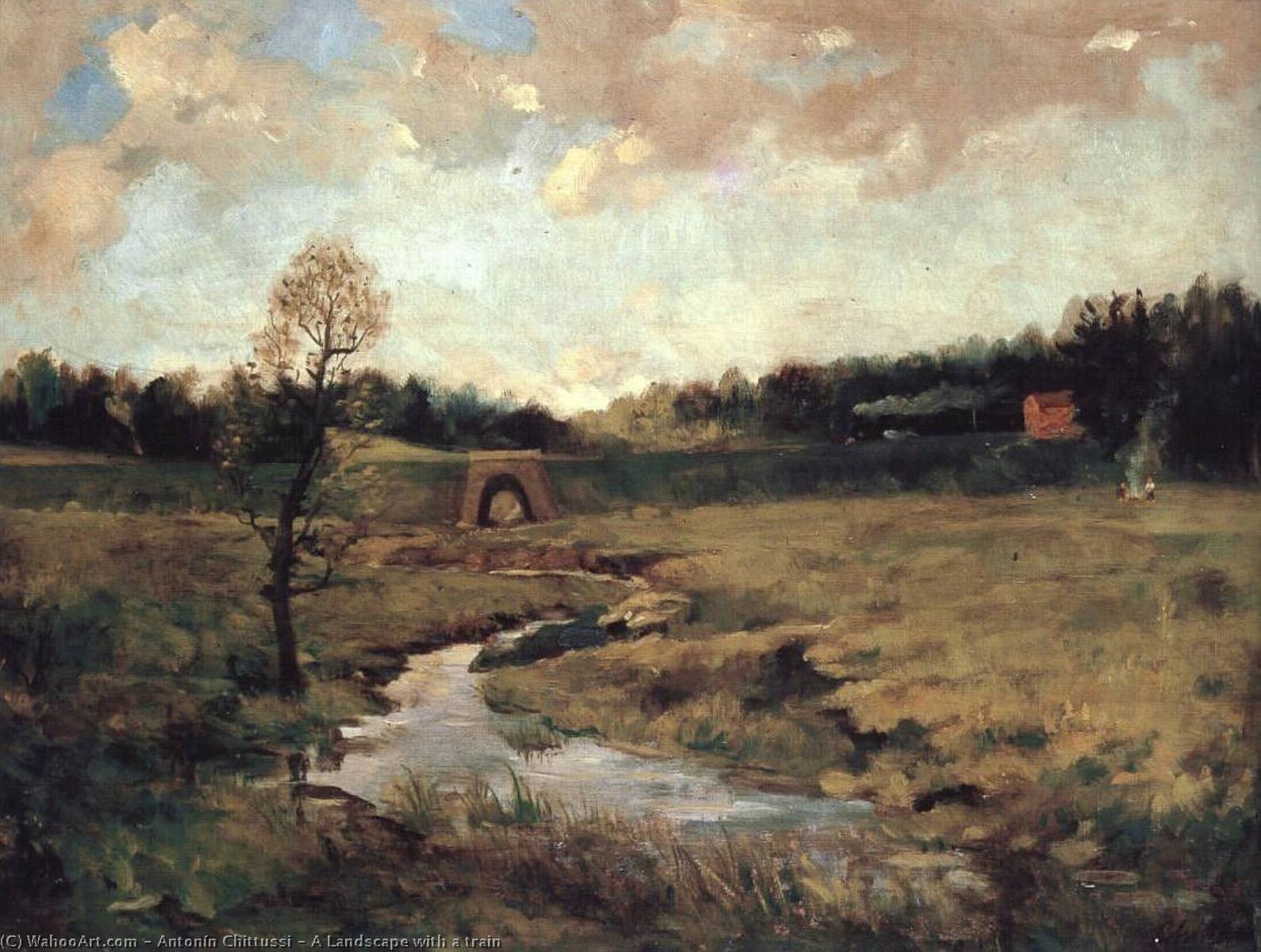
统计数据A Landscape with a train


Discover Antonín Chittussi (1847-1891), a Czech Impressionist painter known for evocative landscapes & cityscapes. Explore his art, influenced by Barbizon School & Parisian styles.
 阅读全文
阅读全文
艺术微喷/版画
博物馆级艺术微喷或帆布版画,制作高效,并提供多种饰面选择。 ( 订购此收藏品的纯手工复刻画作 切换至数字图像销售渠道)




































标准尺寸
定制
CM
INCH
您可以从与原作比例一致的预设尺寸中进行选择。
Loading sizes...

宽度
高度
请输入您所需的宽度和高度,以适配您的画框或墙面。由于印刷品只能进行裁剪,无法超出原图尺寸,因此若比例不一致,画面的一部分将会被裁切。在正式印刷之前,我们会为您发送一份数字效果图供您确认。本页面显示的图片并非最终裁剪后的效果——只有效果图才能展示真实的裁剪情况。


 玻璃选项仅适用于110厘米以下的尺寸。

A Landscape with a train
艺术微喷/版画
复刻品尺寸说明
-


总计金额
¥ 464
艺术家简介
The Soul of the Bohemian Landscape: The Life of Antonín Chittussi
In the tapestry of nineteenth-century European art, few threads are as delicately woven as those of Antonín Chittussi. Born on December 1, 1847, in the quiet town of Ronov nad Doubravou, Chittussi was a painter whose very essence seemed to bridge the gap between the rustic, grounded traditions of the Barbizon School and the shimmering, light-drenched innovations of Parisian Impressionism. His lineage was one of movement and commerce; born to an Italian father from a merchant family that had migrated to Bohemia during the Napoleonic Wars, Chittussi carried within him a cosmopolitan spirit that would later drive him far beyond the borders of his homeland. Though his early life in Bohemia suggested a path toward the family business or perhaps engineering, a profound, innate talent for capturing the nuances of light and shadow beckoned him toward the easel.
His formative years were marked by a restless search for artistic truth. After initial studies in Kutná Hora under František Bohumír Zvěřina, where he mastered the foundational rigors of drawing, Chittussi found himself at odds with the rigid academicism prevalent in Prague. This dissatisfaction propelled him toward Munich and eventually to the heart of the art world: France. It was during his years spent in France, particularly between 1879 and 1884, that his style truly blossomed. Immersed in the atmosphere of the French landscape movement, he became a successor to the Barbizon masters, learning to observe the subtle shifts in atmospheric perspective and the tonal harmonies of the natural world. His work began to breathe with a new vitality, capturing not just the scenery, and landscapes, but the very air that surrounded them.
A Legacy Forged in Light and Defiance
Chittussi’s career was not merely a pursuit of aesthetic beauty; it was also deeply intertwined with the turbulent political currents of his era. He was a man of conviction, a trait famously demonstrated in 1876 when he participated in a courageous student protest against the nationalist sentiments of Professor Alfred Woltmann at Charles University. This act of defiance led to his expulsion from the Academy and even a brief period of imprisonment alongside the renowned Mikoláš Aleš. Such moments of historical friction served to galvanize his artistic identity, pushing him to seek independence and refine a voice that was uniquely his own—one that could navigate both the patriotic social circles of Prague and the avant-garde salons of Paris.
As his technique matured, Chittussi’s oeuvre became a testament to the beauty of plein air realism. His landscapes and cityscapes are characterized by an evocative ability to render the ephemeral qualities of light—the way it filters through a canopy of trees or reflects off a quarry at Champigny. Through his work, he contributed decisively to the establishment of landscape painting as a leading genre within the Czech context, elevating it from mere topographical recording to a profound emotional experience. His later years, spent working in both Bohemia and France, saw him perfecting a style that celebrated the quiet majesty of the natural world, leaving behind a legacy that remains a cornerstone of modern Czech art.
The enduring significance of his contributions can be summarized through several key artistic pillars:
- Synthesis of Styles: The seamless integration of Barbizon-style tonalism with the burgeoning dynamism of Impressionist light.
- Plein Air Mastery: A dedicated commitment to painting outdoors, capturing the authentic, unmediated essence of the landscape.
- Cultural Bridge: Acting as a vital link between the French landscape tradition and the development of Czech national art.
- Emotional Resonance: The ability to transform simple subjects—a train passing through a valley or a quiet quarry—into profound meditations on nature and time.

Antonín Chittussi
1847 - 1891
快速概览
- Artistic Movement Or Style: Impressionism
- Artists Or Movements Influenced By This Artist: ['Parisian styles']
- Artists Who Influenced This Artist:
- František Bohumír Zwěřina
- Barbizon School
- Date Of Birth: 1847
- Date Of Death: 1891
- Full Name: Antonín Chittussi
- Nationality: Czech
- Notable Artworks:
- A Landscape with a Quarry at Champigny
- A Landscape with a train
- Place Of Birth: Ronov nad Doubravou, Bohemia