

 实景预览
实景预览
 分享
分享 分享
分享
 详情
详情 指南
指南

 下载作品
下载作品
 相似作品
相似作品 X射线
X射线 幻灯片播放
幻灯片播放 问答
问答 统计数据
统计数据
- 233.0 x 128.0 cm


¥ 1806
手工油画复制品
由我们的艺术家按需定制,为您提供您所选尺寸及画框的布面手工油画。 ( 切换至版画销售渠道 切换至数字图像销售渠道)
尺寸
·标准尺寸
定制
CM
INCH
您可以从与原作比例一致的预设尺寸中进行选择。
正在加载尺寸...

宽度
高度
请输入您需要的宽度和高度,以适配您的画框或墙面。由于作品为手工绘制,若选择不同比例的尺寸,艺术家可能会在画面边缘多画一些或稍作裁剪 —— 由您决定。在开始绘画之前,我们会为您发送一份数字效果图供您确认。本页面上展示的图片并非最终实物 —— 只有效果图才能反映真实结果。
 了解更多
了解更多完成
·
白色边缘 ¥1

边缘晕染效果 ¥1

延展式 ¥1

P118B ¥10

P118H ¥10

P118W ¥10

P438Z ¥10

P508JH ¥12

P508YH ¥12

P805H ¥10

P805Z ¥10

P919BZ ¥10

P919G ¥10

P919XJ ¥10

P959ZH ¥10

P968JZ ¥12

W106C ¥8

W218G ¥10

W218JH ¥8

W218Y ¥10

W307PJ ¥10

W316G ¥10

W316PJ ¥8

W316Y ¥10

W398PJ ¥8

W4111J ¥10

W500HY ¥15

W500JH ¥15

W692G ¥12

W849H ¥8

W940BG ¥15

W953PJ ¥8

H24-GOLD ¥30

H24-SILVER ¥30

H36-GOLD ¥45

H36-SILVER ¥45
采用保护管包装寄送,方便您交由专业的装裱师进行装裱。
增值服务
可选附加内容包含哪些内容?
可定制内容示例:将面部替换为客户照片;添加宠物(例如,将猫替换为狗);在背景中加入隐藏信息;更改背景风景或元素。
下单后,TopImpressionists.com 团队将通过电子邮件联系客户获取具体指令,并提供效果预览图
下单后,TopImpressionists.com 团队将通过电子邮件联系客户获取具体指令,并提供效果预览图
全球配送()仅需 3-4 周即可送达,无需等待标准时效的 5 周。(5 November)。品质绝不妥协。
保护性清漆
展品铭牌
青铜铭牌雕刻详情
This elegant plaque features the artist's name and the title of the artwork, finely engraved for a timeless presentation.
It is made from bronze with a refined, elegant finish. The text is precisely laser-engraved for a sharp and permanent result. Measuring 9x2 cm, the plaque is compact yet easy to read. It's built to be durable and scratch-resistant, offering a professional, museum-quality look. Mounting is simple thanks to the included adhesive backing.
透明亚克力铭牌详情
The plaque includes essential engraved details such as the artist's name, the title of the artwork, the date it was created, the type of media used-like oil on canvas or watercolor-a brief description of the piece, and a QR code that links to the complete artwork information.
It is crafted from clear acrylic, offering a sleek, modern appearance. The text is UV-engraved in black to ensure strong visual contrast. With a size of 10x15 cm, it ensures optimal readability. It comes equipped with two metal hooks for secure wall mounting. The plaque is designed to be weather-resistant, making it suitable for various environments, and it includes interactive features that work seamlessly with smartphone scanning.
黑色亚克力铭牌详情
This elegant plaque includes engraved information such as the artist's name, the title of the artwork, the date it was created, the type of media used (like oil on canvas or watercolor), a short description of the artwork, and a QR code for quick access to more information.
The plaque itself is made from refined black acrylic with a premium finish. The text is laser-engraved in white for high contrast and readability. Its size is 10x15 cm, designed to be easy to read. It comes with two metal hooks for professional mounting. The design is sleek and fits any interior style. It is also weather-resistant and durable, with built-in digital integration for mobile compatibility.
玻璃选项仅适用于110厘米以下的尺寸。
 玻璃选项仅适用于110厘米以下的尺寸。
- 全球免运费特快专递服务
- 优质亚麻画布
- 全程运输保险
- 关税退款保证
- 色彩精准还原保证
- 100天退货保障(仅限制造缺陷)
- 100% 退款保证
- 多件购买优惠


藏品详情
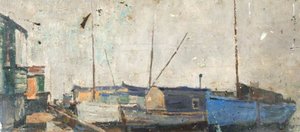
A dramatic harbor scene capturing the chaos of a sinking boat in Arthur Streeton's 1888 masterpiece Sandridge, showcasing Australian Impressionism and inviting you to explore this iconic piece for your collection.
关于作品
A Moment Frozen in Time: The Drama of Sandridge
In the vast expanse of Australian Impressionism, few works capture the raw, unscripted tension of maritime life as poignantly as Arthur Streeton’s Sandridge. Painted in 1888, this monumental oil on canvas serves as a window into a bustling, high-stakes moment within a busy harbor. At first glance, the viewer is drawn into a scene of profound movement and uncertainty; the central focus is a vessel caught in a state of distress, appearing to sink or having just succumbed to the elements. This focal point acts as the emotional anchor of the composition, pulling the eye toward the center of a swirling maritime drama where the calm of the water meets the sudden chaos of an emergency.
Streeton, a pioneer of the Heidelberg School, was a master at capturing what his contemporaries called the "Australian Light." In Sandridge, he utilizes this expertise to paint not just a scene, and not just a location, but an atmosphere. The light dances across the hulls of various boats—ranging from large, dominating vessels to smaller, more agile craft—creating a sense of depth and shimmering heat. Through his brushwork, one can almost feel the humidity of the harbor and the frantic energy of the at least twelve figures scattered throughout the scene. Some onlookers stand in stunned proximity to the sinking boat, while others are mere silhouettes against the horizon, their presence adding to the collective weight of the unfolding tragedy.
Technique and the Impressionist Spirit
The technical execution of Sandridge is a testament to Streeton’s ability to blend large-scale composition with delicate, impressionistic touches. The sheer scale of the work, measuring an impressive 233 x 128 cm, allows the viewer to become immersed in the harbor's geography. Streeton employs a palette that reflects the gritty yet luminous reality of a working port. His use of oil on canvas provides a rich texture that gives weight to the wooden hulls and life to the churning water. The way he manages the interplay between light and shadow is crucial; it is through these subtle shifts in tone that the sense of "chaos" is communicated without relying on overt, messy strokes.
For the discerning collector or interior designer, this piece offers a sophisticated balance of narrative intensity and aesthetic harmony. The painting does not merely depict a disaster; it captures the structural beauty of a maritime landscape. The composition guides the eye through a rhythmic arrangement of masts, sails, and figures, making it a powerful statement piece for any grand space. It possesses that rare quality in fine art: the ability to command attention through its historical gravity while simultaneously complementing a modern or classical interior with its masterful use of color and light.
A Legacy of Australian Identity
To understand Sandridge is to understand the birth of a national artistic identity. During the late 19th century, Streeton and his peers were moving away from European traditions to find a way to paint the unique, harsh, yet beautiful Australian landscape. While much of his work focuses on the golden hues of the bush, Sandridge explores the industrial and social heartbeat of the coast. The painting symbolizes the vulnerability of human endeavor when faced with the unpredictable forces of nature, a theme that resonates deeply across generations.
Owning a high-quality reproduction of this masterpiece allows one to bring a piece of Australian history into the contemporary home. It is more than a decoration; it is an invitation to contemplate the fleeting nature of stability and the enduring strength of human observation. Whether placed in a library, a formal dining room, or a curated gallery space, Sandridge serves as a profound conversation starter, embodying the spirit of an era defined by discovery, struggle, and the breathtaking beauty of the Australian light.
艺术速览与艺术小测验
关于 亚瑟·斯特雷顿

亚瑟·斯特雷顿
1867 - 1943, 澳大利亚
艺术家简介
澳大利亚光影的先驱:亚瑟·斯特雷顿的生命与艺术
亚瑟·欧内斯特·斯特雷顿(Arthur Ernest Streeton),在同时代的人眼中被亲切地称为“Smike”,是澳大利亚艺术史上的一座丰碑。1867年4月8日,他出生于维多利亚州的芒特杜尼德,他的生命轨迹与一个通过风景画寻找自我声音的国家之崛起紧密相连。斯特雷顿的出身并不显赫——他的父母是前往澳大利亚航行的英国移民——他的艺术之旅始于1882年至1887年间在墨尔本国家美术学院的学习,这段经历为他日后定义澳大利亚印象派及海德堡画派(Heidelberg School)的职业生涯奠定了基石。这些早年岁月不仅仅是磨炼技艺的过程,更是一场关于探索的旅程:去捕捉那属于澳大利亚丛林特有的光影与大气质感——那是一种与欧洲截然不同的光芒,也是贯穿斯特雷顿一生的艺术挑战。此外,他还通过担任石版画家学徒来补充正式训练,这些经历无疑深化了他对画面构图与色调价值的理解。海德堡画派与伊格尔蒙特营地
斯特雷顿艺术创作的成熟期正值海德堡画派的兴起,这是一群致力于锻造纯正澳大利亚风格的艺术家群体。他与汤姆·罗伯茨(Tom Roberts)及弗雷德里克·麦卡宾(Frederick McCubbin)的友谊至关重要;他们共同开展了“写生”(plein air)远足,力求直接从自然中呈现景观。这种受法国印象派启发、却又适应澳大利亚独特语境的户外创作精神,成为了他们作品的标志。1888年伊格尔蒙特营地的建立标志着一个转折点。通过与志同道合的艺术家在墨尔本郊外的一座农舍共同生活,斯特雷顿进入了一个创作的高峰期。正是在这里,他创作出了一些最具代表性的杰作,包括《金色的夏日,伊格隆特》(Golden Summer, Eaglemont)(1889)和《溪流静淌,永恒流淌》(Still glides the stream, and shall for ever glide)(1890)。这些画作并非仅仅是对风景的描绘,更是一种情感的唤起——是金黄色田野上闪烁的热浪,是夏日午后的宁静。这个营地营造了一种共同实验与相互激励的环境,巩固了海德堡画派在澳大利亚艺术界不可撼动的地位。该团体的大胆尝试在1889年极具争议的“9比5印象展”中达到顶峰,通过展示那些快速完成的小型画作,挑战了传统的艺术规范。追寻认可与回归故土
在雄心壮志与追求更广阔认可的驱动下,斯特雷顿于1897年搭乘“波利尼西亚号”前往伦敦。尽管他在皇家艺术学院展出并取得了一定的成功(包括1900年的参展),但他发现很难复制在澳大利亚所享有的盛誉。当时的欧洲艺术界竞争激烈且拥挤,他那带有鲜明澳大利亚色彩的视觉表达并不总是能引起既定审美趣味的共鸣。此后,他继续创作并探索不同的题材——例如《威尼斯,拉比亚宫》(Palazzo Labia, Venice)(1908)等威尼斯场景展示了其创作重心的转移,但仍保留了他对光影与色彩特有的敏锐感。第一次世界大战爆发后,斯特雷顿试图通过担任皇家陆军医疗队的一名医务兵来贡献力量,并于1918年成为官方战地艺术家。他的战争绘画在记录西线战场破坏的同时,往往将焦点回归到景观本身,反映了他对自然界永恒的痴迷。1923年,他以名人的身份回到澳大利亚,并因其对艺术的卓越贡献于1937年被授予爵士勋衔。遗产与深远影响
亚瑟·斯特雷顿的遗产远远超出了他的个人画作。他在建立独特的澳大利亚艺术身份方面发挥了至关重要的作用,这种身份赞美了这片大陆的美丽与辽阔。他的作品定义了澳大利亚人如何看待自己及其土地。他的影响力在随后的几代风景画家身上清晰可见,他们都受到了他捕捉澳大利亚光影与大气精髓能力的启发。此外,他还是一位多产的作家和艺术评论家,进一步塑造了关于澳大利亚艺术的论述。尽管他也经历过挫折与自我怀疑的时期,但斯特雷顿始终坚守其艺术愿景,直至1943年9月1日在维多利亚州奥林达逝世。时至今日,他的画作依然能俘获观众的心,为人们提供了一个窥见澳大利亚灵魂深处的永恒窗口。核心作品与主题
- 《金色的夏日,伊格隆特》(1889):或许是他最著名的作品,体现了澳大利亚夏日的炽热与光辉。
- 《溪流静淌,永恒流淌》(1890):对雅拉河的抒情描绘,展示了他对大气透视法的精湛掌握。
- 《火起》(1891):对澳大利亚丛林火灾景观的强力呈现,捕捉了其美丽与危险并存的一面。
- 《威尼斯,拉比亚宫》(1908):展示了他将印象派风格应用于欧洲题材的能力。
- 《埃及饮品商》(1897):一幅充满活力的场景,反映了他的旅行经历与对不同文化的探索。
关于 亚瑟·斯特雷顿 的简介
- Artistic Movement Or Style: 印象派,海德堡画派
- Artists Or Movements Influenced By This Artist: 澳大利亚印象派
- Artists Who Influenced This Artist:
- 路易·布维洛
- J.M.W. 透纳
- Date Of Birth: 1867年4月8日
- Date Of Death: 1943年9月1日
- Full Name: 亚瑟·欧内斯特·斯特雷顿
- Nationality: 澳大利亚
- Notable Artworks:
- 金色的夏天,伊格尔蒙特
- 溪流静静流淌
- 威尼斯,拉比亚宫
- 埃及饮料贩子
- 天狼星湾
- Place Of Birth: 澳大利亚,蒙特杜尼德




亚瑟·斯特雷顿
Sandridge
() ·
含框总尺寸: · 亚麻布油画手绘
总计