
 Oil On PanelRenaissance
 1520
1520 52.0 x 34.0 cm
 Residenzgalerie
购买高分辨率增强版数字图像,其品质远超在线预览。
每一份文件都由我们的内部专家使用先进工具与专业的后期润色技术精心打造。我们确保每一张图像都具备卓越的清晰度、精准的色彩还原度以及细腻的细节表现。
最终文件将在 72 小时内通过电子邮件交付,并针对专业、编辑及印刷用途进行了优化。其品质与顶级设计工作室、出版社和画廊所信赖的标准完全一致。
选择 TopImpressionists.com,您获得的不仅仅是一张图像——您收到的是经过专业级增强、精雕细琢的数字艺术作品,并享有满意保证。以下是您的订单中自动包含的所有内容:

您的高分辨率数字图像文件将在下单后 72 小时内通过电子邮件发送给您 —— 即可立即使用。

您的艺术品经过专业优化,结合先进的 AI 技术与人工修饰,确保呈现极致的细节、清晰度与色彩准确度。

不小心删除了文件或找不到了?没关系——我们将随时为您免费重发。

即刻拥有您的艺术作品,无需支付任何关税、税费或运费——数字下载始终免税。

我们通过专业工具与色彩管理技术,确保您的数字图像尽可能真实地还原原作色彩。

如果您对所购买的数字图像不满意,我们将在60天内为您进行修改或退还100%的款项——无需任何解释。

如果不满意?在收到数字文件后的60天内,我们为您提供全额退款——无需任何理由。

购买 3 张图片可享 10% 折扣 - 购买 5 张可享 15% 折扣 - 购买 10+ 张可享 20% 折扣。非常适合创意项目、画廊和机构使用。
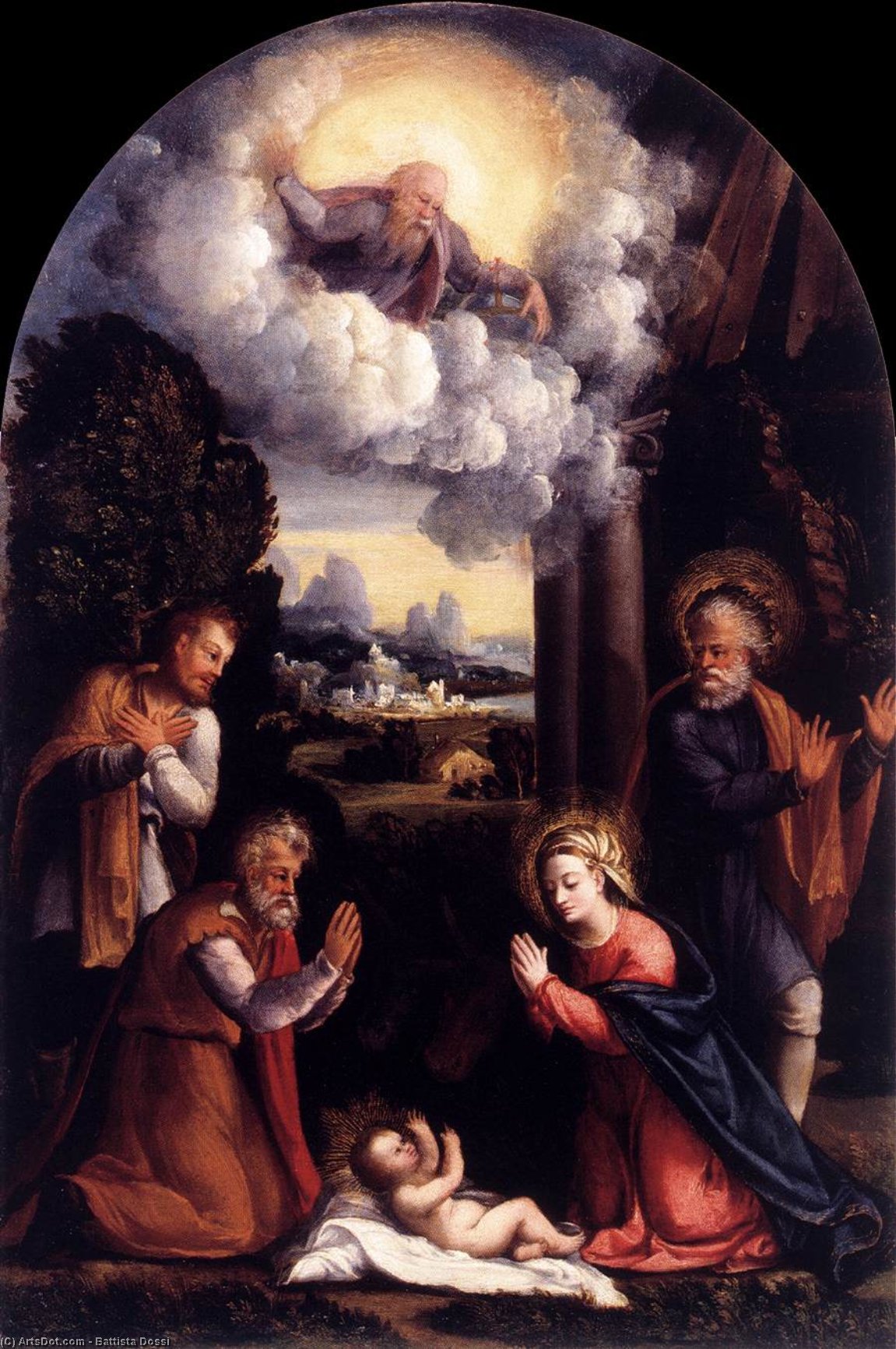
To stand before Battista Dossi's Nativity is to step directly into the luminous heart of the Italian Renaissance. This painting, executed in 1520, transcends mere religious depiction; it is a profound meditation on the moment divine history intersected with humble human reality. The composition itself draws the eye inward, guiding us around the central tableau where the infant Jesus rests within the manger. Battista Dossi captures not just an event, but an atmosphere—a palpable sense of awe mixed with tender intimacy. The meticulous attention paid to every fold of drapery and every nuanced expression on Mary’s face or Joseph’s brow speaks volumes about the artist's mastery and his deep commitment to devotional art.
The technical brilliance evident in this work is breathtaking. Executed in oil on panel, a medium that allowed Dossi such rich saturation of color and remarkable textural depth, the painting achieves an almost sculptural quality. Observe how the light seems to emanate from within the scene itself, catching the edges of the figures' robes and illuminating the celestial glow surrounding the manger. The handling of shadow and highlight is masterful; it lends a three-dimensional vitality that makes the sacred narrative feel immediate and present. This technique allowed Dossi to achieve those subtle gradations of color, giving weight and volume to every element within the carefully orchestrated circular composition.
The symbolism woven throughout the Nativity is rich with theological meaning. At the core lies the mystery of the Incarnation, yet Dossi elevates this moment by including the angelic figure suspended above the scene. This celestial messenger, wings spread against a backdrop suggesting an ethereal sky, acts as a dramatic conduit between heaven and earth. The surrounding figures, kneeling in adoration, serve to ground the divine event within human reverence. Every element—from the rustic suggestion of the stable setting to the flowing garments of the heavenly choir—contributes to a narrative tapestry designed to inspire profound contemplation in the viewer.
For the collector or designer seeking an anchor of timeless beauty, this piece offers unparalleled depth. While its original location at the Residenzgalerie in Salzburg speaks to centuries of artistic pedigree, owning a high-quality reproduction allows one to bring that historical resonance into a contemporary space. The enduring appeal lies in its perfect balance: it is deeply spiritual without being overly austere, and technically brilliant while remaining emotionally accessible. It invites quiet reflection, transforming any room into a sanctuary echoing the gentle wonder of Christ's first breath.
Battista Dossi, born Giovanni di Niccolò de Luteri around 1490 in the vibrant city of Ferrara, Italy, emerged from a family deeply entwined with the artistic life of the Este court. His father, Niccolò de Luteri, served as a bursar for the Dukes of Ferrara, establishing a connection that would profoundly shape Battista’s career. While details of his earliest training remain somewhat elusive, it is believed he initially followed in the footsteps of local artists like Lorenzo Costa, absorbing the foundational principles of Ferrarese painting. However, the true trajectory of his artistic development began with his close association with his older brother, Dosso Dossi, a painter already gaining recognition for his unique and imaginative style.
The Dossi brothers quickly became integral to the Este court’s ambitious artistic projects. Their work wasn't confined to traditional canvases; they were tasked with decorating palazzi and villas, designing elaborate tapestries and theatre sets, even embellishing furniture and carriages—a testament to the Renaissance court artist’s multifaceted role. This environment fostered a spirit of experimentation and collaboration, where mythological and poetic themes reigned supreme. Battista’s early works reflect this influence, showcasing a growing mastery of fresco technique and a penchant for narrative storytelling.
A pivotal moment in Battista Dossi's artistic journey arrived around 1517 when he traveled to Rome. He entered the workshop of the celebrated Raphael, an experience that proved transformative. Immersed in the High Renaissance atmosphere, Battista absorbed Raphael’s compositional elegance, anatomical precision, and sophisticated use of color. This Roman sojourn broadened his perspective and refined his technical skills, though it didn't entirely eclipse the distinctive Ferrarese character already present in his work.
Upon returning to Ferrara after Raphael’s untimely death in 1520, Battista resumed his service at the Este court with renewed vigor. He continued collaborating closely with Dosso, and their combined talents were highly sought after for a variety of commissions. While Dosso often took the lead on larger-scale projects, Battista carved out his own niche, demonstrating a particular aptitude for smaller devotional works, portraits, and intricate decorative designs.
Battista Dossi’s artistic style is characterized by a captivating blend of Ferrarese tradition, Roman refinement, and an individual sensibility that set him apart. His paintings often feature allegorical subjects imbued with symbolic depth, inviting viewers to decipher hidden meanings within the composition. He possessed a remarkable ability to create dreamlike atmospheres through subtle color harmonies, delicate modeling, and carefully orchestrated lighting effects.
Unlike some of his contemporaries who prioritized naturalism, Battista embraced a degree of stylization and eccentricity in his figures. His portraits, while technically proficient, often depict sitters with unusual poses or expressions, adding an element of psychological intrigue. This unconventional approach, coupled with his penchant for striking disharmonies in color, contributed to the unique allure of his work.
Battista Dossi’s career flourished throughout the 1530s and early 1540s, solidifying his reputation as one of Ferrara's leading painters. He also took on students, passing down his knowledge and techniques to a new generation of artists, notably Camillo Filippi. His influence extended beyond painting; he was actively involved in designing floats for court festivals, creating medals, and crafting gold jewelry—a testament to his versatility and artistic range.
Though overshadowed by the fame of his brother Dosso, Battista Dossi left behind a significant body of work that continues to captivate art historians and enthusiasts alike. His paintings offer a glimpse into the refined world of the Este court, revealing a culture steeped in humanism, allegory, and artistic innovation. He represents a fascinating intersection of Renaissance styles, blending the traditions of Ferrara with the elegance of Rome to create a truly unique and enduring artistic legacy.

1490 - 1548 , Italy


第一时间获取最新的艺术新闻、独家优惠及装饰灵感。
向我们介绍您的项目需求,我们的艺术专家将为您提供 3 个个性化的艺术品推荐。
由我们的专家为您精选 3 款心仪之作 —— 完全免费!

 效果预览
效果预览
 购买印刷品
购买印刷品 分享
分享 分享
分享
 详情
详情

 下载
下载
 相似作品
相似作品 X射线
X射线 幻灯片播放
幻灯片播放 展开详情
展开详情