

 分享
分享 分享
分享
 详情
详情 指南
指南

 下载作品
下载作品
 相似作品
相似作品 幻灯片播放
幻灯片播放 问答
问答 统计数据
统计数据Salt Cellar

- 26.0 x 33.0 cm


 展开全文
展开全文
艺术微喷/版画
博物馆级艺术微喷或帆布版画,制作高效,并提供多种饰面选择。 ( 订购纯手工绘制画作 切换至数字图像销售渠道)




































标准尺寸
定制
CM
INCH
您可以从与原作比例一致的预设尺寸中进行选择。
Loading sizes...

宽度
高度
请输入您所需的宽度和高度,以适配您的画框或墙面。由于印刷品只能进行裁剪,无法超出原图尺寸,因此若比例不一致,画面的一部分将会被裁切。在正式印刷之前,我们会为您发送一份数字效果图供您确认。本页面显示的图片并非最终裁剪后的效果——只有效果图才能展示真实的裁剪情况。


 玻璃选项仅适用于110厘米以下的尺寸。

Salt Cellar
艺术微喷/版画
复刻品尺寸
-


最终结算价
¥ 469
A Gilded Echo of Antiquity
Benvenuto Cellini's Salt Cellar, a shimmering testament to the heights of Renaissance goldsmithing, isn’t merely a container for salt; it’s a miniature cosmos, a meticulously crafted allegory brimming with symbolism and technical brilliance. Completed in 1543 for King Francis I of France, this extraordinary object transcends its functional purpose, becoming a profound meditation on the relationship between earth and sea, divinity and humanity. It's a piece that whispers tales of ambition, artistry, and the intoxicating allure of the Italian Renaissance—a world where beauty was paramount and skill elevated to an almost religious pursuit.
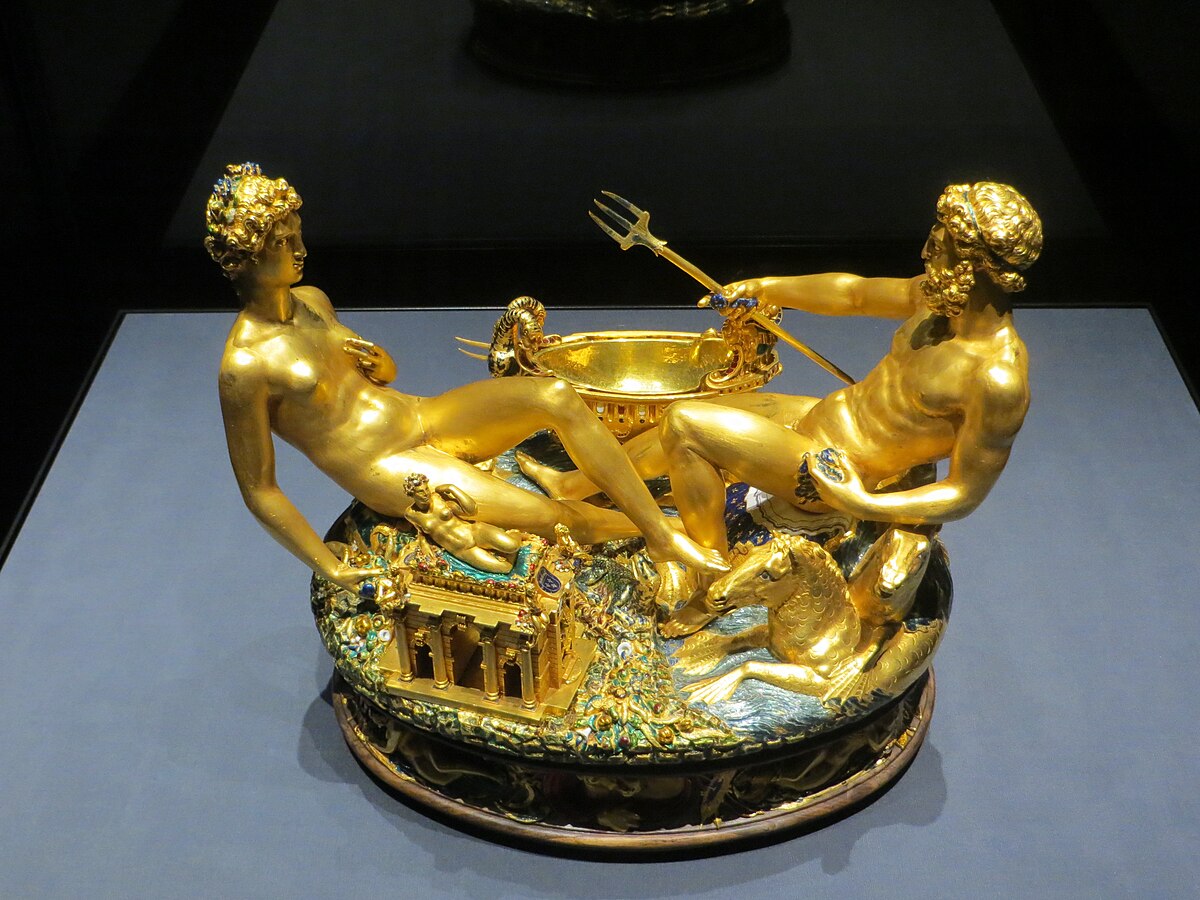
Image of Benvenuto Cellini’s Salt Cellar
The Anatomy of a Masterpiece
Crafted primarily from gold, the Salt Cellar is an astonishing feat of technical mastery. Cellini, renowned for his flamboyant personality and equally impressive skill, eschewed traditional casting methods, instead meticulously hammering the gold into its delicate, flowing form by hand. The base is elegantly fashioned from ebony, providing a striking contrast to the radiant gold, while ivory bearings allow the sculpture to gracefully roll across a banquet table – a deliberate feature designed for display and conversation. But it’s the enameling that truly elevates the piece; intricate scenes depicting figures representing the four seasons and the four winds are painstakingly applied, adding layers of visual complexity and narrative depth. The sheer scale of detail—from the meticulously rendered folds of clothing to the lifelike expressions on the faces of Neptune and Tellus – speaks volumes about Cellini’s dedication and unparalleled skill.
- Material: Gold, Ebony, Ivory, Enamel
- Dimensions: Approximately 10.5 inches (267 mm) tall, 13.1 inches (333 mm) wide
- Technique: Hand-hammered gold, intricate enamel work
A Dialogue with the Divine
The Salt Cellar’s symbolism is as captivating as its aesthetic beauty. At its heart lies a potent allegory of Terra e Mare – Earth and Sea – embodied by the figures of Neptune, god of the ocean, and Tellus, goddess of the earth. These two powerful deities are depicted in an intimate embrace, their legs intertwined, suggesting a harmonious connection between the terrestrial and aquatic realms. The sculpture is further enriched with symbolic details: a small boat carries the salt, representing the flow of commerce and sustenance; a temple dedicated to peppercorns stands alongside Tellus, signifying the pleasures of earthly life. The inclusion of animals—horses, dogs, dolphins—adds another layer of meaning, drawing upon classical iconography and reinforcing the sculpture’s connection to mythology and antiquity.
A Legacy Forged in Ambition
Cellini's autobiography, *Vita*, offers invaluable insight into the creation of this extraordinary piece. He recounts his initial reluctance to accept the commission from Cardinal Ippolito d’Este, dismissing the cardinal’s suggestions with characteristic arrogance and asserting sole credit for the design. The story is rife with anecdotes about Cellini’s daring exploits—including a dramatic escape from bandits while transporting the gold—further cementing his image as a larger-than-life figure of Renaissance Italy. The Salt Cellar, therefore, isn't just an artistic achievement; it’s a reflection of Cellini’s own complex and often contradictory personality – a testament to ambition, skill, and a profound appreciation for beauty. It remains one of the most celebrated examples of Renaissance goldsmithing, captivating viewers with its exquisite detail and enduring symbolism.
常见问题与解答
本韦努托·切利尼 的《Salt Cellar》 的对比度有多强?
本韦努托·切利尼 的《Salt Cellar》 在明暗区域之间呈现出 Gentle 的对比度。
对于 本韦努托·切利尼 的《Salt Cellar》 而言,情感表达与送礼场合是如何完美融合的?
本韦努托·切利尼 的《Salt Cellar》 所传达的 Reflective 氛围,与推荐的送礼场合完美契合:Anniversary。
"Salt Cellar" 的创作年份 1540 对应于 本韦努托·切利尼 艺术生涯中的哪个阶段?
鉴于其创作于1540年,作品《Salt Cellar》属于本韦努托·切利尼的Mature Renaissance时期。
艺术家简介
文艺复兴的奇才:本venuto 切利尼
本venuto 切利尼(1500-1571)是意大利文艺复兴时期一位令人叹为观止的人物,他不仅是一位技艺精湛的金匠和雕塑家,更是一位充满传奇色彩的艺术家。他的多才多艺与奔放个性在他的自传中得到了生动展现,这部自传本身就是一部重要的文学作品,与他的艺术成就相媲美。切利尼完美地体现了曼涅里主义精神——一种紧随文艺复兴鼎盛时期而来的风格,以其戏剧化的张力和复杂的表现手法为特征。
早年生活与艺术启蒙
切利尼出生于佛罗伦萨一个充满音乐氛围的家庭,他的父亲是一位音乐家和乐器制造者。最初,他展现出对音乐的天赋,但15岁时,他对金匠事业产生了强烈的热情,说服了他起初并不情愿的父亲将他作为学徒介绍给安东尼奥·迪·桑德罗(Marcone)。这标志着他正式艺术生涯的开始。早年的经历并非一帆风顺;16岁时,他卷入了一场与同伴之间的冲突,导致被佛罗伦萨驱逐,并前往锡耶纳在金匠弗拉卡斯托罗门下工作。
主要艺术作品与风格
切利尼的作品以其精湛的工艺、大胆的设计和对细节的关注而闻名。他从古典古代汲取灵感,并深受米开朗基罗雕塑的影响,但他的作品也融入了独特的曼涅里主义特征——细长的形体、夸张的姿态以及一种戏剧性的表现力。
- 盐罐: 这件为法国国王弗朗西斯一世委托制作的精美银器杰作,无疑是他最著名的作品之一。它展示了错综复杂的细节和充满活力的形象,现藏于维也纳艺术史博物馆。
- 珀耳修斯与美杜莎之首: 这座青铜雕塑描绘了珀耳修斯凯旋而归,手持美杜莎的头颅。它充分体现了切利尼在塑造形体和表现戏剧性构图方面的精湛技艺,是他在金属艺术领域技能的杰出证明。
- 莱达与天鹅金章: 这枚为贡法洛涅里·加布里埃洛·切萨里诺创作的金章,展示了切利尼将古典神话与精湛工艺完美融合的能力。
- 印章设计草图: 现藏于大英博物馆的一幅素描,展现了他的设计才能。
艺术之外的生活:士兵、音乐家和自传作家
切利尼的生活远远超出了工坊的范围。他曾作为一名士兵参加围攻战役,声称在保卫罗马对抗帝国军队中发挥了关键作用。他还是一位才华横溢的音乐家,曾在教皇宫廷演奏短号和长笛。然而,真正使他脱颖而出的却是他的自传。
- 切利尼自传: 这部坦率且常常带有炫耀色彩的回忆录,为文艺复兴时期的艺术、文化和社会提供了宝贵的见解。它是一部引人入胜的叙事作品,充满了关于赞助人、竞争对手和个人冒险的故事,为我们提供了一个独特的时代视角。
他的自传不仅仅是对事件的回顾;它是一份精心构建的自我肖像,旨在展示他的才华并证明其行为的正当性。尽管有时由于切利尼自身的偏见而不可靠,但它仍然是理解文艺复兴生活的重要一手资料。
遗产与历史意义
本venuto 切利尼于1571年去世于佛罗伦萨,留下了一位意大利文艺复兴时期最重要的艺术家之一的遗产。他的技术技巧、艺术创新和引人入胜的自传继续激励着艺术家和艺术爱好者。他代表了文艺复兴理想——一位精通多门学科、充满雄心壮志且敢于表达个性的全才。他的作品因其美丽、工艺和戏剧性力量而备受赞誉,巩固了他作为西方艺术史上举足轻重的人物地位。

本韦努托·切利尼
1500 - 1571 , 意大利
艺术家简介
- Artistic Movement Or Style: 风格主义
- Artists Who Influenced This Artist: ['米开朗基罗']
- Date Of Birth: 1500年11月1日
- Date Of Death: 1571年2月13日
- Full Name: 本韦努托·切利尼
- Nationality: 意大利国籍
- Notable Artworks (List Of Titles):
- 美杜莎之首珀耳修斯
- 切利尼盐罐
- Place Of Birth (City And Country): 意大利佛罗伦萨
相关文章

Beyond Perfection: The Dramatic Elegance and Intellectual Tension of Renaissance Mannerism
Explore the captivating world of Renaissance Mannerism. Discover how artists moved beyond High Renaissance harmony into a realm of elegant distortion, psychological tension, and dramatic beauty that bridged the gap to the Baroque era.
