
 实景预览
实景预览
 分享
分享 分享
分享
 详情
详情 指南
指南

 下载作品
下载作品
 相似作品
相似作品 X射线
X射线 幻灯片播放
幻灯片播放 问答
问答 统计数据
统计数据

¥ 1804
手工油画复制品
由我们的艺术家按需定制,为您提供您所选尺寸及画框的布面手工油画。 ( 切换至版画销售渠道 切换至数字图像销售渠道)
尺寸
·标准尺寸
定制
CM
INCH
您可以从与原作比例一致的预设尺寸中进行选择。
正在加载尺寸...

宽度
高度
请输入您需要的宽度和高度,以适配您的画框或墙面。由于作品为手工绘制,若选择不同比例的尺寸,艺术家可能会在画面边缘多画一些或稍作裁剪 —— 由您决定。在开始绘画之前,我们会为您发送一份数字效果图供您确认。本页面上展示的图片并非最终实物 —— 只有效果图才能反映真实结果。
 了解更多
了解更多完成
·
白色边缘 ¥1

边缘晕染效果 ¥1

延展式 ¥1

P118B ¥10

P118H ¥10

P118W ¥10

P438Z ¥10

P508JH ¥12

P508YH ¥12

P805H ¥10

P805Z ¥10

P919BZ ¥10

P919G ¥10

P919XJ ¥10

P959ZH ¥10

P968JZ ¥12

W106C ¥8

W218G ¥10

W218JH ¥8

W218Y ¥10

W307PJ ¥10

W316G ¥10

W316PJ ¥8

W316Y ¥10

W398PJ ¥8

W4111J ¥10

W500HY ¥15

W500JH ¥15

W692G ¥12

W849H ¥8

W940BG ¥15

W953PJ ¥8

H24-GOLD ¥30

H24-SILVER ¥30

H36-GOLD ¥45

H36-SILVER ¥45
采用保护管包装寄送,方便您交由专业的装裱师进行装裱。
增值服务
可选附加内容包含哪些内容?
可定制内容示例:将面部替换为客户照片;添加宠物(例如,将猫替换为狗);在背景中加入隐藏信息;更改背景风景或元素。
下单后,TopImpressionists.com 团队将通过电子邮件联系客户获取具体指令,并提供效果预览图
下单后,TopImpressionists.com 团队将通过电子邮件联系客户获取具体指令,并提供效果预览图
全球配送()仅需 3-4 周即可送达,无需等待标准时效的 5 周。(10 November)。品质绝不妥协。
保护性清漆
展品铭牌
青铜铭牌雕刻详情
This elegant plaque features the artist's name and the title of the artwork, finely engraved for a timeless presentation.
It is made from bronze with a refined, elegant finish. The text is precisely laser-engraved for a sharp and permanent result. Measuring 9x2 cm, the plaque is compact yet easy to read. It's built to be durable and scratch-resistant, offering a professional, museum-quality look. Mounting is simple thanks to the included adhesive backing.
透明亚克力铭牌详情
The plaque includes essential engraved details such as the artist's name, the title of the artwork, the date it was created, the type of media used-like oil on canvas or watercolor-a brief description of the piece, and a QR code that links to the complete artwork information.
It is crafted from clear acrylic, offering a sleek, modern appearance. The text is UV-engraved in black to ensure strong visual contrast. With a size of 10x15 cm, it ensures optimal readability. It comes equipped with two metal hooks for secure wall mounting. The plaque is designed to be weather-resistant, making it suitable for various environments, and it includes interactive features that work seamlessly with smartphone scanning.
黑色亚克力铭牌详情
This elegant plaque includes engraved information such as the artist's name, the title of the artwork, the date it was created, the type of media used (like oil on canvas or watercolor), a short description of the artwork, and a QR code for quick access to more information.
The plaque itself is made from refined black acrylic with a premium finish. The text is laser-engraved in white for high contrast and readability. Its size is 10x15 cm, designed to be easy to read. It comes with two metal hooks for professional mounting. The design is sleek and fits any interior style. It is also weather-resistant and durable, with built-in digital integration for mobile compatibility.
玻璃选项仅适用于110厘米以下的尺寸。
 玻璃选项仅适用于110厘米以下的尺寸。
- 全球免运费特快专递服务
- 优质亚麻画布
- 全程运输保险
- 关税退款保证
- 色彩精准还原保证
- 100天退货保障(仅限制造缺陷)
- 100% 退款保证
- 多件购买优惠


藏品详情
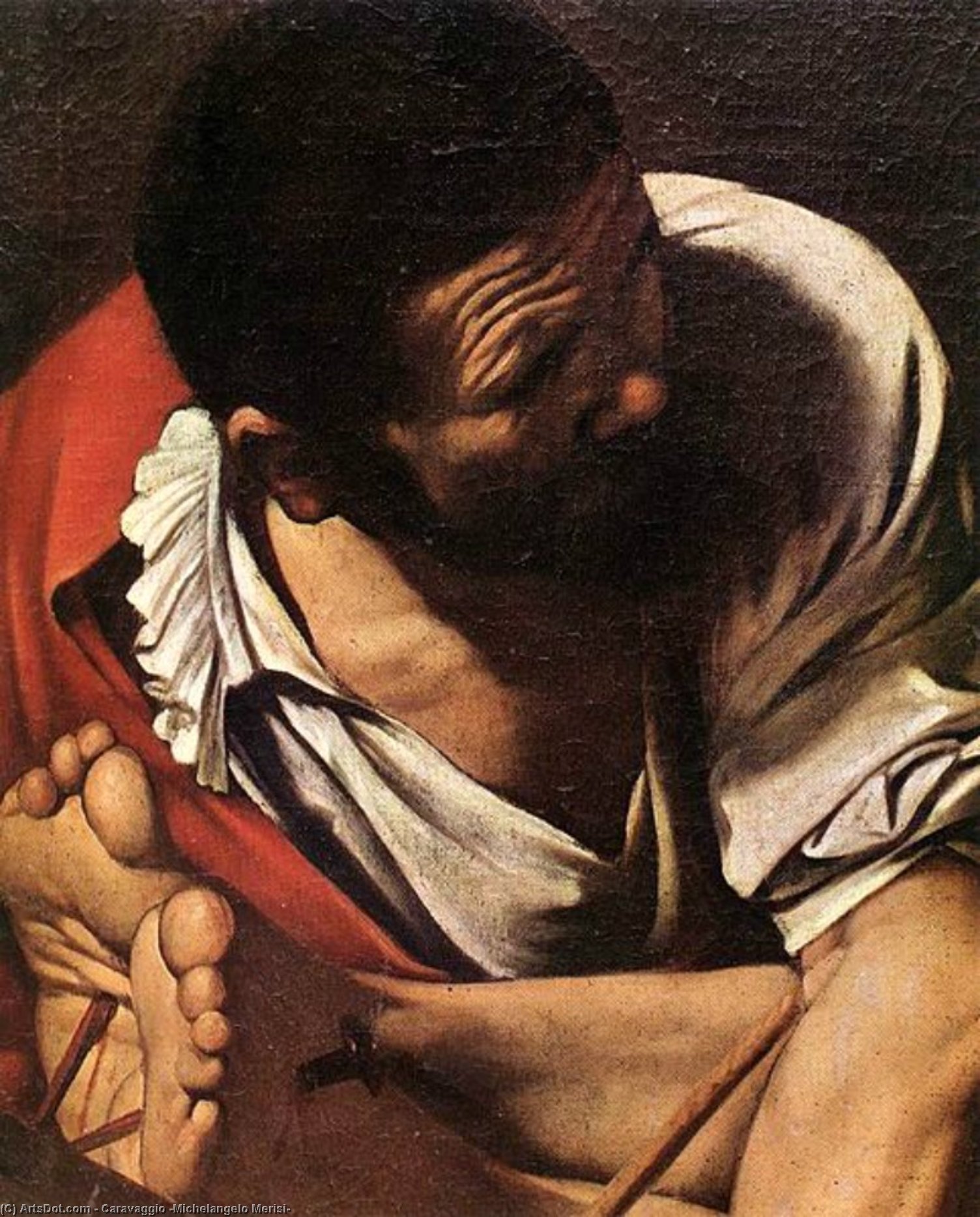
Caravaggio's 'Untitled (92)' depicts a tormented man reflecting on violence and despair, showcasing his signature dramatic chiaroscuro and psychological intensity – a haunting masterpiece.
关于作品
The Weight of Silence: Caravaggio’s ‘Untitled (92)’ – A Study in Human Anguish
Michelangelo Merisi da Caravaggio's “Untitled (92)” is not merely a depiction of a man in distress; it’s a profound exploration of the human condition, rendered with the artist’s signature mastery of light and shadow. This painting, shrouded in mystery regarding its precise date and location within his prolific output, nevertheless possesses an immediate and unsettling power. The subject, a figure seated on the floor, his hands clasped tightly over his knees, embodies a palpable sense of inward turmoil – a silent scream trapped within a posture of profound contemplation. The composition is strikingly simple yet intensely effective; the limited palette—primarily deep reds, browns, and blacks—amplifies the drama and draws the viewer’s eye directly to the man's face, etched with an expression that speaks volumes without uttering a single word.
A Baroque Masterpiece Forged in Shadow – Caravaggio’s Technique
Caravaggio’s genius lay not just in his dramatic subject matter but also in his revolutionary technique. He employed what he termed “tenebrism,” a theatrical use of light and dark, to create an almost hyperrealistic effect. Here, the darkness dominates, enveloping the figure and suggesting a world of uncertainty and despair. A single, unseen source of illumination cuts through this gloom, highlighting the man’s face, hands, and the subtle details of his clothing – a worn red shirt that hints at a life lived with hardship. Notice how Caravaggio uses chiaroscuro—the sharp contrast between light and dark—to sculpt the figure's form, giving it an almost three-dimensional quality. This technique wasn’t simply stylistic; it served to heighten the emotional impact of the scene, forcing the viewer to confront the subject’s suffering directly.
Symbolism Within the Depths – Interpreting the Details
Beyond the immediate portrayal of distress, “Untitled (92)” is rich in symbolic elements. The knife resting on the left side of the image immediately introduces a note of violence and potential conflict—a past trauma perhaps, or an ongoing threat. The bowl, positioned centrally, could represent sustenance consumed before this moment of despair, suggesting a previous state of well-being now irrevocably lost. Crucially, the man’s downward gaze is key; it signifies introspection, regret, and possibly even self-condemnation. The fact that he appears to be looking at the ground suggests a grounding in earthly realities, a stark contrast to the turmoil within his mind. Considering Caravaggio's own turbulent life – marked by poverty, legal troubles, and early loss – one can’t help but see echoes of his personal struggles reflected in this haunting portrait.
Connections & Context: Caravaggio’s Influence and Beyond
Caravaggio’s influence on subsequent generations of artists is undeniable. He paved the way for Baroque painting, shifting away from idealized Renaissance forms towards a more realistic and emotionally charged style. His use of everyday people as subjects—rather than noble figures—was equally revolutionary. Interestingly, research reveals parallels with other works by Caravaggio, such as “Medusa,” where he similarly explored themes of violence, psychological torment, and the confrontation between beauty and horror. The image’s stark realism also connects it to Mughal art, particularly the intricate crowd scenes and psychological dramas found in Shah Jahan's albums – a testament to Caravaggio’s ability to evoke powerful emotions through simple compositions and masterful use of light. The photograph “Untitled 92” by Cindy Sherman, while vastly different in medium, shares a similar exploration of identity and vulnerability, demonstrating the enduring power of Caravaggio’s artistic vision.
TopImpressionists offers meticulously crafted hand-painted reproductions of this iconic work, allowing you to experience the raw emotion and dramatic intensity of Caravaggio's masterpiece in stunning detail. Each reproduction is created by skilled artists using traditional techniques, ensuring an authentic representation of this timeless portrait. Explore our collection today and bring a piece of art history into your home or office.
常见问题与解答
在 卡拉瓦乔 的《untitled (92)》 中,艺术流派与时代背景是如何交汇的?
"untitled (92)" 属于 Baroque Realism 流派,其创作者活跃于 近代早期 时期。
"untitled (92)" 的色彩饱和度如何?
卡拉瓦乔 的《untitled (92)》 的色彩饱和度为 Balanced Soft。
卡拉瓦乔 的《untitled (92)》 是一件广为人知的艺术品吗?
卡拉瓦乔 的《untitled (92)》 的记录热度为 Iconic。
艺术速览与艺术小测验
关于 卡拉瓦乔

卡拉瓦乔
1571 - 1610, 西班牙
艺术家简介
米开朗基罗·梅里西·达·卡拉瓦乔的一生
1571年9月29日,米兰。在西班牙帝国的统治下,米兰公国见证了米开朗基罗·梅里西·达·卡拉瓦乔的降生。他拥有多个名字:米凯朗基罗·梅里西,或是阿梅里吉·达·卡拉瓦乔。他的生命始于一片政治边界不断变动、气氛沉重压抑的土地。他穿行于世间,并非以学者的姿态,而是作为一个充满行动力与冲动感的灵魂。
罗马最终成为了他生命的引力中心。他艺术生涯的大部分时光都在这座城市的围城中度过,在宗教狂热与激烈竞争交织的氛围中穿梭。罗马的街头为他的创作提供了源源不断的模特——那些劳工与被社会遗弃的边缘人。他并不追求过去那种理想化的美感,相反,他在当下生活的粗粝与真实中找到了真理。他在这座城市的足迹,既标志着艺术成就的迅速崛起,也伴随着他那动荡不安的声名。无论是在绘画技法还是个人行径中,他始终是一个游走在阴影中的人。
早年生活、家庭与艺术启蒙
1571年的米兰,空气中弥漫着沉重的瘟疫气息。在1577年的那一天,年幼的米开朗琪罗·梅里西目睹了死神如何夺走了他父亲与祖父的生命。他的父亲费尔莫曾是卡拉瓦乔侯爵的家政管理员兼建筑装饰师。贫困如阴影般笼罩着这个家庭,在那些艰辛的岁月里,他的母亲独自抚养着五个孩子,在1584年撒手人寰之前,始终在为维持生计而苦苦挣扎。
到了1584年,这个少年进入了西蒙·彼得扎诺的工作室。他的学徒生涯始于米兰。作为提香昔日的门生,彼得扎诺为他奠定了坚实的技术基础。这种训练是严苛且系统的,他学习着文艺复兴时期的绘画精髓,但这个来自米兰的少年内心早已蠢蠢欲动。他吸收了伦巴第地区的艺术传统,比起盛期文艺复兴那种理想化的完美形态,他更推崇通过直接观察所获得的自然主义细节。
抵达与在罗马的崛起
大约在1588年或1592年的罗马,这座城市正处于宗教狂热与激烈竞争的熔炉之中。一位二十出头的年轻人踏入了这片充满宏大抱负的土地,但他却一无所有。他是一名身无分文的移民,没有固定的住所,也没有任何生活保障。他在街道间穿行,没有既定社会地位带来的安全感,在这座要求瞬间爆发冲击力的城市里,他只是一个陌生的过客。
生存的挣扎是迫在眉睫的。通过枢机主教弗朗切斯科·马里亚·德尔·蒙特(Cardinal Francesco Maria del Monte)的赞助,他终于站稳了脚跟。在马达玛宫(Palazzo Madama)的阴影下,这位艺术家开始剥离时髦派(Mannerism)那种人工的优雅。他用一种更具生命感、更直观的表达,取代了那些拉长的、理想化的形式。从一名挣扎求生的移民到一名备受认可的天才,这种蜕变就发生在罗马街头的黑暗与高级赞助者的光辉之间那紧绷的张力之中。
赞助人与重大委约
对于一名初来乍到的异乡人而言,罗马从未有过平坦的晋升之路,但这座城市的阴影中却潜藏着强大的盟友。弗朗切斯科·马利亚·德尔·蒙特枢机成为了卡拉瓦乔崛起过程中的核心人物。这位地位显赫的教会赞助人,为这位艺术家提供了摆脱生存挣扎所需的稳定环境。在德尔·蒙特圈子的庇护下,画家终于找到了空间,去孕育他那强烈且写实的艺术愿景。这种赞助不仅仅是物质上的支持,它更像是一座桥梁,连接着一个一贫如洗的移民与罗马艺术界中一股崭露头角的强大力量。
随着一系列宏大的宗教委约项目的到来,艺术创作的赌注也随之升高。在圣路易吉·德·弗朗切西教堂中,孔塔雷利小堂成为了他不断演进的艺术风格的舞台。在这里,他创作出的作品通过那种原始、不加修饰的人性光辉,迫使观众不得不驻足凝视。这些宏大项目的规模,使得他那粗粝的现实主义与教会严谨的艺术规范之间产生了一种激烈的碰撞。在这一影响力领域中,他并非孤军奋战;文琴佐·朱斯蒂尼亚尼也作为一位重要的赞助人脱颖而出,进一步巩固了这位艺术家在当时精英收藏家圈子中的地位。
革命性的技巧与风格
光线在卡拉瓦乔的画作中不仅仅是照亮场景,它更像是一种猛烈的撞击。通过被称为“遮蔽主义”(tenebrism)的技法,卡拉瓦乔利用光与影之间剧烈的对比来攫取观众的注意力。阴影并非仅仅是光的缺失,而是一种具有实体感的、沉重的存在,它们吞噬了画面的边缘,只留下核心主体暴露在光亮之中。这种对明暗对比(chiaroscuro)的戏剧化运用,仿佛从一片深不可测的漆黑虚无中雕刻出了人物,带给人一种直击灵魂的震撼感。
他拒绝了传统绘画中那种稳妥的素描草图准备阶段。相反,他倾向于采用alla prima(直觉写生)的方式,直接在画布上落笔,以捕捉那种转瞬即逝的即时感。这种创作方法极度依赖于近距离的实地观察以及对真人模特的运用。他并不试图去美化或理想化他的创作对象;相反,他将罗马街头那些劳苦大众与社会边缘人带入了神圣的领域。神性在这一刻变得极其人性化,被真实生活中那份尘垢与疲惫所刻画得入木三分。
关键作品与杰作
通过卡拉瓦乔早期的罗马时期作品,街头那种紧绷的张力悄然渗入了神圣的领域。大约在1594年,《骗子》捕捉到了一个心理博弈的瞬间,光线切开场景,揭示了欺骗的手段。到了1596年,创作重心转向了《逃亡埃及途中的休憩》中那片刻的宁静。在这里,神圣感被剥离了往常那种超凡脱俗的光辉,取而代之的是一家人在旅途中沉重而真实的肉身存在,他们那令人惊叹的疲惫感被刻画得清晰可见。
随着他对阴影掌控力的不断加深,画面的构图也变得愈发激烈。在1600年,《鲁特琴手》利用一道锐利且聚焦的光线,雕琢出乐器与人物的质感,将主体从一片深不可测的虚无中拉拽出来。这种技巧在1599年至1600年间的《圣马太的蒙召》中达到了戏剧性冲突的巅峰。一道穿透性的光束击中场景,划破黑暗,在税吏平凡的世俗世界与神圣降临的瞬间转化之间,架起了一座桥梁。
动荡的一生与逃亡
罗马的紧张局势最终彻底爆发。一场斗殴在街头突发,在混乱之中,卡拉瓦乔杀害了拉努乔·托马索尼。随之而来的后果是即时且毁灭性的:谋杀罪名接踵而至,随之而来的还有死刑判决。他不再仅仅是一位备受争议的画家,而成为了一名通缉犯。这座他曾凭借赞助人和才华穿梭其中的城市,如今变成了追捕他的猎场。他不得不抛下一切,仓皇逃离。
这场逃亡是一场横跨地中海的疯狂迁徙。他在那不勒斯、马耳他和西西里之间辗转流离,始终在惶恐中回头张望。即便身处流亡,他的画笔也从未停歇。他作品中的阴影变得愈发沉重,仿佛在映射着一个时刻处于逃亡状态的灵魂。他渴望获得教皇的赦免,渴望重返艺术世界的中心,然而,过去的阴霾却如影随形,在每一个港口、每一片领地中不断追逐着他。
晚年与逝世
他生命的律动犹如一系列狂乱的迁徙。在罗马那场暴力冲突之后,他的足迹穿梭于那不勒斯、马耳他与西西里之间。他是一个始终处于运动状态的人,永远在寻找下一个避难所,或是下一场冲突。1609年,那不勒斯的一场斗殴使他面部毁容,这成为了他动荡人生中一道深刻的肉体烙印。此时的他已是一名通缉犯,在地中海世界四处流亡,试图寻求那始终遥不可及的教皇赦免。这种创作的喷薄而出与法律身份的流离失所之间的剧烈张力,定义了他生命的最后岁月。
终点在1610年降临。当时他正从那不勒斯启程返回罗马,或许是试图为自己的流亡生涯画上句号。他抵达了西班牙帝国统治下的普雷西迪邦,停留在波托埃尔科尔。那年他38岁。关于他死因的真相至今仍是学术界争论不休的话题;从高烧、伤口感染到铅中毒的可能性,各种推测层出不穷。他最终在那些他曾一度主宰过的城市阴影中悄然离世,留下了一系列未竟的杰作,以及一份关于黑暗与光影的永恒遗产。
遗产与艺术影响
他所投下的阴影远超意大利的国界。他对光与暗的处理从根本上改变了西方艺术的发展进程,挣脱了时髦派(Mannerism)的束缚,为巴洛克时代的到来铺平了道路。这种转变并非悄无声息的过渡,而是一场重塑画布写实方式的剧变。他的影响力在艺术巨匠的作品中激荡,如彼得·保罗·鲁本斯和伦勃朗,后者的光影处理技巧在某种程度上都受惠于卡拉瓦乔那激进的自然主义。
在他身后,涌现出一股由模仿者与创新者组成的浪潮。这些被称为“阴影主义者”(Caravaggisti)的追随者,将他那种充满戏剧性的张力传播到了整个欧洲。他们采纳了他利用强烈且聚焦的光线从无尽黑暗中雕琢出人物的手法,确保了他的视觉语言成为下一代画家的标准。卡拉瓦乔不仅仅改变了一种风格;他更改变了人类通过绘画去感知人类生存境遇的方式。
- 《圣马太的蒙召》
- 《圣马太的殉道》
- 《圣马太撰写福音书》
今日何处寻觅他的足迹
这位艺术大师那充满生命力的视觉遗产,如今散落在欧洲各大顶尖艺术殿堂之中。在伦敦,国家美术馆珍藏着他的十件杰作,让这片城市得以近距离感受他创作生涯中极其重要的篇章。巴黎的卢浮宫保存着七幅油画,而维也纳的艺术史博物馆与罗马的博尔盖塞美术馆则各收藏有六件作品。这些艺术圣地已成为他那戏剧化光影美学的核心见证地。
对于那些渴望追寻其宗教题材或世俗主题的旅人而言,这些作品分布在截然不同的文化语境中。在罗马,博尔盖塞美术馆提供了集中审视其艺术成就的绝佳窗口;与此同时,国家古美术馆也收藏了诸多重要作品,其中包括描绘朱迪斯斩首荷罗弗尼的震撼之作。在马耳他,圣约翰博物馆则供奉着那幅气势恢宏的施洗者圣约翰被斩首巨幅画布。此外,纽约的大都会艺术博物馆与罗马的多里亚·潘菲利美术馆,也共同见证了卡拉瓦乔在国际博物馆收藏界中不朽的影响力。
关于 卡拉瓦乔 的简介
- Artistic Movement Or Style: 巴洛克、遮蔽主义、明暗对比法
- Artists Or Movements Influenced By This Artist:
- 鲁本斯
- 何塞·德·里贝拉
- 贝尔尼尼
- 委拉斯开兹
- 伦勃朗
- 阿特米西娅·真蒂莱斯基
- 阴影主义者
- Artists Who Influenced This Artist:
- 西蒙·彼得扎诺
- 提香
- Date Of Birth: 1571年
- Date Of Death: 1610年
- Full Name: 米开朗琪罗·梅里西·达·卡拉瓦乔
- Notable Artworks:
- 病中的巴克斯
- 乐师
- 果篮
- 逃亡埃及途中的休息
- 巴克斯
- 朱迪斯斩首荷罗弗尼
- 抓捕基督
- 抹大拉的玛利亚的转变
- 圣马太的蒙召
- 纳西索斯
- 算命女
- 亚历山卓的圣凯瑟琳
- 鲁特琴手
- 圣保罗的转变
- 圣马太的殉难
- 以撒的祭献
- 圣母之死
- 哀悼基督
- 神圣家族
- 施洗者圣约翰
- 加冕荆棘
- 荒野中的施洗者圣约翰
- 大卫与歌利亚的头
- 圣杰罗姆
- 莎乐美拿着施洗者圣约翰的头
- 基督受鞭刑
- 施洗者圣约翰被斩首
- 阿洛夫·德·维尼雅库尔肖像
- 沉睡的丘比特
- 看哪,这人
- 莎乐美接过约翰的头
- 以马忤斯的晚餐
- 基督的哀悼
- 圣马太的灵感
- 狂喜中的圣弗朗西斯
- 抹大拉的玛利亚
- 算命女
- Place Of Birth: 西班牙,米兰
探索按主题、风格和特征分类的艺术作品。




卡拉瓦乔
untitled (92)
() ·
含框总尺寸: · 亚麻布油画手绘
总计