工作室 — 全球免运费 — 预计2–6周送达
照片转油画定制 愿望清单 购物车
效果预览效果预览 AR 预览AR 预览 购买印刷品 购买印刷品购买图片 购买图片 分享分享
详情详情 加入收藏 加入收藏 下载下载 相似作品相似作品 X射线X射线 幻灯片播放幻灯片播放

Indian Group

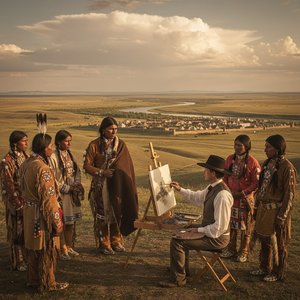
A dramatic 1845 scene of Native Americans with horses and spears by Charles Deas captures the intense psychological tension of the American frontier, inviting you to explore this powerful piece of Western history.

Charles Deas (1818-1867): Pioneer American painter of dramatic frontier life & Native Americans. Explore his intense scenes capturing the spirit of the 19th-century West.

手工油画复制品

由我们的艺术家按需定制,为您提供您所选尺寸及画框的布面手工油画。 (购买印刷品 购买印刷品购买图片 购买图片)

Standard
custom
CM
INCH

从与原作比例一致的预设尺寸中进行选择。

宽度
高度

您可以输入自定义尺寸,以适配特定的画框或空间。如果所选尺寸与原图比例不符,我们将通过裁剪作品或添加手绘元素来扩展画面。数字样稿将在制作开始前发送给您确认。
请注意,屏幕预览无法准确反映实际的裁剪或扩展效果,只有样稿才能真实呈现最终的构图。
虽然我们提供定制尺寸服务,但为了保留原作比例,建议您从预设列表中选择尺寸。

可定制示例:将面部替换为客户照片;添加宠物(例如,将猫替换为狗);在背景中加入隐藏信息;更改背景风景或元素。
下单后,TopImpressionists.com 团队将通过电子邮件联系客户获取具体要求,并提供效果预览图。

全球配送(),仅需 3-4 周即可送达,无需等待标准时效的 5 周。(25 August)。品质绝不妥协。

why_choose_icon
全球免费特快专递服务
why_choose_icon
优质亚麻画布
why_choose_icon
全程运输保险
why_choose_icon
关税退款保证
why_choose_icon
色彩还原度保证
why_choose_icon
60天退货政策(仅限制造缺陷)
why_choose_icon
100%退款保证
why_choose_icon
多件购买优惠

总计金额

$ 269

reproduction

Indian Group

复制材质

复制品尺寸

-

最终总价

$ 269

作品概览

  • Artist: Charles Deas
  • Notable elements: Horses, spears, dogs, and a bowl
  • Subject or theme: Native Americans and horses
  • Title: Indian Group
  • Year: 1845

作品详情

A Moment Frozen in Time: The Drama of Charles Deas

In the vast, untamed expanse of the mid-19th century American frontier, few artists captured the raw, psychological tension of life on the edge of civilization as poignantly as Charles Deas. His masterpiece, Indian Group, painted in 1845, serves as a breathtaking window into a world defined by both profound communal bonds and the looming shadows of conflict. This work is not merely a landscape or a portrait; it is a cinematic tableau that invites the viewer to step into a moment of quiet, heavy anticipation. Through his masterful command of composition, Deas directs our gaze across a gathering of Native Americans, where the stillness of the figures contrasts sharply with the latent energy of the spears held aloft and the powerful presence of horses.

The scene unfolds with a complex arrangement of life and movement. At the heart of the composition, a group gathers around a fallen horse, a detail that introduces an element of vulnerability and gravity to the gathering. The presence of dogs—one sentinel-like near the periphery and another nestled within the central cluster—adds a layer of domestic realism to this frontier setting, grounding the epic scale of the subject matter in the intimate details of daily survival. Deas utilizes a sophisticated technique that emphasizes texture and light, allowing the viewer to almost feel the dust of the plains and the weight of the atmosphere. The interplay between the seated, kneeling, and standing figures creates a rhythmic flow that guides the eye through the narrative, making each element of the painting essential to the collective story.

Symbolism and the Spirit of the American West

Beyond its surface beauty, Indian Group is rich with symbolic resonance. The spears, held by various members of the group, act as vertical anchors in the composition, symbolizing both protection and the ever-present reality of defense in a contested landscape. The fallen horse serves as a powerful memento mori, a reminder of the fragility of life amidst the grandeur of the West. For the discerning collector or interior designer, this piece offers more than just aesthetic appeal; it provides a profound emotional depth that can anchor a room with its historical weight and contemplative mood. The subtle inclusion of a simple bowl in the lower corner suggests the persistence of culture and ritual even in the most rugged environments.

For those seeking to incorporate fine art into a curated space, a high-quality reproduction of this work offers an unparalleled opportunity to evoke the spirit of exploration and the romanticism of the American frontier. The painting’s palette and dramatic lighting make it a versatile centerpiece, capable of complementing both traditional studies and contemporary, minimalist interiors. It stands as a testament to Deas's ability to move beyond mere documentation, capturing instead the very soul of a disappearing era. To possess such a piece is to hold a fragment of history, rendered with an artistry that continues to stir the imagination and command respect across generations.


艺术家简介

A Life Etched in the American West

Charles Deas, born in Philadelphia in 1818, remains a poignant figure in the narrative of 19th-century American art—a painter who captured the drama and psychological tension of frontier life with an intensity that belies his tragically curtailed career. Though he initially aspired to military service, failing to gain admission to West Point proved a turning point, redirecting him toward the world of artistic expression. His early training under John Sanderson in Philadelphia provided a foundational skill set, but it was the allure of the American West—a landscape brimming with both opportunity and conflict—that truly ignited his creative spirit. Deas’s journey westward, beginning around 1840, mirrored that of George Catlin, an artist whose depictions of Native American life had captivated the nation. However, while influenced by Catlin's documentation, Deas moved beyond mere representation, delving into the emotional and psychological complexities inherent in encounters between settlers, trappers, and Indigenous peoples.

The Painter of Psychological Drama

Deas quickly established himself as a notable painter of trappers and American Indians, but his work was far from simple romanticization. His canvases are charged with an unsettling energy—a sense of impending danger, alarm, and often, desperate flight. This is powerfully evident in his most famous work, *Death Struggle*, a harrowing depiction of a frontiersman and Native American locked in mortal combat as they plummet from a cliffside. The painting isn’t merely about physical struggle; it's an exploration of the brutal realities of survival and the precariousness of life on the frontier. The Scream, painted in 1845, offers another compelling example of his psychological acuity. This portrait of a trapper is not a celebration of rugged individualism but rather a study in vulnerability and fear—a man seemingly haunted by the harsh realities surrounding him. Even paintings like *Three Musicians* (1850), which depicts American Indians, are imbued with a quiet dignity tinged with melancholy, suggesting an awareness of the cultural shifts occurring around them. Deas’s skill lay not just in his technical ability to render form and detail but in his capacity to convey the inner lives of his subjects—their anxieties, their hopes, and their fears.

Recognition and a Descent into Darkness

The National Academy of Design recognized Deas's talent early on, electing him an associate member in 1839. He found success exhibiting his work in both New York and St. Louis, where he established a base for several years, venturing out to observe and sketch the life around him. His paintings were often reproduced as engravings, broadening their reach and contributing to the popular image of the American West. However, this period of artistic flourishing was tragically cut short. In 1848, Deas experienced a mental breakdown and was committed to Bloomingdale Asylum in New York, where he remained for the rest of his life. Despite his institutionalization, he continued to paint, though his later works were described as increasingly erratic and unsettling. The circumstances surrounding his illness remain shrouded in mystery, but it undoubtedly cast a long shadow over his artistic output and contributed to his relative obscurity after his death in 1867.

Legacy and Rediscovery

For decades following his death, Charles Deas’s work faded from public view. His paintings were scattered among private collections, largely forgotten by the art world. It wasn't until the mid-20th century that scholars began to reassess his contributions, recognizing him as a pioneering artist who captured a crucial moment in American history—a period of westward expansion and cultural collision. Today, Deas’s paintings can be found in prominent museums such as the National Gallery of Art and the Smithsonian American Art Museum, offering viewers a glimpse into a world both captivating and brutal. His maternal grandfather, Ralph Izard, was an 18th-century politician from South Carolina, adding another layer to his family history. While his life ended tragically, Charles Deas’s legacy endures as a testament to the power of art to illuminate the complexities of the human experience—and to capture the spirit of a nation grappling with its own identity on the ever-shifting frontier. His work serves as a reminder that the American West was not simply a land of opportunity but also a place of profound conflict, loss, and psychological strain.
Charles Deas

Charles Deas

1818 - 1867 , United States of America

艺术家简介

  • Artistic Movement Or Style: Romanticism, Western art
  • Artists Who Influenced This Artist: ['George Catlin']
  • Date Of Birth: December 22, 1818
  • Date Of Death: March 23, 1867
  • Full Name: Charles Deas
  • Nationality: American
  • Notable Artworks:
    • Death Struggle
    • The Scream
    • Three Musicians
  • Place Of Birth: Philadelphia, USA
© TopImpressionists.com — 版权所有  ·  100% 手绘 · 满意保证 · 全球免运费
VISA MASTERCARD