


 Oil On CanvasWallArtBaroque
 1630Early Modern
 89.0 x 77.0 cm
 Residenzgalerie




























从与原作比例一致的预设尺寸中进行选择。

您可以输入自定义尺寸,以适配特定的画框或空间。如果您选择的尺寸与原图比例不符,我们将对作品进行裁剪,或通过镜像填充/纯色填充边缘的方式来扩展图像。在开始制作之前,我们会向您发送一份数字效果图供您确认。
请注意,屏幕上的预览并不能反映实际的裁剪或扩展效果。只有效果图才能准确展示最终的构图。
虽然我们提供定制尺寸,但为了保持原图比例,我们建议您从预设列表中选择尺寸。

Flora
复制品尺寸
To gaze upon Claude Vignon’s Flora is to step into a moment suspended between earthly bounty and ethereal beauty. This painting, dating from 1630, is far more than a mere portrait; it is a rich tapestry woven from the threads of nature's generosity and feminine grace. The subject—a woman adorned with blossoms and holding a basket overflowing with fruit—immediately draws the eye into its vibrant narrative. Vignon captures her not just as a figure, but as an embodiment of springtime itself. Notice how the scattered apples, the perfect pear nestled in the upper right, and the various blooms woven into her hair create a sense of joyous, almost overwhelming abundance that speaks to life at its peak.
Vignon’s technical prowess is immediately apparent. His work is celebrated for its vibrantly coloured palette and splendid illumination, hallmarks of his mature style influenced by the great masters of Italy. The way light seems to catch on the textures—the sheen of the fruit, the delicate folds of her dress, the gleam of her necklace—is breathtaking. His brushwork, described as almost electric, allows every element, from the velvety skin of the apples to the translucent petals, to possess a tangible reality. For those considering a reproduction for your home or collection, understanding this level of detail is key; it speaks to an original commitment to rendering material splendor with unparalleled skill.
Art history has long used floral and fruit motifs to communicate deeper meanings, and Flora is no exception. The inclusion of such profuse natural elements—the flowers crowning her head, the basket brimming with ripe produce—is a classic allegory for fertility, prosperity, and the cyclical nature of life. She represents not only beauty but also the promise of harvest, suggesting that abundance follows careful cultivation, whether in a garden or in one's own endeavors. The overall mood is one of opulent contentment, inviting the viewer to contemplate themes of seasonal change and earthly blessings.
While rooted deeply in 17th-century French painting traditions, this piece retains an enduring resonance that speaks directly to contemporary sensibilities. For the art lover or interior designer seeking a focal point imbued with history and warmth, Flora offers unparalleled depth. It functions beautifully as both a decorative statement—its rich colours adding immediate life to any space—and a profound meditation on beauty's fleeting perfection. Owning a reproduction of this work allows one to bring the sophisticated elegance and vibrant narrative power of Vignon’s genius into the modern domestic sphere, making every glance at it feel like an appreciation of nature’s most exquisite gift.
In the grand, sweeping tapestry of the seventeenth century, few threads are as vibrant or as difficult to untangle as those woven by Claude Vignon. A master of contradictions, Vignon was a painter whose brush seemed to dance between the structured elegance of Mannerism and the raw, dramatic shadows of the Caravaggisti. Born in Tours, France, in 1593 into a family of significant wealth, his early life provided him with the stability to pursue an artistic journey that would eventually take him from the studios of Paris to the sun-drenched streets of Rome and even through the perilous landscapes of Spain. His career was not merely a progression of skill, but a restless exploration of style, making him one of the most prolific and enigmatic figures of the French Baroque era.
Vignon’s artistic soul was forged in the crucible of international influence. While his initial training under the Mannerist Jacob Bunel in Paris provided a foundation of formal grace, it was his transformative period in Italy that truly ignited his genius. Immersed in the Roman art scene, he breathed the same air as the followers of Caravaggio, absorbing the dramatic chiaroscuro and emotional intensity of artists like Guercino and Guido Reni. This exposure allowed him to develop a technique that was nothing short of electric. His mature works are characterized by an almost feverish brushwork, where light does not merely illuminate a subject but seems to vibrate against it. He possessed a singular ability to render the tactile splendor of the material world, capturing the shimmering luster of gold, the deep richness of precious stones, and the intricate, heavy folds of luxurious textiles with a precision that mesmerized his contemporaries.
The life of Claude Vignon was as dramatic as the canvases he produced. His travels were marked by both cultural enrichment and physical peril; most notably, during a journey through Spain, he survived a harrowing encounter in Barcelona where he was attacked by bandits, leaving him with a permanent scar upon his face. Yet, such hardships did not dampen his professional ascent. Upon returning to France, Vignon established himself as one of the most respected and successful artists in Paris. His talent earned him the patronage of the highest echelons of French society, including the formidable King Louis XIII and the powerful Cardinal Richelieu. This level of recognition placed him at the very heart of the nation's cultural and political life.
Beyond his individual mastery, Vignon’s significance lies in his role as a bridge between disparate artistic movements. His work serves as a fascinating intersection where several great traditions met:
As he navigated his career, Vignon also became a vital figure in the art commerce of his time, working closely with print publishers and dealers to ensure his imagery reached a wider audience. Though his style remained difficult for historians to categorize—often shifting between the theatrical and the delicate—his impact was undeniable. He stood as a precursor to the great shifts in European art, embodying the restless, searching spirit of an age that was moving away from the rigidities of the past toward the profound emotional landscapes of the future.

1593 - 1670 , France

探索詹姆斯·惠斯勒25幅杰作!深入了解夜曲、静谧和谐等经典油画背后的故事与艺术魅力。TopImpressionists.com提供博物馆级复制品,为您的家居带来永恒之美。立即在线探索完整系列!
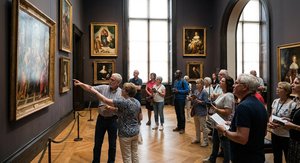
探索慕尼黑老绘画馆25幅杰作!从文艺复兴到巴洛克,领略卢本斯、伦勃朗等大师的经典油画。了解艺术史背后的故事,在家居装饰中融入永恒之美。TopImpressionists.com提供博物馆品质的艺术复制品,点亮您的生活空间。

探索美国国家艺术馆的25幅大师级杰作!深入了解塞尚、马蒂斯等艺术家的故事,感受印象派与现代艺术的魅力。TopImpressionists.com提供高品质油画复制品,点亮您的家居空间。立即在线探索完整系列!

探索纽约大都会艺术博物馆25幅传世杰作!从梵高、莫奈到达芬奇,深入了解艺术大师的故事与创作灵感。精美油画复制品,为您的家居带来艺术气息。立即在TopImpressionists.com发现更多经典作品。

探索埃贡·席勒25幅震撼人心的杰作!深入了解这位表现主义大师的绘画技巧、情感表达与生命哲思。TopImpressionists.com提供高品质艺术复制品,为您的室内设计带来经典之美。立即在线探索完整系列!


第一时间获取最新的艺术新闻、独家优惠及装饰灵感。
向我们介绍您的项目需求,我们的艺术专家将为您提供 3 个个性化的艺术品推荐。
由我们的专家为您精选 3 款心仪之作 —— 完全免费!
 定制手绘复刻品
 分享
分享 分享
分享
 详情
详情

 下载
下载
 相似作品
相似作品 X射线
X射线 幻灯片播放
幻灯片播放 展开详情
展开详情









 玻璃选项仅适用于110厘米以下的尺寸。


