


 实景预览
实景预览
 发送
发送 分享
分享
 详情
详情 指南
指南

 下载图片
下载图片
 相似作品
相似作品 X射线
X射线 幻灯片播放
幻灯片播放 统计数据
统计数据Banishment
 Acrylic On Canvas
- WallArt
- Monochrome Expressionism
 150.0 x 90.0 cm
 墨尔本战争纪念馆
Craig Barrett's 'Banishment' is a haunting monochrome sketch exploring themes of war and resilience. This evocative artwork, inspired by WWI poetry, showcases the artist’s unique blend of tech innovation and poignant human emotion.
 阅读全文
阅读全文
Craig R. Barrett (生于1939年) – 前英特尔CEO兼艺术家,致力于创作受一战诗歌启发的动人单色素描。探索战争、韧性与勇气的主题。
艺术微喷/版画
博物馆级艺术微喷或帆布版画,制作高效,并提供多种饰面选择。 ( 订购此收藏品的纯手工复刻画作 切换至数字图像销售渠道)




P118B ¥10

P118H ¥10

P118W ¥10

P438Z ¥10

P508JH ¥12

P508YH ¥12

P805H ¥10

P805Z ¥10

P919BZ ¥10

P919G ¥10

P919XJ ¥10

P959ZH ¥10

P968JZ ¥12

W106C ¥8

W218G ¥10

W218JH ¥8

W218Y ¥10

W307PJ ¥10

W316G ¥10

W316PJ ¥8

W316Y ¥10

W398PJ ¥8

W4111J ¥10

W500HY ¥15

W500JH ¥15

W692G ¥12

W849H ¥8

W940BG ¥15

W953PJ ¥8




标准尺寸
定制
CM
INCH
您可以从与原作比例一致的预设尺寸中进行选择。
Loading sizes...

宽度
高度
请输入您所需的宽度和高度,以适配您的画框或墙面。由于印刷品只能进行裁剪,无法超出原图尺寸,因此若比例不一致,画面的一部分将会被裁切。在正式印刷之前,我们会为您发送一份数字效果图供您确认。本页面显示的图片并非最终裁剪后的效果——只有效果图才能展示真实的裁剪情况。


 玻璃选项仅适用于110厘米以下的尺寸。

Banishment
艺术微喷/版画
复刻品尺寸说明
-


总计金额
¥ 464
A Portrait of Quiet Intensity: Craig R. Barrett’s “Banishment”
Craig R. Barrett's "Banishment" isn’t merely a monochrome sketch; it’s a distilled echo of the anxieties and resilience inherent in the human condition, rendered with a stark elegance that belies its complex origins. Born from the mind of a man who once steered one of the world’s most powerful technology companies – Intel CEO Craig R. Barrett – this piece reveals a surprising vulnerability beneath layers of disciplined observation. It's a work deeply rooted in the poetry of World War I, specifically Sassoon’s evocative verses, and speaks to themes of isolation, loss, and the enduring struggle against internal demons. The image itself is deceptively simple: a solitary figure, rendered with an almost brutal directness, dominates the composition, its back turned towards the viewer, offering no solace or explanation. This deliberate anonymity invites the observer to project their own experiences onto the subject, fostering a profoundly personal connection.
The Language of Monochrome and Memory
Barrett’s masterful use of monochrome is crucial to the work's impact. The absence of color doesn’t diminish the image; rather, it intensifies its emotional resonance. It strips away superficial distractions, forcing us to confront the raw essence of form and texture. The predominantly dark palette – a deep, almost bruised black – suggests a sense of melancholy and perhaps even despair. Yet, within this darkness, subtle variations in tone reveal a remarkable control over light and shadow, creating a tactile quality that draws the eye across the surface. The technique itself is reminiscent of early 20th-century sketching practices, echoing the expressive lines and loose brushwork favored by artists grappling with the horrors of war. The paper’s texture subtly contributes to this effect, hinting at the artist's hand and adding a layer of intimacy to the piece.
Echoes of Sassoon and the Trauma of War
The text incorporated into “Banishment” – fragments from Wilfred Sassoon’s poetry – provides a vital key to understanding the work’s deeper meaning. Sassoon's verse, known for its unflinching portrayal of war’s psychological toll, speaks directly to themes of disillusionment, suffering, and the struggle to find meaning in a world ravaged by conflict. Barrett’s decision to integrate these words into his sketch suggests a deliberate attempt to confront the legacy of trauma – not through grand pronouncements or heroic narratives, but through quiet contemplation and understated grief. The lines are carefully positioned, almost as if etched onto the figure's form, blurring the boundaries between image and text, and suggesting that the experience of war is inextricably woven into the fabric of human existence.
A Bridge Between Silicon Valley and Somber Sketches
The juxtaposition of Craig R. Barrett’s career – a titan of the technology industry – with this intensely personal artwork is profoundly compelling. It reveals a hidden depth within a man often perceived as purely rational and strategic. “Banishment” offers a glimpse into a soul grappling with complex emotions, suggesting that even those who have achieved extraordinary success can be haunted by inner struggles. The piece serves as a powerful reminder that creativity isn’t solely the domain of innovation; it's also a fundamental aspect of the human experience – a way to process pain, confront mortality, and ultimately, find meaning in a world often marked by uncertainty. The work demonstrates an unexpected sensitivity, transforming the image of a technological visionary into a poignant meditation on the enduring power of memory and emotion.
Dimensions and Reproduction: Bringing “Banishment” Home
“Banishment,” measuring 150 x 90 cm, commands attention with its scale and intensity. Originally created using ink on paper, high-quality reproductions capture the subtle nuances of Barrett’s technique – the delicate variations in tone, the tactile quality of the surface, and the evocative power of the monochrome palette. Consider framing “Banishment” within a simple, dark wood frame to further emphasize its stark beauty, or opt for a minimalist white wall to allow the artwork's inherent drama to shine through. This piece would be particularly well-suited for spaces that value introspection, artistic expression, and a touch of understated elegance – a study, a library, or even a contemporary living room seeking a focal point of quiet intensity.
问答详情
"Banishment" 会为空间带来怎样的氛围?
凭借其Calm的意境,建议将“Banishment”装饰于Living Room。
在Monochrome Expressionism运动中,克雷格·R·巴雷特 的《Banishment》传达了怎样的情感?
在Monochrome Expressionism运动中,"Banishment"以Reflective的基调被记录下来。
克雷格·R·巴雷特 的《Banishment》 的视觉明亮度如何?
总体而言,"Banishment" 的亮度记录为 brilliant。感知亮度描述了作品呈现出的明暗程度。
艺术家简介
从硅谷到忧郁素描:克雷格·R·巴雷特的双重人生
克雷格·R·巴雷特(Craig R. Barrett)的故事是一个关于非凡二元性的叙事,它将科技世界永不停歇的创新与艺术中所描绘的深沉人性及往往令人心碎的现实交织在一起。1939年出生于旧金山的巴雷特,最初的人生轨迹深深植根于科学领域,并从斯坦福大学获得了材料科学博士学位。这种强调精准与观察的严谨学术基础,在潜移默契中深刻地影响了他后来的艺术创作。然而,在数十年的时间里,他更多是以工业巨擘的身份为人所知:1998年出任英特尔(Intel Corporation)首席执行官,并一直任职至2005年,随后担任董事会主席直至2009年。在他的领导下,英特尔成功渡过了互联网泡沫时代的动荡,巩固了其全球技术领导者的地位——这一传奇成就建立在战略远见以及对研发不懈追求的基础之上。然而,在这位高管光鲜亮丽的外表之下,潜藏着一种蓬勃发展的艺术感性,正静待时机,等待着全面绽放。战争的回响:在诗歌与单色调中寻找心声
从英特尔退休后,巴雷特以愈发专注的热情投身于艺术创作。他并未拥抱绚丽的色彩或抽象的形式;相反,他在单色素描那冷峻的情感力量中找到了自己的表达方式。这些作品不仅仅是对场景的描绘,更是对第一次世界大战诗歌——尤其是威弗雷德·欧文(Wilfred Owen)作品中那些凄美诗句的直观回应。一种对士兵们的深切同情渗透在巴雷特的艺术之中,因为欧文曾如此毫不避讳地记录了他们的经历。这种影响是直接且刻意的;许多作品直接呼应或从特定诗篇中汲取灵感,探讨着丧失、勇气以及冲突带来的毁灭性人类代价。这并非一种抽离的历史观察,而是一种与战争心理重量的亲密对话——那种孤独、恐惧以及持久的创伤。因此,巴雷特的艺术旅程不仅仅是创作图像,更是将诗歌的情感真谛转化为一种视觉语言的过程。在阴影与线条中锻造的风格
巴雷特独特的风格因其刻意的简练而具有极高的辨识度。他主要采用单色调的色谱——通常是炭黑、墨水和灰色的色调——为他的描绘增添了一种忧郁的质感,映照出他所表现的景观与经历的荒凉。然而,在这种克制之中蕴含着巨大的表现力。他的线条运用并非仅仅是描述性的,而是充满动态与情感,既捕捉了战壕战的物理现实——泥泞、铁丝网、残破的建筑——也捕捉了战争对个体造成的心理创伤。他的技法中有一种原始感,一种传达紧迫感与悲恸感的即时性。他并不回避描绘战争的恐怖,但他以一种避免煽情主义的敏感度来处理这些题材,转而关注人性元素——在难以想象的逆境面前所展现出的韧性、牺牲以及精神永恒的力量。诸如《进攻一号》(Attack no. 1)等杰作便体现了这种创作方法,提供了对战斗混乱与残酷的生动刻画;而像《放逐》(Banishment)这样的作品则唤起了深层的孤独感与流离失所之感。《塞里西医院驳船一号》(Hospital barge at Cérisy no. 1)直接受欧文诗歌启发,显得尤为凄婉,捕捉到了战时医疗设施内那无声的绝望与脆弱的希望。传承:连接两个世界的桥梁
克雷格·R·巴雷特的历程代表了一种真正独特的存在——一位成功的商业领袖在艺术表达中找到了深远的意义与使命。他的作品是一个强有力的提醒,让我们铭记战争的人类代价,并为威弗雷德·欧文等诗人探索的情感景观提供了视觉化的诠释。虽然他在英特尔的成就已被详尽记录且广受赞誉,但他的艺术贡献为其传奇人生增添了一个引人入胜的新维度。他证明了创造力并不局限于特定的学科;它可以在意想不到的地方繁荣,并从多元的经历中涌现。巴雷特的艺术并非仅仅是退休后的业余爱好,而是一种对历史深切的感悟,是对同理心持久力量的见证,也是对人类境遇的一次深刻探索。他的单色素描如同欧文诗句的视觉回响,确保着第一次世界大战的教训与悲剧能够持续在后代心中激荡。代表作品
- “进攻一号” (Attack no. 1) – 对战斗混乱与残酷性的直观描绘。
- “放逐” (Banishment) – 唤起孤独感与流离失所的情绪。
- “红天” (Red sky) – 捕捉了一种令人难忘的阴郁氛围。
- “不归者” (The unreturning) – 对丧失与纪念的沉思。
- “塞里西医院驳船一号” (Hospital barge at Cérisy no. 1) – 一幕凄婉的场景,描绘了受欧文诗歌启发的战时医疗护理。
- “凡人一号” (Everyman no. 1) – 一幅表现主义绘画,唤起绝望感与对人类境遇的思考。

克雷格·R·巴雷特
1939 - , 美国
快速概览
- Artistic Movement Or Style: 单色素描
- Artists Who Influenced This Artist: ['威尔弗雷德·欧文']
- Date Of Birth: 1939年
- Full Name: 克雷格·R·巴雷特
- Nationality: 美国
- Notable Artworks:
- 进攻 1 号
- 驱逐
- 红天
- 不归者
- 塞里西医院驳船...
- Place Of Birth: 美国旧金山
相关文章

Echoes of Trauma & Hope: Representing Transformation in Artworks of 1918
Explore the profound artistic responses to World War I's trauma & hope. Discover Expressionist masterpieces by Bacon, de Kooning & more. Expert insights for collectors & art enthusiasts at TopImpressionists.

William Owen: A Poetic Vision of War & Landscape in British Modernism
Explore the poignant war poetry of Wilfred Owen, a key figure in British Modernism. Discover his innovative style, themes of loss & camaraderie, and lasting impact on 20th-century literature. Analysis & historical context included.
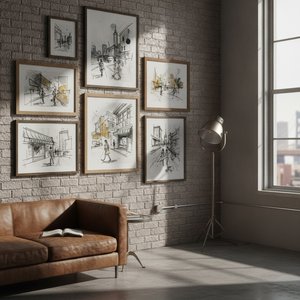
Raw Energy: Why Sketch Studies are the Ultimate Urban Vibe for Your Walls
Elevate your space with the raw energy of sketch studies. Discover how the unfiltered power of charcoal, line, and gesture creates the ultimate urban vibe for modern interiors. Expert trends in contemporary wall art curation for the design-conscious professional.

The Eloquent Line: Exploring the Artistic Significance of Sketches Across Movements and Media
Explore the profound artistic significance of sketches throughout history. From Renaissance masters to modern innovators like Van Gogh & Guston, discover how these foundational works reveal technique, emotion, and vision. Learn more at TopImpressionists.

C.R.W. Nevinson: A Vorticist Vision of War & Modernity
Explore the powerful art of C.R.W. Nevinson, a key British Vorticist painter. Discover his impactful depictions of WWI and evolution beyond Futurism. Expert analysis & high-quality reproductions at TopImpressionists.