


 实景预览
实景预览
 发送
发送 分享
分享
 详情
详情 指南
指南

 下载图片
下载图片
 相似作品
相似作品 X射线
X射线 幻灯片播放
幻灯片播放 统计数据
统计数据Model


Cristóbal Balenciaga’s ‘Model’ (1967) captures a striking tweed suit – elegant, geometric & timeless. Explore this iconic fashion photograph and discover the legacy of the 'Master Couturier'.
 阅读全文
阅读全文
探索 Cristóbal Balenciaga Eizaguirre (Balenciaga) 的世界。这位革命性的西班牙高级定制设计师以其优雅、雕塑般的设计和前卫影响力而闻名。探索《树根》等画作,领略他对时尚的深远影响。
艺术微喷/版画
博物馆级艺术微喷或帆布版画,制作高效,并提供多种饰面选择。 ( 订购此收藏品的纯手工复刻画作 切换至数字图像销售渠道)




P118B ¥10

P118H ¥10

P118W ¥10

P438Z ¥10

P508JH ¥12

P508YH ¥12

P805H ¥10

P805Z ¥10

P919BZ ¥10

P919G ¥10

P919XJ ¥10

P959ZH ¥10

P968JZ ¥12

W106C ¥8

W218G ¥10

W218JH ¥8

W218Y ¥10

W307PJ ¥10

W316G ¥10

W316PJ ¥8

W316Y ¥10

W398PJ ¥8

W4111J ¥10

W500HY ¥15

W500JH ¥15

W692G ¥12

W849H ¥8

W940BG ¥15

W953PJ ¥8




标准尺寸
定制
CM
INCH
您可以从与原作比例一致的预设尺寸中进行选择。
Loading sizes...

宽度
高度
请输入您所需的宽度和高度,以适配您的画框或墙面。由于印刷品只能进行裁剪,无法超出原图尺寸,因此若比例不一致,画面的一部分将会被裁切。在正式印刷之前,我们会为您发送一份数字效果图供您确认。本页面显示的图片并非最终裁剪后的效果——只有效果图才能展示真实的裁剪情况。


 玻璃选项仅适用于110厘米以下的尺寸。

Model
艺术微喷/版画
复刻品尺寸说明
-


总计金额
¥ 464
The Enigmatic Silhouette: Unpacking Cristóbal Balenciaga’s ‘Model’
Cristóbal Balenciaga’s 1966 photograph, “Model,” isn't merely a portrait; it’s a distilled essence of the designer’s revolutionary approach to fashion. The image captures a woman, her form enveloped in a striking tweed suit – a garment that immediately speaks of geometric precision and timeless elegance. Yet, beneath this surface simplicity lies a profound exploration of structure, proportion, and the very nature of representation. The photograph, often cited as one of Balenciaga’s most iconic works, transcends its status as a simple fashion image, offering a glimpse into the meticulous process and philosophical underpinnings of his design philosophy.
Balenciaga's genius wasn’t simply about creating beautiful clothes; it was about dissecting them, understanding their fundamental components, and rebuilding them with an almost architectural rigor. “Model” exemplifies this perfectly. The tweed itself is a deliberate choice – a robust, slightly stiff material that resists the drape of traditional fabrics, demanding a precise construction. Notice how the seams are barely visible, suggesting a layering technique designed to create volume without adding bulk. This restraint, this careful control over the fabric’s behavior, is characteristic of Balenciaga's work and reflects his deep understanding of materials – he considered himself more a craftsman than a designer in the conventional sense.
A Masterclass in Architectural Form
The suit’s silhouette isn’t simply flattering; it’s deliberately constructed to evoke a sense of solidity and strength. The fitted bodice, the subtly flared skirt – each element contributes to an overall impression of contained power. Balenciaga was deeply influenced by the art movements of his time, particularly Surrealism and Cubism, which encouraged him to deconstruct familiar forms and reassemble them in unexpected ways. This is evident in the suit’s sharp angles and its almost sculptural quality. The photograph itself becomes a study in form – a meditation on how shape can convey meaning and emotion.
The choice of David Bailey as the photographer further enhances the image's impact. Bailey, known for his stark, black-and-white portraits, captures the subject with an unflinching gaze, emphasizing her posture and the suit’s impeccable tailoring. The lighting is carefully controlled, highlighting the textures of the tweed and casting subtle shadows that accentuate the garment’s three-dimensional form. Bailey's skill lies in revealing the underlying structure of the image, mirroring Balenciaga’s own approach to design.
Echoes of a Lost Era: Context and Legacy
“Model” was created during a pivotal moment in fashion history – the mid-1960s. While Yves Saint Laurent was injecting youthful energy into Parisian couture with his Le Smoking tuxedo, Balenciaga remained steadfastly committed to his own vision of timeless elegance. His designs were often perceived as being ahead of their time, challenging conventional notions of beauty and femininity. The photograph serves as a reminder of this period of creative experimentation and the enduring influence of Balenciaga’s work.
The image also speaks to the broader cultural context of the era – a fascination with architecture, technology, and industrial design. Balenciaga's designs were often described as “architectural,” reflecting a growing interest in geometric forms and functional aesthetics. The photograph captures this spirit perfectly, suggesting that fashion could be both beautiful and intellectually stimulating.
A Timeless Icon: Reproduction and Inspiration
Today, “Model” remains one of the most recognizable images in the history of fashion photography. Its enduring appeal lies in its combination of technical skill, artistic vision, and emotional resonance. Reproductions of this photograph are highly sought after by collectors and interior designers alike, who appreciate its timeless elegance and its ability to evoke a sense of sophistication and refinement. When commissioning a hand-painted reproduction, it’s crucial to select an artist who understands Balenciaga's meticulous approach to detail and his commitment to capturing the essence of his designs.
问答详情
克里斯托瓦尔·巴伦西亚加 的《Model》 的版权情况是如何界定的?
"Model" 的版权状态 —— 仍受版权保护 —— 取决于艺术家于 1972 年逝世这一事实。
"Model" 的材质是什么,采用了哪种风格?
“Model”采用 Acrylic On Canvas 创作,呈现出 Early Modernism 风格。
“Model”是否一直留在其艺术家的故乡?
是的——该作品目前存放于艺术家的原籍国。克里斯托瓦尔·巴伦西亚加的出生国是西班牙,而收藏有《Model》原件的博物馆则位于西班牙。
艺术家简介
早年生活与职业生涯
Cristóbal Balenciaga Eizaguirre 是一位享誉世界的西班牙时装设计师,于 1895 年出生于西班牙的格塔里亚。他最为人所熟知的是创立了 Balenciaga 时装品牌,该品牌已成为高级定制时装的代名词。凭借其对工艺标准近乎苛刻的追求,Balenciaga 在时装界赢得了极高的声望,甚至被 Christian Dior 誉为“我们所有人的大师”,并被 Coco Chanel 赞誉为“真正意义上的唯一一位时装设计师”。艺术风格与影响
Balenciaga 的设计以其优雅、简约以及对细节的极致关注而著称。他深受前卫艺术运动的影响,这种精神也深刻地体现在他那些大胆且具有创新性的作品之中。他的部分代表作包括:- 《雅歌 IV 之研究》(素朴艺术/原始主义),这幅画作展现了他将实验性精神融入时尚的独特视角。
- 《树根》(50 x 100 厘米,后印象派,布面油画),此作体现了他捕捉自然本质的卓越能力。
- 《杂技演员》(超现实主义,布面油画),这幅作品彰显了他勇于突破时尚界边界的决心。
博物馆与收藏
Balenciaga 的艺术杰作散见于世界各地的博物馆与私人收藏之中,其中包括:- 阿斯图里亚斯美术馆(西班牙),该馆拥有丰富的欧洲艺术藏品。
- 安德烈斯·布莱斯滕收藏(墨西哥),这是一个展示拉丁美洲艺术作品的墨西哥艺术收藏。
- 被火灾摧毁的博物馆(美国),这是美国艺术史上的一段悲剧性事件。
传承与影响
Balenciaga 的传奇早已超越了时装设计的范畴。他影响了几代设计师,其作品因其永恒的魅力与优雅而持续受到人们的赞颂。作为 Cristóbal Balenciaga Eizaguirre,他永远是高级定制时装界的一座不朽丰碑。- 在 https://TopImpressionists.com/@/cristobal-balenciaga-eizaguirre 浏览更多 Cristóbal Balenciaga Eizaguirre 的作品
- 在 /zh/art/show/art-d3atkt-zh/ 探索 阿斯图里亚斯美术馆 的藏品
- 在 https://TopImpressionists.com/@@/a@d3bqc7-the-museum-destroyed-by-fire-(united-states)">https://TopImpressionists.com/@@/a@d3bqc7-the-museum-destroyed-by-fire-(united-states)"> 深入了解 安德烈斯·布莱斯滕收藏

克里斯托瓦尔·巴伦西亚加
1895 - 1972 , 西班牙
快速概览
- Artistic Movement Or Style: 前卫艺术 / 超现实主义
- Artists Or Movements Influenced By This Artist: ['雨果·德·纪文西']
- Artists Who Influenced This Artist:
- 克里斯汀·迪奥
- 可可·香奈儿
- Date Of Birth: 1895年1月21日
- Date Of Death: 1972年3月23日
- Full Name: Cristóbal Balenciaga Eizaguirre
- Nationality: 西班牙
- Notable Artworks:
- 《雅歌 IV》研究
- 树根
- 杂技演员
- Place Of Birth: 西班牙,格塔里亚
相关文章

Gianfranco Ferré: Deconstructing Haute Couture – A Legacy of Architectural Form
Explore the revolutionary world of Gianfranco Ferré, 'the architect of fashion.' Discover his architectural approach to haute couture, iconic Dior designs, and lasting influence on luxury style. A deep dive for collectors & enthusiasts.

Cristóbal Balenciaga: Deconstructing Haute Couture's Architectural Legacy
Explore the revolutionary world of Cristóbal Balenciaga, the 'couturier's couturier'. Discover his architectural designs, lasting influence on haute couture, and guide to collecting rare pieces. A connoisseur’s resource.

Draped Narratives: Fashion as Symbol & Subject in Historical Art
Explore the fascinating history of fashion as a symbol of power & status in art! Discover masterpieces from Gainsborough to Tissot and learn how clothing shaped societal narratives. Find museum-quality reproductions at TopImpressionists.
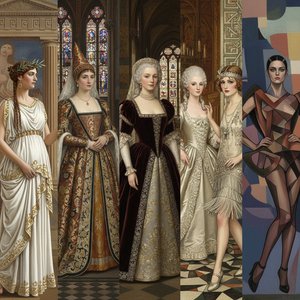
Style Through the Ages: Iconic Artworks That Defined the Evolution of Fashion Design
Explore the breathtaking intersection of fine art and high fashion. Discover how iconic masterpieces from Art Deco to Impressionism have shaped the world of luxury couture and timeless design in this curated visual journey.

The Lens of Luxury: A Visual Journey Through the Evolution and Artistry of Fashion Photography
Embark on a visual journey through the evolution of fashion photography. Discover how masters like Gianfranco Ferré blended geometry, surrealism, and texture to redefine high-fashion art for collectors and connoisseurs of luxury imagery.

