






























从与原作比例一致的预设尺寸中进行选择。

您可以输入自定义尺寸,以适配特定的画框或空间。如果您选择的尺寸与原图比例不符,我们将对作品进行裁剪,或通过镜像填充/纯色填充边缘的方式来扩展图像。在开始制作之前,我们会向您发送一份数字效果图供您确认。
请注意,屏幕上的预览并不能反映实际的裁剪或扩展效果。只有效果图才能准确展示最终的构图。
虽然我们提供定制尺寸,但为了保持原图比例,我们建议您从预设列表中选择尺寸。

untitled (3220)
复制品尺寸
Edvard Munch, a name synonymous with the raw emotionality of Expressionism, gifted the world with works that delve into the depths of the human psyche. While “The Scream” often eclipses his other creations, lesser-known pieces like this untitled winter scene – cataloged as 3220 – offer equally compelling insights into Munch’s artistic vision and personal struggles. This painting isn't a dramatic outburst of angst; rather, it is a quiet meditation on solitude, resilience, and the subtle beauty found even in the bleakest landscapes. The composition depicts a snow-covered town nestled amongst rolling hills, its houses huddled together against the cold. A cloudy sky casts a muted light over the scene, enhancing the sense of stillness and isolation. Scattered figures, seemingly going about their daily routines, populate the streets, while a lone dog adds a touch of domesticity to the otherwise stark environment.
To understand this painting fully, one must consider the biographical context that profoundly shaped Munch’s art. Born in 1863, his childhood was marked by tragedy – the early loss of his mother and sister to tuberculosis cast a long shadow over his life, instilling within him a lifelong preoccupation with mortality and illness. These experiences weren't merely personal grief; they became foundational themes explored repeatedly throughout his oeuvre. Munch’s artistic journey began in Kristiania (Oslo), where he encountered the nihilist philosopher Hans Jæger, who encouraged him to embrace subjective experience and express inner turmoil through art. This influence led Munch away from traditional academic painting towards a more emotionally charged style. While the exact date of this particular work remains unknown, it likely emerged during a period when Munch was experimenting with landscapes as vehicles for conveying psychological states – a departure from his more overtly symbolic figure paintings.
Though not as immediately striking as some of his more famous works, this untitled scene demonstrates Munch’s mastery of atmosphere and mood. The brushwork is loose and expressive, capturing the texture of snow and the weight of the clouds with remarkable sensitivity. The color palette is restrained – dominated by whites, grays, and muted blues – reflecting the coldness of winter and the emotional distance conveyed within the scene. Munch doesn’t rely on dramatic contrasts or bold colors to evoke feeling; instead, he employs a subtle interplay of tones and textures to create a sense of quiet melancholy. The elevated perspective, with the town perched atop a hill, adds to the painting's contemplative quality, inviting viewers to observe the scene from a detached yet empathetic vantage point. It’s a technique that allows for both observation and introspection.
While seemingly straightforward in its depiction of a winter town, this painting invites deeper symbolic interpretation. The snow itself can be seen as representing purity, but also isolation and death – themes central to Munch’s artistic concerns. The figures, though engaged in everyday activities, appear somewhat detached and anonymous, perhaps reflecting the alienation and loneliness that characterized modern life. Even the presence of the dog, a symbol of loyalty and companionship, cannot fully dispel the pervasive sense of solitude. The painting doesn't offer easy answers or resolutions; instead, it presents a poignant snapshot of human existence – a delicate balance between beauty and sorrow, hope and despair. For those seeking to bring a touch of introspective elegance to their space, a reproduction of this work offers not just aesthetic appeal but also a powerful emotional resonance.

1863 - 1944 , 瑞典
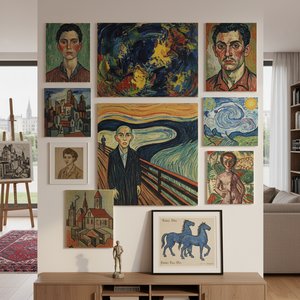
探索表现主义的灵魂!本文精选十幅名作,从莫迪里亚尼到夏加尔,揭秘大师背后的故事与艺术魅力。感受色彩的力量,重塑您的家居空间。TopImpressionists.com 提供博物馆品质的艺术复制品和个性化装饰方案。立即在线探索全系列!

Explore 10 famous snow paintings by Monet, Degas & more! Discover the stories behind these serene winter landscapes and iconic artworks. Find museum-quality art reproductions for your home at TopImpressionists.com.

Journey into the heart of Impressionism! Explore 10 masterpieces by Monet, Renoir & Degas that revolutionized landscape art. Discover their stories, techniques & find museum-quality reproductions to elevate your home decor on TopImpressionists.com.

Explore the life & critical work of Alan Clutton-Brock, a leading British art critic renowned for his insights into landscape painting and atmospheric realism. Discover his influence on post-war artistic discourse.

Explore the rich history of landscape painting! Discover renowned artists, movements like Romanticism, & techniques such as atmospheric perspective. Find inspiration and quality reproductions at TopImpressionists.


第一时间获取最新的艺术新闻、独家优惠及装饰灵感。
向我们介绍您的项目需求,我们的艺术专家将为您提供 3 个个性化的艺术品推荐。
由我们的专家为您精选 3 款心仪之作 —— 完全免费!

 Preview
 定制手绘复刻品
 分享
分享 分享
分享
 详情
详情

 下载
下载
 相似作品
相似作品 X射线
X射线 幻灯片播放
幻灯片播放
 展开详情
展开详情









 玻璃选项仅适用于110厘米以下的尺寸。


