





























从与原作比例一致的预设尺寸中进行选择。

您可以输入自定义尺寸,以适配特定的画框或空间。如果所选尺寸与原图比例不符,我们将通过裁剪作品或添加手绘元素来扩展画面。数字样稿将在制作开始前发送给您确认。
请注意,屏幕预览无法准确反映实际的裁剪或扩展效果,只有样稿才能真实呈现最终的构图。
虽然我们提供定制尺寸服务,但为了保留原作比例,建议您从预设列表中选择尺寸。

untitled (3361)
复制品尺寸
Edward Hopper's "Untitled (3361)," a black and white photograph capturing a quiet scene outside a building, isn’t merely a depiction of five individuals seated on sidewalk chairs; it’s a distilled essence of 20th-century American experience – a poignant exploration of isolation, urban anonymity, and the subtle melancholy that often underlies modern life. Created during Hopper's most prolific period, this work exemplifies his signature style: stark realism imbued with an almost dreamlike quality, achieved through masterful use of light and shadow. The photograph itself presents a scene frozen in time, inviting viewers to contemplate the stories – or perhaps the lack thereof – behind each figure’s posture and gaze.
Hopper, born in Nyack, New York, in 1882, possessed an innate ability to observe and translate the complexities of human interaction into visual form. His early training at the New York School of Art, under influential figures like William Merritt Chase and Robert Henri, instilled a deep appreciation for realism while simultaneously nurturing his unique artistic voice. This photograph, created around 1930-1940, reflects this synthesis – a precise rendering of reality layered with an underlying current of introspection. The composition is deliberately restrained, focusing on the immediate foreground figures while subtly receding into the background, creating a sense of spatial depth and drawing the viewer’s eye to the central drama unfolding within the frame.
Hopper’s genius lay not just in his subject matter but also in his technical execution. He was a master of light, using it to sculpt form, define mood, and evoke emotion. In "Untitled (3361)," the stark contrast between the illuminated interior of the building and the shadowed sidewalk creates a powerful visual tension. The diffused light filtering through the windows casts an ethereal glow on the seated figures, highlighting their faces and postures while simultaneously obscuring details and contributing to the overall sense of mystery. The use of black and white further amplifies this effect, stripping away color and focusing attention solely on form, texture, and tonal variations.
Notice the deliberate placement of the chairs – angled at various points, creating a dynamic yet static composition. This arrangement subtly suggests a sense of unease or awkwardness, hinting at unspoken interactions and unresolved tensions. The book resting on one chair adds another layer of intrigue, prompting questions about the individuals’ thoughts and activities. Hopper's meticulous attention to detail – from the wrinkles in the faces of the seated figures to the subtle variations in texture of the sidewalk – contributes significantly to the photograph’s realism and emotional resonance.
While Hopper himself often resisted definitive interpretations of his work, "Untitled (3361)" is widely understood as a meditation on loneliness and isolation—themes that were central to his artistic vision. The figures in the photograph appear detached from one another, lost in their own thoughts or absorbed in private worlds. Their postures – some relaxed, others tense – suggest a range of emotions, but none convey overt connection. The empty street and the darkened building contribute to this sense of solitude, reinforcing the feeling that these individuals are adrift in an indifferent urban landscape.
Considering Hopper’s broader body of work, particularly paintings like “Nighthawks” and “Gas,” it's clear that he was fascinated by the quiet dramas unfolding within everyday American life. “Untitled (3361)” serves as a microcosm of this larger theme, offering a glimpse into the hidden lives of ordinary people and prompting viewers to contemplate their own experiences of isolation in an increasingly complex world. The photograph’s enduring appeal lies in its ability to evoke a powerful emotional response – a sense of melancholy, curiosity, and perhaps even a touch of recognition.

1931 - 1967 , 美国

Explore the profound beauty of American Realism. From the Ashcan School's urban grit to intimate portraits, discover how artists captured the authentic soul of a nation through unvarnished truth and masterful observation.
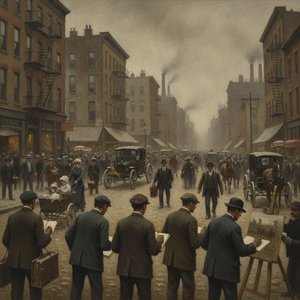
Discover the raw beauty of the Ashcan School. Explore how masters like Bellows and Henri captured the gritty, vibrant soul of early 20th-century New York through profound American Realism and evocative urban landscapes.


第一时间获取最新的艺术新闻、独家优惠及装饰灵感。
向我们介绍您的项目需求,我们的艺术专家将为您提供 3 个个性化的艺术品推荐。
由我们的专家为您精选 3 款心仪之作 —— 完全免费!


 效果预览
效果预览
 切换至印刷版
 分享
分享 分享
分享
 详情
详情

 下载
下载
 相似作品
相似作品 X射线
X射线 幻灯片播放
幻灯片播放
 展开详情
展开详情









 玻璃选项仅适用于110厘米以下的尺寸。


