
从与原作比例一致的预设尺寸中进行选择。

您可以输入自定义尺寸,以适配特定的画框或空间。如果所选尺寸与原图比例不符,我们将通过裁剪作品或添加手绘元素来扩展画面。数字样稿将在制作开始前发送给您确认。
请注意,屏幕预览无法准确反映实际的裁剪或扩展效果,只有样稿才能真实呈现最终的构图。
虽然我们提供定制尺寸服务,但为了保留原作比例,建议您从预设列表中选择尺寸。

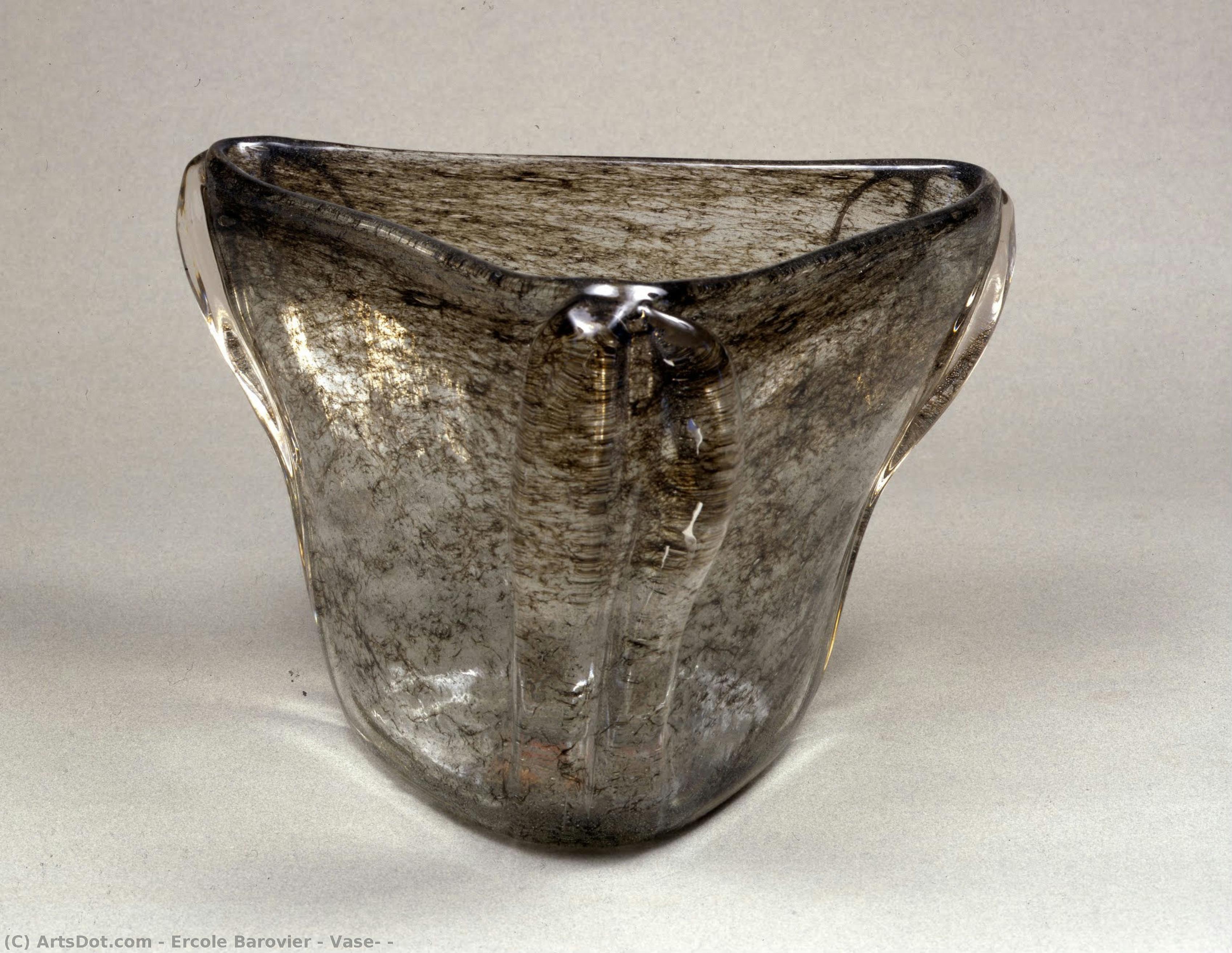
Vase,
复制品尺寸
In the realm of mid-century glass artistry, few pieces command attention with such quiet, structural intrigue as this 1936 vase by the Venetian master Ercole Barovier. At first glance, the viewer is met with a captivating paradox: a vessel defined not just by its substance, but by its absence. The centerpiece of this work is a deliberate, sculptural void—a hollow core that pierces through the heart of the material, inviting the eye to dance between the solid and the ethereal. This interplay of light and shadow transforms the object from a mere container into a dynamic sculpture, where the transparency of the glass meets the profound mystery of the empty space within.
The piece serves as a breathtaking testament to the era's fascination with geometric abstraction and the manipulation of negative space. For the discerning collector or interior designer, this vase offers more than just decoration; it provides a focal point that breathes life into a room. When placed under soft ambient lighting, the edges of the glass catch the glow, creating a shimmering halo effect that softens the surrounding environment. It is an object designed to be experienced through movement, as the perspective shifts and the internal aperture reveals new depths of refraction and brilliance.
To understand the soul of this work, one must look toward the fiery furnaces of Murano, where Ercole Barovier breathed new life into centuries-old traditions. Born into a lineage of glassmakers that spans over six hundred years, Barovier possessed an intuitive, almost alchemical connection to his medium. By 1936, he was already pushing the boundaries of what Venetian glass could achieve, moving beyond the decorative mosaics of his ancestors toward a more modern, avant-garde language. This vase embodies that transition—a moment in history where the weight of tradition met the lightness of modernism.
The technique required to create such a precise architectural feature within glass is nothing short of extraordinary. It demands an intimate knowledge of temperature control and the fluid behavior of molten material. Barovier’s ability to manipulate the glass to form a stable, hollowed center speaks to his mastery over the medium's structural integrity. For those seeking to adorn a curated space with a piece of history, this reproduction captures that precise tension between the delicate fragility of glass and the bold, permanent strength of sculptural design.
Integrating a piece of this caliber into a contemporary interior allows for a sophisticated dialogue between historical craftsmanship and modern aesthetics. Whether nestled within a minimalist gallery setting or serving as a centerpiece on a dark, polished mahogany table, the vase acts as an anchor of elegance. It evokes a sense of nostalgia for the golden age of Italian design while remaining strikingly relevant to the clean lines of today's luxury decor.
Owning a reproduction of such a significant work allows one to inhabit the atmosphere of 1930s Venice, bringing a touch of Barovier’s "weaver of light" magic into the home. It is an investment in emotion and atmosphere, offering a constant source of inspiration for anyone who finds beauty in the delicate balance of form, function, and the infinite possibilities found within a single, well-placed shadow.
Born in the heart of Venice in 1889, Ercole Barovier’s life was inextricably linked to the ancient craft of glassmaking – a legacy passed down through generations within his family. His early years were steeped in the traditions of the Baroviers, a name synonymous with Venetian artistry for over six centuries. Unlike many of his contemporaries who pursued formal training, Barovier's genius blossomed from an intuitive understanding of materials and a profound respect for the techniques honed by his ancestors. Initially studying law, he ultimately recognized that his true calling lay within the fiery furnaces of Murano, a decision that would reshape not only his own destiny but also the very landscape of Venetian glass art.
The family’s initial venture, Vetreria Artistica Barovier et C., was already renowned for its pioneering use of murrine – intricate mosaics created by layering colored glass rods. However, it was Ercole's arrival as artistic director in 1919 that ushered in a new era of innovation and aesthetic daring. He inherited a company steeped in tradition but possessed the vision to push beyond established boundaries, blending classical techniques with a distinctly modern sensibility.
Barovier's most significant contribution to the world of glass lies in his development of tessuto vitreo – “vitreous fabric.” This revolutionary technique, born from a serendipitous accident during the creation of the iconic Primavera series, involved layering thick sheets of clear glass with subtle imperfections and inclusions. The result was an ethereal surface that resembled aged parchment or craquelé porcelain, imbued with a captivating sense of depth and movement. Unlike traditional murrine, which relied on precise geometric patterns, tessuto vitreo embraced the beauty of irregularity, creating pieces that felt both meticulously crafted and utterly organic.
He didn’t simply replicate existing techniques; Barovier was a relentless experimenter. He mastered the art of incorporating unusual materials – gold leaf, mother-of-pearl, and even fragments of ceramic – into his designs, elevating glass beyond mere transparency to become a medium capable of capturing light and texture in unprecedented ways. His work wasn’t confined to simple decoration; he explored complex forms, layered textures, and subtle color shifts, pushing the boundaries of what was considered possible with Murano glass.
Several series stand as testaments to Barovier's extraordinary talent. The Primavera collection, perhaps his most celebrated achievement, exemplifies his mastery of tessuto vitreo, with its milky white surfaces shimmering beneath layers of iridescent color. The variations – Primavera, Crepuscolo, Autunno Gemmato, Laguna Gemmata, Marina Gemmata, and Rostrati – each offered a unique interpretation of this captivating technique, showcasing the breadth of his artistic vision.
Beyond the Primavera series, Barovier produced a remarkable range of objects, including elegant vases like the Lenti, which employed a complex cased glass construction to create an illusion of depth and movement. These pieces, often adorned with delicate gold leaf accents, were prized for their exquisite craftsmanship and sophisticated design.
Barovier’s innovative spirit and exceptional artistry garnered widespread recognition throughout his career. He participated in prestigious events such as the Venice Biennale, the Milan Triennale, and the Paris Universal Exposition, receiving numerous awards and accolades, including the coveted Golden Compass Award. His work was exhibited at renowned institutions like the Galleria Sabauda in Turin, ensuring its place within the canon of Italian art.
Ercole Barovier’s legacy extends far beyond his own lifetime. He played a pivotal role in revitalizing Murano glassmaking, introducing new techniques and inspiring generations of artisans. His pioneering work with tessuto vitreo continues to influence contemporary designers and artists, cementing his status as one of the most important figures in the history of Venetian glass art. His pieces are not merely beautiful objects; they are windows into a world of light, color, and illusion – a testament to the enduring power of human creativity.

1889 - 1974 , Italy

Embark on a visual journey through the luminous world of stained glass art. Discover the exquisite craftsmanship, historical significance, and captivating beauty of masterworks from Art Nouveau to the Gothic era, curated for the discerning fine art enthusiast.

探索丁托列托25幅杰作:深入了解这位威尼斯光影大师的艺术传奇!从宗教绘画到神话故事,感受文艺复兴与巴洛克风格的完美融合。TopImpressionists.com提供高清艺术复制品和家居装饰灵感,点亮您的生活空间。立即探索完整系列!

Journey back to the 1930s with TopImpressionists. Explore 10 iconic artworks from Hopper, Kahlo & Magritte reflecting a decade of change. Find museum-quality reproductions and curated decor ideas inspired by Art Deco, Surrealism & more! Discover all masterpieces on TopImpressionists.com

Explore the luminous mastery of the Venetian Renaissance. Discover how masters like Titian and Giorgione revolutionized art through colorito, light, and atmosphere. An expert guide to the golden age of Italian painting for collectors and enthusiasts.

Explore the breathtaking mastery of the Venetian Renaissance. Discover how legends like Titian revolutionized art through Colorito, capturing the luminous light and vibrant pigments of the Venetian lagoon in a visual journey of unparalleled color and texture.


第一时间获取最新的艺术新闻、独家优惠及装饰灵感。
向我们介绍您的项目需求,我们的艺术专家将为您提供 3 个个性化的艺术品推荐。
由我们的专家为您精选 3 款心仪之作 —— 完全免费!

 购买印刷品
购买印刷品 分享
分享 分享
分享
 详情
详情

 下载
下载
 相似作品
相似作品 幻灯片播放
幻灯片播放


 展开详情
展开详情






































 玻璃选项仅适用于110厘米以下的尺寸。


