





























从与原作比例一致的预设尺寸中进行选择。

您可以输入自定义尺寸,以适配特定的画框或空间。如果所选尺寸与原图比例不符,我们将通过裁剪作品或添加手绘元素来扩展画面。数字样稿将在制作开始前发送给您确认。
请注意,屏幕预览无法准确反映实际的裁剪或扩展效果,只有样稿才能真实呈现最终的构图。
虽然我们提供定制尺寸服务,但为了保留原作比例,建议您从预设列表中选择尺寸。

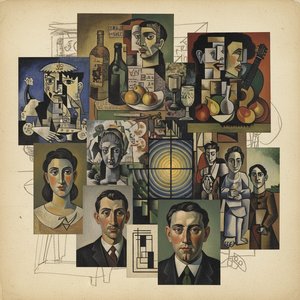
untitled (41)
复制品尺寸
Fernand Léger's "Untitled (41)" is not merely a depiction of figures; it’s an embodiment of the burgeoning dynamism of the 20th century. Painted in 1941, this vibrant canvas captures a moment frozen in time – a group of individuals engaged in what appears to be leisure, yet rendered through Léger's signature style: a bold synthesis of abstraction and observation. The painting’s immediate impact stems from its riotous color palette and the deliberate fragmentation of form, hallmarks of Léger’s engagement with the machine age. He sought to translate the energy of factories and urban landscapes into a new visual language, one that rejected traditional representational techniques in favor of exploring the geometric vocabulary of modern industry.
This work resonates powerfully with Léger’s earlier masterpiece, "The Divers" (1941), currently held at The Art Institute of Chicago. Both paintings share a similar compositional structure – a group of figures engaged in activity – but “Untitled (41)” possesses a heightened sense of immediacy and spontaneity. Léger's approach was deeply influenced by the industrial revolution and the rise of urban life, reflecting his belief that art should reflect the realities of modern existence. The inclusion of sports balls adds another layer to this interpretation, symbolizing leisure and recreation within an increasingly mechanized world. Léger’s artistic trajectory began with a grounding in the physicality of rural labor, contrasting sharply with the mechanical forms he would later champion, demonstrating a profound understanding of how form could communicate both the beauty and the anxieties of modernity.
"Untitled (41)" transcends a simple depiction of a group of people; it’s an exploration of the human condition within the context of rapid technological advancement. The figures, though fragmented, represent humanity's adaptability and resilience in the face of change. The painting evokes a sense of both excitement and unease – mirroring the complex emotions associated with the transition to a modern world. It invites viewers to contemplate the relationship between humans and machines, and the impact of industrialization on society. This piece is a testament to Léger’s ability to capture not just what he saw, but also how he *felt* about the world around him.

1881 - 1955 , 法国

探索米罗大师25幅经典画作,领略超现实主义的色彩与诗意。深入了解每件作品背后的故事、艺术技巧和文化意义。TopImpressionists.com提供高品质米罗油画复制品,为您的家居增添艺术灵感!立即在线探索完整系列。

Explore the captivating world of Beatrice Parsons, a pioneering British abstract expressionist. Discover her journey from garden watercolors to evocative color field paintings and learn about her place within art history.
Explore 10 Cubist masterpieces by Picasso, Braque & more! Delve into the history of this revolutionary art movement. Find museum-quality reproductions and elevate your home decor with TopImpressionists. Discover all masterpieces on TopImpressionists.com

探索亨利·马蒂斯25幅杰作,感受野兽派色彩的魅力!从《舞蹈》到《红色和谐》,揭秘大师背后的故事与艺术灵感。TopImpressionists.com提供博物馆级高质量油画复制品,为您的家居增添奢华艺术气息。立即在线探索完整系列!

探索立体主义的艺术魅力!本文精选十部定义了这场革命性运动的杰作,带您深入了解毕加索、布拉克等大师的创作故事与技法。从几何抽象到现代风格,感受色彩与形式的无限可能。TopImpressionists.com为您提供博物馆品质的艺术品复制和家居美学灵感!


第一时间获取最新的艺术新闻、独家优惠及装饰灵感。
向我们介绍您的项目需求,我们的艺术专家将为您提供 3 个个性化的艺术品推荐。
由我们的专家为您精选 3 款心仪之作 —— 完全免费!


 效果预览
效果预览
 切换至印刷版
 分享
分享 分享
分享
 详情
详情

 下载
下载
 相似作品
相似作品 X射线
X射线 幻灯片播放
幻灯片播放

 展开详情
展开详情









 玻璃选项仅适用于110厘米以下的尺寸。


