

 实景预览
实景预览
 发送
发送 分享
分享
 详情
详情 指南
指南

 下载图片
下载图片
 相似作品
相似作品 X射线
X射线 幻灯片播放
幻灯片播放 统计数据
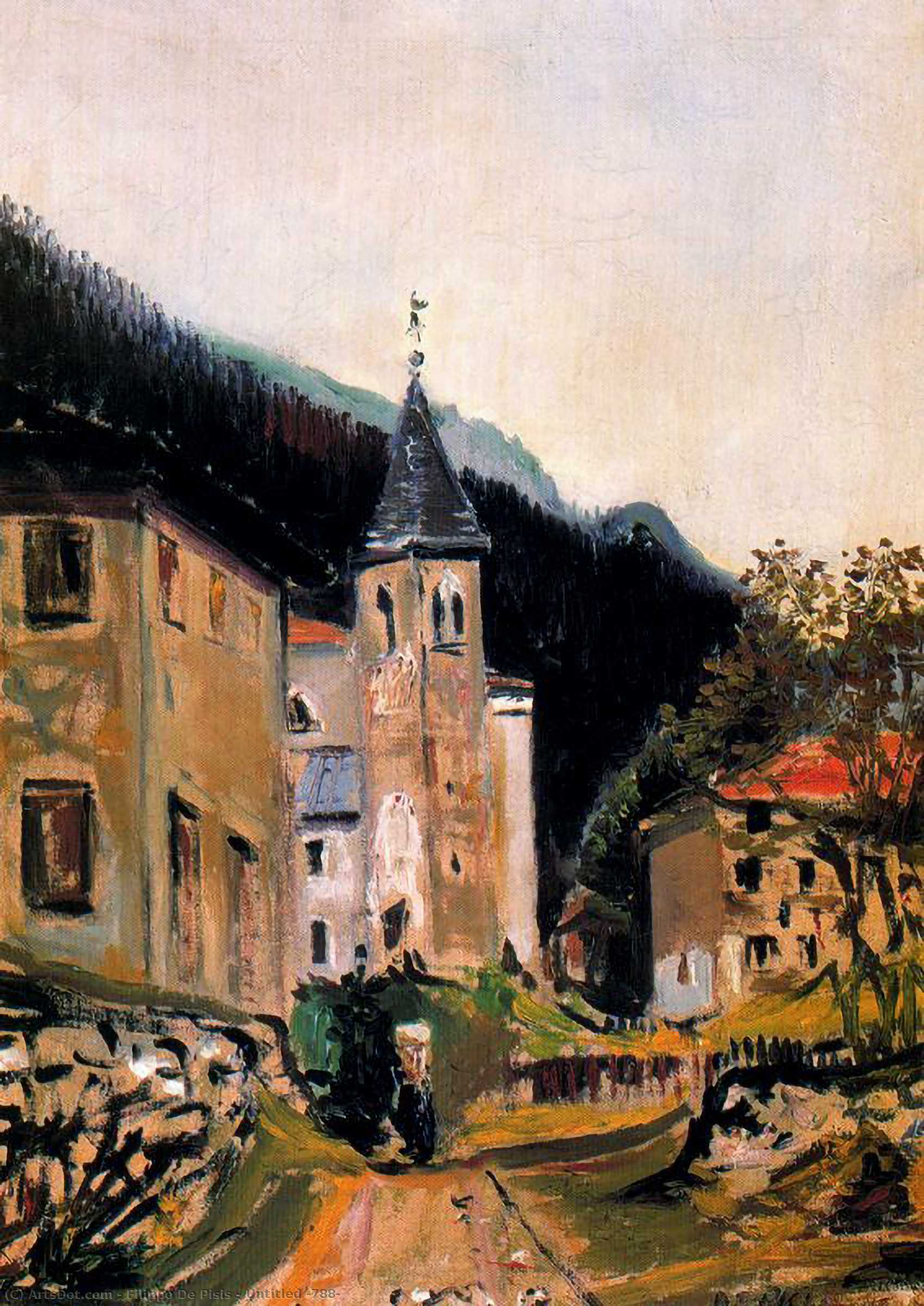
统计数据Untitled (788)
Filippo De Pisis (1896-1956) was a celebrated Italian painter & poet known for his evocative cityscapes, still lifes, and maritime scenes. Explore his metaphysical influences, airy style, and poignant works reflecting a 'pathetic pleasure-pain'.
 阅读全文
阅读全文
获取远超网页预览效果的印刷级文件。我们销售的每一张数字图像均源自库存数据库中的高分辨率母版——宽度通常在 5,000 至 15,000 像素之间——因此您可以放心地进行大幅打印、局部裁剪或还原细腻的细节。
每一件作品在离开我们的工作室前都经过了精心的处理。数字影像专家会对照原作核对色彩,并在必要时进行校正,随后利用专业修图工具提升清晰度与细节表现——且始终忠实于艺术家的笔触与风格。最终呈现的图像宛如原作本身,而非仅仅是一张加了滤镜的扫描件。
您可以在完成前进行审核:我们的专家将在 72 小时内通过电子邮件向您发送图像以供审阅。如果不满意?您可以要求改进或修正,若质量未达预期,亦可申请退款。
这也是出版商、设计工作室、画廊及印刷厂所信赖的品质。
数字图像
下载高分辨率文件,用于个人展示、打印及创意项目。 ( 切换至版画销售渠道 订购此收藏品的纯手工复刻画作)
每份数字图像订单均包含的内容
专业级数字交付,品质无忧
选择 TopImpressionists.com,您获得的不仅仅是一张图像——您收到的是经过专业级增强、精雕细琢的数字艺术作品,并享有满意保证。以下是您的订单中自动包含的所有内容:

即时邮件交付
您的高分辨率数字图像文件将在下单后 72 小时内通过电子邮件发送给您 —— 即可立即使用。

AI 增强型数字图像
您的艺术品经过专业优化,结合先进的 AI 技术与人工修饰,确保呈现极致的细节、清晰度与色彩准确度。

终身免费重发服务
不小心删除了文件或找不到了?没关系——我们将随时为您免费重发。

无需进口税费,始终如一
即刻拥有您的艺术作品,无需支付任何关税、税费或运费——数字下载始终免税。

色彩精准保障
我们通过专业工具与色彩管理技术,确保您的数字图像尽可能真实地还原原作色彩。

100天满意保证
如果您对所购数字图像不满意,我们将在100天内为您进行修改或提供100%的全额退款——无需任何理由。

100% 退款保证
不满意?在收到数字文件后的100天内,您可以申请全额退款——无需任何理由。

批量订购优惠
购买 3 张享 10% 折扣 - 购买 5 张享 15% 折扣 - 购买 10 张以上享 20% 折扣。非常适合创意项目、画廊及机构使用。
艺术家简介
The Poet of the Fleeting Moment
Born Luigi Filippo Tibertelli in the historic Italian city of Ferrara, Filippo De Pisis was an artist who refused to be confined by a single medium. To understand his canvas, one must first understand his soul as a poet; he viewed the world through a lens of literary sensitivity, where every shadow and light flicker held a narrative weight. His early years in Italy were marked by a profound intellectual curiosity, studying literature and philosophy in Bologna. It was here that he encountered the haunting, dreamlike visions of Giorgio De Chirico, an encounter that would plant the seeds of Metaphysical influence within his burgeoning style. This duality—the precision of a scholar and the wandering eye of a flâneur—defined his approach to art, allowing him to capture not just the physical reality of a subject, but its emotional resonance.
His journey was one of constant movement across the great cultural capitals of Europe. Moving to Rome in 1919 and later settling in Paris in 1925, De Pisis immersed himself in the vibrant, avant-garde pulse of the interwar period. In Paris, his brushwork began to shed its more rigid, metaphysical origins, absorbing the light and movement of French Impressionism. He moved within the same circles as Georges Braque and André Derain, and his style evolved into something uniquely his own: a technique often described as pittura a zancapi mosca—a "fly-wing" style of painting characterized by rapid, fragmented, and nervous brushstrokes. This method allowed him to achieve an airy, almost mirage-like quality, where objects seemed to vibrate with life before dissolving back into the atmosphere.
A Symphony of Light and Melancholy
The heart of De Pisis’s oeuvre lies in his ability to find the eternal within the ephemeral. He possessed a singular talent for elevating the mundane—a simple arrangement of mushrooms, a bowl of strawberries, or a vase of foxgloves—into profound meditations on existence. His still lifes are never merely static arrangements; they are imbued with what he called "pathetic pleasure-pain," a bittersweet recognition of beauty's fleeting nature. Through muted pastel hues and a masterful command of Venetian light, he created compositions where the boundaries between objects and their surroundings blur, suggesting a deep, spiritual interconnectedness between all things.
His fascination with Venice provided much of his most luminous subject matter. The city’s architectural grandeur and its misty, maritime atmosphere served as the perfect stage for his expressive explorations. Whether depicting the rhythmic movement of a seascape or the quiet intimacy of a street scene, De Pisis utilized a broken brushstroke technique that captured the very essence of light hitting water or stone. This period of his work represents a pinnacle of Italian Post-Impressionism, where the artist’s technical skill met an almost obsessive devotion to capturing the "secret spirit" of the moment.
Legacy of the Cosmopolitan Visionary
Despite the disruptions of World War II and his eventual return to Italy, De Pisis never lost the cosmopolitan spirit that had defined his youth. His life was famously eccentric, marked by a dandyish lifestyle and an insatiable appetite for the beauty found in the smallest details—even claiming that a discarded feather on a street could spark a masterpiece. This radical openness to the world ensured that his work remained perpetually fresh, avoiding the stagnation that often plagues established masters.
Today, the significance of Filippo De Pisis rests in his unique position as a bridge between the structured metaphysical movements of the early 20th century and the more spontaneous, emotive expressions of later decades. His legacy is found in:
- The fusion of poetry and painting: Proving that visual art can be as lyrical and metaphorically rich as the written word.
- Mastery of atmosphere: Redefining how light and texture can convey complex psychological states like nostalgia and longing.
- The elevation of the everyday: Transforming simple still lifes into profound explorations of beauty, decay, and the passage of time.
He remains a celebrated figure in the annals of Italian art, remembered not just as a painter of scenes, but as a chronicler of the ephemeral soul.

Filippo De Pisis
1896 - 1956
概览
- Full Name: Luigi Filippo Tibertelli
- Nationality: Italian
- Date Of Birth: 1896
- Date Of Death: 1956
- Place Of Birth: Italy
- Notable Artworks:
- Strawberries. Still Life
- Untitled (160)
- Untitled (742)
- Artistic Movement Or Style: Post-Impressionism
- Artists Who Influenced This Artist: ['Massimo Campigli']
- Artists Or Movements Influenced By This Artist: ['Futurism']