

 实景预览
实景预览
 发送
发送 分享
分享
 详情
详情 指南
指南

 下载图片
下载图片
 相似作品
相似作品 X射线
X射线 幻灯片播放
幻灯片播放 统计数据
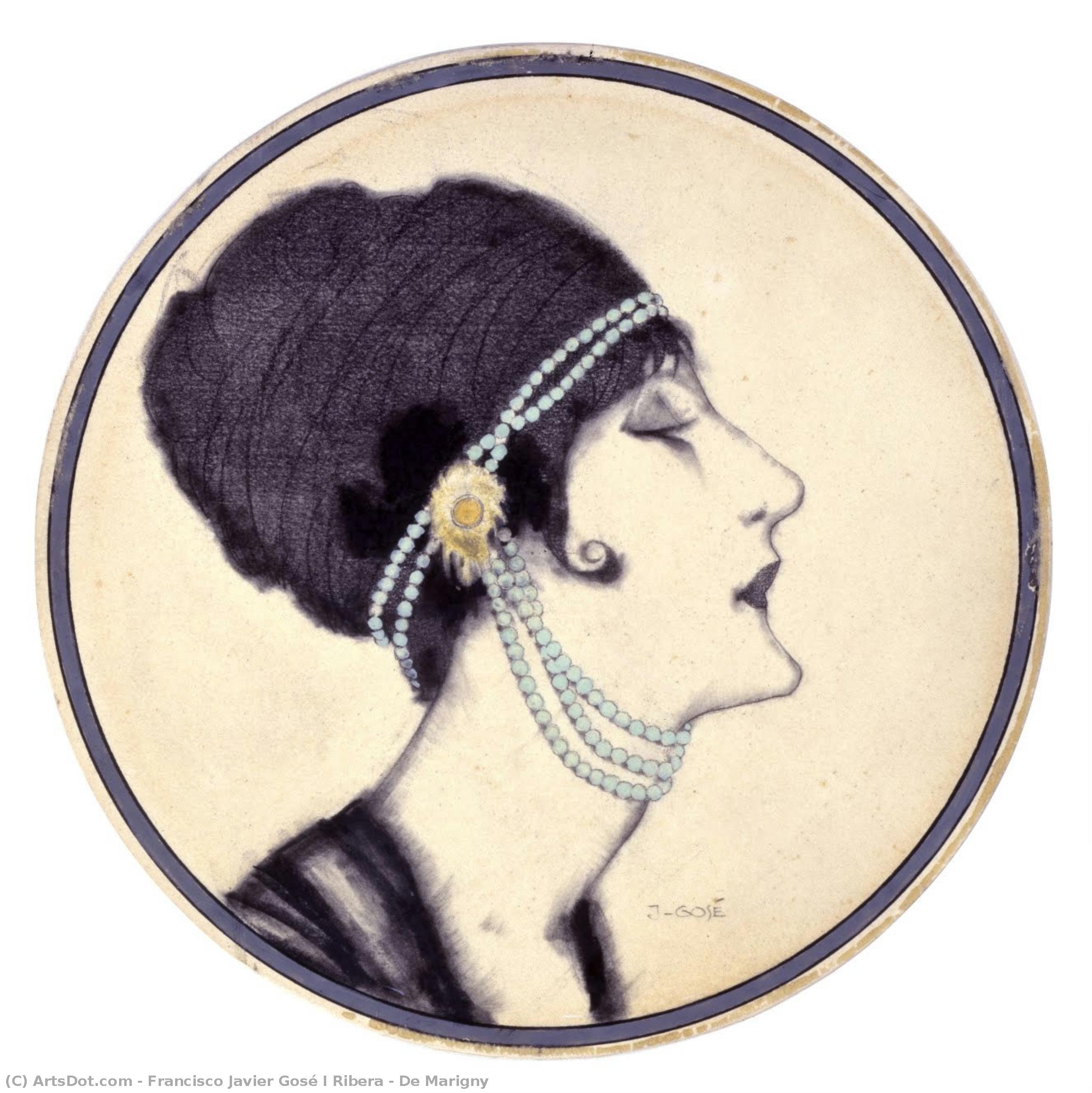
统计数据De Marigny


Francisco Javier Gosé i Ribera (1876-1915) was a Spanish painter & illustrator renowned for his Art Nouveau & Art Deco works. Explore his captivating fashion illustrations, satirical drawings from Le Rire & L'Assiette au Beurre, and legacy in Europea
 阅读全文
阅读全文
艺术微喷/版画
博物馆级艺术微喷或帆布版画,制作高效,并提供多种饰面选择。 ( 订购此收藏品的纯手工复刻画作 切换至数字图像销售渠道)




































标准尺寸
定制
CM
INCH
您可以从与原作比例一致的预设尺寸中进行选择。
Loading sizes...

宽度
高度
请输入您所需的宽度和高度,以适配您的画框或墙面。由于印刷品只能进行裁剪,无法超出原图尺寸,因此若比例不一致,画面的一部分将会被裁切。在正式印刷之前,我们会为您发送一份数字效果图供您确认。本页面显示的图片并非最终裁剪后的效果——只有效果图才能展示真实的裁剪情况。


 玻璃选项仅适用于110厘米以下的尺寸。

De Marigny
艺术微喷/版画
复刻品尺寸说明
-


总计金额
¥ 464
艺术家简介
The Visionary Lines of Francisco Javier Gosé i Ribera
In the vibrant, shifting landscape of early twentieth-century Europe, few artists captured the pulse of modernity with as much wit and elegance as Francisco Javier Gosé i Ribera. Born in 1876 in the historic Spanish city of Alcalá de Henares, Gosé emerged not merely as a painter, but as a visual chronicler of an era caught between the flowing, organic grace of Art Nouveau and the sharp, geometric sophistication of Art Deco. His life, though tragically brief, was a whirlwind of intellectual pursuit and artistic experimentation that bridged the gap between Spanish tradition and Parisian avant-garde.
Gosé’s artistic foundation was laid in Barcelona, a city then breathing the air of Catalan Modernisme. At the Escola de la Llotja, he studied under the influential Josep Luís Pellicer, whose teachings emphasized the profound connection between decorative arts and architectural structure. This early immersion in design would become the heartbeat of Gosé’s later work. As he navigated the bohemian circles of Barcelona, particularly the legendary Els Quatre Gats—a sanctuary for icons like Picasso—he absorbed the rebellious spirit of the era, learning to use the line not just to depict form, but to convey social commentary and cultural movement.
A Parisian Odyssey and the Art of Satire
The year 1900 marked a transformative departure for the young artist when he relocated to Paris, the undisputed epicenter of the art world. It was in this cosmopolitan atmosphere that Gosé truly found his voice as an illustrator and satirist. He became a vital contributor to the most prestigious satirical publications of the day, including Le Rer and L’Assiette au Beurre. These platforms demanded a unique mastery of caricature—an ability to distill complex social hierarchies and political tensions into single, biting images. His work during this period was characterized by a remarkable precision, where every stroke served to highlight the nuances of fashion, class, and the burgeoning urban identity.
Beyond the boundaries of pure illustration, Gosé’s intellect sought deeper expressions of the human condition. He was a man of multifaceted talents, venturing into literary realms to explore themes of psychology and philosophy. This intellectual depth allowed his visual art to transcend mere decoration; his drawings often possessed an underlying tension, reflecting the psychological complexities of the modern subject. His ability to weave together the aesthetic beauty of fashion illustration with the sharp edge of social critique made him a singular figure in the European press.
Legacy and Artistic Significance
The historical significance of Francisco Javier Gosé i Ribera lies in his role as a stylistic bridge. He possessed the rare ability to synthesize the ornamental flourishes of the late nineteenth century with the streamlined, industrial aesthetic that would define the coming decades. His legacy is preserved through several key artistic contributions:
- Mastery of Style: The seamless integration of Art Nouveau curves with the structured elegance of Art Deco.
- Visual Storytelling: A profound contribution to the golden age of European satirical illustration, using art as a tool for social observation.
- Cultural Synthesis: Bringing the spirit of Spanish identity into the heart of the French avant-garde movement.
- Fashion and Form: Capturing the ephemeral beauty of early 20th-century fashion through a lens of sophisticated graphic design.
Though his life ended in 1915, leaving much of his potential unfulfilled, the impact of Gosé’s vision remains etched in the history of modern graphic art. He remains a celebrated figure for those who seek to understand the transition from the romanticism of the past to the bold, unapologetic modernity of the twentieth century.

Francisco Javier Gosé I Ribera
1876 - 1915 , Spain
快速概览
- Artistic Movement Or Style: Art Nouveau & Art Deco
- Artists Or Movements Influenced By This Artist: ['Expressionism']
- Artists Who Influenced This Artist: ['José Luis Pellicer']
- Date Of Birth: 1876
- Date Of Death: 1915
- Full Name: Francisco Javier Gosé i Ribera
- Nationality: Spanish
- Notable Artworks:
- Noctámbulos / Conversación
- Arianne
- Idilio / Italiana
- Place Of Birth: Alcalá de Henares, Spain