工作室 — 全球免运费 — 预计2–6周送达
愿望清单 购物车
定制手绘复刻品 定制手绘复刻品购买高清图片 购买高清图片 分享分享
详情详情 加入收藏 加入收藏 下载下载 相似作品相似作品 X射线X射线 幻灯片播放幻灯片播放

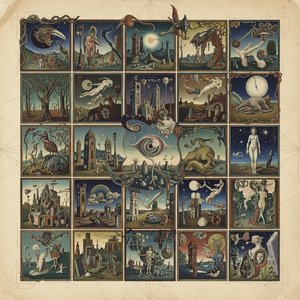
Giant

Magnificent hand-painted reproduction of Frederick Sommer’s ‘Giant’. Explore surreal desert landscapes & innovative photography by this master artist. A unique art piece for your collection.

Explore the unique world of Frederick Sommer: master photographer known for surreal desert landscapes, musical score drawings & innovative photographic techniques.

艺术微喷/版画

博物馆级艺术微喷或帆布版画,制作高效,并提供多种饰面选择。

P118B $10
P118H $10
P118W $10
P438Z $10
P508JH $12
P508YH $12
P805H $10
P805Z $10
P919BZ $10
P919G $10
P919XJ $10
P959ZH $10
P968JZ $12
W106C $8
W218G $10
W218JH $8
W218Y $10
W307PJ $10
W316G $10
W316PJ $8
W316Y $10
W398PJ $8
W4111J $10
W500HY $15
W500JH $15
W692G $12
W849H $8
W940BG $15
W953PJ $8

Standard
custom
CM
INCH

从与原作比例一致的预设尺寸中进行选择。

宽度
高度

您可以输入自定义尺寸,以适配特定的画框或空间。如果您选择的尺寸与原图比例不符,我们将对作品进行裁剪,或通过镜像填充/纯色填充边缘的方式来扩展图像。在开始制作之前,我们会向您发送一份数字效果图供您确认。
请注意,屏幕上的预览并不能反映实际的裁剪或扩展效果。只有效果图才能准确展示最终的构图。
虽然我们提供定制尺寸,但为了保持原图比例,我们建议您从预设列表中选择尺寸。

全球配送(),仅需 2 周即可送达,无需等待标准流程的 4/5 周。(23 July)

why_choose_icon
全球免费特快专递服务
why_choose_icon
优质亚麻画布
why_choose_icon
全程运输保险
why_choose_icon
关税退款保证
why_choose_icon
色彩还原度保证
why_choose_icon
60天退货政策(仅限制造缺陷)
why_choose_icon
100%退款保证
why_choose_icon
多件购买优惠

总计金额

-

reproduction

Giant

艺术微喷/版画

复制品尺寸

-

最终总价

-

作品概览

  • Dimensions: 24 x 19 cm
  • Notable elements or techniques: Assemblage sculpture; Diffused lighting
  • Artistic style: Experimental photography
  • Medium: Photography
  • Subject or theme: Desert landscape; Hybrid creature
  • Year: 1947

艺术知识测试

每道题只有一个正确答案。

题目 1:
What artistic style is ‘Giant’ attributed to?
题目 2:
The sculpture utilizes a grayscale color palette. Why might this choice be significant?
题目 3:
What prominent figure collaborated with Frederick Sommer to establish the Center for Creative Photography?
题目 4:
Describe the dominant textural elements present in ‘Giant’.
题目 5:
What symbolic meaning could the juxtaposition of organic and mechanical components in ‘Giant’ represent?

藏品详情

A Surreal Encounter with Scale and Symbolism: Examining Frederick Sommer’s “Giant”

Frederick Sommer's "Giant," created in 1947, stands as an arresting testament to Surrealist aesthetics and a masterful demonstration of photographic innovation. More than just a depiction of sculpture—it’s a carefully constructed visual narrative that invites contemplation on themes of human ambition, vulnerability, and the profound connection between humanity and the natural world. Sommer's work transcends mere representation; it strives for emotional resonance, capturing a disconcerting beauty born from juxtaposition and unexpected combinations.

Composition and Visual Harmony

The photograph’s central focus is undeniably captivating: two substantial, rounded forms—likely stylized representations of heads or pods—pierced by circular indentations that serve as eyes. These figures dominate the vertical composition against a textured wooden backdrop, establishing an immediate sense of grandeur yet simultaneously hinting at fragility. Emerging from atop these forms is a human arm reaching upwards, anchoring the sculpture to the earth while symbolizing aspiration and striving for transcendence. Beneath this upward thrust lies a miniature mechanical device—perhaps an engine or pump—positioned between two ladder-like structures, representing technological advancement alongside a yearning for stability. The deliberate framing of the image reinforces the sculptural element, emphasizing its monumental presence within a contained space.

Technique and Artistic Vision

Sommer’s approach to photography was revolutionary for his time. He eschewed conventional lighting techniques, opting instead for diffused illumination that softens shadows and highlights textures—a crucial consideration given the sculpture's materiality. Utilizing traditional photographic methods, he meticulously captured the intricate details of the assembled components, showcasing the artist’s dedication to precision and realism within a deliberately surreal framework. The resulting image is imbued with a palpable sense of atmosphere, mirroring the unsettling beauty characteristic of Surrealist art.

Historical Context and Artistic Influences

“Giant” emerged from the fertile intellectual landscape of post-war America, coinciding with the establishment of the Center for Creative Photography at Arizona State University—a pivotal moment in photographic history. Sommer’s collaboration with fellow artists like Ansel Adams, Harry Callahan, Wynn Bullock, and Aaron Siskind fostered a collective commitment to experimentation and challenged established artistic conventions. Surrealism, championed by André Breton and others, profoundly influenced Sommer's stylistic choices, encouraging him to explore dreamlike imagery and unsettling juxtapositions—elements powerfully realized in “Giant.”

Symbolic Resonance and Emotional Impact

The sculpture’s title itself – "Giant" – immediately conveys a sense of scale and power, prompting viewers to consider the immensity of existence alongside the vulnerability inherent in human experience. The incorporation of organic forms alongside mechanical components speaks to broader anxieties about humanity's relationship with nature and technology—themes that resonate deeply within the artwork’s emotional core. Sommer’s masterful manipulation of light, texture, and composition culminates in an image that evokes curiosity, unease, and perhaps a glimmer of humor—a testament to his ability to transform visual observation into profound artistic expression.

Concluding Thoughts

“Giant” remains a compelling exemplar of Surrealist photography and Sommer's enduring legacy as a visionary artist. Its meticulous craftsmanship, evocative symbolism, and unsettling beauty continue to captivate audiences today, cementing its place within the canon of 20th-century art history.

艺术家简介

Frederick Sommer: A Desert Visionary

Frederick Sommer (1905 – 1999) stands as a singular figure in American photography and visual art, recognized for his hauntingly beautiful desert landscapes and his pioneering exploration of photographic techniques. Born in Cornell University where he met Frances Elisabeth Watson—whom he married in 1928—Sommer’s life was marked by intellectual curiosity and artistic dedication, culminating in the establishment of the Center for Creative Photography at Arizona State University alongside Ansel Adams, Harry Callahan, Wynn Bullock, and Aaron Siskind. This collaborative endeavor cemented his legacy as a champion of experimental photography and fostered a vibrant community of artists committed to pushing creative boundaries.
  • Early Life & Tuberculosis Diagnosis:
  • Sommer’s artistic journey began unexpectedly in 1931 when he was diagnosed with tuberculosis. Seeking solace and expression amidst illness, he turned to photography as a medium—a decision that profoundly shaped his artistic vision. This formative experience instilled within him a sensitivity to vulnerability and resilience, themes that would permeate much of his subsequent work.
  • The Advent of Photography & Influences:
  • Photography’s transformative power captivated Sommer, leading him to acquire an 8×10 Century Universal Camera in 1938. Inspired by the monumental landscapes of Ansel Adams—particularly Yosemite Valley’s El Capitan and Half Dome—Sommer embarked on a quest to capture the grandeur and subtle complexities of the American desert. His artistic sensibilities were further enriched by collaborations with luminaries like Max Ernst, Aaron Siskind, Richard Nickel, and Minor White, who shared his fascination for exploring unconventional photographic approaches.

Desert Landscapes & Surreal Composition

Sommer’s photographs are characterized by an arresting stillness—a deliberate rejection of conventional compositional strategies. Rather than striving for dramatic vistas or theatrical lighting effects, he favored horizonless landscapes and jarred subjects—techniques that demanded meticulous observation and a profound understanding of visual perception. As Robert C. Morgan eloquently described, Sommer's images “were sommer’s seemingly infinite desert landscapes, some of which he referred to as 'constellations.'" These compositions weren’t merely representations of the natural world; they functioned as meditations on solitude, contemplation, and the sublime—reflecting a deep engagement with existential themes.
  • Innovative Techniques & Collage Exploration:
  • Sommer relentlessly pursued new methods of artistic expression, experimenting with cliché-verre negatives and pushing the boundaries of photographic printing. Notably, he transitioned to collage in his final years—creating intricate assemblages based on anatomical illustrations—a stylistic choice that underscored his enduring interest in exploring visual metaphors and conveying complex ideas.
  • Institutional Recognition & Legacy:
  • His contribution to photography was formally acknowledged through the founding of the Center for Creative Photography, a testament to his unwavering belief in collaborative artistic endeavors. Sommer’s archive—containing extensive photographic negatives and correspondence—became an invaluable resource for scholars and artists alike, furthering the dissemination of experimental photographic practices.

Musical Score Drawings & Artistic Dialogue

Beyond his monumental desert landscapes, Sommer produced a series of drawings inspired by musical scores—a practice that reveals his artistic sensitivity to rhythm, texture, and visual harmony. These compositions weren’t intended as literal transcriptions of music; instead, they functioned as symbolic representations of emotional states and intellectual concepts—demonstrating Sommer's ability to translate abstract ideas into tangible forms.
  • Notable Collaborations & Artistic Influences:
  • Sommer’s artistic journey intersected with the careers of influential figures such as Ansel Adams, Harry Callahan, Wynn Bullock, and Aaron Siskind, fostering a dynamic exchange of ideas and techniques. His work continues to inspire artists today—serving as a reminder that true innovation arises from embracing unconventional approaches and engaging in meaningful dialogue across disciplines.

Concluding Reflections: A Master’s Enduring Vision

Frederick Sommer passed away in 1999, leaving behind an extraordinary artistic legacy. His photographs—particularly his desert landscapes—remain among the most evocative and intellectually stimulating images of the twentieth century—a testament to his unwavering commitment to artistic exploration and his profound understanding of the human condition. Today’s reproductions of Sommer's work continue to captivate audiences worldwide—affirming his enduring influence on American art history.
Frederick Sommer

Frederick Sommer

1905 - 1999

艺术家简介

  • Artistic Movement Or Style: Photography, Surrealism
  • Artists Or Movements Influenced By This Artist: ['Yosemite Valley Views']
  • Artists Who Influenced This Artist:
    • Ansel Adams
    • Edward Weston
    • Aaron Siskind
  • Date Of Birth: 1905
  • Date Of Death: 1999
  • Full Name: Frederick Sommer
  • Nationality: American
  • Notable Artworks:
    • Giant
    • Max Ernst
    • Untitled (213)
  • Place Of Birth: Cornell University
© TopImpressionists.com — 版权所有  ·  100% 手绘 · 满意保证 · 全球免运费
VISA MASTERCARD