


 实景预览
实景预览
 发送
发送 分享
分享
 详情
详情 指南
指南

 下载图片
下载图片
 相似作品
相似作品 X射线
X射线 幻灯片播放
幻灯片播放 统计数据
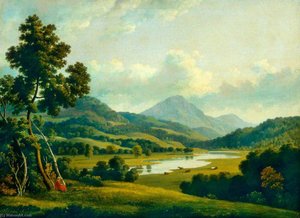
统计数据Derwentwater
 1850
1850 57.0 x 77.0 cm
 Government Art Collection
 阅读全文
阅读全文
手工油画复制品
由我们的艺术家按需定制,为您提供您所选尺寸及画框的布面手工油画。 ( 切换至版画销售渠道 切换至数字图像销售渠道)




































标准尺寸
定制
CM
INCH
您可以从与原作比例一致的预设尺寸中进行选择。
Loading sizes...

宽度
高度
请输入您需要的宽度和高度,以适配您的画框或墙面。由于作品为手工绘制,若您选择不同的尺寸比例,艺术家可能会在画面边缘多画一些或稍作裁剪 —— 由您决定。在开始绘画之前,我们会为您发送一份数字效果图供您确认。本页面上展示的图片并非最终实物 —— 只有效果图才能反映真实结果。
可定制示例:将面部替换为客户照片;添加宠物(例如,将猫替换为狗);在背景中加入隐藏信息;更改背景风景或元素。
下单后,TopImpressionists.com 团队将通过电子邮件联系客户获取具体要求,并提供效果预览图
下单后,TopImpressionists.com 团队将通过电子邮件联系客户获取具体要求,并提供效果预览图


 玻璃选项仅适用于110厘米以下的尺寸。

Derwentwater
复制品材质
复刻品尺寸说明
-


总计金额
¥ 1808
The Derwentwater painting, created by George Frederick Buchanan in 1850, is a breathtaking oil on canvas artwork that showcases the artist's exceptional skill in capturing serene landscapes. Measuring 57 x 77 cm, this stunning piece is part of the Government Art Collection (London, United Kingdom).
The Derwentwater painting is a testament to George Frederick Buchanan's skill as a landscape artist, and its serene beauty continues to captivate art lovers to this day. For handmade oil paintings reproductions of this masterpiece, visit https://TopImpressionists.com.
Artistic Style and Composition
The painting depicts a tranquil scene of a lake with mountains in the background, surrounded by trees and a small village near the water's edge. The village features several buildings, including a church steeple and a barn, while a boat on the lake adds to the peaceful atmosphere. Two birds can be seen flying above the lake, and two dogs are resting near the village, creating a harmonious balance between nature and human-made structures. Key elements of the painting include the use of soft colors, delicate brushstrokes, and a sense of depth that draws the viewer into the scene. The artist's attention to detail is evident in the intricate textures and patterns found throughout the painting. For more information on George Frederick Buchanan's works, visit /art/list/?Filter=AS7SKD-George-Frederick-Buchanan-Derwentwater.Similar Works by George Frederick Buchanan
Some of George Frederick Buchanan's other notable works include:- Scene in the Lake District, another oil on canvas painting created in 1850, measuring 56 x 76 cm, and part of the Government Art Collection (London, United Kingdom). More details can be found at /art/list/?Filter=AQZHYC-George-Frederick-Buchanan-Scene-in-the-Lake-District.
- Landscape with a Lake, a stunning oil on canvas painting measuring 60 x 91 cm, also part of the Government Art Collection (London, United Kingdom). Visit /art/list/?Filter=AQZR6W-George-Frederick-Buchanan-Landscape-with-a-Lake for more information.
The Derwentwater painting is a testament to George Frederick Buchanan's skill as a landscape artist, and its serene beauty continues to captivate art lovers to this day. For handmade oil paintings reproductions of this masterpiece, visit https://TopImpressionists.com.
问答详情
George Frederick Buchanan 的《Derwentwater》 的版权是否允许进行复制?
《Derwentwater》的原作收藏于Government Art Collection,该作品属于属于公有领域 —— 其版权已过期。
是否有面向学生的 George Frederick Buchanan 的《Derwentwater》 详情页?
针对 George Frederick Buchanan 的《Derwentwater》,我们提供了一个 指南 页面:这是一份可打印的艺术品资料页,专为学生及课堂教学使用而设计。
贯穿于George Frederick Buchanan 的《Derwentwater》中的主导色调是什么?
“Derwentwater”倾向于Ochre to Sepia色调。
艺术家简介
The Soul of the Scottish Highlands: The Life and Art of George Frederick Buchanan
In the quiet, mist-shrouded valleys of the nineteenth century, a particular kind of magic was being captured on canvas by an artist who preferred the whispers of nature to the clamor of the city. George Frederick Buchanan (1800–1864) emerged as a vital voice within the Romantic movement, a painter whose work serves as a window into the tranquil, enduring beauty of the Lake District and the Scottish Highlands. While history often reserves its brightest spotlights for the tempestuous drama of J.M.W. Turner or the rugged realism of John Constable, Buchanan carved out a unique sanctuary in the art world through his devotion to serenity, light, and the profound stillness of the natural landscape.
Born in Kendal, Cumbria, into a family deeply rooted in the Quaker tradition, Buchanan’s early life was shaped by values of integrity and a quiet, observant intellect. His upbringing instilled in him a reverence for the world around him, though his path to formal artistry was not without hesitation. The moral convictions of his youth initially made him wary of the pursuit of formal training; however, his innate curiosity eventually led him to the Newcastle upon Tyne Art Academy. It was there that he encountered the profound influence of John Sell Cotman, a master of landscape whose delicate handling of light and structure would leave an indelible mark on Buchanan’s developing aesthetic.
A Journey Through Light and Water
The true metamorphosis of Buchanan’s style occurred when he relocated to Keswick in 1835. This move placed him at the very heart of his greatest inspiration: the breathtaking scenery of Derwentwater and Bassenthwaite Lake. The dramatic topography of the region—characterized by towering, verdant mountains and shimmering, mirror-like waters—became the primary protagonist in his oeuvre. Buchanan did not merely seek to document these locations; he sought to translate their emotional resonance. Through a meticulous, layered technique, often beginning with precise underdrawings followed by delicate washes of color, he achieved a luminous quality that made the atmosphere feel almost tangible.
His mastery was particularly evident in his ability to balance the monumental with the intimate. In works such as Landscape with a Lake and a Shepherd, Buchanan weaves human presence into the vastness of nature without disrupting its peace. The inclusion of a shepherd and his dogs near the water's edge provides a sense of scale and life, grounding the epic landscape in a moment of pastoral quietude. His palette, often favoring muted and earthy hues, reflected the subdued grandeur of the English and Scottish landscapes, avoiding unnecessary flash in favor of a sophisticated, tonal harmony that invites the viewer into a state of contemplation.
Legacy of the Romantic Landscape
As his career progressed, Buchanan’s reputation grew through exhibitions at prestigious institutions such as the Royal Academy and the British Institution. His ability to capture the essence of specific locales—from the iconic Kilchurn Castle on Loch Awe to the serene vistas of Derwentwater—ensured that his work became a vital part of the British landscape tradition. Even as the art world moved toward new movements, Buchanan remained steadfast in his commitment to the Romantic ideal: the belief that nature is a source of spiritual renewal and profound emotional truth.
Today, the significance of George Frederick Buchanan lies in his role as a chronicler of a vanishing tranquility. His paintings remain much more than mere topographical records; they are poetic meditations on the permanence of the earth against the fleeting passage of time. To look upon a Buchanan landscape is to experience a moment of stillness, a breath held in reverence of the mountains and lakes that continue to define the spirit of the North.
George Frederick Buchanan
1800 - 1864
快速概览
- Full Name: George Frederick Buchanan
- Nationality: British
- Date Of Birth: 1800
- Date Of Death: 1864
- Place Of Birth: Keswick, England
- Notable Artworks: ['Derwentwater']
- Artistic Movement Or Style: Romantic Landscape