
从与原作比例一致的预设尺寸中进行选择。

您可以输入自定义尺寸,以适配特定的画框或空间。如果您选择的尺寸与原图比例不符,我们将对作品进行裁剪,或通过镜像填充/纯色填充边缘的方式来扩展图像。在开始制作之前,我们会向您发送一份数字效果图供您确认。
请注意,屏幕上的预览并不能反映实际的裁剪或扩展效果。只有效果图才能准确展示最终的构图。
虽然我们提供定制尺寸,但为了保持原图比例,我们建议您从预设列表中选择尺寸。

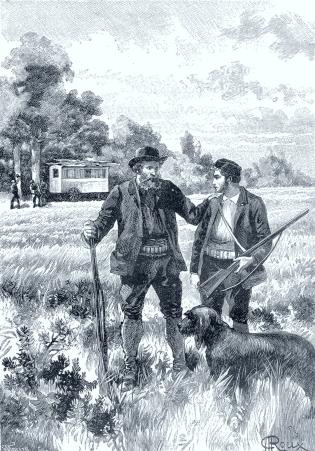
Untitled (AQTDS7)
复制品尺寸
In the twilight of the nineteenth century, as the rigid boundaries of realism began to dissolve into the evocative mists of the Symbolist movement, a singular talent emerged from the heart of Paris to redefine the visual language of imagination. George Roux (1853–1929) was not merely an illustrator; he was a world-builder whose pen breathed life into the impossible. Born into a disciplined environment as the son of a decorated French Army officer, Roux inherited a meticulous eye for detail and a profound respect for structural accuracy. This foundational rigor, honed under the tutelage of Jean-Baptiste Camille Bouchardy at the prestigious École des Beaux-Arts, provided him with the technical mastery required to ground even the most fantastical narratives in a palpable, breathing reality.
Roux’s artistic journey is inextricably woven into the fabric of literary history through his legendary collaboration with Jules Verne. Beginning in 1885 with L’Épave du Cynthia, Roux embarked on a two-decade partnership that would see him become the second-most prolific illustrator for Verne’s Les Voyages extraordinaires. While many viewed these stories as mere scientific adventures, Roux perceived them through a Symbolist lens. He did not simply replicate the text; he infused every woodcut and engraving with an atmospheric depth that suggested much more than what was visible on the surface. Through his masterful command of shadow, light, and intricate hatching, he transformed Verne’s landscapes into realms of mystery and psychological intrigue.
The brilliance of Roux’s work lies in his ability to balance academic precision with the ethereal qualities of Symbolism. His technique often utilized monochromatic palettes—deep blacks and stark whites—to create a sense of drama and tension. Whether working in lithography or woodcut, Roux possessed an uncanny ability to use geometric shapes and fine line work to evoke the grandeur of nature and the vulnerability of the human spirit. His illustrations for Verne’s voyages were characterized by:
This mastery allowed him to bridge the gap between the scientific curiosity of the Victorian era and the burgeoning interest in the subjective, emotional truths of the modern age. In his hands, a mountainous wilderness was not just a setting, but a character in its own right, capable of expressing both terror and majesty.
Though the era of the great book illustrators eventually gave way to new forms of visual media, the impact of George Roux remains undiminished. He stands as a pivotal figure who elevated the medium of illustration from a secondary, decorative craft to a sophisticated form of fine art capable of profound philosophical expression. His work helped define the visual identity of early science fiction, providing a template for how the extraordinary could be rendered with dignity and depth. Today, collectors and historians look to Roux not just as a chronicler of Verne’s adventures, but as a master of the fin de siècle aesthetic—an artist who captured the fleeting, beautiful, and often haunting essence of an age caught between the known world and the infinite unknown.

1853 - 1929


第一时间获取最新的艺术新闻、独家优惠及装饰灵感。
向我们介绍您的项目需求,我们的艺术专家将为您提供 3 个个性化的艺术品推荐。
由我们的专家为您精选 3 款心仪之作 —— 完全免费!

 效果预览
效果预览
 购买手绘画作
 分享
分享 分享
分享
 详情
详情

 下载
下载
 相似作品
相似作品 X射线
X射线 幻灯片播放
幻灯片播放
 展开详情
展开详情






































 玻璃选项仅适用于110厘米以下的尺寸。


