


 实景预览
实景预览
 发送
发送 分享
分享
 详情
详情 指南
指南

 下载图片
下载图片
 相似作品
相似作品 X射线
X射线 幻灯片播放
幻灯片播放 统计数据
统计数据Katherine Rosen


George Bellows’ captivating 1921 portrait, ‘Katherine Rosen,’ showcases his masterful realism and dynamic style. Explore the Yale Art Gallery's stunning depiction of a woman in a serene setting.
 阅读全文
阅读全文
乔治·韦斯利·贝娄 (1882-1925) 是美国现实主义绘画的代表人物,以描绘纽约都市生活、拳击场景和工人阶级而闻名。他的作品充满活力与力量,是“八君子”画派的重要成员,对早期现代艺术产生了深远影响。大胆的笔触和富有冲击力的画面令人印象深刻。
艺术微喷/版画
博物馆级艺术微喷或帆布版画,制作高效,并提供多种饰面选择。 ( 订购此收藏品的纯手工复刻画作 切换至数字图像销售渠道)




P118B ¥10

P118H ¥10

P118W ¥10

P438Z ¥10

P508JH ¥12

P508YH ¥12

P805H ¥10

P805Z ¥10

P919BZ ¥10

P919G ¥10

P919XJ ¥10

P959ZH ¥10

P968JZ ¥12

W106C ¥8

W218G ¥10

W218JH ¥8

W218Y ¥10

W307PJ ¥10

W316G ¥10

W316PJ ¥8

W316Y ¥10

W398PJ ¥8

W4111J ¥10

W500HY ¥15

W500JH ¥15

W692G ¥12

W849H ¥8

W940BG ¥15

W953PJ ¥8




标准尺寸
定制
CM
INCH
您可以从与原作比例一致的预设尺寸中进行选择。
Loading sizes...

宽度
高度
请输入您所需的宽度和高度,以适配您的画框或墙面。由于印刷品只能进行裁剪,无法超出原图尺寸,因此若比例不一致,画面的一部分将会被裁切。在正式印刷之前,我们会为您发送一份数字效果图供您确认。本页面显示的图片并非最终裁剪后的效果——只有效果图才能展示真实的裁剪情况。


 玻璃选项仅适用于110厘米以下的尺寸。

Katherine Rosen
艺术微喷/版画
复刻品尺寸说明
-


总计金额
¥ 464
A Moment Frozen in Time: George Bellows’ “Katherine Rosen”
George Wesley Bellows' 1921 painting, "Katherine Rosen," residing within the hallowed halls of the Yale University Art Gallery, isn’t merely a portrait; it’s a carefully constructed tableau of domesticity and quiet contemplation. More than just a likeness, Bellows masterfully captures a fleeting moment – a woman seated in repose, enveloped by the familiar comforts of her home. The painting immediately draws the eye to its central subject, Katherine Rosen herself, presented with an understated elegance that belies the dynamism often associated with Bellows’ work. Her posture is relaxed yet dignified, her hands folded gently in her lap, suggesting a sense of inner peace and self-possession.
Bellows' signature style—a potent blend of realism and expressive brushwork—is vividly apparent here. The muted palette – dominated by soft browns, creams, and subtle greens – creates an atmosphere of intimacy and warmth. His bold, visible strokes aren’t employed for dramatic effect but rather to build texture and form with remarkable precision. Notice how the light catches on the upholstery of the couch, the delicate folds of the drapery, and even the subtle sheen of the potted plant—each element rendered with a tactile quality that invites the viewer to almost reach out and touch it. This deliberate attention to detail speaks volumes about Bellows’ commitment to portraying the world as he truly saw it: rich in texture and imbued with life.
The Ashcan School and Urban Realism
To fully appreciate “Katherine Rosen,” one must understand its place within the broader context of American art during the early 20th century. Bellows was a pivotal figure in the Ashcan School, a movement that rejected the idealized subjects and polished techniques of academic painting in favor of depicting everyday life—often with unflinching honesty. Unlike many artists of the time who focused on grand historical narratives or mythological themes, the Ashcan School turned its gaze inward, documenting the gritty realities of urban America: crowded tenements, bustling street scenes, and the lives of ordinary people.
“Katherine Rosen” embodies this spirit of realism. The setting—a comfortable yet modestly furnished room—is a far cry from the opulent interiors typically depicted in portraiture. The inclusion of the couch, potted plant, and vases isn’t simply decorative; it speaks to the woman's life, her surroundings, and perhaps even her aspirations. Bellows wasn’t interested in presenting an idealized image of beauty or wealth; he was interested in capturing a genuine moment of human experience.
Symbolism and Emotional Resonance
Beyond its realistic depiction, “Katherine Rosen” is laden with subtle symbolism. The woman's seated posture suggests contemplation and perhaps even melancholy. Her hands folded in her lap are a gesture of quiet reflection—a pause amidst the relentless pace of modern life. The surrounding objects – the couch, plant, and vases – can be interpreted as symbols of domesticity, comfort, and connection to nature. The clock on the wall subtly reminds us of the passage of time, adding another layer of complexity to the scene.
Bellows’ masterful use of light and shadow further enhances the painting's emotional impact. The soft, diffused light creates a sense of intimacy and warmth, while the subtle shadows add depth and dimension to the composition. The overall effect is one of quiet beauty—a poignant reminder of the simple pleasures of everyday life. It’s a portrait that invites us to slow down, observe, and appreciate the beauty in the ordinary.
A Legacy of American Art
“Katherine Rosen” stands as a testament to George Bellows' remarkable talent and his profound understanding of the human condition. His ability to capture not just physical likeness but also emotional depth and psychological nuance is what makes this painting so enduringly captivating. Alongside works like “Little Girl in White (Queenie Burnett)” and “The Rope,” "Katherine Rosen" exemplifies Bellows’ commitment to portraying American life with honesty, empathy, and a keen eye for detail. Reproductions of this iconic work offer a remarkable opportunity to bring the spirit of the Ashcan School into any space, reminding us of the power of art to illuminate our shared human experience.
问答详情
"Katherine Rosen" 的色彩呈现出浓郁还是柔和的视觉感?
乔治·韦斯利·贝娄 (Qiáo Zhì Wēsīlì Bèi Lóu) 的《Katherine Rosen》 展示了Monochromatic的色彩强度。
乔治·韦斯利·贝娄 (Qiáo Zhì Wēsīlì Bèi Lóu) 的《Katherine Rosen》的情感基调是什么?
“Katherine Rosen” 传达出一种 Reflective 的情感。这种情感基调描述了作品给人的印象。
在Ashcan School Realism运动中,乔治·韦斯利·贝娄 (Qiáo Zhì Wēsīlì Bèi Lóu) 的《Katherine Rosen》传达了怎样的情感?
"Katherine Rosen" 在 Ashcan School Realism 运动中蕴含着 Reflective 的情感基调。
艺术家简介
早年生活与艺术启蒙
乔治·韦斯利·贝娄 (George Wesley Bellows) 于1882年8月12日或19日出生于俄亥俄州哥伦布市,他的命运并非一开始就注定为艺术家。贝娄的童年充满活力,他展现出对绘画的天赋,笔记本上充满了敏锐的观察和不断提升的技巧草图。然而,他的成长环境并非完全专注于艺术;他在体育方面也表现出色,在俄亥俄州立大学打棒球和篮球——这种双重身份深刻影响了他的艺术视角,赋予他的作品动态运动感和身体性。这段体育生涯不仅培养了他的纪律性,还让他对人体形态有了深入的理解,这一主题后来成为他最著名的绘画的核心。在完成大学学业之前,贝娄被一股不可抗拒的力量吸引到纽约市,渴望接受正规的艺术训练。走向成熟:阿什坎派与个人风格
1904年抵达纽约后,贝娄很快得到罗伯特·亨利 (Robert Henri) 的指导,他是阿什坎派 (Ashcan School) 的领军人物。这个艺术家群体——包括约翰·斯隆 (John Sloan)、威廉·格拉肯斯 (William Glackens) 和乔治·卢克斯 (George Luks) ——有意远离学院派传统,转而描绘城市生活的残酷现实:拥挤的贫民窟、熙熙攘攘的街道和工人阶级美国人的日常挣扎。贝娄全身心地投入到这种精神中,最初模仿亨利的自由笔触和社会现实主义承诺。然而,他并不满足于简单地复制老师的风格;他拥有追求自己独特艺术声音的雄心壮志。1906年,他和同伴艺术家爱德华·基夫 (Edward Keefe) 共同建立了一个工作室,标志着一个充满实验和成长的时期。早期的作品在1908年的展览中获得了褒贬不一的评价——一些评论家认为它们粗糙,另一些人则赞赏它们的胆大创新精神。贝娄的主题常常具有争议性,挑战了当时对“可接受”艺术的传统观念。他毫不回避地描绘城市生活中不太光彩的一面,捕捉贫困、劳动和休闲场景,展现出无情的诚实感。生活的竞技场:拳击与都市景观
贝娄的作品涵盖广泛的主题——肖像画、风景画、海景画——但他最广为人知的可能是他对拳击比赛的有力描绘。对他而言,这些不仅仅是体育赛事;它们是人类戏剧的缩影,体现了斗争、韧性和驱动竞争的原始本能。他经常光顾烟雾弥漫的拳击俱乐部,仔细研究拳击手的动作、他们眼神中的强度以及人群中原始的能量。像《俱乐部成员》(1909) 和《鲨基酒吧里的公鹿》(1909) 这样的画作是他捕捉这种氛围的能力的杰出例子,利用戏剧性的光线、动态的构图和一种有形的紧张感。拳击场景不仅仅是关于这项运动本身;它们还是当时美国社会达尔文主义的比喻,反映了生存竞争的残酷现实。除了拳击比赛之外,贝娄还从其他都市生活的壮观场面中汲取灵感——游行、马戏团和拥挤的街道——所有这些都为他提供了探索运动、能量和集体体验的机会。风格演变与持久遗产
随着贝娄作为艺术家的成熟,他的风格经历了一个微妙但重要的转变。虽然他仍然致力于现实主义,但他开始远离早期作品中的自由笔触,采用一种更程式化的美学,其特点是流畅的曲线、纪念性形式和增强的戏剧感。这种转变在他的后期作品中很明显,例如《邓普西与菲波》(1924),这是一幅巨大的画布,以惊人的强度捕捉了传奇拳击比赛的关键时刻。他还尝试石版画,创作了一系列引人注目的版画,展示了他对线条和色调的掌握。尽管在他的一生中取得了相当大的成功——包括1913年当选为国家设计学院院士——贝娄仍然致力于突破艺术界限并挑战传统规范。他于1925年去世,年仅42岁,英年早逝,但他的遗产作为美国最重要的现实主义画家之一而延续了下来。他留下的作品继续引起今天观众的共鸣,为早期20世纪美国生活提供了有力而无情的肖像——一个充满活力、冲突和人类精神的世界。他的影响可以从后世艺术家身上看到,他们致力于捕捉现代都市体验的动态性和复杂性。乔治·贝娄不仅仅是在画图;他是在记录一个时代。主要作品与认可
- 《俱乐部成员》(1909) – 捕捉拳击俱乐部氛围的开创性作品。
- 《鲨基酒吧里的公鹿》(1909) – 另一幅标志性的拳击比赛描绘,以其戏剧性的光线和构图而闻名。
- 《码头工人》(1912) – 对工人阶级劳动者的有力描绘,展示了贝娄捕捉身体性和纹理的能力。
- 《德国人到达》(1918) – 一系列石版画,描绘了一战期间犯下的暴行,展示了他对社会和政治问题的参与。
- 《邓普西与菲波》(1924) – 一幅巨大的画布,捕捉了拳击历史的关键时刻,展示了贝娄演变的风格和构图技巧的掌握。

乔治·韦斯利·贝娄 (Qiáo Zhì Wēsīlì Bèi Lóu)
1882 - 1925 , 美国
快速概览
- Artistic Movement Or Style: 现实主义, 阿什坎派
- Artists Who Influenced This Artist: ['罗伯特·亨利']
- Date Of Birth: 1882年
- Date Of Death: 1925年
- Full Name: 乔治·韦斯利·贝娄
- Nationality: 美国人
- Notable Artworks (List Of Titles):
- 中央公园
- 德国人到达
- 码头工人
- 网球比赛
- Place Of Birth (City And Country): 美国俄亥俄州哥伦布市
相关文章
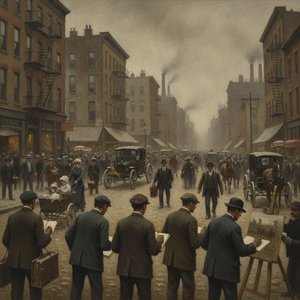
The Ashcan School: Capturing the Raw, Unfiltered Soul of Urban Life through American Realism
Discover the raw beauty of the Ashcan School. Explore how masters like Bellows and Henri captured the gritty, vibrant soul of early 20th-century New York through profound American Realism and evocative urban landscapes.

The Unvarnished Truth: A Cultural Journey Through the Soul of American Realism
Explore the profound beauty of American Realism. From the Ashcan School's urban grit to intimate portraits, discover how artists captured the authentic soul of a nation through unvarnished truth and masterful observation.

The Raw Truth: A Definitive Guide to the Power and Legacy of Social Realism Art
Explore the profound impact of Social Realism. Discover how masters like Courbet rejected idealism to capture the raw, socio-political truths of the working class through powerful, unvarnished art history and enduring visual critique.
