






























从与原作比例一致的预设尺寸中进行选择。

您可以输入自定义尺寸,以适配特定的画框或空间。如果所选尺寸与原图比例不符,我们将通过裁剪作品或添加手绘元素来扩展画面。数字样稿将在制作开始前发送给您确认。
请注意,屏幕预览无法准确反映实际的裁剪或扩展效果,只有样稿才能真实呈现最终的构图。
虽然我们提供定制尺寸服务,但为了保留原作比例,建议您从预设列表中选择尺寸。

The duck
复制品尺寸
This captivating painting, simply titled “The Duck,” offers a profound glimpse into the revolutionary artistic vision of Georges Braque, one of the pioneers of Cubism. Executed with meticulous attention to detail, the artwork presents a seemingly straightforward depiction of a duck in flight – yet beneath this surface lies a complex exploration of form, space, and perception that defines the core tenets of Braque’s groundbreaking style. The stark contrast between the black and white plumage of the bird against the expansive blue sky immediately draws the viewer's eye, establishing a dynamic tension that speaks to the artist’s desire to dismantle traditional representational techniques.
Created during Braque’s pivotal period within the development of Cubism – roughly between 1907 and 1914 – “The Duck” embodies the movement's core principles. Emerging from a shared interest among Braque, Pablo Picasso, and other artists, Cubism sought to represent subjects from multiple viewpoints simultaneously, challenging the conventional notion of a single, fixed perspective. Braque’s training as a house painter and decorator, evident in his precise rendering and understanding of structure, provided a crucial foundation for this radical approach. He wasn't simply painting what he *saw*; he was actively reconstructing it according to his intellectual understanding of form.
The influence of Paul Cézanne is readily apparent – Braque, like Picasso, was deeply affected by Cézanne’s exploration of geometric forms within landscapes. However, unlike Cézanne's attempts to synthesize multiple viewpoints into a unified whole, Braque and Picasso fractured these views, presenting them as independent planes that intersect and overlap.
The painting is executed with a confident, almost brutalist, application of paint. Braque’s technique relies on thick impasto in certain areas, particularly around the edges of the duck's wings, creating a tactile quality that adds to the sense of dynamism. The use of black and white pigment allows for a dramatic interplay of light and shadow, further emphasizing the geometric forms. It is clear from the brushwork that Braque was not simply applying paint; he was actively shaping it to convey his artistic ideas.
The choice of black and white also speaks to the movement’s interest in exploring fundamental visual elements – line, shape, and plane – rather than being distracted by color. This reductionist approach allowed Braque to focus on the underlying structure of the subject matter, revealing its essential qualities with remarkable clarity.
"The Duck," despite its seemingly simple subject, resonates with deeper symbolic meanings. The duck itself can be interpreted as a symbol of transformation, renewal, or even vulnerability – themes frequently explored in modern art. More broadly, the painting’s fragmented form reflects the anxieties and uncertainties of the early 20th century, a period marked by rapid technological advancements, social upheaval, and a questioning of traditional values. The artwork evokes a sense of quiet contemplation, inviting viewers to engage with its complex visual language and contemplate the nature of perception itself.

1882 - 1963 , 法国
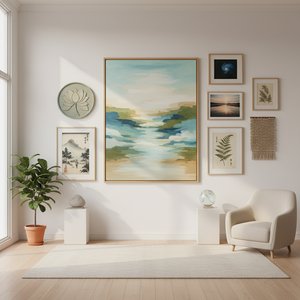
Find serenity with our Top 10 tranquil artworks! Explore masterpieces by Monet, Van Gogh & more. Discover the stories behind calming Impressionist landscapes and peaceful Japanese art. Museum-quality reproductions at .

探索立体主义的艺术魅力!本文精选十部定义了这场革命性运动的杰作,带您深入了解毕加索、布拉克等大师的创作故事与技法。从几何抽象到现代风格,感受色彩与形式的无限可能。TopImpressionists.com为您提供博物馆品质的艺术品复制和家居美学灵感!

Explore 10 Cubist masterpieces by Picasso, Braque & more! Discover the stories behind these revolutionary paintings and their impact on modern art. Find museum-quality reproductions for your home at TopImpressionists.com – where art comes to life.

Explore the art of transforming spaces with our comprehensive guide to wall decor. From historical movements to contemporary trends, discover how to curate impactful interiors and commission bespoke artwork for a truly personalized aesthetic.

Explore 10 defining Cubist Expressionism masterpieces by Picasso, Braque & more. Discover the stories behind these bold, geometric paintings and bring museum-quality art to your home with TopImpressionists.com. Explore the full collection online.


第一时间获取最新的艺术新闻、独家优惠及装饰灵感。
向我们介绍您的项目需求,我们的艺术专家将为您提供 3 个个性化的艺术品推荐。
由我们的专家为您精选 3 款心仪之作 —— 完全免费!

 Preview
 购买版画
购买版画 分享
分享 分享
分享
 详情
详情

 下载
下载
 相似作品
相似作品 X射线
X射线 幻灯片播放
幻灯片播放

 展开详情
展开详情









 玻璃选项仅适用于110厘米以下的尺寸。


