


 实景预览
实景预览
 发送
发送 分享
分享
 详情
详情 指南
指南

 下载图片
下载图片
 相似作品
相似作品 X射线
X射线 幻灯片播放
幻灯片播放 统计数据
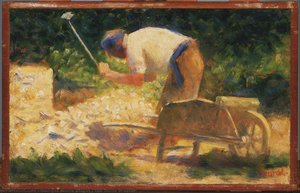
统计数据The Mower
 Oil On Canvas
- WallArt
- Post-Impressionism
 1882
1882- 19th Century
 16.0 x 25.0 cm
 大都会艺术博物馆
Experience the luminous tranquility of Georges Seurat's The Mower, a Post-Impressionist masterpiece utilizing Pointillism to capture light and nature, now available as a stunning hand-painted reproduction for your home.
 阅读全文
阅读全文
Georges Seurat(1859-1891),法国画家,是印象派之后的新印象主义创始人。他以点状绘画技术著称于世,通过运用纯色小点创造出光线和色彩的视觉融合效果,彻底改变了绘画艺术。他的代表作《巴黎铁塔》、《慵懒的圣奥纳》等作品展现了他对现代生活的独特视角与艺术表达能力。他是现代艺术发展的重要推动者,为后人开辟了新的创作道路。
艺术微喷/版画
博物馆级艺术微喷或帆布版画,制作高效,并提供多种饰面选择。 ( 订购此收藏品的纯手工复刻画作 切换至数字图像销售渠道)




P118B ¥10

P118H ¥10

P118W ¥10

P438Z ¥10

P508JH ¥12

P508YH ¥12

P805H ¥10

P805Z ¥10

P919BZ ¥10

P919G ¥10

P919XJ ¥10

P959ZH ¥10

P968JZ ¥12

W106C ¥8

W218G ¥10

W218JH ¥8

W218Y ¥10

W307PJ ¥10

W316G ¥10

W316PJ ¥8

W316Y ¥10

W398PJ ¥8

W4111J ¥10

W500HY ¥15

W500JH ¥15

W692G ¥12

W849H ¥8

W940BG ¥15

W953PJ ¥8




标准尺寸
定制
CM
INCH
您可以从与原作比例一致的预设尺寸中进行选择。
Loading sizes...

宽度
高度
请输入您所需的宽度和高度,以适配您的画框或墙面。由于印刷品只能进行裁剪,无法超出原图尺寸,因此若比例不一致,画面的一部分将会被裁切。在正式印刷之前,我们会为您发送一份数字效果图供您确认。本页面显示的图片并非最终裁剪后的效果——只有效果图才能展示真实的裁剪情况。


 玻璃选项仅适用于110厘米以下的尺寸。

The Mower
艺术微喷/版画
复刻品尺寸说明
-


总计金额
¥ 464
Georges Pierre Seurat: A Symphony of Light and Precision – Exploring “The Mower”
Georges Pierre Seurat, a name synonymous with innovation and meticulous observation within the Post-Impressionist movement, irrevocably altered the landscape of painting in late 19th century France. Born in Paris on December 2nd, 1859, his artistic journey began amidst a burgeoning fascination for scientific principles – specifically optics – which would ultimately propel him to create one of the most recognizable and influential artworks of his era: “The Mower.” Now housed at The Metropolitan Museum of Art in New York City, this deceptively simple depiction holds profound significance beyond its tranquil subject matter.
- Composition & Technique
- Artistic Significance – Pointillism’s Delicate Dance
- Context Within Seurat's Oeuvre – A Prelude to Grandeur
- Relevance in Modern Art – Echoes of Genius Across Generations
Composition & Technique: Capturing Tranquility Through Scientific Precision
"The Mower," measuring just 16 x 25 cm, is executed with remarkable care using oil on canvas. Seurat’s genius lay not merely in capturing a rural scene but in applying his groundbreaking technique – Pointillism – to achieve an unprecedented level of luminosity and color vibrancy. Unlike Impressionists who blended pigments wet-on-wet, Seurat painstakingly applied tiny dots of pure pigment onto the canvas surface. This method, rooted in Helmholtz’s theory of color perception, aimed to stimulate the eye's ability to synthesize colors optically, resulting in a shimmering effect that transcends mere representation.
- Detailed Observation
- Optical Mixing – Illusion of Depth and Texture
- The Role of Color Theory
Artistic Significance – Pointillism’s Delicate Dance
While “The Mower” doesn't showcase the full extent of Seurat’s later explorations into Chromoluminarism—where he utilized a broader palette and manipulated tonal gradations—it represents an essential step in establishing Pointillism as his signature style. The painting brilliantly portrays a solitary farmer diligently cutting grass with a scythe, bathed in dappled sunlight. A bird soaring overhead introduces a subtle element of dynamism against the backdrop of stillness, emphasizing the artist’s focus on capturing not just what is seen but how it feels—a profound sense of calm and contemplative engagement.
- Symbolism – Labor and Rural Life
- Emotional Resonance – Serenity and Mindfulness
Context Within Seurat's Oeuvre – A Prelude to Grandeur
"The Mower" precedes Seurat’s monumental masterpiece, “A Sunday Afternoon on the Island of La Grande Jatte,” marking a pivotal moment in his artistic development. However, it stands alone as an exemplary embodiment of his early aesthetic sensibilities—a desire to distill complex visual information into its purest form. Alongside this serene depiction are other notable works like Landscape at Saint-Ouen and The Gardener, all residing within The Musée de l'Annonciade and numerous private collections. These pieces underscore Seurat’s unwavering commitment to exploring the interplay between observation and artistic expression.
- Influence on Later Artists
- Connecting Impressionism & Avant-garde Movements
Relevance in Modern Art – Echoes of Genius Across Generations
Georges Seurat’s legacy extends far beyond the confines of 19th century France. His innovative techniques and stylistic vision continue to inspire artists today, demonstrating the enduring power of artistic experimentation and intellectual curiosity. “The Mower,” with its masterful use of color and composition, serves as a testament to Seurat's ability to transform everyday life into an extraordinary visual experience—a timeless reminder that beauty can be found in simplicity and precision.
问答详情
苏拉 的《The Mower》 是一件广为人知的艺术品吗?
“The Mower”的受欢迎程度被归类为Iconic。
苏拉 的《The Mower》 描绘了什么内容?
苏拉 的《The Mower》 中呈现的主题包括 rural landscape, farming, scythe, bird flight, tranquility, color theory, pointillism。这些主题共同构成了该艺术作品的主旨。
苏拉 的《The Mower》 融合了怎样的主题与氛围?
"The Mower" 展示了 rural landscape, farming, scythe, bird flight, tranquility, color theory, pointillism,其传达的情绪为 Serene。
相关艺术品


艺术家简介
乔治·修拉:点彩主义的先驱与光学的探求
乔治·皮埃尔·修拉(Georges Pierre Seurat,1859年12月2日 – 1891年3月29日)是一位法国画家和绘图家,他以开创性的点彩画法而闻名于世。他的巨幅作品《格朗代热图岛上的星期日下午》(A Sunday Afternoon on the Island of La Grande Jatte)标志着新印象主义运动的开端,其绘画技巧利用对比色的小点来呈现光线效果,深深地影响了后世艺术的发展。修拉的一生虽然短暂,却以其独特的视角和严谨的方法,彻底改变了人们对色彩、光线与绘画之间的关系的理解。他不仅仅是一位画家,更是一位科学家,一位哲学家,用他的画笔探索着光学与视觉的奥秘。从学院派训练到光学理论
修拉的艺术之路并非一蹴而就,而是经历了一个渐进式的演变过程。早年,他在 École des Beaux-Arts 学习,接受了传统的绘画训练,掌握了素描和构图的基本技巧。然而,他很快便对这些传统规范产生了质疑,开始寻求一种更科学、更理性的绘画方法。修拉沉浸于色彩理论的研究中,深受科学家如米歇尔·欧仁·舍夫勒(Michel Eugène Chevreul)和奥格登·鲁德(Ogden Rood)的影响,他们对色彩的相互作用以及视觉感知进行了深入研究。这些研究成为了他革命性技巧——点彩主义的基础。修拉的核心理念在于将纯色的小点应用于画布上,依靠观者的眼睛来混合这些颜色,从而产生一种充满活力、光彩夺目的效果。这不仅仅是追求更鲜艳的色彩,更是为了理解人类视觉系统如何感知光线和色彩,并利用这种知识创造出更加生动、引人入胜的绘画体验。他会用康泰炭笔在粗糙的纸上绘制详细的草图,精确地规划每个小点的放置位置,体现了他艺术创作过程中的近乎数学般的严谨性。创新之作:修拉的主要作品与艺术愿景
《格朗代热图岛上的星期日下午》(1884-1886)是修拉研究和实验的集大成者,也是新印象主义运动的开端。这幅巨大的画作描绘了巴黎人在塞纳河畔享受悠闲时光的场景,充分展现了他点彩主义的精髓。人物被细致地描绘成精心排列的色彩小点,仿佛闪烁着光芒,营造出一种宁静而安详的氛围。《圣德尼的蓿草》(Alfalfa, Saint-Denis)展示了他将色彩理论应用于乡村景观的方式,而早期作品如《圣瓦勒恩的风景》(Landscape at Saint-Ouen)则揭示了他的风格演变和对光线与气氛的捕捉兴趣。即使是对现代巴黎生活的描绘,例如《埃菲尔铁塔》(The Eiffel Tower),也通过他的独特技巧得到了升华,展现了工业现代感与艺术创新的和谐统一。《阿尼耶尔河畔的沐浴者》(Bathers at Asnières)是另一件重要的作品,以其独特的风格探索了休闲和现代生活的主题,预示着《格朗代热图岛上的星期日下午》中更精致的处理手法。这些画作不仅仅是对场景的再现,更是精心设计的视觉实验,旨在探索色彩与感知的可能性。持久的影响:历史意义与艺术遗产
尽管修拉的一生短暂——他在31岁时就去世了(1891年),但他对艺术世界的贡献是深远而广泛的。他的作品挑战了传统的艺术惯例,为众多后来的艺术运动铺平了道路。他对主观表达和探索新技巧的重视,引起了寻求摆脱学院派束缚的艺术家的共鸣。修拉的影响可以体现在野兽派画家对大胆色彩和表现性笔触的运用、立体主义者对形式进行几何解构以及抽象表现主义者对情感强度和即兴创作的追求之中。修拉的科学方法,虽然最初备受争议,但最终拓宽了艺术可能性的定义。他证明了艺术既可以具有理性的严谨性,又可以充满情感的感染力,这种结合继续激励着当代艺术家。修拉的作品不仅仅是技术创新的见证,更是对现代生活本质的深刻捕捉,以无与伦比的精确性和美感固化了他作为现代艺术先驱者的地位。他的画作依然证明了观察、实验和人类理解周围世界愿望的力量,通过艺术表达这一独特的视角。
苏拉
1859 - 1891 , 法国
快速概览
- 全名: 乔治·皮埃尔·修拉
- 出生地点: 法国巴黎
- 出生日期: 1859年12月2日
- 去世日期: 1891年3月29日
- 受影响的艺术家或运动:
- 野兽派
- 立体主义
- 抽象表现主义
- 国籍: 法国
- 影响艺术家:
- 米歇尔·欧文
- 奥格登·鲁德
- 艺术运动或风格: 新印象主义,点彩画法
- 著名作品:
- 大本岛星期日下午
- 阿尼埃尔的沐浴者
- 圣德尼的阿尔法
相关文章

光与影的彼岸:印象派与后印象派艺术收藏家的鉴赏之旅
深入探索印象派与后印象派艺术世界的瑰丽魅力。TopImpressionists为您提供专业的艺术收藏建议、定制油画服务,助您构建独一无二的臻品系列。了解大师作品背后的故事,提升您的艺术鉴赏力。

印象主义之外:探索后印象派绘画的情感深度
深入探索后印象派绘画的情感深度,解读塞尚、梵高、高更等大师的艺术创新。TopImpressionists提供专业的艺术史分析与高清作品欣赏,助您领略现代艺术魅力!

光影与灵魂的革命:深度解析印象派与后印象派的艺术魅力与美学演变
探索印象派与后印象派的艺术革命。本文深度解析莫内、梵高、塞尚等大师如何通过光影与色彩重塑现代美学。作为全球领先的艺术品交易平台,TopImpressionists为您呈现博物馆级的纯手工油画复刻,以精湛技艺捕捉名画神韵,为您的私人收藏与高端空间装饰注入永恒的艺术灵魂。

Beyond Impressionism: How Post-Impressionism Revolutionized Modern Art through Emotion and Structure
Explore the profound evolution of art from Impressionism to Post-Impressionism. Discover how masters like Van Gogh revolutionized color and emotion, shaping modern art history through structural innovation and expressive technique.

后印象主义十大名作:重塑艺术,点亮生活美学
探索后印象主义的十部杰作,从梵高的星空到高更的塔希提风情。了解艺术大师背后的故事与技法,感受色彩与光线的魅力。TopImpressionists.com为您提供博物馆品质的画作复制和精选家居装饰方案,点亮您的生活美学!


