





























从与原作比例一致的预设尺寸中进行选择。

您可以输入自定义尺寸,以适配特定的画框或空间。如果您选择的尺寸与原图比例不符,我们将对作品进行裁剪,或通过镜像填充/纯色填充边缘的方式来扩展图像。在开始制作之前,我们会向您发送一份数字效果图供您确认。
请注意,屏幕上的预览并不能反映实际的裁剪或扩展效果。只有效果图才能准确展示最终的构图。
虽然我们提供定制尺寸,但为了保持原图比例,我们建议您从预设列表中选择尺寸。

Ram
复制品尺寸
Georgia O’Keeffe’s “Ram,” painted in 1938, isn’t merely a depiction of an animal; it’s a profound meditation on life, death, and the enduring spirit of the American Southwest. This oil-on-canvas work, currently residing within the Georgia O'Keeffe Museum in Santa Fe, immediately commands attention with its stark simplicity and arresting composition. The ram itself—a powerful, almost skeletal figure—dominates the center of the picture plane, its head held high against a muted, atmospheric backdrop. The color palette is deliberately restrained: predominantly earthy browns, ochres, and grays punctuated by the startling blue of a single flower nestled within the creature’s mouth. This deliberate lack of vibrant hues amplifies the painting's emotional weight, forcing the viewer to confront the subject with an unblinking gaze.

O’Keeffe’s technique is characterized by a meticulous attention to detail and an almost obsessive rendering of texture. She employed a dry brushstroke, building up layers of paint to create a palpable sense of surface—the rough wool of the ram's coat, the delicate petals of the blue morning glory, even the subtle contours of the landscape behind. This tactile quality invites close inspection, encouraging the viewer to lose themselves in the intricacies of the painting. The composition itself is deceptively simple; O’Keeffe masterfully utilizes negative space—the vast expanse of sky and earth surrounding the ram—to heighten its presence and emphasize its isolation. The placement of the flower within the mouth isn't accidental; it serves as a poignant symbol, often interpreted as representing both life and death – the fleeting beauty of existence held within the jaws of mortality.
“Ram” was created during a pivotal period in O’Keeffe’s career—a time when she was increasingly experimenting with abstraction and exploring themes of nature, sexuality, and the American West. Influenced by Arthur Wesley Dow's teachings on color and line, O’Keeffe moved away from traditional representational painting toward a more subjective and emotionally resonant approach. This work reflects her growing interest in the stark beauty of the New Mexico landscape—a region that would become inextricably linked to her artistic vision. The painting can be seen as a precursor to her later, even more iconic works, such as “Jimson Weed/White Flower No. 1,” which similarly explored themes of mortality and the female form.
Beyond its formal qualities, "Ram" resonates with profound symbolic meaning. The ram itself is a powerful symbol of strength, virility, and leadership—qualities often associated with masculinity. However, in O’Keeffe's hands, the animal takes on a distinctly vulnerable quality, its head held high but its form rendered skeletal and almost ghostly. The blue flower, a rare splash of color within the composition, adds an element of fragility and beauty to this otherwise austere scene. It suggests that even in the face of mortality, there is still room for grace and wonder. The painting evokes a sense of quiet contemplation—a reminder of our own fleeting existence and the enduring power of nature.

1887 - 1986 , 美国

Explore the captivating world of Georgia O'Keeffe! Discover her groundbreaking flower paintings, New Mexico landscapes & lasting impact on American Modernism. Expert analysis and insights.

Immerse yourself in the captivating world of slate blue! Explore 10 iconic paintings by Monet, Van Gogh & Renoir. Discover their stories, techniques & find museum-quality art reproductions for your home at .
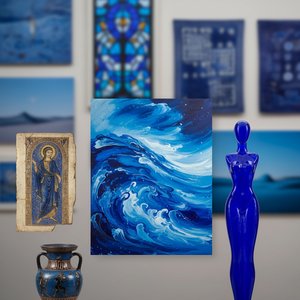
Explore the rich history of blue in art! Discover its symbolism, from ancient pigments to modern masterpieces by Kandinsky & Seurat. Uncover the psychological impact and cultural meanings behind this captivating hue.

Explore the rich history of flower symbolism in Western painting! Discover how artists from the Renaissance to Modernism used blossoms to convey meaning, emotion & beauty. Learn about iconic artworks and movements.

Explore the rich history of floral painting! Discover symbolism, techniques & masterpieces from Van Huysum to O'Keeffe. Expert insights for art lovers & collectors at TopImpressionists.


第一时间获取最新的艺术新闻、独家优惠及装饰灵感。
向我们介绍您的项目需求,我们的艺术专家将为您提供 3 个个性化的艺术品推荐。
由我们的专家为您精选 3 款心仪之作 —— 完全免费!


 效果预览
效果预览
 购买手绘画作
 分享
分享 分享
分享
 详情
详情

 下载
下载
 相似作品
相似作品 X射线
X射线 幻灯片播放
幻灯片播放


 展开详情
展开详情









 玻璃选项仅适用于110厘米以下的尺寸。


