

Shown: · With its frame:
 实景预览
实景预览
 分享
分享 分享
分享
 详情
详情 指南
指南

 下载作品
下载作品
 相似作品
相似作品 X射线
X射线 幻灯片播放
幻灯片播放 Q&A
Q&A 统计数据
统计数据Self-portrait 7


¥ 1807
手工油画复制品
由我们的艺术家按需定制,为您提供您所选尺寸及画框的布面手工油画。 ( 切换至版画销售渠道 切换至数字图像销售渠道)
本作品受版权保护
本页面展示的作品受版权法保护,这意味着我们无法合法地制作或销售与其完全相同的复制品。此项保护依据包括以下国际协议等: 伯尔尼公约 以及各国法律,包括下文所述的法律: 美国版权法第17编。
作为一种既合规又充满敬意的替代方案,我们提供以原作为灵感定制的手绘艺术作品。我们的资深专业艺术家会仔细研读原作的风格、韵味与艺术精髓,以此创作出能够唤起相同情感的新颖且独特的作品——同时确保其本身是一件原创之作。
这种方法完全符合版权法规,因为它并不涉及对受保护艺术品的复制或翻录。相反,它是一种富有创意的重新诠释——是一件受原作启发、但与原作并不相同的全新绘画作品。
 了解更多
了解更多Size
·标准尺寸
定制
CM
INCH
您可以从与原作比例一致的预设尺寸中进行选择。
Loading sizes...

宽度
高度
请输入您需要的宽度和高度,以适配您的画框或墙面。由于作品为手工绘制,若选择不同比例的尺寸,艺术家可能会在画面边缘多画一些或稍作裁剪 —— 由您决定。在开始绘画之前,我们会为您发送一份数字效果图供您确认。本页面上展示的图片并非最终实物 —— 只有效果图才能反映真实结果。
Finish
·
White ¥1

Blurside ¥1

Extended ¥1

P118B ¥10

P118H ¥10

P118W ¥10

P438Z ¥10

P508JH ¥12

P508YH ¥12

P805H ¥10

P805Z ¥10

P919BZ ¥10

P919G ¥10

P919XJ ¥10

P959ZH ¥10

P968JZ ¥12

W106C ¥8

W218G ¥10

W218JH ¥8

W218Y ¥10

W307PJ ¥10

W316G ¥10

W316PJ ¥8

W316Y ¥10

W398PJ ¥8

W4111J ¥10

W500HY ¥15

W500JH ¥15

W692G ¥12

W849H ¥8

W940BG ¥15

W953PJ ¥8

H24-GOLD ¥30

H24-SILVER ¥30

H36-GOLD ¥45

H36-SILVER ¥45
Shipped in a protective tube, ready for your own framer.
Above 105 cm the frame is shipped as a kit for a professional framer — read the details.
Extras
optionalWhat do the extras include?
Examples of what can be changed: Replace face with customer photo; Add pet (e.g., replace cat with dog); Include hidden message in background; Change background landscape or elements.
After order, TopImpressionists.com team will email client for instructions and provide a mockup preview
After order, TopImpressionists.com team will email client for instructions and provide a mockup preview
全球配送()仅需 3-4 周即可送达,无需等待标准时效的 5 周。(29 October)。品质绝不妥协。
保护性清漆
展品铭牌
青铜铭牌雕刻详情
This elegant plaque features the artist's name and the title of the artwork, finely engraved for a timeless presentation.
It is made from bronze with a refined, elegant finish. The text is precisely laser-engraved for a sharp and permanent result. Measuring 9x2 cm, the plaque is compact yet easy to read. It's built to be durable and scratch-resistant, offering a professional, museum-quality look. Mounting is simple thanks to the included adhesive backing.
透明亚克力铭牌详情
The plaque includes essential engraved details such as the artist's name, the title of the artwork, the date it was created, the type of media used-like oil on canvas or watercolor-a brief description of the piece, and a QR code that links to the complete artwork information.
It is crafted from clear acrylic, offering a sleek, modern appearance. The text is UV-engraved in black to ensure strong visual contrast. With a size of 10x15 cm, it ensures optimal readability. It comes equipped with two metal hooks for secure wall mounting. The plaque is designed to be weather-resistant, making it suitable for various environments, and it includes interactive features that work seamlessly with smartphone scanning.
黑色亚克力铭牌详情
This elegant plaque includes engraved information such as the artist's name, the title of the artwork, the date it was created, the type of media used (like oil on canvas or watercolor), a short description of the artwork, and a QR code for quick access to more information.
The plaque itself is made from refined black acrylic with a premium finish. The text is laser-engraved in white for high contrast and readability. Its size is 10x15 cm, designed to be easy to read. It comes with two metal hooks for professional mounting. The design is sleek and fits any interior style. It is also weather-resistant and durable, with built-in digital integration for mobile compatibility.
玻璃选项仅适用于110厘米以下的尺寸。
 玻璃选项仅适用于110厘米以下的尺寸。
- 全球免运费特快专递服务
- 优质亚麻画布
- 全程运输保险
- 关税退款保证
- 色彩精准还原保证
- 100天退货保障(仅限制造缺陷)
- 100% 退款保证
- 多件购买优惠


藏品详情
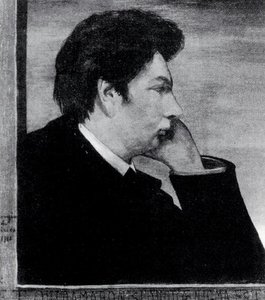
A haunting self-portrait by Giorgio de Chirico (1922). Explore the artist's melancholic style, surreal imagery, and philosophical depth in this iconic masterpiece.
艺术家简介
乔治奥·德·奇里科(1888-1978)是超现实主义前卫的意大利艺术家,以其“形而上绘画”闻名。他的作品描绘了空旷的城市广场、诡异的阴影和无表情的人体模型,探索存在主义主题,对后世艺术产生了深远影响。
About the painting
A Dreamscape in Gray: De Chirico’s “Self-Portrait 7”
Giorgio de Chirico's "Self-Portrait 7," painted around 1922, isn’t merely a depiction of an artist; it’s a distilled essence of the anxieties and intellectual currents swirling through Europe at the dawn of the 20th century. This haunting monochrome study, housed within the Toledo Museum of Art, invites us into a realm where reality fractures, memory bleeds into dream, and the self becomes both subject and object—a captivating paradox that defines much of de Chirico’s oeuvre. The painting immediately arrests with its stark simplicity: a figure rendered in muted grays, positioned slightly off-center against a subtly receding backdrop, his hand partially obscuring his mouth as if holding back a profound thought or perhaps a secret sorrow.
The work belongs firmly within de Chirico’s “Metaphysical” period, a movement he pioneered alongside his brother, Andrea Savinio. This style rejected the superficiality of contemporary art and sought to capture not just appearances but the underlying anxieties and irrationalities of human experience. Influenced by philosophers like Arthur Schopenhauer and Friedrich Nietzsche, de Chirico aimed to depict a world where logic dissolves, and the familiar becomes unsettlingly strange. The painting’s palette—a carefully orchestrated symphony of grays—is crucial to this effect. It's not simply black and white; it’s a spectrum of tones that evokes both melancholy and a sense of timelessness, mirroring the artist’s own preoccupation with mortality and the passage of time.
Deconstructing Form: Technique and Composition
Technically, “Self-Portrait 7” is characterized by a meticulous layering of oil paint—a technique de Chirico revisited after abandoning his earlier, more vibrant style. He employed subtle gradations of tone to create an illusion of depth and texture, suggesting the rough surface of clothing and the smooth planes of the face. The composition itself is deceptively simple, yet profoundly effective. The figure’s placement off-center creates a dynamic tension, drawing the eye across the canvas and inviting contemplation. Notice how the background recedes sharply, almost dissolving into an indeterminate space—a technique that reinforces the painting's sense of unease and disorientation.
The use of line is equally deliberate. The strong outlines defining the face and body are softened by the surrounding tones, creating a sense of ambiguity. There’s a deliberate lack of detail; de Chirico wasn’t interested in photographic realism but rather in capturing the *feeling* of a scene—the emotional weight of a moment. The inclusion of the bust of Eudipides, subtly referenced in the painting's title and further explored in another work by the artist, adds an additional layer of symbolic complexity, hinting at themes of fate, suffering, and the burden of knowledge.
Symbolism and Emotional Resonance
The obscured mouth is perhaps the most potent symbol within the portrait. It suggests restraint, introspection, or even a suppressed emotion—a refusal to fully articulate the anxieties that plague the artist’s mind. The overall mood is undeniably melancholic, yet there's also an undercurrent of quiet dignity and resilience. De Chirico wasn’t simply depicting sadness; he was exploring the complex relationship between the self and the world, revealing a profound sense of isolation within a rapidly changing society.
The painting’s setting—a vaguely architectural space—further contributes to its unsettling atmosphere. It's reminiscent of Roman arcades, which de Chirico frequently depicted in his work, but here they feel strangely deserted and devoid of life. This reinforces the sense of alienation and loneliness that permeates the portrait. The subtle inclusion of a tangerine adds an unexpected element of warmth and color—a fleeting reminder of beauty amidst the prevailing gloom.
A Legacy of Dreamlike Visions
“Self-Portrait 7” stands as a quintessential example of de Chirico’s unique artistic vision. It's a painting that defies easy interpretation, inviting viewers to engage with its mysteries and grapple with its emotional complexities. It’s not merely a portrait; it’s a window into the artist’s psyche—a glimpse behind the curtain of his creative process. De Chirico’s work continues to resonate today because it taps into universal anxieties about identity, mortality, and the nature of reality. Reproductions of this powerful image offer a chance to bring this dreamlike vision into your own space, prompting reflection and sparking conversation.
常见问题与解答
乔治·德·基里科 的《Self-portrait 7》 属于哪种艺术流派?
“Self-portrait 7”是一件Metaphysical Art时期的作品。该艺术流派体现了作品所属的艺术传统。
乔治·德·基里科 的《Self-portrait 7》 的色调是明亮还是深沉?
乔治·德·基里科 的《Self-portrait 7》 的记录数值为:亮度 deep_shadow,亮度感 Soft Shadow。
建议将 "Self-portrait 7" 的 Portrait 格式作品陈列在什么位置?
乔治·德·基里科 的《Self-portrait 7》 的 Portrait 格式推荐用于 Living Room。画幅与空间的结合,将为您提供复制品摆放的指引。
Quick facts and art quiz
About 乔治·德·基里科

乔治·德·基里科
1888 - 1978, 希腊
艺术家简介
乔治奥·德·奇里科:梦境的建筑师
在希腊的沃洛斯(Volos)降生的乔治奥·德·奇里科(Giorgio de Chirico,1888-1978),是一位意大利画家、雕塑家和作家,他以其独特的“形而上绘画”(Metaphysical painting)风格而闻名于世。他的艺术生涯并非一帆风顺,而是充满了对传统技法的探索与对现代社会异化感的深刻反思。早年在雅典理工学院接受教育,为他日后的艺术创作奠定了基础。然而,真正点燃他创造力火花的是在慕尼黑的求学经历。在那里,他接触到了阿诺德·博克林(Arnold Böcklin)和马克斯·克林格(Max Klinger)的作品,这些艺术家以其象征性的景观和令人不安的意象深深地吸引了他。与此同时,弗里德里希·尼采(Friedrich Nietzsche)、阿图尔·叔本华(Arthur Schopenhauer)等哲学家的思想也对他的艺术创作产生了深远的影响,这些思想探讨了存在主义、人类欲望的不理性以及主观现实的本质。这些元素共同构成了奇里科绘画的核心——一种试图揭示日常生活中隐藏的真实,展现熟悉空间中潜藏的令人不安诗意的风格。形而上绘画的诞生与发展
1909年左右,奇里科开始探索一种独特的艺术风格,他将其命名为“形而上绘画”。这并非仅仅是一种风格上的创新,更是一次深刻的尝试,旨在捕捉表象之下的隐藏现实,揭示潜藏于日常空间中的不安感。一次前往佛罗伦萨的旅行以及在圣十字广场(Piazza Santa Croce)的经历成为了一个转折点,激发了他创作一系列标志性的“形而上城镇广场”作品。这些画作以其怪异的静谧、长长的戏剧性阴影、不合逻辑的透视以及古典建筑与无面人偶、高耸雕像等令人不安元素并置为特征。这种效果极具震撼力,唤起了一种怀旧、孤立和难以承受的失落感。奇里科创立了形而上绘画学校(Scuola Metafisica),对超现实主义产生了深远的影响,尽管他后来也与超现实主义的一些解读方式保持距离。他的画作并非梦境的简单描绘,而是试图展现一个超越可见世界的领域——一个时间和空间流动、意识和潜意识边界模糊的领域。《思想家的苦恼》(The Vexations of the Thinker)、《秋日下午之谜》(The Enigma of an Autumn Afternoon)以及《爱的歌》(The Song of Love)等作品,完美地体现了这种令人着迷的美学,邀请观者沉思存在的奥秘和人类感知的脆弱性。风格转变与持久的遗产
一战后,奇里科的艺术之路发生了一个意想不到的转折。他放弃了早期的形而上绘画风格,转而拥抱一种更为传统的古典主义或新巴洛克风格。这种转变受到了广泛批评;许多评论家认为这是质量下降的表现,指责他抛弃了定义其早期作品的创新精神。然而,奇里科始终坚持自己的艺术选择,重温过去的题材,但以不同的美学视角呈现它们。尽管饱受批评,他的影响力和后世艺术家是不可估量的。他对空间、透视和象征主义的创新运用挑战了传统的艺术规范,为新的表达形式开辟了道路。影响与艺术传承
奇里科的作品是19世纪末的象征主义运动与20世纪初超现实主义兴起的关键桥梁。他深受阿诺德·博克林和马克斯·克林格的影响,他们的富有表现力的意象与他对神话和潜意识的迷恋产生了共鸣。尼采和叔本华等哲学家的思想为他提供了一个框架,以探索存在焦虑、异化以及在看似毫无意义的世界中寻找意义的主题。然而,奇里科的影响远不止于超现实主义。勒内·马格利特(René Magritte)和萨尔瓦多·达利(Salvador Dalí)等艺术家深受他的形而上绘画的启发,借鉴了他的并置、不合逻辑透视和象征性意象来创造他们自己的梦幻世界。他的作品也影响了后来的魔幻现实主义运动,该运动旨在以一种增强的神秘感和心理深度来描绘日常现实。如今,奇里科的画作在世界各地的主要博物馆中展出,包括罗马西班牙广场附近的专门为他设立的博物馆,确保了他作为20世纪最重要的艺术家之一的遗产得以延续。他留下的不仅仅是一系列艺术作品,更是一种新的视角——一种看待世界的方式,将它视为一个充满隐藏含义、令人不安的美丽和持久神秘的地方。关键影响与艺术传承
- 受到影响:阿诺德·博克林(Arnold Böcklin)、马克斯·克林格(Max Klinger)、弗里德里希·尼采(Friedrich Nietzsche)、阿图尔·叔本华(Arthur Schopenhauer)。
- 影响:超现实主义,特别是勒内·马格利特(René Magritte)和萨尔瓦多·达利(Salvador Dalí)。他的作品也影响了后来的魔幻现实主义。
艺术家简介
- 全名: 乔治奥·德·奇里科
- 出生地点: 希腊沃洛斯
- 出生日期: 1888年7月10日
- 受影响的艺术家或运动:
- 勒内·马格利特
- 萨尔瓦多·达利
- 国籍: 意大利
- 影响艺术家:
- 阿诺德·博克林
- 马克斯·克linger
- 弗里德里希·尼采
- 艺术运动或风格: 超现实主义,形而上绘画
- 著名作品:
- 思想家的苦恼
- 秋日下午之谜
- 爱的旋律
探索按主题、风格和特征分类的艺术作品。


Self-portrait 7
·