
从与原作比例一致的预设尺寸中进行选择。

您可以输入自定义尺寸,以适配特定的画框或空间。如果您选择的尺寸与原图比例不符,我们将对作品进行裁剪,或通过镜像填充/纯色填充边缘的方式来扩展图像。在开始制作之前,我们会向您发送一份数字效果图供您确认。
请注意,屏幕上的预览并不能反映实际的裁剪或扩展效果。只有效果图才能准确展示最终的构图。
虽然我们提供定制尺寸,但为了保持原图比例,我们建议您从预设列表中选择尺寸。

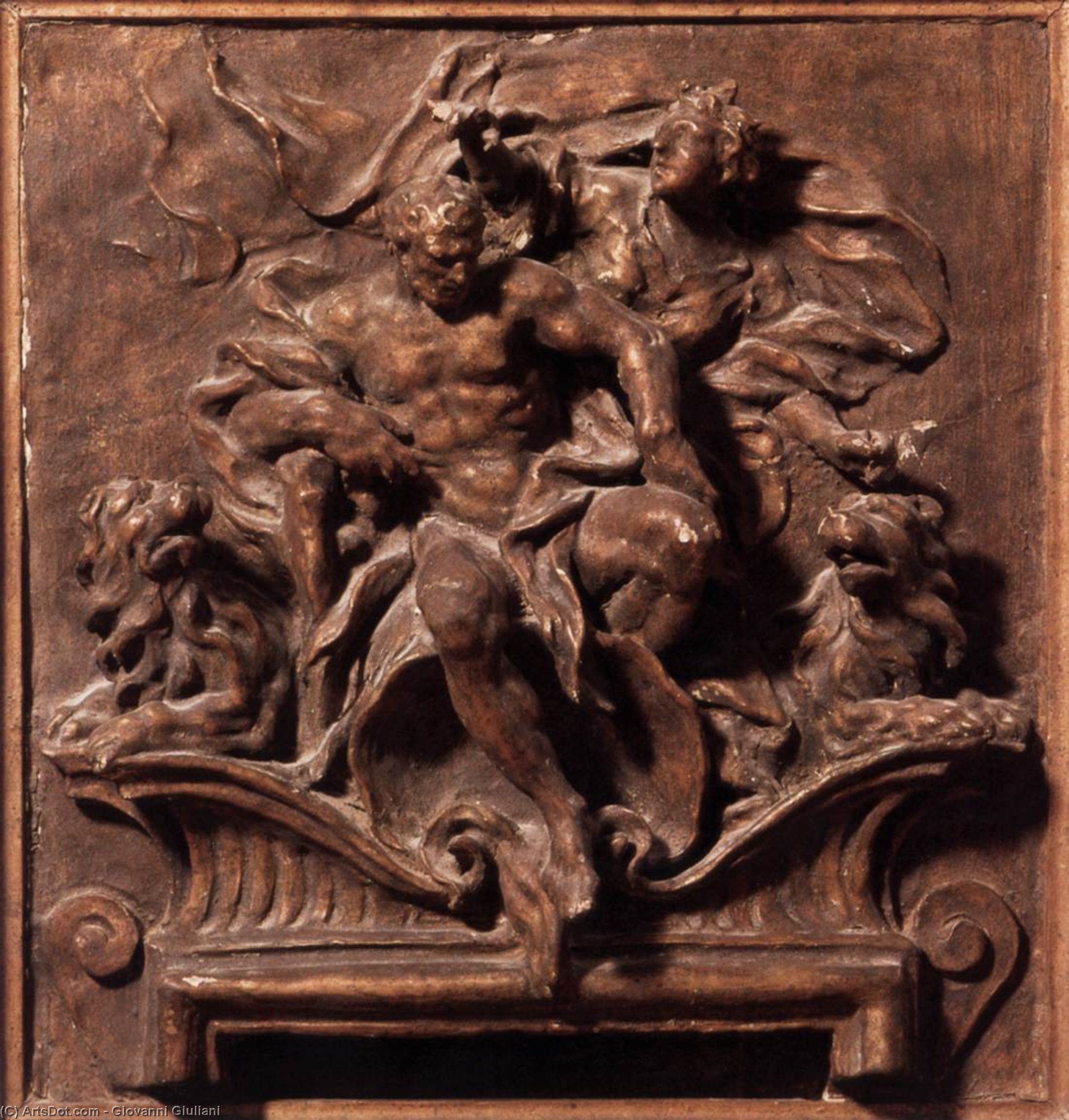
Hercules Enthroned
复制品尺寸
To gaze upon this depiction of Hercules Enthroned is to be immediately enveloped by an aura of monumental power tempered by classical grace. This bronze statue, dating from the year 1709, captures more than just a mythological figure; it embodies the very concept of enduring strength—a physical and spiritual fortitude that has captivated artists for millennia. The composition itself is rich with narrative detail. At the heart sits Hercules, portrayed in a commanding posture, one leg resting upon an elevated pedestal, suggesting both repose and readiness for action. He is not merely seated; he reigns from his throne, surrounded by attendants whose presence adds layers of human drama to the divine subject.
The artistry behind this piece belongs to Giovanni Giuliani, a master craftsman whose career serves as a fascinating bridge between two great artistic epochs. Born in Venice in 1664, Giuliani’s work is remarkable for its subtle evolution—a graceful pivot away from the overt theatricality of High Baroque drama toward an emerging, refined Classicism. While deeply rooted in the rich Venetian tradition, his touch lends this sculpture a quiet dignity that speaks to a more measured contemplation. His ability to imbue even grand mythological subjects with such meticulous execution elevates the piece beyond mere representation; it becomes a study in controlled magnificence.
The symbolism within Hercules Enthroned is as deep as the bronze itself. Hercules, universally recognized for his labors and unmatched might, serves as an archetype of human potential realized through virtue. Yet, the inclusion of surrounding elements—the attentive figures flanking him, the watchful dog near the base, and the perched bird above—grounds this divine power in the natural world. These animals are not mere decoration; they act as silent witnesses to his enduring strength, connecting the god’s mythic might to the cyclical rhythms of nature itself. The entire tableau suggests that true power is not isolated but exists in harmony with its environment.
For the discerning collector or designer, this reproduction offers an unparalleled opportunity to integrate high art narrative into contemporary living spaces. The patina and detailed musculature of the bronze suggest a history lived through centuries, lending instant gravitas to any room. Whether placed in a grand foyer where one wishes to evoke tales of heroism, or within a study meant for deep contemplation, Hercules Enthroned commands attention without shouting. It whispers of enduring ideals—of perseverance, nobility, and the quiet triumph of spirit over adversity. Owning this piece is not simply acquiring sculpture; it is curating an atmosphere steeped in classical aspiration.
Giovanni Giuliani (1664-1744) stands as a compelling figure in the late Baroque artistic landscape of Venice and, surprisingly, Vienna. Often overshadowed by his more flamboyant contemporaries, Giuliani’s work represents a subtle yet significant shift—a move away from the overtly dramatic gestures of the earlier Baroque towards a refined elegance that foreshadowed the burgeoning Classical style. His career, spanning nearly eight decades, reveals an artist deeply rooted in Venetian tradition while simultaneously adapting to and influencing the artistic currents of Central Europe. His legacy is not defined by grand, sweeping narratives, but rather by his meticulous execution, his ability to imbue seemingly simple subjects with a quiet dignity, and his crucial role as a transitional figure between two distinct aesthetic periods.
Born into a family marked by both opportunity and hardship—his father a convicted criminal—Giuliani’s early life instilled within him a pragmatic sensibility that informed his artistic practice. He received his initial training in Venice, the undisputed heart of the Baroque, where he likely honed his skills under the primacy of established masters. The Venetian tradition, with its emphasis on rich color, dynamic composition, and theatricality, undoubtedly shaped his early style. However, Giuliani’s career trajectory took an unexpected turn when he relocated to Vienna in 1689. This move proved pivotal, as it placed him within the orbit of the Habsburg court—a center increasingly receptive to the cooler, more restrained aesthetics emerging from Italy.
Giuliani's work during his Viennese period is particularly noteworthy for its versatility and technical sophistication. While he continued to draw upon Venetian influences—particularly in his depictions of religious figures—he adapted them to suit the tastes of the Austrian aristocracy. His talent extended far beyond the canvas, reaching into the realms of sculpture and decorative arts, where he could manipulate various media to achieve a sense of opulent craftsmanship. This versatility is evident in several key areas of his output:
The historical importance of Giovanni Giuliani lies in his role as an artistic conduit. By transporting the warmth and richness of Venetian technique to the more formal atmosphere of the Habsburg court, he helped facilitate a stylistic evolution. He did not merely replicate the past; he refined it. His ability to move away from the heavy, often overwhelming drama of the high Baroque toward a more controlled, elegant aesthetic provided a foundation for the Classical movements that would follow.
Through his work in both sculpture and decorative design, Giuliani left an indelible mark on the aesthetic landscape of Central Europe. He remains a vital subject for those studying the transition of European art, representing a moment when the theatricality of the 17th century began to yield to the clarity and order of the 18th. His life's work serves as a testament to the power of adaptation, proving that an artist can remain true to their cultural roots while profoundly shaping the artistic destiny of a new home.

1664 - 1744 , Italy

Explore the profound beauty of bronze sculpture. From the ancient lost-wax technique to the interplay of light and patina, discover how this enduring alloy captures human emotion and history through masterful artistry and strength.


第一时间获取最新的艺术新闻、独家优惠及装饰灵感。
向我们介绍您的项目需求,我们的艺术专家将为您提供 3 个个性化的艺术品推荐。
由我们的专家为您精选 3 款心仪之作 —— 完全免费!

 购买手绘画作
 分享
分享 分享
分享
 详情
详情

 下载
下载
 相似作品
相似作品 幻灯片播放
幻灯片播放


 展开详情
展开详情






































 玻璃选项仅适用于110厘米以下的尺寸。


