

 实景预览
实景预览
 分享
分享 分享
分享
 详情
详情 指南
指南

 下载作品
下载作品
 相似作品
相似作品 X射线
X射线 幻灯片播放
幻灯片播放 问答
问答 统计数据
统计数据Donna che si lava

- 115.0 x 63.0 cm


A vibrant 1954 portrait by Giuseppe Ajmone captures a woman in a colorful bathroom setting with expressive pink and yellow tones, offering a unique opportunity to bring this mid-century Italian masterpiece into your home.
 展开全文
展开全文
探索朱塞佩·阿乔内(Giuseppe Ajmone)动人心弦的画作:受博纳尔和毕加索影响的风景与半抽象人物。在 TopImpressionists 探索他的意大利艺术传承。
艺术微喷/版画
博物馆级艺术微喷或帆布版画,制作高效,并提供多种饰面选择。 ( 订购纯手工绘制画作 切换至数字图像销售渠道)




P118B ¥10

P118H ¥10

P118W ¥10

P438Z ¥10

P508JH ¥12

P508YH ¥12

P805H ¥10

P805Z ¥10

P919BZ ¥10

P919G ¥10

P919XJ ¥10

P959ZH ¥10

P968JZ ¥12

W106C ¥8

W218G ¥10

W218JH ¥8

W218Y ¥10

W307PJ ¥10

W316G ¥10

W316PJ ¥8

W316Y ¥10

W398PJ ¥8

W4111J ¥10

W500HY ¥15

W500JH ¥15

W692G ¥12

W849H ¥8

W940BG ¥15

W953PJ ¥8




标准尺寸
定制
CM
INCH
您可以从与原作比例一致的预设尺寸中进行选择。
Loading sizes...

宽度
高度
请输入您所需的宽度和高度,以适配您的画框或墙面。由于印刷品只能进行裁剪,无法超出原图尺寸,因此若比例不一致,画面的一部分将会被裁切。在正式印刷之前,我们会为您发送一份数字效果图供您确认。本页面显示的图片并非最终裁剪后的效果——只有效果图才能展示真实的裁剪情况。


 玻璃选项仅适用于110厘米以下的尺寸。

Donna che si lava
艺术微喷/版画
复刻品尺寸
-


最终结算价
¥ 470
An Intimate Encounter with Light and Form
In the quiet, private moments of domestic life, there exists a profound beauty that often escapes the hurried gaze of the world. Giuseppe Ajmone, a master of capturing these ephemeral instances, invites us into such a moment with his 1954 masterpiece, Donna che si lava (Woman Washing). The painting presents us with a figure seen from behind, her back turned to the viewer as she engages in a ritual of cleansing. This perspective creates an immediate sense of voyeuristic intimacy, yet it remains deeply respectful, drawing the observer into a private sanctuary rather than intruding upon it. The composition is a delicate dance of light and shadow, where the warmth of pinks and yellows breathes life into the skin, transforming a mundane bathroom setting into a stage of vibrant, chromatic expression.
The technique employed by Ajmone reflects his deep connection to the post-war Italian tradition, blending elements of semi-abstraction with a palpable sense of reality. Influenced by the luminous palettes of Pierre Bonnard and the structural boldness of Picasso, Ajmone utilizes color not merely as a descriptive tool but as an emotional language. The way the light dances across the woman's form suggests a fluid, almost rhythmic movement, where the boundaries between the subject and her environment begin to soften. Scattered throughout the scene, objects such as a delicate cup, a bottle, and various bowls are rendered with a painterly touch that emphasizes texture and light over rigid detail, contributing to a dynamic composition that feels both grounded and dreamlike.
A Legacy of Italian Modernism
To understand the depth of Donna che lava, one must look toward the rich historical tapestry of Ajmone’s career. Emerging from the prestigious Brera Academy under the tutelage of masters like Achille Funi and Carlo Carrà, Ajmone was a central figure in the mid-century Italian art scene. His participation in landmark exhibitions, such as the Manifesto del Realismo and the prestigious Venice Biennale, places this work within a period of intense artistic exploration following World War II. This era was defined by a search for a new visual language—one that could reconcile the weight of tradition with the burgeoning freedom of modern abstraction. In this painting, we see that reconciliation perfectly realized; it is a work that honors the human figure while embracing the expressive potential of color and light.
For the discerning collector or interior designer, this piece offers more than just visual appeal; it provides an emotional anchor for a sophisticated space. The warmth of the palette makes it an ideal centerpiece for rooms designed to evoke tranquility and refinement. Whether placed in a sun-drenched morning room or a moody, contemporary study, the painting’s ability to command attention through subtle nuance ensures it remains a conversation piece for years to come. Owning a reproduction of such a significant work allows one to bring a fragment of Italian modernism into the home, fostering an environment of cultured contemplation and timeless elegance.
常见问题与解答
朱塞佩·阿乔内 的《Donna che si lava》 原作的技法和尺寸是多少?
《Donna che si lava》采用Oil On Canvas创作,原件尺寸为115 x 63 cm。
创作《Donna che si lava》时,朱塞佩·阿乔内 的年龄是多少?
朱塞佩·阿乔内 在 31 岁时创作了《Donna che si lava》。艺术家出生于 1923,该作品创作于 1954 年。
"Donna che si lava" 的材质是什么,采用了哪种风格?
在“Donna che si lava”中,Oil On Canvas技法与Contemporary Realism运动交相辉映。
相似作品


艺术家简介
早年生活与教育
Giuseppe Ajmone 是一位享誉国际的意大利画家,1923年出生于意大利的卡皮尼亚诺·塞西亚。1941年,他前往米兰求学,在 布雷拉学院 接受了深厚的艺术熏陶,师从 Achille Funi 与 Carlo Carrà 等艺术大师。艺术生涯
Ajmone 的艺术生涯充满了探索与成就,其足迹遍布各类重要展览,其中最为人所知的是他在1946年参与了“现实主义宣言”(亦被称为 《超越格尔尼卡》)。他曾荣获贝拉焦首届全国绘画展奖项。1950年,他受邀参加了第25届威尼斯双年展(Biennale of Venice),并于1951年获得了旨在表彰意大利青年画家的 Senatore Borletti 奖。国际展览与合作
Ajmone 的艺术魅力跨越了国界,其作品曾在全球范围内展出,包括:- 巴西圣保罗双年展(1951年及1959年)
- 东京国际双年展(1959年)
- 匹兹堡国际艺术博物馆(1955年及1958年)
- 哥本哈根、多特蒙德、纽伦堡以及布宜诺斯艾利斯
代表作品与风格
Ajmone 的画作常以风景与半抽象的人物形象为主题。他的艺术语言深受 Bonnard、Picasso、Braque 以及 Nicolas de Staël 等名家的影响。然而,他并未流于模仿,其作品最核心的特质在于那种细腻、忧郁且充满亲密感的艺术氛围。晚年生活与传承
1982年,Ajmone 定居于罗马尼亚诺·塞西亚(诺瓦拉),并一直居住于此直至2005年逝世。通过各类展览以及对其作品的悉心保护,他的艺术遗产至今仍被世人传颂。 在 TopImpressionists 欣赏 Giuseppe Ajmone 的艺术杰作: 通过维基百科了解更多关于 Giuseppe Ajmone 的信息: Giuseppe Ajmone - Wikipedia
朱塞佩·阿乔内
1923 - 2005 , 意大利
相关文章

Angelo Chiacchio: A Mid-Century American Illustration Master & the Rise of Commercial Art
Explore the captivating world of Angelo Chiacchio, a master of mid-century American illustration. Discover his evolution, signature style, and lasting impact on commercial art & design. Learn about his legacy at the Museum of American Illustration.
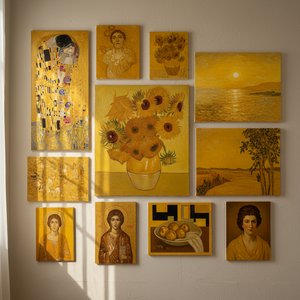
Golden Hues: Top 10 Paintings Dominated by Yellow Ochre |
Explore 10 iconic paintings bathed in golden yellow ochre! From Van Gogh's sunflowers to Monet’s haystacks, discover the stories behind these masterpieces. Find museum-quality art reproductions & elevate your home decor on .
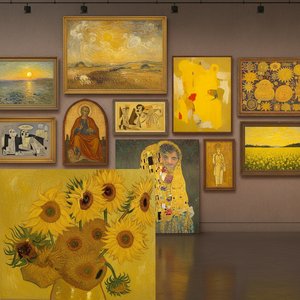
Golden Hues: 10 Masterpieces Dominated by Chrome Yellow | TopImpressionists
Immerse yourself in golden light! Explore 10 famous paintings dominated by 'Chrome Yellow', from Van Gogh’s Sunflowers to Monet's Haystacks. Discover the stories behind these iconic Impressionist & Post-Impressionist masterpieces and find museum-quality art reproductions at TopImpressionists.com.

The Golden Hue: Exploring Symbolism & Emotion in Yellow Art
Explore the rich symbolism & emotional power of yellow in art history! From Van Gogh to Kandinsky, discover how artists used this vibrant hue. Expert analysis & high-quality reproductions at TopImpressionists.

Blush & Brilliance: 10 Iconic Paintings Dominated by Light Pink Tones |
Explore 10 iconic paintings bathed in captivating light pink tones! From Monet's Impressionism to Renoir’s romance, discover the stories behind these blush-hued masterpieces. Find museum-quality art reproductions & decor inspiration at .