

 实景预览
实景预览
 分享
分享 分享
分享
 详情
详情 指南
指南

 下载作品
下载作品
 相似作品
相似作品 X射线
X射线 幻灯片播放
幻灯片播放 问答
问答 统计数据
统计数据
- 125.0 x 85.0 cm


¥ 1972
手工油画复制品
由我们的艺术家按需定制,为您提供您所选尺寸及画框的布面手工油画。 ( 切换至版画销售渠道 切换至数字图像销售渠道)
尺寸
·标准尺寸
定制
CM
INCH
您可以从与原作比例一致的预设尺寸中进行选择。
正在加载尺寸...

宽度
高度
请输入您需要的宽度和高度,以适配您的画框或墙面。由于作品为手工绘制,若选择不同比例的尺寸,艺术家可能会在画面边缘多画一些或稍作裁剪 —— 由您决定。在开始绘画之前,我们会为您发送一份数字效果图供您确认。本页面上展示的图片并非最终实物 —— 只有效果图才能反映真实结果。
 了解更多
了解更多完成
·
白色边缘 ¥1

边缘晕染效果 ¥1

延展式 ¥1

P118B ¥10

P118H ¥10

P118W ¥10

P438Z ¥10

P508JH ¥12

P508YH ¥12

P805H ¥10

P805Z ¥10

P919BZ ¥10

P919G ¥10

P919XJ ¥10

P959ZH ¥10

P968JZ ¥12

W106C ¥8

W218G ¥10

W218JH ¥8

W218Y ¥10

W307PJ ¥10

W316G ¥10

W316PJ ¥8

W316Y ¥10

W398PJ ¥8

W4111J ¥10

W500HY ¥15

W500JH ¥15

W692G ¥12

W849H ¥8

W940BG ¥15

W953PJ ¥8

H24-GOLD ¥30

H24-SILVER ¥30

H36-GOLD ¥45

H36-SILVER ¥45
采用保护管包装寄送,方便您交由专业的装裱师进行装裱。
增值服务
可选附加内容包含哪些内容?
可定制内容示例:将面部替换为客户照片;添加宠物(例如,将猫替换为狗);在背景中加入隐藏信息;更改背景风景或元素。
下单后,TopImpressionists.com 团队将通过电子邮件联系客户获取具体指令,并提供效果预览图
下单后,TopImpressionists.com 团队将通过电子邮件联系客户获取具体指令,并提供效果预览图
全球配送()仅需 3-4 周即可送达,无需等待标准时效的 5 周。(8 November)。品质绝不妥协。
保护性清漆
展品铭牌
青铜铭牌雕刻详情
This elegant plaque features the artist's name and the title of the artwork, finely engraved for a timeless presentation.
It is made from bronze with a refined, elegant finish. The text is precisely laser-engraved for a sharp and permanent result. Measuring 9x2 cm, the plaque is compact yet easy to read. It's built to be durable and scratch-resistant, offering a professional, museum-quality look. Mounting is simple thanks to the included adhesive backing.
透明亚克力铭牌详情
The plaque includes essential engraved details such as the artist's name, the title of the artwork, the date it was created, the type of media used-like oil on canvas or watercolor-a brief description of the piece, and a QR code that links to the complete artwork information.
It is crafted from clear acrylic, offering a sleek, modern appearance. The text is UV-engraved in black to ensure strong visual contrast. With a size of 10x15 cm, it ensures optimal readability. It comes equipped with two metal hooks for secure wall mounting. The plaque is designed to be weather-resistant, making it suitable for various environments, and it includes interactive features that work seamlessly with smartphone scanning.
黑色亚克力铭牌详情
This elegant plaque includes engraved information such as the artist's name, the title of the artwork, the date it was created, the type of media used (like oil on canvas or watercolor), a short description of the artwork, and a QR code for quick access to more information.
The plaque itself is made from refined black acrylic with a premium finish. The text is laser-engraved in white for high contrast and readability. Its size is 10x15 cm, designed to be easy to read. It comes with two metal hooks for professional mounting. The design is sleek and fits any interior style. It is also weather-resistant and durable, with built-in digital integration for mobile compatibility.
玻璃选项仅适用于110厘米以下的尺寸。
 玻璃选项仅适用于110厘米以下的尺寸。
- 全球免运费特快专递服务
- 优质亚麻画布
- 全程运输保险
- 关税退款保证
- 色彩精准还原保证
- 100天退货保障(仅限制造缺陷)
- 100% 退款保证
- 多件购买优惠


藏品详情
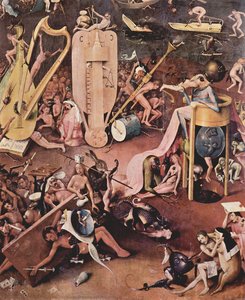
Hieronymus Bosch's "Two Witches" depicts two enigmatic figures amidst a dark, symbolic scene—a haunting exploration of morality and the supernatural from the Renaissance master.
艺术家简介
荷兰文艺复兴时期神秘画师,希罗尼穆斯·博斯以其超现实主义和象征主义作品闻名。《人间天堂》等杰作展现了对宗教主题的独特诠释,充满奇幻生物与道德寓意。他的作品影响了后世无数艺术家,是北方艺术史上的重要人物。
关于作品
A Glimpse into a Twisted World: The Enigmatic "Two Witches"
Hieronymus Bosch's “Two Witches,” painted circa 1480-1490, isn’t merely a depiction of two figures; it’s an immersion into a meticulously crafted nightmare. Born in ’s-Hertogenbosch, Netherlands, during a period rife with religious anxieties and burgeoning folklore, Bosch developed a singular artistic vision—one that fused the unsettling realities of his time with fantastical imagery and profound psychological depth. This particular work, often considered a preparatory study for a larger altarpiece, offers a concentrated dose of his signature style: a world brimming with symbolic excess, moral warnings, and a pervasive sense of impending doom. The painting’s power lies not in its narrative clarity—it deliberately avoids straightforward storytelling—but rather in the unsettling atmosphere it generates through carefully orchestrated details and an almost unbearable tension between the two central figures.
The composition itself is deceptively simple. Two women, draped in long, flowing robes of indeterminate color, occupy a starkly minimalist background. Their faces are obscured by elaborate head coverings—a deliberate choice that heightens their anonymity and emphasizes their role as archetypal figures rather than individuals. One holds a book or manuscript, its contents tantalizingly out of view, while the other carries a staff topped with what appears to be an animal skull – a potent symbol of death and decay. The positioning of the figures, slightly off-center, creates a dynamic imbalance, drawing the viewer’s eye into the heart of this unsettling tableau. Bosch masterfully uses negative space to amplify the sense of isolation and foreboding, suggesting that these women exist within a larger, unseen drama.
The Language of Line and Shadow: Technique and Style
Bosch's technique is instantly recognizable—a testament to his painstaking attention to detail. The work is executed entirely in pen and ink on paper, utilizing a remarkably precise hand that renders the figures’ forms with astonishing accuracy. He employs hatching and cross-hatching to create subtle gradations of tone, suggesting depth and volume without resorting to traditional shading techniques. This meticulous approach lends a remarkable sense of realism to the fantastical elements within the scene—the intricate folds of the robes, the unsettling details of the skull, even the suggestion of texture in the women’s garments. The monochromatic palette – shades of gray – further enhances the painting's somber mood and focuses attention on the interplay of line and shadow.
The influence of Bosch’s artistic training is evident in his mastery of perspective, though it’s deliberately flattened, creating a sense of claustrophobia. He doesn’t attempt to create an illusion of depth; instead, he uses overlapping lines and carefully positioned elements to suggest spatial relationships within the scene. The figures are presented as if trapped within a confined space—a visual metaphor for the psychological constraints imposed by sin and temptation. Bosch's style is deeply rooted in the Northern Renaissance tradition, yet it transcends conventional artistic boundaries, forging a uniquely personal and profoundly unsettling vision.
Decoding the Symbols: A Journey into Morality and Madness
“Two Witches” is saturated with symbolism, inviting endless interpretation. The book held by one figure likely represents knowledge—but perhaps also dangerous or forbidden knowledge. The skull atop the staff is a clear reference to mortality and the transience of earthly pleasures. The women themselves can be seen as allegorical figures representing temptation, sin, and the perils of indulging in worldly desires. Bosch’s work frequently served as moralistic warnings, depicting the consequences of straying from religious piety. The overall atmosphere evokes a sense of impending judgment—a reminder that even seemingly innocuous actions can lead to devastating outcomes.
Furthermore, the painting resonates with themes of madness and delusion. Bosch's art often explores the boundaries between reality and fantasy, sanity and insanity. The unsettling expressions on the women’s faces, combined with the bizarre setting, suggest a descent into psychological turmoil—a reflection of the anxieties and uncertainties that plagued Renaissance society. The scene feels like a carefully constructed dreamscape, populated by figures caught in a perpetual state of unease.
A Timeless Masterpiece: Reproduction and Legacy
“Two Witches” remains one of Hieronymus Bosch’s most compelling works, captivating viewers with its unsettling beauty and profound psychological depth. Reproductions offer an accessible way to experience the power of this extraordinary painting, allowing us to contemplate its complex symbolism and appreciate Bosch's unparalleled artistic vision. Whether displayed in a grand salon or a smaller study, a high-quality reproduction of “Two Witches” serves as a constant reminder of the enduring fascination with darkness, morality, and the mysteries of the human psyche.
常见问题与解答
因布洛赫 (Yīnbùluòhé) 的《Two Witches》 是油画、素描还是版画?
因布洛赫 (Yīnbùluòhé) 的《Two Witches》 被归类为 WallArt。该类别描述了原作的艺术形式。
因布洛赫 (Yīnbùluòhé) 的《Two Witches》 中哪些颜色占据主导地位?
因布洛赫 (Yīnbùluòhé) 的《Two Witches》 采用了 Neutrals 色调,并以 Putty (#dedede) 作为主导色。
“Two Witches”这一Northern Renaissance背后蕴含着怎样的国族渊源?
这件Northern Renaissance风格的作品《Two Witches》出自一位出生于荷兰的艺术家之手。
艺术速览与艺术小测验
关于 因布洛赫 (Yīnbùluòhé)

因布洛赫 (Yīnbùluòhé)
1450 - 1516, 荷兰
艺术家简介
Hieronymus Bosch:一个充满异想天开的艺术大师
Bosch,作为文艺复兴时期荷兰最杰出的艺术家之一,以其独特的风格和对人类灵魂深层恐惧的洞察力而闻名于世。尽管关于他的生平和创作细节匮乏,但通过对历史文献和艺术作品的细致研究,我们得以还原出一个充满神秘色彩的人物形象。他并非一个传统意义上的名人,记录上对他个人的生活几乎没有记载,这更增添了人们对这位艺术家及其作品的无限遐想空间。早年生活与艺术训练
关于Bosch的出生时间和家庭背景信息极少。历史学家普遍认为他生于约公元1450年,在荷兰北部城市圣赫尔滕博斯克,当时该城属于布拉班特公国。他的父亲安东尼·范阿肯是一位艺术家和艺术顾问,同时也是圣赫尔滕博斯克圣约翰教堂的牧师。虽然关于他的个人生活几乎没有记载,但通过对圣赫尔滕博斯克市政记录和当地骑士团账簿的考证,我们了解到他从小就接受了家庭艺术训练,吸收了当时荷兰绘画传统中的技术和规范。这些早期作品展现出对传统绘画风格的影响,尤其是在色彩运用和细节处理上,但同时他也开始超越单纯的模仿,展现出一种非凡的想象力,为他的艺术生涯奠定了基础。艺术风格与创作特点
Bosch最显著的艺术特征是其独特的风格——一种兼具精细技巧和疯狂想象力的完美融合。他主要使用油画在橡木板上进行创作,这不仅体现了他对绘画媒介的卓越掌握能力,还赋予作品绚丽的光泽和复杂纹理。与当时其他佛拉芒画家追求光滑表面隐藏创作痕迹的传统不同,Bosch大胆运用粗糙的绘画技术,创造出一种充满异想天开风格的作品。他的画作并非简单地记录现实世界,而是通过象征主义来探讨复杂的道德和神学概念,常常关注罪恶的危险、感官享受的脆弱以及神圣审判的必然性。他创作中的生物——怪诞恶魔、奇幻动物和奇异的人类形象,不仅具有装饰作用,而且是道德败坏和精神腐蚀的象征。这种对圣洁与污秽的融合、对美丽与丑陋的对比,创造出一种令人震惊的效果,至今仍深深吸引着观众的目光。主要作品与艺术成就
Bosch最著名的作品无疑是《圣母玛利亚花园》,这幅三联画作品堪称艺术史上的奇迹之一。当它被打开时,展现出一个广阔的景象——天堂、人间和地狱,这些都构成了一个复杂的象征性景观,反映了人类从伊甸园堕落的历史过程。左侧面板描绘了伊甸园的美丽景色,繁茂的植物和各种奇幻生物共同构成了天堂的景象;中间面板则展现了人类沉溺于感官享受和无节制的欲望的世界;右侧面板则呈现出地狱的恐怖景象,各种罪恶类型遭受着可怕的惩罚。这种对圣洁与污秽的对比、对美丽与丑陋的融合,创造出一种令人震惊的效果,至今仍深深吸引着观众的目光。此外,《最后的审判三联画》、《圣约翰教堂升起》等作品也展现了Bosch对天堂和地狱景象的精湛技巧,以及他对人类灵魂深层恐惧的洞察力。这些作品不仅具有极高的艺术价值,更蕴含着丰富的历史文化意义,挑战了当时人们对宗教道德和社会规范的传统观念。艺术影响与历史意义
Bosch的艺术风格对后世艺术家产生了广泛而深刻的影响。他最著名的学生彼得·布鲁格尔老者继承了他的绘画主题和构图技巧,同时许多其他艺术家也从他的梦幻般的图像和对潜意识的探索中汲取灵感。例如,萨尔瓦多·达利和马克斯·恩斯特等艺术家公开承认了他们对Bosch艺术风格的崇敬与借鉴。他创作中的生物——怪诞恶魔、奇幻动物和奇异的人类形象,不仅具有装饰作用,而且是道德败坏和精神腐蚀的象征。这种对圣洁与污秽的对比、对美丽与丑陋的对比,创造出一种令人震惊的效果,至今仍深深吸引着观众的目光。他不仅是一位杰出的艺术家,更是一位思想家和文化符号,他的作品为艺术发展开辟了新的道路,并深刻影响了人们对人类灵魂和宇宙的认知。Bosch的作品是文艺复兴时期荷兰艺术的重要组成部分,它以其独特的风格和象征主义表达方式,挑战了当时人们对宗教道德和社会规范的传统观念,并在艺术史上占据着举世瞩目的地位。关于 因布洛赫 (Yīnbùluòhé) 的简介
- Artistic Movement Or Style: 超现实主义和象征主义绘画风格
- Artists Or Movements Influenced By This Artist: ['彼得·布鲁格尔老杰拉德']
- Date Of Birth: c. 1450
- Date Of Death: 1516
- Full Name: Hieronymus Bosch
- Nationality: 荷兰人
- Notable Artworks:
- 最后的审判圣经画卷
- 尘世乐园
- 圣约翰教堂升天圣经画卷
- Place Of Birth: Den Bosch,荷兰




因布洛赫 (Yīnbùluòhé)
Two Witches
() ·
含框总尺寸: · 亚麻布油画手绘
总计