

 实景预览
实景预览
 切换至版画销售渠道
 分享
分享 分享
分享
 详情
详情 指南
指南

 下载作品
下载作品
 相似作品
相似作品 X射线
X射线 幻灯片播放
幻灯片播放 Q&A
Q&A 统计数据
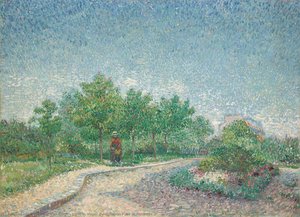
统计数据Landscape in Mâcon

- 33.0 x 43.0 cm

Explore the Pointillist works of Hippolyte Petitjean (1854-1929), a French painter known for his landscapes, portraits & innovative color techniques.
 展开全文
展开全文
获取远超网页预览效果的印刷级文件。我们销售的每一张数字图像均源自库存数据库中的高分辨率母版——宽度通常在 5,000 至 15,000 像素之间——因此您可以放心地进行大幅打印、局部裁剪或还原细腻的细节。
每一件作品在离开我们的工作室前都经过了精心的处理。数字影像专家会对照原作核对色彩,并在必要时进行校正,随后利用专业修图工具提升清晰度与细节表现——且始终忠实于艺术家的笔触与风格。最终呈现的图像宛如原作本身,而非仅仅是一张加了滤镜的扫描件。
您可以在最终定稿前进行审核:我们的专家将在 72 小时内通过电子邮件向您发送图像以供审阅。如果不满意?您可以要求改进或修正;若质量未达预期,亦可申请退款。
这也是出版商、设计工作室、画廊及印刷厂所信赖的品质。
每份数字图像订单均包含的内容
专业级数字交付,品质保障
选择 TopImpressionists.com,您获得的不仅仅是一张图像——您收到的是经过专业级增强、精雕细琢的数字艺术作品,并享有满意保证。以下是您的订单中自动包含的所有内容:

邮件即时送达
您的高分辨率数字图像文件将在下单后 72 小时内通过电子邮件发送给您 —— 即可立即使用。

AI 增强型数字文件
您的艺术品经过专业优化,结合先进的 AI 技术与人工修饰,确保呈现极致的细节、清晰度与色彩准确度。

终身免费重发服务
不小心删除了文件或找不到了?没关系——我们将随时为您免费重发。

无需进口税费,始终如一
即刻拥有您的艺术作品,无需支付任何关税、税费或运费——数字下载始终免税。

色彩精准保障
我们通过专业工具与色彩管理技术,确保您的数字图像尽可能真实地还原原作色彩。

100天满意保证
如果您对所购数字图像不满意,我们将在100天内为您进行修改或提供100%的全额退款——无需任何理由。

100% 退款保证
不满意?在收到数字文件后的100天内,您可以申请全额退款——无需任何理由。

批量订购优惠
购买 3 张享 10% 折扣 - 购买 5 张享 15% 折扣 - 购买 10 张以上享 20% 折扣。非常适合创意项目、画廊及机构使用。




艺术家简介
The Luminous Legacy of Hippolyte Petitjean
In the golden twilight of the nineteenth century, a period defined by radical shifts in perception and the pursuit of pure light, Hippolyte Petitjean emerged as a vital architect of color. Born in the quiet surroundings of Mâcon, France, in 1854, his journey from a provincial student to a central figure in the Neo-Impressionist movement is a testament to the transformative power of artistic vision. His early training began at the age of thirteen in his hometown, but it was the move to Paris and the prestigious École des Beaux-Arts that would fundamentally reshape his destiny. Under the tutelage of academic masters such as Alexandre Cabanel and Pierre Puvis de Chavannes, Petitjean mastered the rigorous foundations of classical technique, yet his spirit yearned for a more modern, scientific exploration of the visible world.
The trajectory of Petitjean’s career underwent a profound metamorphosis in 1884, following a fateful encounter with Georges Seurat. This meeting was not merely a social introduction but an artistic awakening. Inspired by Seurat’s revolutionary theories on optical mixing, Petitjean abandoned the traditional blending of pigments in favor of Pointillism. He embraced the meticulous application of tiny, distinct dots of pure color, a method designed to let the viewer's eye perform the work of synthesis. This transition from the academic traditions of his mentors to the vibrant, shimmering surfaces of Neo-Impressionism allowed him to capture a sense of luminosity that felt almost supernatural, turning landscapes and portraits into vibrating tapestries of light.
A Mastery of Light and Form
Petitjean’s oeuvre is characterized by a remarkable versatility that refused to be confined to a single stylistic prison. While he is most celebrated for his Pointillist precision, his hand was capable of great fluidity. By 1894, he began to move away from the rigid dotting technique, integrating more feathery, expressive strokes into his compositions. This evolution allowed him to bridge the gap between the scientific rigor of Seurat and the more emotive, atmospheric qualities of Impressionism. His landscapes, particularly those capturing the rugged beauty of Normandy and Brittany, serve as profound meditations on the interplay of atmosphere and earth, where the sea and sky seem to dissolve into a haze of pure pigment.
Beyond the landscape, Petitjean’s portraits stand as some of his most intimate achievements. In these works, he utilized his mastery of color theory to imbue skin tones with a subtle psychological depth. He did not merely seek to replicate a likeness; rather, he sought to capture the very essence of his subjects through the careful orchestration of light and shadow. His ability to layer pigment to achieve an unparalleled realism—where a face seems to glow from within—demonstrates a sophisticated understanding of how color affects human perception. This dedication to the emotional resonance of color ensured that even his most technical experiments remained deeply human.
Historical Significance and Artistic Endurance
The significance of Hippolyte Petitjean lies in his role as a bridge between eras. He was an artist who could navigate the strictures of the Salon while simultaneously pushing the boundaries of the avant-garde. His participation in the Salon des Indépendants and exhibitions across Europe—from Brussels to Berlin—cemented his reputation as a significant voice in the international art scene. Even as he experimented with decorative watercolours later in life, returning to widely spaced rounded spots of pure color, he remained faithful to the core principle that light is not merely something that falls upon an object, but something that resides within the very fabric of color itself.
Today, the legacy of Petitjean continues to resonate through the collections of prestigious institutions such as the National Gallery of Art and the Musée d’Art Moderne in Paris. His work serves as a vital chapter in the story of modern art, reminding us of a time when painters dared to deconstruct reality into its most fundamental elements: dots, light, and emotion. To look upon a Petitjean painting is to witness the triumph of scientific observation married to poetic intuition, an enduring testament to the beauty found in the meticulous assembly of a thousand tiny fragments.

Hippolyte Petitjean
1854 - 1929 , France
基本信息
- Full Name: Hippolyte Petitjean
- Nationality: French
- Date Of Birth: 1854
- Date Of Death: 1929
- Place Of Birth: Mâcon, France
- Notable Artworks:
- Pont Neuf
- Woman in a Garden
- In the Park
- Artistic Movement Or Style: Pointillism