
购买高分辨率增强版数字图像,其品质远超在线预览。
每一份文件都由我们的内部专家使用先进工具与专业的后期润色技术精心打造。我们确保每一张图像都具备卓越的清晰度、精准的色彩还原度以及细腻的细节表现。
最终文件将在 72 小时内通过电子邮件交付,并针对专业、编辑及印刷用途进行了优化。其品质与顶级设计工作室、出版社和画廊所信赖的标准完全一致。
选择 TopImpressionists.com,您获得的不仅仅是一张图像——您收到的是经过专业级增强、精雕细琢的数字艺术作品,并享有满意保证。以下是您的订单中自动包含的所有内容:

您的高分辨率数字图像文件将在下单后 72 小时内通过电子邮件发送给您 —— 即可立即使用。

您的艺术品经过专业优化,结合先进的 AI 技术与人工修饰,确保呈现极致的细节、清晰度与色彩准确度。

不小心删除了文件或找不到了?没关系——我们将随时为您免费重发。

即刻拥有您的艺术作品,无需支付任何关税、税费或运费——数字下载始终免税。

我们通过专业工具与色彩管理技术,确保您的数字图像尽可能真实地还原原作色彩。

如果您对所购买的数字图像不满意,我们将在60天内为您进行修改或退还100%的款项——无需任何解释。

如果不满意?在收到数字文件后的60天内,我们为您提供全额退款——无需任何理由。

购买 3 张图片可享 10% 折扣 - 购买 5 张可享 15% 折扣 - 购买 10+ 张可享 20% 折扣。非常适合创意项目、画廊和机构使用。
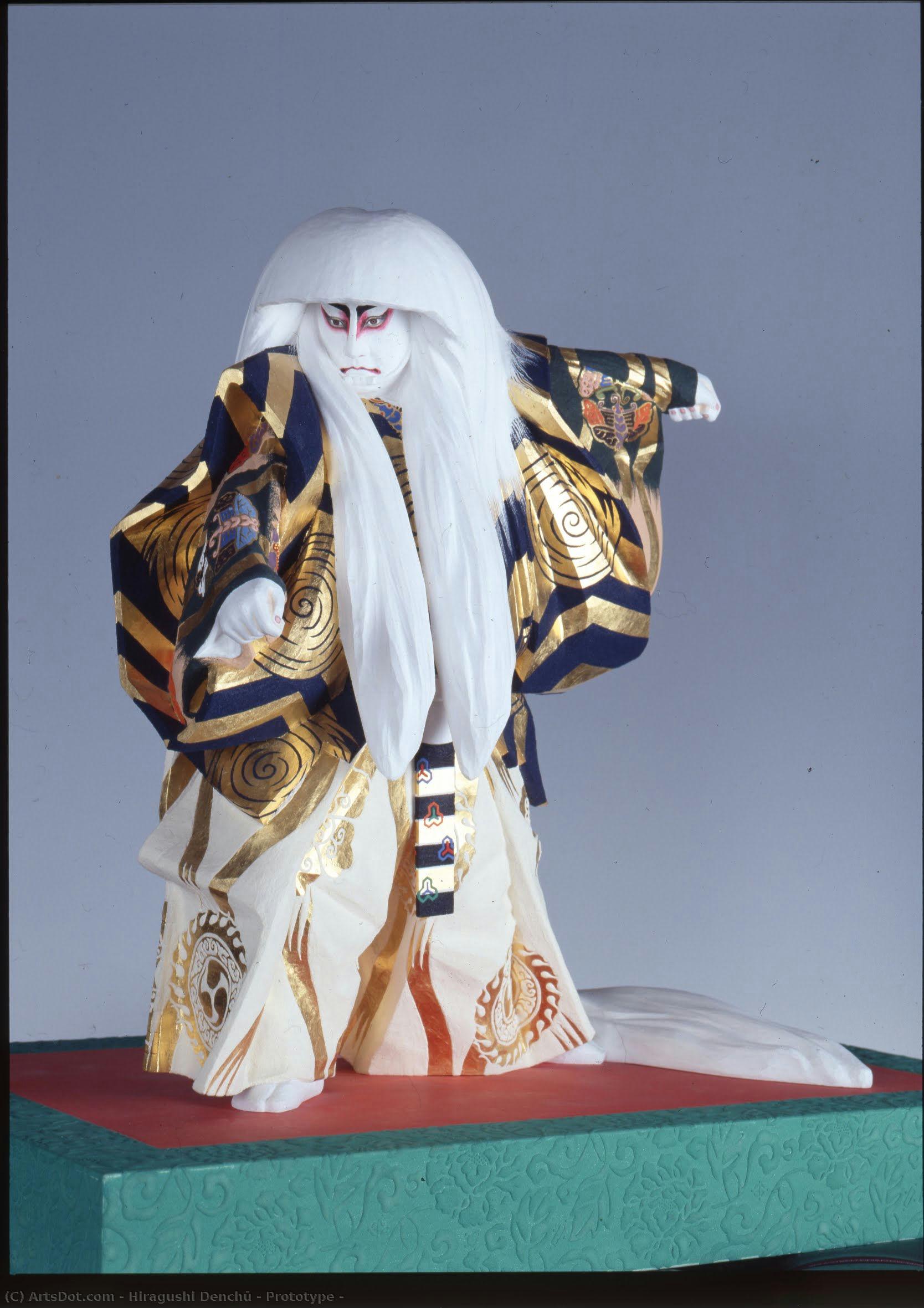
In the quiet intersection of spiritual devotion and masterful craftsmanship lies the work of Hiragushi Denchū, a sculptor whose hands breathed life into the very essence of Japanese wood. Born in 1872 within the scenic Okayama Prefecture, Denchū’s journey was one of profound transformation, moving from the humble beginnings of an apprentice in Osaka’s doll-making workshops to the prestigious heights of an Imperial Artist. His early years were shaped by the rhythmic precision of carving and the vibrant colors of traditional artistry, yet it was his ability to transcend mere decoration that would eventually define his place in the pantheon of Japanese masters. Denchū did not merely carve wood; he sought to capture the ephemeral breath of the divine and the enduring dignity of the human spirit.
The foundation of Denchū’s aesthetic was deeply rooted in the rich soil of Buddhist philosophy. His training under the esteemed Kōun Takamura at Tokyo’s Imperial Art Academy provided him with a rigorous technical discipline, yet his heart remained tethered to the ancient traditions of his lineage. He became a master of polychrome wood sculpture, a technique that required an extraordinary patience to meticulously carve cedar wood before applying layers of vibrant, luminous pigments. This marriage of texture and color allowed him to create works that possessed a startling realism, where the grain of the wood seemed to pulse with the warmth of living flesh or the terrifying energy of a deity.
To encounter a Denchū sculpture is to witness a moment of frozen emotion. His repertoire spanned the celestial and the terrestrial, moving seamlessly between the wrathful power of Buddhist iconography and the tender vulnerability of human portraiture. In his celebrated piece “Tenshō,” the viewer is confronted by a deity of immense spiritual fervor, characterized by a dramatic pose and a halo of flames that seems to flicker even in the stillness of a museum gallery. Conversely, his work "Old Mother of Heian" offers a profound study in serenity, capturing the weathered grace of age with such sensitivity that the inanimate wood takes on a palpable, breathing presence.
His technical prowess was matched only by his commitment to the evolution of Japanese sculpture. As a founding member of the Nihon Chōkoku Kai (Japan Sculpture Society) in 1907, he stood at the forefront of a movement that sought to elevate sculpture from a decorative craft to a high art form capable of expressing modern complexities. This period of his life was marked by an intense exploration of how traditional materials could serve new, emotive narratives, ensuring that the ancient art of woodcarving remained relevant in a rapidly changing Japan.
The significance of Denchū’s contribution to Japanese culture is etched into the very institutions that honor him. His career was punctuated by some of the highest accolades a Japanese artist could receive, including his appointment as an Imperial Household Artist in 1944. The nation recognized his immense cultural value through several prestigious designations:
Even in his final years, Denchū continued to leave his mark upon the sacred landscape of Japan. One of his most enduring legacies can be found at the Kaminarimon Gate of Tokyo's Sensō-ji Temple, where his masterful carving of a pair of dragon gods serves as a guardian for the temple’s entrance. Through this work, Denchū achieved a rare feat: he bridged the gap between the individual artist and the collective spiritual consciousness of a people. His sculptures remain not just objects of beauty, but vessels of reverence, reminding every observer of the profound sanctity found within the natural world.

1872 - 1979 , Japan


第一时间获取最新的艺术新闻、独家优惠及装饰灵感。
向我们介绍您的项目需求,我们的艺术专家将为您提供 3 个个性化的艺术品推荐。
由我们的专家为您精选 3 款心仪之作 —— 完全免费!

 效果预览
效果预览
 购买印刷品
购买印刷品 分享
分享 分享
分享
 详情
详情

 下载
下载
 相似作品
相似作品 X射线
X射线 幻灯片播放
幻灯片播放

 展开详情
展开详情